- 96 pages
- English
- ePUB (mobile friendly)
- Available on iOS & Android
eBook - ePub
Blues Musicians of the Mississippi Delta
About this book
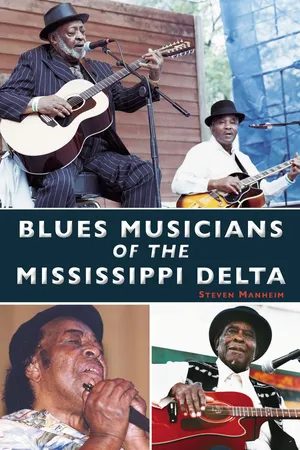
The Mississippi Delta blues run as deep and mysterious as the beautiful land from where the music originates. Blues legends B.B. King, Muddy Waters, John Lee Hooker, Howlin' Wolf, Sonny Boy Williamson, and countless other greats came from this region. The Delta blues, born as work songs in Mississippi cotton fields, was played on city street corners and in rural juke joints. With the Great Migration of African Americans in the first half of the 20th century, the Delta blues also made its way from Mississippi to Chicago. The sound of the blues would become the blueprint for the birth of rock and roll in Memphis in the 1950s. The era of the great Delta blues musicians is over, but their legacy remains an important chapter in American music. This book contains images of these important performers and the rich Delta landscapes that influenced their music.
Trusted by 375,005 students
Access to over 1 million titles for a fair monthly price.
Study more efficiently using our study tools.
Information
Subtopic
Music BiographiesOne
THE LAST OF THE GREAT MISSISSIPPI DELTA BLUES MUSICIANS

ROBERT LOCKWOOD JR. AND PINETOP PERKINS, CLEVELAND, OHIO, 1998. Robert Lockwood Jr. (left) and Joe Willie “Pinetop” Perkins were two of the last great Delta blues musicians. They both appeared on King Biscuit Time, a live radio program in the 1940s on KFFA in Helena, Arkansas. Lockwood, on electric guitar, played with harp great Sonny Boy Williamson II in 1941. Perkins later joined the original band on piano. This program was the first to broadcast live blues heard throughout the Mississippi Delta region.

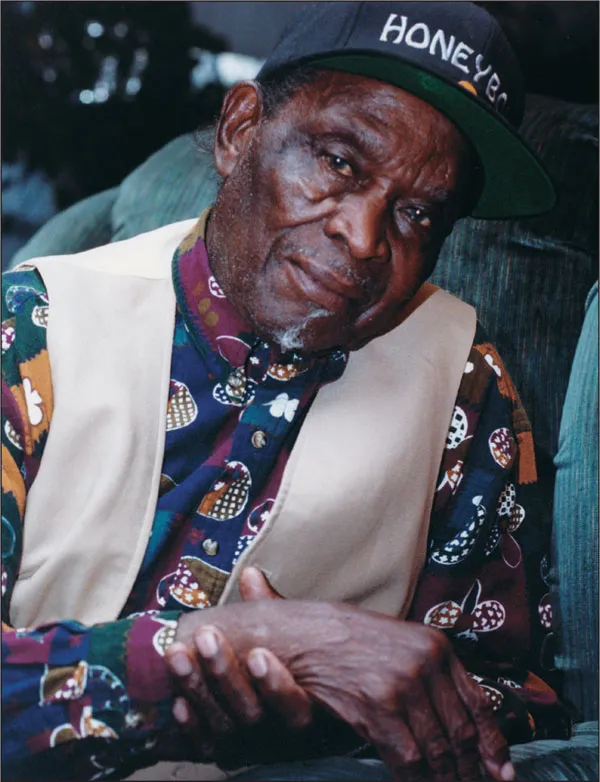
DAVID “HONEYBOY” EDWARDS, CHICAGO, 1998, AND CLEVELAND, OHIO, 2000. Throughout his 80-year career, David “Honeyboy” Edwards was the embodiment of the rambling, itinerant blues musician. Born in Shaw, Mississippi, in 1915, he remained true to the original Delta blues style. He learned to play from his father, Henry Edwards, and blues pioneers Charley Patton and Tommy Johnson. He traveled throughout the South playing in juke joints with Robert Johnson, Big Joe Williams, Tommy McClennan, Sonny Boy Williamson II, and Big Walter Horton. He was with Robert Johnson on the night of his final performance in August 1938, when Johnson was allegedly poisoned in Greenwood, Mississippi. Folklorist Alan Lomax recorded him in 1942 for the Library of Congress in Clarksdale. Edwards continued to tour well into his nineties, carrying the torch for the Delta blues into the 21st century.
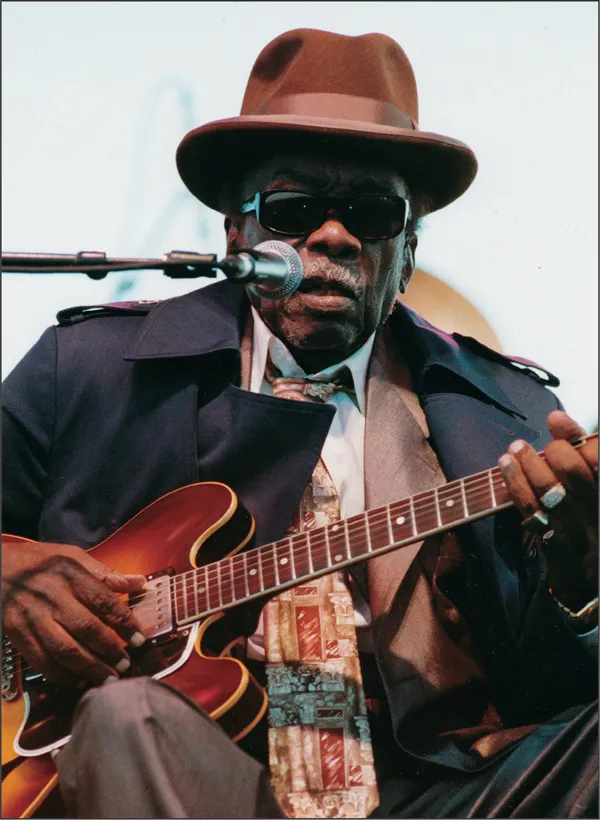
JOHN LEE HOOKER, CHESAPEAKE BAY BLUES FESTIVAL, 1999. John Lee Hooker, “the King of the Delta Boogie,” was one of the blues’ most influential performers. His pulsating, rhythm-based guitar and distinctive vocals resonated with blues and rock audiences for six decades. Hooker was born to sharecroppers near Clarksdale, Mississippi, in 1917, although there are contradictory details about his early life. His father was a preacher, and spiritual music was his early influence. At age 14, he ran away to live with his stepfather Will Moore, a blues musician, who was a major factor in his playing style. By the early 1940s, Hooker moved to Detroit, by way of Memphis and Cincinnati. In 1948, he released his seminal debut “Boogie Chillen.” The hypnotic-grooves on “Crawlin’ Kingsnake,” “I’m in the Mood,” and “Boom Boom” struck a chord with British rock bands in the 1960s, helping fuel the British Invasion and a blues resurgence in America.


ROBERT LOCKWOOD JR., CHICAGO, 1999. Robert Lockwood Jr. was a blues innovator and one of the last great Delta blues musicians. A pioneer in the development of electric guitar, he introduced a jazzy inflection with more complex chord structures into the blues. Born in 1915 on a farm in Turkey Scratch, Arkansas, near Helena, Lockwood was a direct link and the only student of the legendary Robert Johnson, who was his stepfather. He made his first recordings on Bluebird in 1941. He was the first electric guitarist to be heard on live radio in the Delta, playing on King Biscuit Time with Sonny Boy Williamson II in 1941 on KFFA in Helena, Arkansas. Lockwood was a well-known session player in Chicago in the 1950s for Sonny Boy Williamson II, Little Walter, Willie Dixon, and Otis Spann. He was a mentor to B.B. King and the Delta’s first modern lead guitar player. He was inducted into the Blues Hall of Fame in 1989.
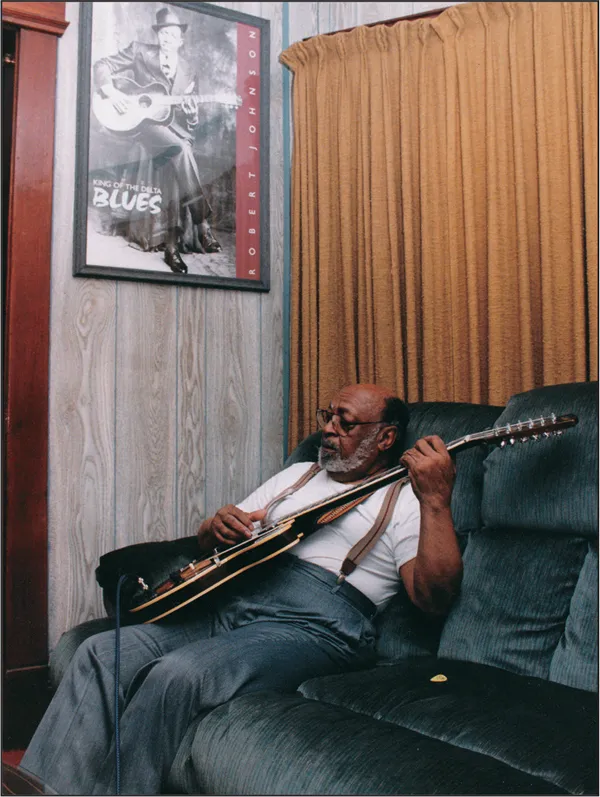
ROBERT LOCKWOOD JR. AT HOME, CLEVELAND, OHIO, 1998. Robert Lockwood Jr. patterned his early style on Robert Johnson’s playing intricacies in the 1930s. He took Johnson’s intense polyrhythmic style and incorporated jazz elements, creating his own unique phrasing of traditional blues. His blues standards include “Little Boy Blue,” “Take a Little Walk With Me,” and “Black Spider Blues.”

HONEYBOY EDWARDS AND ROBERT LOCKWOOD JR., CLEVELAND, OHIO, 2000. David “Honeyboy” Edwards (left) and Robert Lockwood Jr. were two of the last great Delta blues musicians, both with direct links to the legendary Robert Johnson. Edwards played and traveled with Johnson in the Mississippi Delta in the 1930s. They both relocated to Chicago in the 1950s.

PINETOP PERKINS, POCONO BLUES FESTIVAL, 1999, AND CLEVELAND, OHIO, 1998. Joe Willie “Pinetop” Perkins was one of the blues’ greatest pianists. His boogie-woogie, barrelhouse style made him one of the blues’ best modern piano players. He was born in 1913 in Belzoni, Mississippi, where he worked in plantation cotton fields. A knife attack severed tendons in his arm in 1943, forcing him to switch from guitar to piano. Perkins traveled to Helena, Arkansas with Robert Nighthawk in 1943, where he played on the King Biscuit Time radio show on KFFA with Sonny Boy Williamson II. “Pinetop’s Boogie Woogie,” recorded at Sun Records in 1953, became Perkins’s signature tune. The original version was done by Pinetop Smith in 1928. His session work included Nighthawk, Earl Hooker, Little Milton, and Albert King. He replaced Otis Spann for a stint in Muddy Waters’s last great band in 1969. He won a Grammy Award for “Joined at the Hip” with Willie “Big Eyes” Smith in 2011.
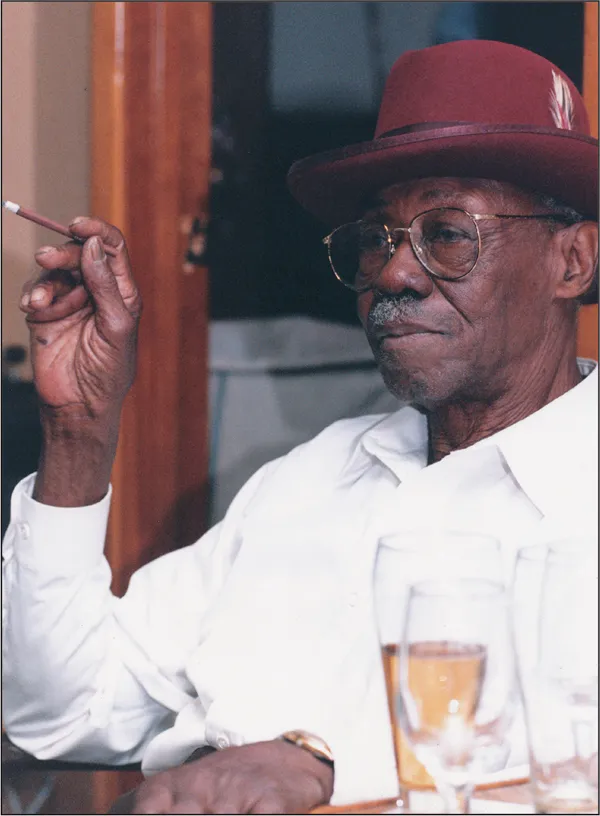

SNOOKY PRYOR, POCONO BLUES FESTIVAL, 1999. James Edward “Snooky” Pryor was a pioneer in amplified Chicago blues harmonica. Born in Lambert, Mississippi, in 1921, he began playing harmonica as a child. Pryor developed his piercing style in the Delta before moving to Chicago in 1940. He is believed to be the first harp player to amplify his sound by cupping a harmonica and microphone in his hands through a public address (PA) s...
Table of contents
- Cover Page
- Title Page
- Copyright Page
- Table of Contents
- Acknowledgments
- Introduction
- 1. The Last of the Great Mississippi Delta Blues Musicians
- 2. Blues Musicians of the Delta and Mississippi
- 3. Mississippi Delta Views
- Bibliography
Frequently asked questions
Yes, you can cancel anytime from the Subscription tab in your account settings on the Perlego website. Your subscription will stay active until the end of your current billing period. Learn how to cancel your subscription
No, books cannot be downloaded as external files, such as PDFs, for use outside of Perlego. However, you can download books within the Perlego app for offline reading on mobile or tablet. Learn how to download books offline
Perlego offers two plans: Essential and Complete
- Essential is ideal for learners and professionals who enjoy exploring a wide range of subjects. Access the Essential Library with 800,000+ trusted titles and best-sellers across business, personal growth, and the humanities. Includes unlimited reading time and Standard Read Aloud voice.
- Complete: Perfect for advanced learners and researchers needing full, unrestricted access. Unlock 1.4M+ books across hundreds of subjects, including academic and specialized titles. The Complete Plan also includes advanced features like Premium Read Aloud and Research Assistant.
We are an online textbook subscription service, where you can get access to an entire online library for less than the price of a single book per month. With over 1 million books across 990+ topics, we’ve got you covered! Learn about our mission
Look out for the read-aloud symbol on your next book to see if you can listen to it. The read-aloud tool reads text aloud for you, highlighting the text as it is being read. You can pause it, speed it up and slow it down. Learn more about Read Aloud
Yes! You can use the Perlego app on both iOS and Android devices to read anytime, anywhere — even offline. Perfect for commutes or when you’re on the go.
Please note we cannot support devices running on iOS 13 and Android 7 or earlier. Learn more about using the app
Please note we cannot support devices running on iOS 13 and Android 7 or earlier. Learn more about using the app
Yes, you can access Blues Musicians of the Mississippi Delta by Steven Manheim in PDF and/or ePUB format, as well as other popular books in Media & Performing Arts & Music Biographies. We have over one million books available in our catalogue for you to explore.