- English
- ePUB (mobile friendly)
- Available on iOS & Android
eBook - ePub
About this book
An original exploration of the 2003 Iraq war and geopolitics more broadly through the prism of art.
- Offers a reappraisal of one of the most contentious and consequential events of the early twenty-first century
- Advances an original perspective on Britain's role in the 2003 invasion and subsequent occupation of Iraq
- Maps out new ways of thinking about geopolitical events through art
- Examines the work of artists, curators and activists in light of Britain's role as a colonial power in Iraq and the importance of oil
- Reflects on the significance, limits and dilemmas of art as a form of critical intervention
- Questions the implications of art in colonialism and modernity
Tools to learn more effectively

Saving Books

Keyword Search

Annotating Text

Listen to it instead
Information
Chapter One
Introduction
Laid out during the middle of the nineteenth century, London’s Trafalgar Square embodies and displays geopolitical power. At its centre is a massive stone column supporting a statue of Admiral Horatio Nelson, to many, Britain's foremost naval commander. Overlooking the Square from the north side is the National Gallery, an institution that contains one of the greatest collections of European art, while on other sides are located the High Commissions of former British imperial territories that are now independent states. A short walk away down Whitehall lie the main offices of government and state. In close proximity are many other leading cultural institutions, including the National Portrait Gallery, Tate Britain and Tate Modern, each of which has historically tended to focus on European and North American art. The British Museum, which holds one of the world’s foremost collections of ancient artefacts, is located a short distance away.1 At the same time, the Square has also always invited appropriation and subversion. Constructed to assert the grandeur and authority of the British state, military and empire at a time of wars and revolutions, and often hosting officially‐endorsed events of national significance, the Square has periodically been taken over by protests and demonstrations, including, in the recent past, protests against British participation in the wars in Afghanistan and Iraq.
At three corners of the Square are located plinths supporting statues of military and political leaders, but the fourth plinth, in the north west corner, was left vacant after a subscription campaign failed to raise sufficient funds to pay for a statue to go there. Since 1998, this ‘Fourth Plinth’ has hosted a series of installations by prominent contemporary artists, who are periodically selected by commission and whose proposed work is then installed there for a few months at a time (de Vasconcellos 2016). The Plinth has offered selected artists an opportunity to introduce something different into public space, something that might be more, less or other than a protest, and which might engage the public and enter into conversation with its surroundings (Sumartojo 2013).
In 2008, the British artist Jeremy Deller was among those invited to propose a work. Troubled by what he saw as the restricted ways in which the ongoing war in Iraq was being represented and debated, Deller proposed that an object such as a damaged car should be relocated from Iraq and exhibited on the Plinth with the title The Spoils of War, a harshly ironic reference to the imperial practice of displaying objects taken from conquered lands. The appearance of an actual object from Iraq, destroyed in a conflict in which British forces continued to be engaged, might, the artist hoped, disrupt public discourse about the war. While Deller constructed a photomontage to illustrate his idea (Figure 1.1) and a maquette for the work was displayed for a few weeks along with other proposals in a small anteroom to the National Gallery, his idea was not adopted having been judged unsuitable, or at least not the most suitable. Deller did subsequently succeed in having a wrecked car from Iraq exhibited in the Imperial War Museum (IWM) in London, but only after British forces had officially withdrawn from the country.2

Figure 1.1 The Spoils of War, Jeremy Deller (2008).
Image courtesy of the artist.
In late 2017, nearly ten years on and several commissions later, it was announced that a work in the series The Invisible Enemy Should Not Exist by Michael Rakowitz (an American artist of Iraqi Jewish heritage) had been selected to appear on the Plinth. The proposed object would be a reproduction of a lamassu, a protective deity in the hybrid form of a winged bull with a human head. The original had stood at the gates of the Assyrian city of Nineveh in northern Iraq, from around 700 BCE until it was destroyed by Islamic State (IS) militants after they took over the area in 2015 (Greater London Authority 2018).3
The lamassu (Figure 1.2) was unveiled in March 2018, and the work can readily be interpreted as an act of resistance and affirmation in the face of the brutal iconoclasm of IS. The sculpture also evoked the 2003 invasion and subsequent occupation of Iraq by the United States and Britain, which created the conditions in which a movement like IS could emerge and thrive, and, more specifically, the fact that, while they had defeated the Iraqi military and occupied the country’s cities in a matter of weeks, American and British forces had failed to protect Iraq’s museums, galleries, archives and libraries, which were subject to extensive looting, vandalism and destruction (Bahrani 2003; see also Bogdanos 2005). The sculpture would serve as a reproduction of a lost object, while bearing a complex relation to the original and carrying wider symbolic and material resonances. As Rakowitz stated, ‘I see this work as a ghost of the original, and as a placeholder for those human lives that cannot be reconstructed, that are still searching for sanctuary’ (Elbaor 2017). In emphasising its ghostliness, Rakowitz evoked questions of spectrality, of what can be seen and what cannot, of appearance and liminality (Pilar Blanco and Peeren 2013, p.1). Like Deller’s proposal for the wrecked car, the lamassu conjures up bodies both corporeal and geopolitical, staging a haunting return for people and objects that have been lost through war.
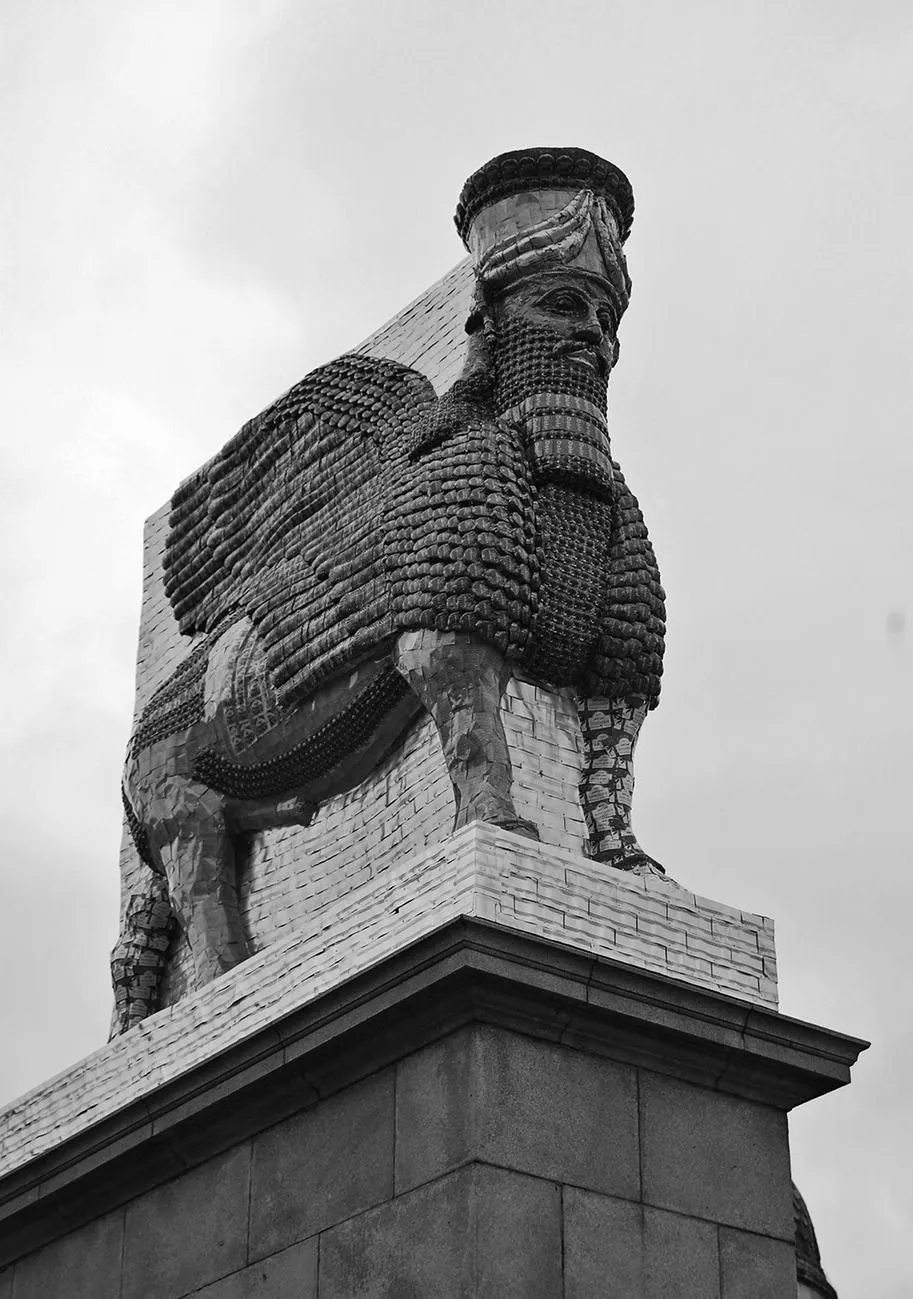
Figure 1.2 The Invisible Enemy Should Not Exist, Michael Rakowitz (2018). A Mayor of London Fourth Plinth Commission.
Photo by author, courtesy of the artist.
As with other objects in the Invisible Enemy series, the lamassu was fabricated out of materials used to package and sell groceries produced in Iraq and exported beyond the country, in this case date syrup cans. Through the use of everyday objects, the work would, in the words of the artist, further embody Iraq’s ‘former economic power, now destroyed by war’ (Elbaor 2017), as well as the conditions of displacement, exile and diaspora experienced by millions of Iraqi people. The location of the work was also highly significant. While previous exhibitions of works in the series had taken place in museums and galleries, here the sculpture appeared not just in a major public space, but at a site of huge material and symbolic importance to Britain’s military and colonial past, and to its ongoing political and cultural life. On the Fourth Plinth, the lamassu provided a dramatic contrast with the other statues in the Square, while seeming to form a strange alliance with several original lamassu taken from Iraq by nineteenth‐century colonial archaeologists and which continue to be displayed in the British Museum.
The appearance of the lamassu was an event in its own right, but one implicated in many other events, which it might be said to have embodied and activated in a variety of ways. Its appearance was especially significant in a situation where, as with so much of the country's colonial history, many of Britain’s political and cultural institutions have struggled, or simply failed to recognise or comprehend, the scope, nature and implications of the 2003 Iraq war. While several major public inquiries into aspects of the war have made sporadic reference to the harms suffered by Iraqi people, they have focused principally on Britain, being concerned primarily with British politicians, civil servants, spies, generals, soldiers and administrators; with what they did, what they did wrong, what they did not do, and what they might have done differently. Iraq and Iraqi people, for whom the war was in many ways a quite different kind of event, hardly appear. The lamassu, by contrast, offers a different way into the event. As this book argues, artworks like the lamassu expand and complicate what is often taken to be the event of the 2003 Iraq war and point towards the multiple nature, or multiplicity, of geopolitical events more generally.
Official inquiries into the 2003 war have not been tasked with investigating the effects of British colonial influence on Iraq, or of recurring intervention in the country, but such exclusions reflect nonetheless a broader situation in which the appearance and participation of ‘other’ people and places in British public life are heavily conditioned and circumscribed. Jacques Rancière (2006) conceptualises this process of determining what and whom can appear and be recognised in the public sphere as le partage du sensible: the distribution, sharing or division of that which is sensible, or available to sense perception (see also Dikeç ; Dixon 2009; Dixon 2015). Rancière (2006) further argues that the issue of who and what can appear and be seen, and of who can speak and be heard in public, is prior to most definitions of politics. The ‘distribution of the sensible’, he argues, represents a ‘primary aesthetics’ that conditions the political realm and the ways in which events can appear as matters for public experience, deliberation and debate (Rancière 2006, pp.12–13). This idea can be linked with the argument advanced by Edward Said (1978) that Europeans have, over an extended period, represented the people and places of the Middle East in ways that systematically diminish their agency, diversity and voice, and ultimately their humanity, a phenomenon he called Orientalism. To the extent that people and places subject to Orientalism appear in Western public life, they do so in a limited and prejudicial manner. As Gregory (2004a, p.253) writes, building on Said, ‘colonial modernity is intrinsically territorializing, forever installing partitions between “them” and “us”’. One consequence of this is to inhibit the extent to which events might be encountered and apprehende...
Table of contents
- Cover
- Table of Contents
- List of Figures
- Series Editor’s Preface
- Acknowledgements
- Chapter One: Introduction
- Chapter Two: Thinking Geopolitics Through the Event
- Chapter Three: Artworks as Evental Assemblages
- Chapter Four: Geopolitics at the Museum
- Chapter Five: Iraq Beyond Iraq
- Chapter Six: Geopolitical Aesthetics of Oil
- Chapter Seven: Photomontage as Geopolitical Form
- Chapter Eight: Geopolitical Bodies
- Chapter Nine: Conclusions
- References
- Index
- End User License Agreement
Frequently asked questions
Yes, you can cancel anytime from the Subscription tab in your account settings on the Perlego website. Your subscription will stay active until the end of your current billing period. Learn how to cancel your subscription
No, books cannot be downloaded as external files, such as PDFs, for use outside of Perlego. However, you can download books within the Perlego app for offline reading on mobile or tablet. Learn how to download books offline
Perlego offers two plans: Essential and Complete
- Essential is ideal for learners and professionals who enjoy exploring a wide range of subjects. Access the Essential Library with 800,000+ trusted titles and best-sellers across business, personal growth, and the humanities. Includes unlimited reading time and Standard Read Aloud voice.
- Complete: Perfect for advanced learners and researchers needing full, unrestricted access. Unlock 1.4M+ books across hundreds of subjects, including academic and specialized titles. The Complete Plan also includes advanced features like Premium Read Aloud and Research Assistant.
We are an online textbook subscription service, where you can get access to an entire online library for less than the price of a single book per month. With over 1 million books across 990+ topics, we’ve got you covered! Learn about our mission
Look out for the read-aloud symbol on your next book to see if you can listen to it. The read-aloud tool reads text aloud for you, highlighting the text as it is being read. You can pause it, speed it up and slow it down. Learn more about Read Aloud
Yes! You can use the Perlego app on both iOS and Android devices to read anytime, anywhere — even offline. Perfect for commutes or when you’re on the go.
Please note we cannot support devices running on iOS 13 and Android 7 or earlier. Learn more about using the app
Please note we cannot support devices running on iOS 13 and Android 7 or earlier. Learn more about using the app
Yes, you can access Geopolitics and the Event by Alan Ingram in PDF and/or ePUB format, as well as other popular books in Scienze fisiche & Geografia. We have over one million books available in our catalogue for you to explore.