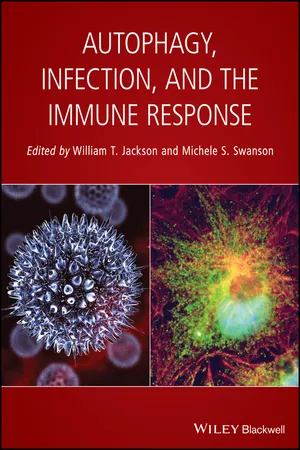
The relationship between infection and immunity and autophagy, a pathway of cellular homeostasis and stress response, has been a rapidly growing field of study over the last decade. While some cellular processes are pro- or anti-infection, autophagy has been proven to be both: a part of the innate immune response against some microbes, and a cellular pathway subverted by some pathogens to promote their own replication.
Autophagy, Infection, and the Immune Response provides a unified overview of the roles of cellular autophagy during microbial infection. Introductory chapters ground the reader by delineating the autophagic pathway from a cellular perspective, and by listing assays available for measuring autophagy. Subsequent chapters address virus interactions with autophagy machinery, the various roles of autophagy parasitic infection, and interactions of bacteria with the autophagic pathway. Concluding chapters explore the relationships of autophagy to systemic immune responses, including antigen presentation, ER stress, and production of IFN-gamma.
Designed as a resource for those interested in initiating studies on the relationship between autophagy and infection or immunity, Autophagy, Infection, and the Immune Response combines practical state-of the art technique descriptions with an overview of the wide variety of known interactions between pathogens and the autophagic pathway.
Life Sciences Institute and Department of Molecular, Cellular and Developmental Biology, University of Michigan, Ann Arbor, Michigan, USA
1.1 Introduction
Autophagy is a highly controlled process in which cellular components are self-degraded and subsequently recycled. This pathway in part plays a “house cleaning” role in the cell, directing numerous cargoes to the lysosome (or the vacuole in yeast and plants) for degradation. Depending on the specific conditions, the cargoes include random portions of cytoplasm, protein aggregates, and damaged or superfluous organelles such as mitochondria and peroxisomes. Dysfunction of autophagy is linked with many pathologies, including cancer, diabetes, myopathies, heart, liver and lung diseases, and certain types of neurodegenerative disease (Castets et al., 2013; Gonzalez et al., 2011; Klionsky and Codogno, 2013; Murrow and Debnath, 2013; Rubinsztein et al., 2012; Yang and Klionsky, 2010).
Emerging studies have revealed that autophagy plays important roles in immunity. In 2004, independent studies demonstrated for the first time that invading pathogens can be cargoes for autophagy (Gutierrez et al., 2004; Nakagawa et al., 2004). Today it is well accepted that autophagy can directly eliminate intracellular pathogens, including bacteria, fungal parasites, and viruses. Autophagy can also activate innate immune signaling cascades such as Toll-like receptor (TLR) signaling to attack invading pathogens (Lee et al., 2007; Xu et al., 2007). However, microbes constantly undergo strong selective pressure to develop strategies to block host defense mechanisms. Indeed, studies indicate that some adaptations that confer pathogenicity involve microbial inactivation or subversion of autophagy through distinct mechanisms (Deretic and Levine, 2009; Kuballa et al., 2012; Levine et al., 2011; Yuk et al., 2012; Zhou and Zhang, 2012).
Autophagy's role in immunity is not limited to controlling infection by direct elimination of pathogens. For example, autophagy facilitates MHC (major histocompatibility complex) antigen presentation, indicating that autophagy is involved in adaptive as well as innate immunity (English et al., 2009; Paludan et al., 2005). Moreover, defects in autophagy are associated with autoimmune diseases such as Crohn disease (Levine et al., 2011; Schroder and Tschopp, 2010; Shi et al., 2012). Thus, autophagy is an integral part of our response to infection and plays a key role in immunity. A comprehensive understanding of autophagy as it pertains to microbial infection and the molecular mechanisms that underlie the interplay between autophagy and immune signaling pathways may enable us to unravel the pathogenesis of many infectious and immune diseases, and develop more effective therapeutic strategies for their treatment.
1.2 Autophagy
1.2.1 Types of Autophagy
There are three main types of autophagy: chaperone-mediated autophagy (CMA), microautophagy, and macroautophagy (Figure 1.1). CMA is a process where a cytosolic chaperone protein, HSPA8/HSC70, specifically recognizes its cargo proteins through a KFERQ-like motif and facilitates their translocation directly across the lysosomal membrane for degradation (Dice, 2007; Kaushik and Cuervo, 2012). Microautophagy involves the uptake of portions of cytoplasm by the direct invagination or protrusion of the lysosomal or vacuolar membrane (Mijaljica et al., 2011). The third process, macroautophagy, hereafter referred to as autophagy, is the best characterized and will be the focus of this chapter.
Figure 1.1 Schematic model of mammalian autophagy. Cargoes including cytosolic proteins, protein aggregates, and damaged organelles are sequestered by a phagophore, which will expand and mature to form a complete autophagosome. The outer membrane of the autophagosome fuses with either a late endosome (forming an amphisome, which then fuses with a lysosome) or lysosome, forming an autolysosome. Finally, the cargoes together with the inner membrane are degraded and the breakdown products are released back into the cytosol for reuse.
1.2.2 Morphology
The morphological hallmark of autophagy involves the de novo formation of a double-membrane organelle named the autophagosome; however, this structure is essentially an end product of the sequestration process and as such is not really the primary functional unit of autophagy. Rather, the precursor to the autophagosome, the phagophore, is the dynamic membrane structure that is responsible for sequestering the cargos such as damaged organelles and invading pathogens (Figure 1.1). The phagophore expands with the addition of membrane, the sources of which are suggested to include almost every intracellular organelle. Upon completion, the phagophore seals and becomes a completed autophagosome. The autophagosome may fuse directly with a lysosome or, first, with a late endosome to form an intermediate amphisome. The subsequent fusion of the outer membrane of the autophagosome or the amphisome limiting membrane with a lysosome generates an autolysosome and exposes the cargoes to the degradative lysosomal enzymes. The degradation products, especially amino acids, are subsequently released back into the cytosol and are used in generating energy or as substrates for biosynthetic pathways.
1.2.3 Molecular Machinery
Even though autophagosomes have been observed by electron microscopy as early as the 1950s, the molecular mechanisms of autophagy have been poorly studied until the past two decades (Stromhaug and Klionsky, 2001). The molecular machinery was first identified through studies in budding yeast, Saccharomyces cerevisiae, and to date more than 30 autophagy-related (ATG) genes have been identified as being involved in this process (Harding et al., 1995; Klionsky et al., 2003; Thumm et al., 1994; Tsukada and Ohsumi, 1993). Subsequent work with mammalian cells has revealed homologs of the core autophagy machinery (Xie and Klionsky, 2007), supporting the notion that autophagy is evolutionarily conserved. At the same time, there are also increasing numbers of ATG proteins being identified in mammals and other model systems such as Caenorhabditis elegans that lack yeast homologs, suggesting an increased complexity and diversity of function in higher eukaryotes (Klionsky and Codogno, 2013). For ease of discussion, the protein machinery of autophagy is subdivided into four major complexes in the following sections, and we focus on the mammalian autophagy machinery.
ULK1/ULK2 complex
Autophagy occurs at a basal level in cells under normal conditions. Upon stress or other stimuli, autophagy can be induced, and defects in regulation that prevent proper induction can lead to aberrant cell physiology; however, too much autophagy activity can also be detrimental to the cell. Thus, the level of autophagy must be tightly controlled. Accordingly, there are various factors that regulate autophagy induction, and studies have shown that the ULK1/ULK2 (unc-51 like autophagy activating kinase 1/2) complex functions in part in an early stage of autophagy regulation.
ULK1 and ULK2 are kinases and the other components of the complex include ATG13, RB1CC1/FIP200 (RB1-inducible coiled-coil 1), and ATG101. ATG13 directly interacts with ULK1/ULK2 and RB1CC1 regardless of the nutrient availability (Hosokawa et al., 2009; Jung et al., 2009); however, the phosphorylation status of these proteins changes under different conditions. In nutrient-rich conditions, a key upstream negative regulator of autophagy, the mechanistic target of rapamycin complex 1 (MTORC1) interacts with the complex and phosphorylates ULK1/ULK2 and ATG13, inhibiting ULK1/ULK2 kinase activity. Upon starvation, MTORC1 is released from the complex. ULK1/ULK2 and ATG13 are then partially dephosphorylated, leading to activation of ULK1/ULK2 kinase activity, which in turn leads to phosphorylation of ATG13 (presumably on distinct sites from those used by MTORC1) and RB1CC1 to induce autophagy (Chan, 2009; Hara et al., 2008; Hosokawa et al., 2009). AMPK (AMP-activated protein kinase) also binds ULK1/ULK2 and positively regulates autophagy through phosphorylation upon glucose starvation; as expected, AMPK and MTORC1 phosphorylate ULK1 at different sites (Kim et al., 2011; Zhao and Klionsky, 2011).
Class III phosphatidylinositol 3-kinase complexes
The class III phosphatidylinositol 3-kinase (PtdIns3K) is generally thought to act downstream of the ULK1/ULK2 complex, mediating formation of phosphatidylinositol-3-phosphate (PtdIns3P) on the phagophore membrane, an event essential for autophagy. PtdIns3P serves to recruit downstream factors such as WIPI1 (WD repeat domain, phosphoinositide interacting 1) and WIPI2, which are involved in the trafficking of ATG9 and promote autophagosome maturation (Polson et al., 2010). In mam...
Table of contents
Cover
Title Page
Copyright
Contributors
Preface
Acknowledgments
Chapter 1: Autophagy and Immunity
Chapter 2: Techniques for Studying Autophagy
Chapter 3: Role of Autophagy in Dna Virus Infections in Vivo
Chapter 4: Studying Rna Viruses and Autophagy in Vivo
Chapter 5: Autophagy and Picornavirus Infection
Chapter 6: Flaviviruses and Autophagy
Chapter 7: Autophagy: A Home Remodeler for Hepatitis C Virus
Chapter 8: Modulating Autophagy to Cure Human Immunodeficiency Virus Type-1
Chapter 9: Autophagy in the Infected Cell: Insights From Pathogenic Bacteria
Chapter 10: Rab Proteins in Autophagy: Streptococcus Model
Chapter 11: Helicobacter Pylori Infection Control by Autophagy
Chapter 12: Interactions between Salmonella and the Autophagy System
Chapter 13: Host Factors that Recruit Autophagy as Defense Against Toxoplasma Gondii
Chapter 14: Mycobacterium Tuberculosis and the Autophagic Pathway
Chapter 15: Autophagy Enhances the Efficacy of BCG Vaccine
Chapter 16: Autophagy's Contribution to Innate and Adaptive Immunity: an Overview
Chapter 17: Autophagy in Immune Responses to Viruses
Chapter 18: Processing and MHC Presentation of Antigens after Autophagy-assisted Endocytosis, Exocytosis, and Cytoplasm Degradation
Index
End User License Agreement
Trusted by 375,005 students
Access to over 1.5 million titles for a fair monthly price.
Study more efficiently using our study tools.
Frequently asked questions
Yes, you can cancel anytime from the Subscription tab in your account settings on the Perlego website. Your subscription will stay active until the end of your current billing period. Learn how to cancel your subscription
No, books cannot be downloaded as external files, such as PDFs, for use outside of Perlego. However, you can download books within the Perlego app for offline reading on mobile or tablet. Learn how to download books offline
We are an online textbook subscription service, where you can get access to an entire online library for less than the price of a single book per month. With over 1.5 million books across 990+ topics, we’ve got you covered! Learn about our mission
Look out for the read-aloud symbol on your next book to see if you can listen to it. The read-aloud tool reads text aloud for you, highlighting the text as it is being read. You can pause it, speed it up and slow it down. Learn more about Read Aloud
Yes! You can use the Perlego app on both iOS and Android devices to read anytime, anywhere — even offline. Perfect for commutes or when you’re on the go. Please note we cannot support devices running on iOS 13 and Android 7 or earlier. Learn more about using the app
Yes, you can access Autophagy, Infection, and the Immune Response by William T. Jackson, Michele S. Swanson, William T. Jackson,Michele Swanson,Michele S. Swanson, William T. Jackson, Michele Swanson in PDF and/or ePUB format, as well as other popular books in Biological Sciences & Microbiology. We have over 1.5 million books available in our catalogue for you to explore.