Economics

Poverty and Inequality
Poverty refers to a state of deprivation where individuals lack basic necessities such as food, shelter, and healthcare. Inequality, on the other hand, pertains to the unequal distribution of resources and opportunities within a society. Both poverty and inequality are key concerns in economics as they can impact economic growth, social stability, and overall well-being.
Written by Perlego with AI-assistance
Related key terms
1 of 5

12 Key excerpts on "Poverty and Inequality"
 No longer available |Learn more
International Development
Issues and Challenges
- Damien Kingsbury, John McKay, Janet Hunt(Authors)
- 2016(Publication Date)
- Red Globe Press(Publisher)
More specifically it calculates the percentage of households that experience overlapping deprivations in three dimensions. These dimensions are represented by ten indicators. Education is measured by years of schooling and school attendance. Health is assessed by child mortality and nutrition, while living condi-tions are a combination of access to an electricity type of cooking fuel, Defining and Measuring Poverty 193 type of flooring, access to and type of sanitation, access to and quality of water supply and assets of the household. Policies to increase capabilities (and thus reduce poverty) would include focusing on improving people’s ability to function and achieve success in life. This includes improving literacy levels and health as well as facilitating people to participate in the formal economy. Inequality and social exclusion Inequality is a further important aspect of poverty. The level of ine-quality within a society provides insights into the level of development experienced by that society including developed countries (see Piketty 2014 ; Stiglitz 2013 ). Income equality explores issues of distribution and access hidden within other discussions of poverty, such as the focus on average income or income per capita. It is possible that whilst aver-age income, for example, is of a reasonable level a high level of dispar-ity exists within that country due to the unequal distribution of that income. In the extreme instance, it is possible for a country of 100 peo-ple to have an average income of $1 (meaning that the total income for the whole country is also $100) but for 99 people to have zero income and the last person to have the full $100. Under these circumstances, understanding poverty requires understanding the divide between poor and non-poor. The divide between poor and non-poor can be understood in both absolute and relative terms. eBook - PDF
- Rob Poole, Robert Higgo, Catherine A. Robinson(Authors)
- 2013(Publication Date)
- Cambridge University Press(Publisher)
The political belief that wealth would ‘trickle down’ as national income increased had proven false. The onset of the present economic depression significantly increased the existing trend towards greater social inequality. Although similar changes are evident in comparable European countries, these changes are most marked in the UK (Hills, 2010). 1 Brewer M, Goodman A, Muriel A, Sibieta L (2007) Poverty and Inequality in the UK 2007 IFFS Briefing Note 73, The Institute for Fiscal Studies www.ifss.org.uk/bns/bn73.pdf retrieved 6 September 2012. 16 Chapter 2: Poverty 17 Whilst the everyday use of the term poverty may appear uncomplicated, describ- ing poverty in a scientific and robust way is difficult. There are layers of complexity, as poverty extends beyond a simple lack of material resource. Absolute poverty implies a lack of the means to secure fundamental human needs such as food, shelter, water, sanitation, basic education and so on. There is no substantial part of the UK population living with this type of poverty at present, although small numbers of people are in want of basic necessities. For the most part, in the West- ern world, poverty means a lack of resources compared to other people, relative poverty. There are a number of different ways of thinking about this, all of which have limitations. Income Monetary income is the simplest measure of poverty or wealth in a developed economy. However, it is necessary to take into account the impact of direct and indirect taxation in order to arrive at an estimate of net income. In agrarian societies, some necessities are secured without exchanging money. For exam- ple, villagers may join together to use their collective labour to harvest crops. There are few examples of economic community collectivism in the UK, although there are some co-operative ventures organised at a local level, such as skill exchanges. eBook - PDF
The Democratic Challenge
Rethinking Democracy and Democratization
- Jorge Nef, Bernd Reiter(Authors)
- 2009(Publication Date)
- Red Globe Press(Publisher)
Poverty, then, represents a diminished capability to live as one wants Poverty, Inequity and Democracy 109 to live and as such, it reduces the amount of freedom available to those individuals and communities affected by it. At the same time, poverty is the most visible manifestation of economic insecurity. It is often related to other symptoms such as low or stagnant growth, large and inextricable indebtedness, deteriorating terms of exchange, food scarcity, bad health, and unemployment. Many lay people and experts alike see poverty as the principal economic and social problem in the world; and the main devel-opmental challenge. Underdevelopment is much more than the size of GNP, GDP per capita or the rate of growth. It involves basically the ques-tion of “what’s happening to poverty?” (Seers, 1977). Perhaps the most ironic paradox of our time is that poverty is persisting and spreading in the most prosperous age in human history. For the problem of deprivation is not one of wealth-creation, but squarely one of distribution. Fifteen years ago, the UNDP report (UNDP, 1993) noted that the wealthiest 20 percent of humanity received 82.7 percent of the world’s income. One year later, in 1994, the last year these comparative statistics were systematically published in a comparable manner, the upper percentile had increased its share to over 90 percent. Though more recently, neo-liberal intellectu-als have made claims regarding a decline of inter-national disparities; the long run historical trends (1960–1994) are quite revealing (Dwivedi et al., 2007: 45). Also revealing is the apparent tendency for within-coun-try disparities to increase in recent years, even under conditions of appar-ent reduction of disparities among countries (Milanovic, 2006: 7). These trends point at an entrenched structural bias in the material distribution of assets and liabilities in the world system.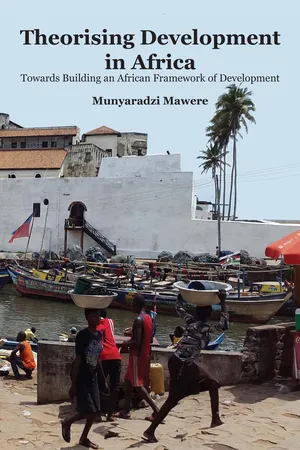 eBook - PDF
Theorising Development in Africa
Towards Building an African Framework of Development
- Munyaradzi Mawere(Author)
- 2017(Publication Date)
- Langaa RPCIG(Publisher)
For many years, the World Bank has defined absolute poverty as the condition of not 99 having the means to afford basic human needs with the one involved living below the US$1/day line. Due to depreciation of the US$, the poverty datum line per day has increased from US$1/day to US$1, 25/day. On the other hand, relative poverty is a condition of having fewer resources (or income) than others in a given society. In other words, relative poverty is calculated by comparing the highest segment of a given population with the lowest segment. Thus in a society (say A) where we have two members (X who is richer and P who is poor as compared to X), we can deduce, using such calculations, that P in society A is relatively poor than X in the same society. Mowafi (n.d: 3) summarises the distinction between absolute poverty and relative poverty more aptly when he says “while absolute poverty refers to the set of resources a person must acquire in order to maintain a minimum standard of living, relative poverty is concerned with how well off an individual is with respect to others in the same society.” This means that while the measure of absolute poverty may, in theory, be expected to remain stable, relative poverty line is expected to shift over time as the overall standard of living in a given society changes. Inequality and poverty Inequality generally refers to a condition of being unequal between and amongst members of the same society which creates imbalanced (or uneven) opportunities to access resources such as shelter, land, clothing, food and others. Inequality could be social, economic or some other ways that exclude other people from benefitting from a given resource. This means that inequality breeds disparity, difference, and discrepancies between and amongst people leading into comparisons such as poor and rich. It is on this note that many scholars perceive inequality as the obverse of poverty. eBook - PDF
- P.M. Ananth(Author)
- 2020(Publication Date)
- Society Publishing(Publisher)
7.2.3. Spatial Aspects of Inequality and Poverty Research observing the geography of income, wealth, and poverty has readily shown an unequal distribution within different nations and certain evidence shows a gradual increase in concentration. Discrimination of rich and poor is really important as it can effectively change the perception of people and affect their preferences for redistribution. More spatial inequality can eventually lead to calls for better devolution with greater freedom for different regions to increase the revenue and have complete control over the local decisions of spending, though there is an issue also, that the spatial inequalities will further increase because of the differences in the ability to increase the income- tax-raising power are usually linked to need negatively. 7.3. POVERTY Poverty, in general, is known as a multidimensional concept that fundamentally measures the deprivation levels encountered by a particular person, household, or community. However, it has been observed that most of the literature usually concentrates on the indicators of deprivation like food, income, access to housing, living standard, etc. (Figure 7.2). The exact choice of indicators to measure the levels of deprivation can be arbitrary and as a result, this may not imitate a full-scale measure of not achieved basic requirements in different social contexts. Such kind of difference generally leads to distinct notions such as social exclusion, vulnerability, and poverty being interchangeably used in the development discourse. Income Disparity: A Global Perspective 172 Figure 7.2. Poverty in the communities is getting increase day by day. Source: Image by Needpix.com. While allowing distinct variations in indicators of not achieved basic requirements, poverty is defined as a measure of deprivation of the fundamental requirements of a person, group, or community that needs a basic living standard. eBook - PDF
- Rhoda E. Howard-Hassmann(Author)
- 2010(Publication Date)
- Penn State University Press(Publisher)
On the other hand, poverty has increased and inequality has widened within some countries. within-country inequality and poverty One way to ensure that individuals enjoy economic human rights is to redistribute wealth from the richest to the poorest. Yet, although world pov- erty levels decreased during globalization, within some countries inequal- ity widened. Among countries, the Gini coefficient ranges from about 0.2 to 0.7; inequality is generally wider in sub-Saharan Africa and Latin America and lower in Asia and the advanced Western industrial democra- cies. For example, in Canada the Gini coefficient was 0.321 in 2005, in the globalization, poverty, and inequality 27 United States it was 0.450 in 2007, in Brazil it was 0.567 in 2005, and in Namibia it was 0.707 in 2003 (Central Intelligence Agency 2008). The benefits of economic growth are less likely to reach the poor in countries with high inequality (Ravallion 2003, 21). High within-country inequality often indicates that the society is organized in such a way that it is difficult for the poorest to participate meaningfully; it may also be an indicator of poor development prospects. With little buying power, the poor are less able to contribute to a country’s economic growth, and with poor education and in bad health they are less likely to be employable in growth industries. High within-country inequality may also affect the political process. Demoralized by the contrast between their own living conditions and those of the rich, the poor may withdraw from the politi- cal process, rebel, or even turn to crime. Finally, high inequality implies that the poor do not enjoy the human dignity on which all human rights are premised. It suggests that their governments do not take the poorest citizens’ needs seriously enough to devote resources to them. eBook - PDF
Development Economics
Theory, Empirical Research, and Policy Analysis
- Julie Schaffner(Author)
- 2013(Publication Date)
- Wiley(Publisher)
chapter Poverty, Inequality, and Vulnerability Economic growth makes development possible, but rapid rates of economic growth alone are no guarantee of widespread improvements in well-being. A positive rate of economic growth in Bangladesh, for example, tells us that incomes there are rising on average, but it does not tell us what is happening in the lives of poor Bangladeshi households, like those we met in Chapter 2. Their incomes might be stagnant or falling. And even if their incomes are rising, their health may be deteriorating or they might face rising uncertainty about the future. When evaluating development success at the macro level, therefore, most development analysts look not only to statistics on economic growth rates but also to an array of indicators describing how income gains are distributed across people and how lives are changing along nonincome dimensions. The indicators fall under three broad headings that are important in contemporary development discussions: poverty, inequality, and vulnerability. This chapter first examines definitions and common measures of poverty, inequality, and vulnerability. It then takes a first look at the theoretical and empirical links between economic growth, on the one hand, and reductions in poverty, inequality, and vulnerability, on the other. In so doing, it reveals further motivation for Part III’s more detailed study of the decisions, markets, and institutions through which development takes place. 5.1 Definitions and Measures Poverty, inequality, and vulnerability are multidimensional problems that may be measured in diverse ways. In what follows, we define some of the most commonly employed measures, highlighting how each measure describes a different feature of the socioeconomic landscape and how development analysts’ values and priorities might influence their choice of measures to use when evaluating development success. eBook - PDF
Global Turning Points
The Challenges for Business and Society in the 21st Century
- Mauro F. Guillén, Emilio Ontiveros(Authors)
- 2016(Publication Date)
- Cambridge University Press(Publisher)
The authors also sought to advance a speci fi c agenda about minimal government intervention in the economy when it comes to fostering growth, which is a much more debatable recipe for success at reducing poverty. But the issue that concerns us is whether inequality may get in the way of reducing poverty or not, given that the poor stand to gain from economic growth, as the cases of China and India amply demonstrate. A recent IMF study concludes that “ longer growth spells are robustly associated with more equality in the income distribution ” (Berg and Ostry 2011 : 3). The underlying mechanism has to do with how inequality (or the lack thereof) changes incentives. While some degree of inequality is inherent to the well-functioning of the market economy, rising inequality reduces the incentives for the poor to invest in education. It can also create the conditions for sociopolitical upheaval, as we shall analyze below. This argument is corroborated by the careful analysis of one of the most in fl uential development economists, William Easterly ( 2007 ), who found that structural inequality in the long run reduces per capita income because it undermines the quality of institutions in the country and discourages schooling. 84 A disparate world: inequality and poverty In sum, we can safely conclude that rising inequality within countries is likely to reduce economic growth and economic development, which in turn will make poverty reduction much harder. Thus, there is no paradox between rising inequality and decreasing poverty. Poverty came down at a time when inequality was also coming down. The recent spike in inequal-ity within countries since the turn of the twenty-fi rst century may well thwart further efforts at poverty reduction. A related aspect of the relationship between inequality and poverty has to do with the impact of globalization. No longer available |Learn more
World Social Report 2020
Inequality in a Rapidly Changing World
- Department of Economic and Social Affairs(Author)
- 2020(Publication Date)
- United Nations Publications(Publisher)
This growing evidence base has helped ensure consideration of income inequality as part of the international development agenda. This section summarizes what is now a broad and burgeoning technical literature on the topic. Considering that each indicator of economic inequality has strengths and limitations, the analysis uses several indicators to assess progress – or lack thereof. Section B illustrates how access to opportunities and resources continues to depend on group attributes such as ethnicity and race, migrant origin, and socioeconomic and disability status. The focus is on the dynamics of group-based inequality – that is, on whether development is equalizing opportunities among groups or, rather, is leaving some groups behind. Section C discusses why inequality matters, focusing on the effect of high and growing inequality on economic growth, poverty, social mobility and political stability. A. Economic inequality People’s opportunities in life and the future of their children are largely shaped by their income and wealth. Now five years into implementation, the 2030 Agenda has focused the attention of the international community on the predicament of growing economic inequality. Real and sustained progress in addressing it, however, has eluded most countries. The evidence presented in this section shows that economic inequality has been on the rise in most high-income countries over the past 30 years but has declined in several low- and middle-income countries. Where inequality has risen, increases have 8 Target 10.1 is to progressively achieve and sustain income growth of the bottom 40 per cent of the population at a rate higher than the national average by 2030. INEQUALITY IN A RAPIDLY CHANGING WORLD 21 been largely due to the rapid rise in top incomes. Even though economic inequality among countries has declined, it is still more pronounced than that observed within countries. Chances in life continue to depend on the country in which a person is born.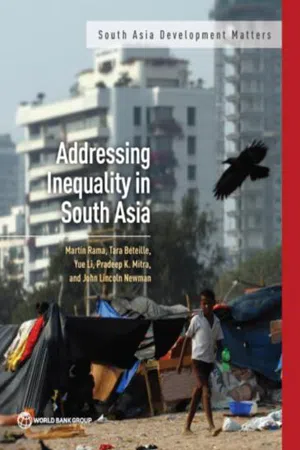 eBook - PDF
- Martin Rama, Tara Béteille, Yue Li, Pradeep K. Mitra, John Lincoln Newman(Authors)
- 2015(Publication Date)
- World Bank(Publisher)
1 37 Why Inequality Matters E quality carries an intrinsic value for most of the world’s great religions, including Buddhism, Christianity, Hinduism, Islam, and Judaism, as it does for most other faith traditions and ideologies— religious or secular. Every normative theory of social arrangements that has stood the test of time also seems to demand equality of something. What is meant by equality, however, var-ies from one faith to another and from one theory to another (Sen 1992). Reviewing what inequality means to different people and summarizing the long-standing intellec-tual pursuits around the concept would be an exceedingly ambitious undertaking. Instead, this report makes the deliberate choice of focusing on inequality of well-being among households. But justifying this choice requires revisiting a major debate in modern develop-ment economics, namely inequality of oppor-tunities versus inequality of outcomes. In A Theory of Justice , Rawls (1971) argued for both equality of opportunities and equality of outcomes. Roemer (1998a, 1998b), in contrast, made a case for com-pensating people for disadvantages related to circumstances but tolerating the remaining inequality of outcomes. Roemer’s conceptual-ization shifted the attention of development economics toward equality of opportunities— often defined in terms of access to basic services. In South Asia, in particular, many children suffer from discrimination in access to basic services because of their socioeconomic cir-cumstances, such as their caste or their gen-der. But between these circumstances and their actual well-being as adults lies a range of additional factors affecting how individuals function. The extent of mobility determines how opportunity is converted into well-being at later stages in life. A range of shocks can pull individuals who had similar opportuni-ties as children in completely different direc-tions over time.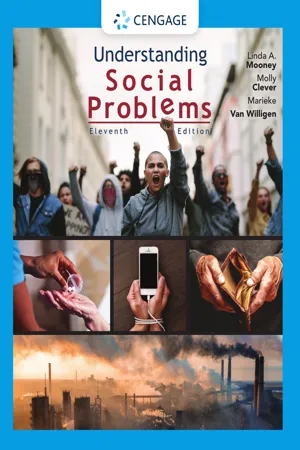 eBook - PDF
- Linda Mooney, Molly Clever, Marieke Van Willigen, , Linda Mooney, Molly Clever, Marieke Van Willigen(Authors)
- 2021(Publication Date)
- Cengage Learning EMEA(Publisher)
–Richard G Wilkinson @ProfRG Wilkinson Copyright 2022 Cengage Learning. All Rights Reserved. May not be copied, scanned, or duplicated, in whole or in part. Due to electronic rights, some third party content may be suppressed from the eBook and/or eChapter(s). Editorial review has deemed that any suppressed content does not materially affect the overall learning experience. Cengage Learning reserves the right to remove additional content at any time if subsequent rights restrictions require it. 219 Consequences of Economic Inequality and Poverty society, not just those at the bot- tom of the ladder. Wilkinson and Pickett explain this association as an outcome of social evaluative threat, in other words, inequal- ity increases stress and anxiety, which contribute to health prob- lems (through increased levels of the stress hormone cortisol) and social problems (through feelings of inadequacy and depression). Substandard Housing and Homelessness Having a roof over one’s head is considered a basic necessity. How- ever, for the poor, that roof may be literally caving in. In addition to having leaky roofs, housing units of the poor often have holes in the floor and open cracks in the walls or ceiling. Low-income housing units often lack central heating and air conditioning, sewer or septic systems, and electric out- lets in one or more rooms. Hous- ing for the poor is also often located in areas with high crime rates and high levels of pollution. Concentrated areas of poverty and poor housing in urban areas are called slums. One-third of urban populations in developing regions are living in slums. The United Nations estimates that 1 billion people in the world live in slums (UN-Habitat 2018). Over the course of a lifetime, an estimated 6 percent of the U.S. population will experience homelessness, however, these rates vary dramatically by race (Fusaro et al. 2018).
- P. Nel(Author)
- 2008(Publication Date)
- Palgrave Macmillan(Publisher)
As a result, unequal societies are characterized by a high incidence rate of violent conflict and strife (‘brutish’), and by the collapse of insti- tutions of property rights which encourages crime and exposes the lesser-endowed citizens to exploitation and rent-seeking behaviour by the rich and powerful (‘nasty’). By undermining both the rate and quality of economic growth, inequality also leaves large sections of a population with inadequate access to the material and spiritual resources that are necessary for a long and fulfilling life (‘poor’ and ‘short’). In short, this chapter shows that inequality holds serious con- sequences for human well-being in developing countries. Human well-being is a multifaceted concept and differences exist about the most appropriate way of conceptualizing and measuring it. 3 The lite- rature evoked by Amartya Sen (2000a) and Martha Nussbaum’s work (2000) suggests that relative well-being depends on a range of diversi- fied capabilities that people must have in order to live healthy, long, and fulfilling lives. Important as it is to consider the full range of these capabilities, and the fact that different individuals would need and desire different configurations of capabilities, there can be no doubt that Hobbes’ list of deprivations points towards a core set of capabilities: The capabilities to share in the fruits of social recipro- city and to enjoy security from violence, exploitation, and material deprivation. In what follows, I discuss each of these capabilities in turn, showing how and to what extent economic inequality as meas- ured by the EHII Gini index score impacts on empirical indicators that can be used to approximate each of these capabilities. As elsewhere in this book, the emphasis falls on seeking ways to formulate generaliza- tions that can stand up to empirical tests by identifying cross-sectional trends, rather than on developing detailed insights into the inequal- ity conditions of specific countries.
Index pages curate the most relevant extracts from our library of academic textbooks. They’ve been created using an in-house natural language model (NLM), each adding context and meaning to key research topics.

