Literature

Literary Archetypes
Literary archetypes are recurring symbols, characters, themes, or motifs that embody universal patterns and traits across different cultures and time periods. They serve as fundamental building blocks in storytelling, representing common human experiences and emotions. By tapping into these archetypes, writers can create relatable and resonant narratives that transcend specific cultural or historical contexts.
Written by Perlego with AI-assistance
10 Key excerpts on "Literary Archetypes"
 eBook - PDF
- Robert W. Hamblin(Author)
- 2022(Publication Date)
- University Press of Mississippi(Publisher)
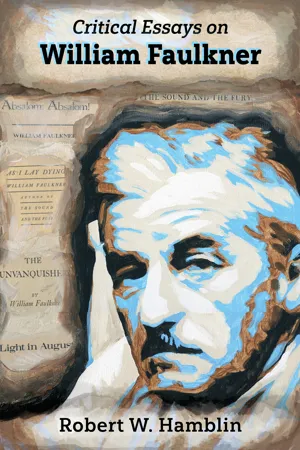
5 Faulkner, Myth, and Archetype human race. According to Jung, these archetypes, which he calls “primordial images,” have supplied the characters, situations, symbols, and themes of sto- ries from primitive societies onward throughout history. Examples of arche- types may be found in the symbolism typically associated with such images as water (creation, purification, redemption), circles (wholeness, unity), gar- dens (paradise, fertility), and various colors (red: blood, sacrifice; green: hope, progress; black: evil, melancholy, death; white: purity, innocence), as well as such universal character types as the Innocent, the Serpent, the Great Mother, the Wise Old Man, the Hero, the Trickster, and the Scapegoat. Writers being individuals in whom the working of the collective unconscious is particularly strong, these archetypal symbols, motifs, and character types will naturally find expression in literary works, quite independent of the conscious aware- ness or intention of the writers themselves. 2 While Jung’s theory of the collective unconscious provides one of the major underpinnings of the mythical method, giving it a psychological and even pseudo-scientific validity, it is important to recognize that writers and critics quickly broadened the definition of “archetype” to include cultural and conscious—as well as personal and unconscious—derivatives of older materials. It is this wider definition that Eliot alludes to in his mention of the importance of ethnology and The Golden Bough. Here his reference is almost certainly to the Cambridge Hellenists, an influential group of British scholars, including F. M. Cornford, Gilbert Murray, and Jane Harrison, as well as Frazer, who were busily applying recent anthropological findings to the examination of the mythic and ritualistic origins of Greek drama. Their aim was to dis- cover the essential and universal truths of existence buried, like treasures in ancient tombs, in the narratives embraced by early cultures.
- Arch G. Woodside, Suresh C. Sood, Arch G. Woodside, Suresh C. Sood(Authors)
- 2016(Publication Date)
- Emerald Group Publishing Limited(Publisher)
periods of history. Hence, there are similar archetypal patterns that mani-fest themselves in various forms amongst a variety of writings including stories, myths, and legends. The notable example of a mentor Merlin appears in the Arthurian Legends, the solitary hero and the Great Gatsby. Campbell (1973) writes of “the helpful crone and fairy godmother as a familiar feature of European fairy lore,” this female figure serves as a helper or guide to the novice in these stories. Independent of a biological basis or recurring patterns of thought in text, archetypes behave in essence akin to an instinct or tendency in humans to organize experiences. The archetype is ever ready to allow con-sumers to experience life events in a prescribed manner acting as a principle of guiding behavior but never before learnt. This supports both psychologi-cal and literary thinking as follows: … I do not intend that we “store” specific archetypal stories or myths, as C.G. Jung has proposed. That seems like misplaced concreteness. Rather, I mean a readiness or predisposition to organise experience into a narrative form, into plot structures and the rest. ( Bruner, 1990 ) This predisposition toward organizing allows for a consumer story to be the same overarching archetypal story shared between consumers while accommodating variations and nuances peculiar to individual circumstances. 3.2.1. Taxonomy of Archetypes Joseph Campbell saw the culturally coded archetypes as representing mean-ing in a culture via iconic representation. Archetypal imagery stemming from mythology, rituals, and symbolism, as available online at the Archive for Research in Archetypal Symbolism ( ARAS, 2010 ) stem from early imprinting ( Rapaille, 1995 ) of experiences. These archetypal images are fre-quently personified in dreams, myths and fairytales and underlie a common theme through the shared associations. eBook - PDF
Archetypes and the Fourth Gospel
Literature and Theology in Conversation
- Brian Larsen(Author)
- 2018(Publication Date)
- T&T Clark(Publisher)
It is like a deeply graven river-bed in the soul, in which the waters of life, that had spread hitherto with groping and uncertain course over wide but shallow surfaces, suddenly become a mighty river. This happens when that particular chain of circumstances is encountered which from immemorial time has contributed to the laying down of the primordial image. 2 Archetypes, Jung believes, appear in a variety of intellectual contexts, ranging from Plato’s concept of forms to Kant’s categories of human cognition and beyond. But rather than logical or metaphysical categories, Jung finds archetypes rooted in depth 2 Carl Jung, Contributions to Analytical Psychology , trans. H. G. Baynes and C. F. Baynes (London: Kegan Paul, 1928), 246–47. Introduction 3 psychology. 3 For Jung, archetypes are visible manifestations of something rooted in the deepest soil of human experience. 4 Frasier’s influential The Golden Bough pursues a similar line of thought from an anthropological perspective. 5 Whatever its source, in general terms the concept of archetype has a long history and has been widely used in a number of disciplines. One of those disciplines is literary criticism. Lee offers the following definition of archetypal literary criticism: Archetypal criticism focuses on the generic, recurring and conventional elements in literature that cannot be explained as matters of historical influence or tradition. It studies each literary work as part of the whole of literature. This kind of criticism accepts as its informing principle that archetypes—typical images, characters, narratives designs, themes, and other literary phenomena—are present in all literature and so provide the basis for study of its interconnectedness. 6 Or plainly, “The archetype is simply the typical at the highest power of literary generalization.” 7 The application of archetypal analysis to literature received its most comprehensive and influential treatment in Northrop Frye’s Anatomy of Criticism (1957).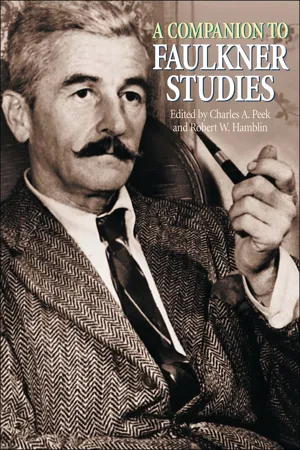 eBook - PDF
- Charles Peek, Robert W. Hamblin, Charles Peek, Robert W. Hamblin(Authors)
- 2004(Publication Date)
- Greenwood(Publisher)
Examples of archetypes may be found in the sym- bolism typically associated with such images as water (creation, purification, redemption), circles (wholeness, unity), gardens (paradise, fertility), and vari- MYTHIC AND ARCHETYPAL CRITICISM 3 ous colors (red: blood, sacrifice; green: hope, progress; black: evil, melancholy, death; white: purity, innocence), as well as such universal character types as the Innocent, the Serpent, the Great Mother, the Wise Old Man, the Hero, the Trick- ster, and the Scapegoat. Writers being individuals in whom the working of the collective unconscious is particularly strong, these archetypal symbols, motifs, and character types will naturally find expression in literary works, quite inde- pendent of the conscious awareness or intention of the writers themselves. 2 While Jung's theory of the collective unconscious provides one of the major underpinnings of the mythical method, giving it a psychological and even pseudo- scientific validity, it is important to recognize that writers and critics quickly broadened the definition of "archetype" to include cultural and conscious—as well as personal and unconscious—derivatives of older materials. It is this wider definition that Eliot alludes to in his mention of the importance of ethnology and The Golden Bough. Here his reference is almost certainly to the Cambridge Hel- lenists, an influential group of British scholars, including F. M. Cornford, Gilbert Murray, and Jane Harrison, as well as Frazer, who were busily applying recent anthropological findings to the examination of the mythic and ritualistic origins of Greek drama. Their aim was to discover the essential and universal truths of existence buried, like treasures in ancient tombs, in the narratives embraced by early cultures. eBook - PDF
- William K. Ferrell(Author)
- 2000(Publication Date)
- Praeger(Publisher)
During this evolutionary process, the meaning of the ritual becomes a part of the individual groups’ genetic makeup. What becomes reality is that myths, in their most basic form, are simply extensions of our human consciousness, being expressed as hopes and fears through the medium of art—what it means to be human. It would seem logical that these early cultures, by bringing to the light their deepest and most profound thoughts, are fulfilling a need for them Page 8 selves and their progeny. These ancient people’s lives were governed not by some high political, social, or economic system; rather, their primary concern was survival. Yet each culture developed a cadre of artists to create their narratives. These artists, labeled wizard, witch doctor, medicine man, or shaman, possessed intellectual abilities that separated them from the rest. They possessed the ability to interpret intuitively how people should live and to some extent why. It was their job to interpret the metaphysical world and place the information into a comprehensible form, the myth stories. We should not assume that all the stories from the myriad of cultures that have been preserved are profound, but it is not too difficult to separate those that are truly meaningful and thus assume archetypal status. Holman’s A Handbook to Literature defines archetype as a literary form that ‘‘applies to an image, a descriptive detail, a plot pattern, or a character type that occurs frequently in literature, myth, religion, or folklore and is therefore believed to evoke profound emotions in the reader because it awakens a primordial image in his unconscious memory and thus calls into play illogical but strong responses” (40–41). Archetypal stories connect to each other and connect to us through the same instinctive nature that we, through our collective unconsciousness, share with those who originated them. eBook - PDF
Text in the Natural World
Topics in the Evolutionary Theory of Literature
- Laurence A. Gregorio(Author)
- 2017(Publication Date)
- Peter Lang Group(Publisher)
What do archetypes have to do with the emergence of the literary faculty in evolution? Archetypes first give rise to the mythologizing function of the human imagination, if the observations of literature scholars, historians of religion and anthropologists the world over are correct. With a mythologizing mechanism in place (and Jung recognizes such an archetype, we might add), story is made possible because archetypes provide categories for organizing actions, characters and situations so that sense can be made of them, by orga- nizing them into what literary scholarship often terms fable, with thematic unity and with causation linking a series of events into plot. What adaptive advantages do archetypes—apart from the myth and lit- erature they bring to life—either confer or enhance? The answer, and again this addresses archetypes alone without regard for the art engendered by these psychic tools, has to do with the strengthening of social bonds within the spe- cies, something upon which early humans certainly depended as the species passed through its hunter-gatherer phase and subsequently made the move to dependency on agriculture. Archetypes in general provide community of mind (what, for example, would be the good of a myth in which no one else saw the wonder?). Social bonding resulting from community of images of thought would be an asset to any group seeking to fare better in the struggle for life. Through that community, humans achieve a sense of identity or belonging, form, function and device 129 shared values and protocols, all of which enhance the efforts of the species to make societies last. eBook - ePub
C. G. Jung
The Basics
- Ruth Williams(Author)
- 2018(Publication Date)
- Routledge(Publisher)
3 ArchetypesI will begin by setting out the Jungian definition of archetype. Then I will lightly touch on a few examples with which you will be familiar (although you may not have thought of them in this way), before including some archetypal themes which may not be so immediately obvious, such as number, slavery, love, war, home, sacrifice and meaning.DefinitionArchetype is a precise, technical term in Jungian speech which Jung first coined in 1919 in “Instinct and the Unconscious” (CW8 par. 270). Originally Jung had used the term ‘primordial image’ until he recognised that the manifestations of universal motifs were not limited to images but also arose as ideas, feelings, experiences and characteristic patterns of behaviour (Stevens 2006 p.76).Archetypes are not to be confused with stereotypes. In everyday speech, the meanings are sometimes conflated. A stereotype is used to describe a hackneyed, trite or oversimplified idea/person.Archetypes can be construed as:• significant events (such as birth, death, falling in love, marriage, war)• characters (Mother, Father, Hero, Wise Old Man/Woman etc)• symbols (heart, crucifix, mandalas), and motifs (adolescence, midlife crisis, heartbreak, abandonment, transcendence)Archetypes are not simply intellectual concepts but are imbued with feeling, which gives them their power to affect us in a most visceral fashion. You know when you are gripped by an archetype, such as falling in love. Or when you are possessed by the ‘witch’; or the ‘hero’. They have characteristics with which we may be familiar and encountering them in their archetypal form increases their impact significantly because archetypes are numinous (which means they are possessed of a spiritual quality/energy which increases their force and may be felt as overwhelming).The word ‘archetype’ comes from two Greek words which translate as ‘first pattern’ or prototype. The term as Jung initially envisaged it can be construed as conveying something like a template which then becomes fleshed out with personal/cultural/historical data, creating a more specific/refined image or form. ‘Mother’ is an archetype but our respective cultures will fill this image with greater levels of complexity and nuance, and our personal mothers will create a more specific image of what being a mother means to each of us. Jung: eBook - ePub
Jungian Literary Criticism
The Essential Guide
- Susan Rowland(Author)
- 2018(Publication Date)
- Routledge(Publisher)
potentials for certain sorts of images, meanings, or patterns of behaviour (Jung 1954a, CW9i: para. 136). Only their images are visible or knowable and these images are never a pure archetype. Rather, similar to an individual literary text re-working inherited forms in a creative union with contemporary elements, so too does the archetypal image evolve particularity from the way universal human inclinations are individually experienced.The various ways Jung chose to express the unknowable nature of archetypes do suggest literary creativity. Archetypes are mysterious personalities wholly independent from the ego (ibid.: para. 80). Alternatively, some archetypes are psychic processes, typical situations or transformations (ibid.). They are not inherited ideas, but rather the inherited possibility for ideas (ibid.: para. 136). The creativity of archetypes is inexhaustible, androgynous, equally capable of any and all genders. Therefore, they may occur in literature as the generative energy that links worlds distant in space, time and culture. For example, the following sixteenth century lines portray a yearning and a peril that is both foreign and recognisable.They flee from me that sometime did me seek With naked foot, stalking in my chamber. I have seen them gentle, tame, and meek, That now are wild and do not remember That sometime they put themself in danger To take bread at my hand; and now they range, Busily seeking with a continual change.(Sir Thomas Wyatt (1503–1542) www.poetryfoundation.org/poems/45589/they-flee-from-me )Here is an archetypal, universal human situation of pain and loss. Where once the speaker was desired, even hunted in his rooms, now the pursuers run away from him. Those who were domestic, wanting a relationship with him are now savage in the sense of having lives no longer attuned to his home. Later lines move from the image of wild animals to the explicitly human, not least in evoking clothes falling off the beloved woman’s body. Part of the archetypal patterning of this poem is the erotics of hunting where what can apply to the stalking of deer is also true for lovers. eBook - ePub
The American Father Onscreen
A Post-Jungian Perspective
- Toby Reynolds(Author)
- 2021(Publication Date)
- Routledge(Publisher)
These are the patterns which influence our psychological development and growth. They are also the patterns that interact with our culture, our personal experiences and family lives to bring shape and form to an individual psyche. The archetypes are the mechanism through which the psyche maintains its sense of balance and health. (2007, p. 25) Hauke, another leading post-Jungian writer on film, defines the archetype as ‘the unconscious structuring principles of the psyche which make our experience, perception and behaviour distinctly human’ (2001, p. 244). Singh’s discussion and definition of the archetype are directly quoted from Roger Brooke: A hypothetical construct, used to account for the similarity in the images that cluster around typically human themes and situations … anything said about the meaning of an archetypal image, or symbol, is only ever an approximation to this core. (2009, p. 121) This definition is clearly at odds with the more classical view of Stevens, refusing, as it does, to propose the archetype as a solid feature, more a theoretical reaction to existing human behaviour. This divergence of opinion is one of the problems facing anyone attempting to define the archetype as it excites and inspires so many differing views. For my own part, I disagree with Singh and Brooke’s cautious labelling of the archetype as theoretical in that whilst it is an unconscious phenomenon, it can be known, at the very least, by the archetypal images that it produces and the behaviours it generates. Clearly something is present; the fact that it is essentially unknowable apart from the images it creates does not necessarily make it a hypothetical construct. Similar to the Freudian unconscious, it is discernible via the traces it leaves within culture and language. For the purposes of our discussion here, the archetype can be defined as an unconscious but distinct nexus of dynamically essential psychic energy that is located within the collective unconscious eBook - PDF
The Politics of Rhetoric
Richard M. Weaver and the Conservative Tradition
- Bernard K. Duffy, Martin Jacobi(Authors)
- 1993(Publication Date)
- Praeger(Publisher)
Instead, he affirms only that truths partake of universal patterns within human minds and are transcendent only in this way. His distinction is the same one Burke makes between Plato and Kant when Burke says of Plato, "We need but take his universals out of heaven and situate them in the human mind (a process begun by Kant), making them not metaphysical but psychological" (Counter-Statement 48). Weaver's poets have access to these universal psychological truths, as we all do according to this view; their artistry is in the fullness with which they see and depict these truths and in their ability to prophesy persuasively about the effects of confrontations with these truths. Weaver thereby shifts the source of the poet's power from the supernat- ural to the natural, and his position on the origins of this power find sup- port in psychological and scientific theories. Artistic truths, like psycho- biologists' "biogrammatical triggers" and Carl Jung's archetypes of the collective unconscious, are innate and psychological. Jung says that arche- types are "universal images that have existed since the remotest times"; they are the stuff that informs myths and are "first and foremost psychic phenomena that reveal the nature of the soul" ("Archetypes of the Collec- tive Unconscious" 206-7). Of the importance of cultural myths, Weaver says that they are "the great symbolic structure which hold together the 72 The Politics of Rhetori imagination of a people and provide bases of harmonious thought and ac- tion" (VO 34). The archetypes that embody the myths reside in the depths of the collective unconscious, and poetry is able to drag from these depths, blurred and obscured though they are, glimpses of archetypes. Certain of these archetypal images of a collective unconscious are col- lected in the "metaphysical dream" of the culture. Tyrannizing images, analogous to archetypal images, are compelling embodiments of shared be- liefs and attitudes.
Index pages curate the most relevant extracts from our library of academic textbooks. They’ve been created using an in-house natural language model (NLM), each adding context and meaning to key research topics.

