Psychology

Media Influences on Aggression
Media influences on aggression refer to the impact of media content, such as violent video games, movies, and television shows, on aggressive behavior. Research in this area explores how exposure to violent media can desensitize individuals to violence, increase aggressive thoughts and emotions, and lead to aggressive behavior. Understanding these influences is important for addressing the potential negative effects of media on individuals' behavior.
Written by Perlego with AI-assistance
Related key terms
1 of 5
11 Key excerpts on "Media Influences on Aggression"
 No longer available |Learn more
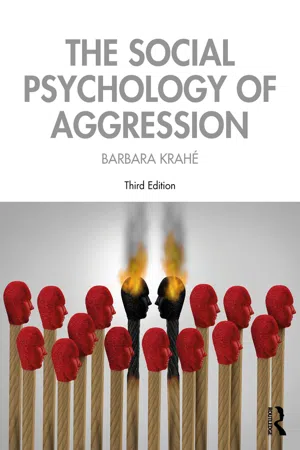
The Social Psychology of Aggression
3rd Edition
- Barbara Krahé(Author)
- 2020(Publication Date)
- Routledge(Publisher)
Chapter 6 M edia violence and aggression In the public debate on aggression and violence, media influences are blamed by many people for the apparently increasing levels of aggression, especially among children and adolescents. A cursory and occasional sampling is sufficient to convince the everyday observer that television programmes are full of aggressive episodes, often of a highly violent nature, that are easily accessible even to young viewers. The same is true for movies, comic books, and, in particular, video games. In addition, surveys regularly show that children are exposed to violent media for substantial durations from an early age. These observations lead many people to believe that the portrayal of violence in the media affects the level of aggression in society. Some critics even argue that media consumption in general, irrespective of its aggressive content, contributes to aggression and antisocial behaviour. At the same time, the claim that violent media contents cause users to become more aggressive has been vigorously disputed, not only by users and the media industry, but also by some researchers in the field. The present chapter will review the current state of the debate on the link between media violence and aggression, whereby media violence is defined as showing or describing behaviour by media characters intended to cause harm, especially severe physical harm, to others. The discussion is guided by the general proposition that the effects of media use on social behaviour depend on the content of the media stimuli. As we saw in Chapter 2, observational learning plays a major role in the acquisition and persistence of aggressive behaviour. For this process to happen, the observed behaviour needs to be aggressive in nature eBook - PDF
Cultures of Computer Game Concerns
The Child Across Families, Law, Science and Industry
- Estrid Sörensen(Author)
- 2018(Publication Date)
- transcript Verlag(Publisher)
An alternative assumption is that violence in entertainment media only causes some people to behave in a physically aggressive manner. Psychology explains the occurrence of acts of violence with risk and protective factors. While risk fac-tors raise the likelihood of such behaviour occurring, protective factors counteract it. With this in mind, the effect of violence in media as described above can only ever be understood as one puzzle piece which interacts with other risk factors to increase the probability of aggressive behaviour [3]. There are currently too few D OES E XPOSURE TO M EDIA V IOLENCE M AKE P EOPLE A GGRESSIVE ? | 275 scientific studies that enable us to evaluate the magnitude of the influence of vio-lent media in relation to other, well-documented risk factors. These can be traits such as a high degree of neuroticism or low tolerance, for instance, or provocations experienced in specific situations, stress level, parental negligence and bad role models within the peer group. As a rule, the more risk factors that concur in an individual, the greater the danger that he or she will actually behave aggressively [4]. [1] Kirsh, S. J., Mounts, J. R. & Olczak, P. V. (2006). Violent media consumption and the recognition of dynamic facial expressions. Journal of Interpersonal Violence, 21 (5), 571-584. doi:10.1177/0886260506286840 [2] Anderson, C. A., Shibuya, A., Ihori, N., Swing, E. L., Bushman, B. J., Sa-kamoto, A. & Saleem, M. (2010). Violent video game effects on aggression, empathy, and prosocial behaviour in eastern and western countries: A meta-analytic review. Psychological Bulletin , 136, 151-173. doi:10.1037/a0018251 [3] Gentile, D. A. & Bushman, B. J. (2012). Reassessing media violence effects using a risk and resilience approach to understanding aggression. Psychology of Popular Media Culture, 1 (3), 138-151. doi:10.1037/a0028481 [4] Markey, P. M. & Markey, C. N. eBook - PDF
- Saba Safdar, Catherine A. Sanderson(Authors)
- 2021(Publication Date)
- Wiley(Publisher)
Both those who experienced joy and those who felt frustration from playing the game reported higher aggression and competitiveness in real life. Furthermore, gender difference was found, and men were more competitive in playing video games than women (McGloin et al., 2016). These studies describe one way in which exposure to violence in the media can lead to aggression in daily life. This section examines several factors that contribute to the link between media violence and aggression, including modelling aggression, priming aggres- sive thoughts and emotions, creating physiological arousal, and reducing reactions to aggression. PROVIDES AGGRESSIVE MODELS One clear way in which exposure to violence on television can lead to aggression is via model- ling (Fitzpatrick, Oghia, Melki, & Pagani, 2016). As described in the previous section, people who are exposed to media violence learn aggressive ways to act and that such behaviour can get them rewards. One study with over 2,000 high school students revealed that students who watch wres- tling on television are more likely to engage in fighting with peers (DuRant, Champion, & Wolfson, 2006). In several tragic cases, attempts to mimic aggressive events seen on television and in the mov- ies have led to death. For example, the mass shooting that happened at Marjory Stoneman Douglas High School in Parkland, Florida, on February 14, 2018, was inspired by the Columbine shooting at a Colorado high school on April 20, 1999. 350 CHAPTER 11 AGGRESSION Corroborating this finding, Collier et al. (2016) conducted meta-analyses of over 50 studies examining how parental intervention in media consumed by their children (restrictive mediation, active mediation, and co-viewing) influenced child media use, aggression, substance use, and sexual behaviour. It was found that when parents restrict what their child can watch, it can significantly help to prevent negative sexual outcomes, as well as to reduce media time. eBook - ePub
Children's Responses to the Screen
A Media Psychological Approach
- Patti M. Valkenburg(Author)
- 2004(Publication Date)
- Routledge(Publisher)
CHAPTER 3Media Violence and Aggression
Of all issues related to children and the media, the influence of violent entertainment on aggressive behavior has undoubtedly received most research attention. This chapter provides insight into the current state of the empirical research on this topic. Consisting of four sections, the first discusses the different types of effect studies that have been conducted, identifying their strong and weak points. The second section reviews the various theories that attempt to explain why media violence may effect aggressive behavior, such as the social learning theory, cognitive script theory, arousal theory, and desensitization theory. The third section focuses on differentiations in the effects of media violence, such as the characteristics in media productions that stimulate or reduce aggressive behavior, and the factors influencing children's susceptibility to media violence. The final section concentrates on how adults can modify or counteract possible adversive effects of media violence on children.FIVE TYPES OF RESEARCH ON THE EFFECTS OF MEDIA VIOLENCE
Public concern about the effects of media violence on aggressive behavior existed long before television was introduced. However, the empirical research that investigates whether there is a basis for this concern did not burgeon until the 1960s, when growing fear about increasing delinquency in American inner cities developed. Since then, numerous studies have been conducted into the impact of media violence on the aggressive behavior of children and young people.To understand and critically evaluate the research into the impact of media violence on aggressive behavior, it is necessary to overview the nature of the re-search that has been conducted. The empirical research into the impact of media violence can be classified into five types of studies: (1) laboratory experiments, (2) field experiments, (3) correlational studies, (4) causal-correlational studies, and (5) meta-analyses. I start this chapter with a discussion of each of these types of research. eBook - PDF
- Catherine A. Sanderson, Saba Safdar(Authors)
- 2014(Publication Date)
- Wiley(Publisher)
Source: Fischer, P., & Greitemeyer, T. (2006). Music and aggression: The impact of sexual aggressive song lyrics on aggression-related thoughts, emotions, and behavior toward the same and the opposite sex. Personality and Social Psychology Bulletin, 32, 1165–1176. 421 How Do the Media Influence Aggression? Davidson, Putnam, and Larson (2000) introduced functional imaging to the study of aggression and found that a circuit consisting of the orbital frontal cortex, amygdala, and anterior cingulate cortex varies in activity level in such a way as to suggest a neural corre- late of aggression. Support for their hypothesis comes from studies in forensic psychology demonstrating that individuals with tendencies toward criminal and aggressive behaviour show reduced activity in the neural circuitry of emotion regulation (Birbaumer et al., 2005). Recent research in neuroscience reveals how exposure to violence in the media can have an impact in brain activity (Carnagey, Anderson, & Bartholow, 2007). In one study, research- ers examined event-related potentials in the brain (measured brain response to thoughts or perceptions) while participants were looking at either violent or nonviolent photographs (Bartholow, Bushman, & Sestir, 2006). Participants with a high history of exposure to vio- lent video games had lower brain reactivity in response to violent photographs, presum- ably because they were desensitized to such images. Unfortunately, reduced brain activity in response to violent stimuli predicted increased aggression in a later task. Other research suggests that playing violent video games leads to decreased activity in the portion of the brain that inhibits behaviour and suppresses emotional reactions (Weber, Ritterfeld, & Mathiak, 2006). These findings suggest that exposure to violence in the media could lead to increased rates of aggression over time, at least in part because such exposure may decrease neurological responses to such images. eBook - PDF
- George Comstock, Erica Scharrer(Authors)
- 2010(Publication Date)
- Academic Press(Publisher)
This leads to the plausible speculation that video games effects may peak among young males in pre- and early adolescence, while for television and film violence the largest effect sizes have been recorded in the research literature for very young children and for those of college age (Paik & Comstock, 1994; Comstock & Scharrer, 1999, pp. 287–297). These circumstances lead us to render a qualified verdict. We con-clude that the evidence at present identifies violent video game play as increasing aggressive and antisocial behavior among children and ado-lescents. We also conclude that violent video game play fits well within IV. The Effects of Violence in Video Games 237 238 Television Violence, Aggression, and Other Behavioral Effects the explanatory framework of the General Aggression Model (GAM) (Anderson & Dill, 2000; Anderson, Gentile & Buckley, 2007). We believe that the processes involved in the contribution of violent tele-vision and film entertainment to aggressive and antisocial behavior operate similarly in the case of violent video games. Finally, we con-clude that effects are greatest among males 10 to 14 in age. V. OTHER HYPOTHESES REGARDING MEDIA INFLUENCE The hypothesis that exposure to violent television or film entertain-ment increases aggressive or antisocial behavior by far has received the most attention of any possible effect of media violence. Frequently, this hypothesis has been extended to include presumed antecedents or correlates of such behavior—for example, hostile thoughts, aggressive personality traits, or attitudes and values favorable to causing others discomfort, inconvenience, or pain. Additional hypotheses, however, have focused on mental states and their consequences, and in each case there is evidence of media influence. Three hypotheses have received considerable attention: 1. Fear —the expectation that the depiction of some events by the media will incite reactions of fear or anxiety (Cantor, 2001). eBook - PDF
Human Aggression
Theories, Research, and Implications for Social Policy
- Russell G. Geen, Edward D. Donnerstein(Authors)
- 1998(Publication Date)
- Academic Press(Publisher)
A stronger reliance needs to be placed on educational and media interventions specifically directed at changing beliefs about violence. The au- thors' solution then is to err on the side of education and self-regulation rather than on legal regulation. Research evidence to date is consistent with a call for more educational interventions. Our ever-increasing knowledge of media effects, attitude formation and change, child development, and human behavior positions researchers as a force in the solution of the problem of media violence. REFERENCES American Medical Association. (1996). Physician guide to media violence. Chicago, IL: Author. American PsychologicalAssociation. (1993). Violence and youth: Psychology's response. Washington, DC: Author. Atkin, C. (1983). Effects of realistic TV violence vs. fictional violence on aggression. Journalism Quarterly, 60, 615-621. 196 STACY L. SMITH AND EDWARD DONNERSTEIN Bandura, A. (1965). Influence of models' reinforcement contingencies on the acquisition of imitative responses. Journal of Personality and Social Psychology, 1(6), 589-595. Bandura, A. (1971). Social learning theory. New York: General Learning Press. Bandura, A. (1986). Social foundations of thought and action: A social cognitive theory. Englewood Cliffs, NJ: Prentice-Hall. Bandura, A. (1994). Social cognitive theory of mass communication. In J. Bryant & D. Zillmann (Eds.), Media effects (pp. 61-90). Hillsdale, NJ: Erlbaum. Bandura, A., Ross, D., & Ross, S. A. (1961). Transmission of aggression through imitation of aggres- sive models. Journal of Abnormal and Social Psychology, 63, 575-582. Bandura, A., Ross, D., & Ross, S. A. (1961). Transmission of aggression through imitation of aggres- sive models. Journal of Abnormal and Social Psychology, 63, 575-582. Bandura, A., Ross, D., & Ross, S. A. (1963a). Imitation of film-mediated aggressive models. Journal of Abnormal and Social Psychology, 66(1), 3-11. eBook - PDF
Violence and Terror in the Mass Media
An Annotated Bibliography
- George Gerbner, Nancy Signorielli(Authors)
- 1988(Publication Date)
- Greenwood(Publisher)
279. Bandura, Albert. "What TV Violence Can Do to Your Child." In Otto N. Larsen, Violence and the Mass Media. New York: Harper and Row, 1968, pp. 123-139. Discussion of a series of experiments carried out at the Stanford psychological laboratories to provide a basis to evaluate the impact of televised aggression on preschool children. Results indicate that violence on television or in the movies affects viewers by reducing their inhibitions against violence, by increasing aggressive behavior, and by teaching them how to be aggressive or attack others. 280. Bandura, Albert. "A Social Learning Theory of Aggression." Journal of Communication, Vol. 28, No. 3, 1978, pp. 12-29. This theory of aggression stresses that people are not born with preformed repertoires of aggressive behavior; rather they must learn them. A complete theory of aggression must explain how aggressive patterns are developed, what provokes people to behave aggressively, and what sustains such actions after they have been initiated. The theory stresses the importance of observational learning in this process. In both laboratory and controlled field studies exposure to filmed violence shapes the form of aggression and increases interpersonal aggressiveness in children and adolescents. 281. Bandura, Albert. "Psychological Mechanisms of Aggression." In M. von Cranach, K. Foppa, W. Lepenies, and D. Ploog (eds), Human Ethology: Claims and Limits of a New Discipline. Cambridge, MA: Cambridge University Press, 1979. A review of social-psychological research on aggression. The neurobiological and psychological mechanisms of aggression are explored. Aggression is discussed as a multifaceted phenomenon that has many determinants and serves diverse purposes. The author outlines a schema of three components of aggression in social learning theory; the origins of aggression, the instigators, and the regulators of aggressive behavior. 78 eBook - PDF
- W. James Potter(Author)
- 1999(Publication Date)
- SAGE Publications, Inc(Publisher)
• Personality Type. The more aggressive the person is, the more influ-ence viewing of violence will have on that person's subsequent aggressive behavior (Comstock et al., 1978; Stein & Friedrich, 1972). And children who are emotionally disturbed are more susceptible to a disinhibition effect (Sprafkin et al., 1992). Lagerspetz and Engblom (1979) classified each of their participants into one of four personality types: aggressive, constructive, sub-missive, and anxious. In the play period following viewing, personality ac-counted for more differences than the type of film seen: The submissives and constructives showed an increase in aggressive play after seeing the violent film. 2.3. Viewer States. The degrees of physiological arousal, anger, and frustra-tion have all been found to increase the probability of a negative effect (Carlson et al., 1990; Geen, 1975; Geen & Berkowitz, 1967; Liebert & Schwartzberg, 1977; Schuck, Schuck, Hallam, Mancini, & Wells, 1971; Tannenbaum, 1972; Thomas, 1982; Worchel, Hardy, & Hurley, 1976; Zillmann, Bryant, Comisky, & Medoff, 1981; Zillmann & Sapolsky, 1977). • Aroused State. Portrayals (even if they are not violent) that leave viewers in an aroused state are more likely to lead to aggressive behavior (Berkowitz & Geen, 1966; Donnerstein & Berkowitz, 1981; Tannenbaum, 1972; Zillmann, 1971). Effects of Exposure to Media Violence 31 • Emotional Reaction. Viewers who are upset by the media exposure (negative hedonic value stimuli) are more likely to aggress (Rule & Ferguson, 1986; Zillmann et al., 1981). Such aggression is especially likely when people are left in a state of unresolved excitement (Comstock, 1985). In addition, Ekman et al. (1972) found that when boys who were watching violence on television exhibited happy facial expressions while viewing, they were more likely to be aggressive during subsequent play. eBook - PDF
Media Violence and its Effect on Aggression
Assessing the Scientific Evidence
- Jonathan Freedman(Author)
- 2017(Publication Date)
- University of Toronto Press(Publisher)
On first joining the group, children are influenced mainly to engage in milder behaviours such as watching violent programs and being slightly aggressive. This would produce a small relationship between exposure to media violence and aggression (because the group encouraged both). Later, they become involved in more serious acts of aggression. This would produce the pattern of statistical effects described above - a same-age correlation between viewing violence and aggression, and a positive coefficient between early violence viewing and later aggression even after early aggression was controlled. Another social factor might be the family situation. The multiwave study found that controlling for socioeconomic status reduced the plu-rality of positive effects for boys, and that controlling for school, SES (socio-economic states), and gender had the same effect for boys and girls combined. Even with these analyses, the pattern did not disappear 132 Media Violence and Its Effect on Aggression entirely; however, perhaps other controls would have accomplished that. In any case, focusing on social and economic factors seems reason-able. In most of the research, poorer children and those with less well educated parents tend to watch more television and more violent television and also to be more aggressive. Poorer parents -especially single parents -have relatively little time and energy to spend with their children. On average, they almost certainly are less able to closely supervise and monitor their children's behaviour. (Of course, there is great variation in this. Some poor parents undoubtedly supervise their children very closely, whereas some rich parents do not.) Also, poor children have fewer toys, games, and books and have access to fewer outside activities. If the parents spend little time with their children and the children have a limited number of leisure activities, it is likely they watch a lot of television. eBook - PDF
- Russell G. Geen, Edgar C. O'Neal, Russell G. Geen, Edgar C. O'Neal(Authors)
- 2013(Publication Date)
- Academic Press(Publisher)
There are five men in each group. The mean of 38.0 is significantly different from all others by planned comparisons. associated with reinforced aggression subsequently became more potent elicitors of aggression than stimuli not associated with reinforced aggression. To summarize briefly the reactive aggression hypothesis, we should note again, as we did at the beginning of this section, that the major em-phasis is the impulsive and irrational nature of some aggressive acts. As we have seen, such outbursts may be triggered by stimuli that have ac-quired strong associations with violent behavior, especially when such behavior has had reinforcing outcomes. Among such stimuli may be those emanating from the mass media of communication. Arousal states produced by frustration, attack, or other such antecedents may serve primarily to activate and intensify responses to these stimuli. Observed Violence and Arousal Displays of violence, such as those in the mass media, may be a potent source of emotional arousal, as anyone knows who has ever experienced physiological change while watching an aggressive movie or television program. These conditions of heightened arousal may activate aggressive responses to provocations, such as interpersonal attacks or in-sults (Tannenbaum, 1972), or summate with arousal produced by the provocation itself (Doob & Climie, 1972; Doob & Korschenbaum, 1973). OBSERVING VIOLENCE IN THE MASS MEDIA 209 Zillmann (1971) used this general line of reasoning to account for the results of an experiment in which male subjects were shown either an aggressive or an erotic film subsequent to aggressing against a provocateur. The erotic film, which showed a man and a woman en-gaged in precoital activity, had previously been shown to be more arous-ing physiologically than both a violent prizefight film and a third film having neither aggressive nor sexual meaning.
Index pages curate the most relevant extracts from our library of academic textbooks. They’ve been created using an in-house natural language model (NLM), each adding context and meaning to key research topics.

