- English
- ePUB (mobile friendly)
- Available on iOS & Android
eBook - ePub
Laser Ignition of Energetic Materials
About this book
The book gives an introduction to energetic materials and lasers, properties of such materials and the current methods for initiating energetic materials. The following chapters and sections highlight the properties of lasers, and safety aspects of their application. It covers the properties of in-service energetic materials, and also materials with prospects of being used as insensitive ammunitions in future weapon or missiles systems or as detonators in civilian (mining) applications. Because of the diversity of the topics some sections will naturally separate into different levels of expertise and knowledge.
Information
1
Historical Background
1.1 Introduction
Historically, mankind has tried to dominate both fellow human beings and other animals for as long as humans have been around. Some of this domination was achieved by killing other species. This had two aspects; survival and providing food.
Survival was dictated by the fact that many animals regarded humans as excellent sources of food and were quite capable of killing humans. Humans could have two approaches; avoid areas known to contain threatening species or produce devices – weapons – which would enable humans to kill the threatening animals. Humans then developed a taste for the flesh of some of the animals they had killed, thus increasing the sources of food available. As the human population increased, conflict between humans for food and territory increased, and so humans started to fight amongst themselves. By using weapons, humans could overcome physical disadvantages, and the optimum situation was to be able to kill your opponent before they could kill you.
The sword and lance effectively extended the human arm and kept your opponent at bay but, as lances became longer and longer, they became more unwieldy. A remote killing weapon was required. Simple javelins, which could be thrown at the opposition, extended the distance between opponents but required considerable physical stature and skill to achieve the correct flight trajectory for the javelin. Therefore, in order to overcome human physical limitations, mechanical advantage devices were used. The earliest weapons for remote killing were simple slings. These could carry a stone and were capable of accelerating it to high velocity by spinning the sling in a circle. When one of the supporting thongs was released, the stone would travel in an almost straight line from the point of release. Impact of the stone with an animal or human was capable of killing or injuring the animal.
With the development of wood manufacturing skills, bows and arrows became individual weapons or, when grouped together became a lethal hail of arrows which did not depend on the individual accuracy of the archer. The longbow was the ultimate in these weapons. Improved performance came when mankind developed stored energy devices, such as the ballista and crossbows, both of which stored mechanical energy in wooden elements but required winding up before loading the stone or arrow projectile. These overcame the limitations of physical stature required to effectively use the longbow. The ballista, Figure 1.1, was also used to fire barrels of burning oil at the enemy when they had formed shield walls against arrows. The oil container burst on impact and was one of the first deployments of pyrotechnics weapons.
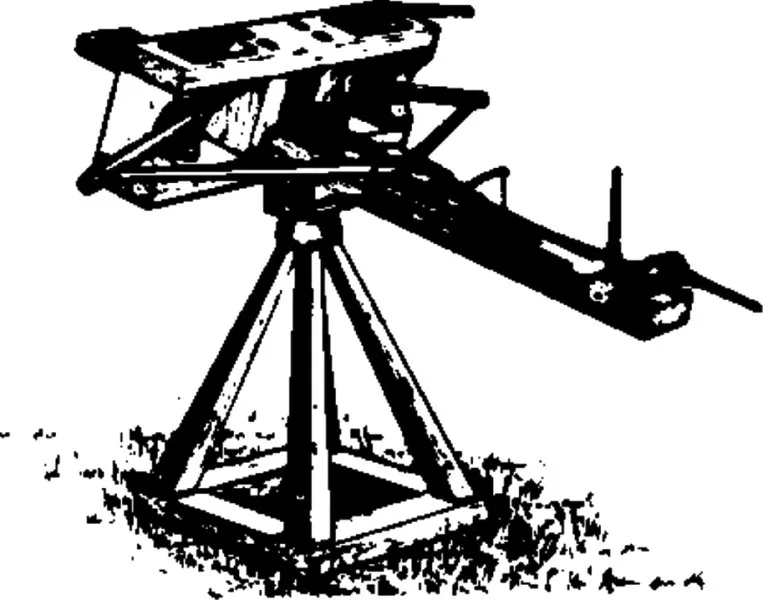
Figure 1.1 Small-scale basic ballista. Reproduced with permission from Cranfield University © 2014.
1.2 The Gunpowder Era
Meanwhile, the Chinese were developing the first chemical explosive gunpowder. The earliest record of this was around 800 AD. Initially, the mixture was for use as a medicine but, as with all good inventions, serendipity intervened and a batch of the medicine fell on to the fire over which it was been cooked; it very rapidly burnt with a flash, smoke and rushing sound. The potential for this was recognized, and the Chinese started to use the mixture as a propellant for their lances/javelins. When attached to the normal throwing spear, these early rockets could extend the useful range of the javelin by as much as a factor of two.
It took about 400 years for the technology to appear in Europe, when a cleric Roger Bacon was credited with discovering the properties of gunpowder. He was so afraid of its properties that he hid the details of the composition in code in religious manuscripts. The recognition of its propellant properties resulted in the manufacture of muzzle-loaded cannons.
An idea of the chronology of the development of the science is given in Table 1.1 on page 3.
Table 1.1 Some significant discoveries in the history of explosives.
| Explosive | Credited to | Nationality | Date |
| Gunpowder | {Anon {R. Bacon | (Probably Chinese) English | Before 1000 c.1246 |
| First battlefield cannon | Italian | c 1326 | |
| Crecy bombard | English | 1346 | |
| Hand cannon | Italian | c 1364 | |
| Leonardo's mortar | Leonardo da Vinci | Italian | c 1483 |
| Mercury fulminate | Kunckel | German | c.1690 |
| Picric acid1 | Woulff | German | 1771 |
| Mercury fulminate percussion cap | Forsyth | Scottish | 1825 |
| Nitrocellulose2 | {Pelouze {Schonbein | French German | 1838 1845 |
| Nitroglycerine | Sobrero | Italian | 1846 |
| TNT | Wilbrand | German | 1863 |
| The fulminate detonator | Nobel | Swedish | 1865 |
| Dynamite | Nobel | Swedish | 1867 |
| Ammonium nitrate mixtures | Ohlsson & Norrbin | Swedish | 1867 |
| Tetryl | Mertens | German | 1877 |
| N.C. propellants3 | {Schultze {Vieille | German French | 1864 1884 |
| Ballistite | Nobel | Swedish | 1883 |
| Cordite | Abel & Dewar | British | 1889 |
| Lead azide | Curtius | German | 1890 |
| PETN | Rheinisch-Westfaelische Sprengstoff A.G | German | 1894 |
| RDX | Henning (patented by Herz) | German German | 1899 1920 |
| NTO | von Manchot and Noll | German | 1905 |
| Tetrazene | Hoffman & Roth | German | 1910 |
| HMX | |||
| Slurry explosives | Cook | USA | 1957 |
| Emulsion explosives | |||
| PBX |
1 Explosive properties of Picric acid were not investigated for a further 100 years.
2 Pelouze produced NC but did not understand the chemistry whereas Schonbein correctly identified the chemistry and made some propellant uses.
3 Schultze produced the first successful powdered NC propellants and Vielle was credited with the first NC propellants for rifled barrel guns.
1.3 Cannons, Muskets and Rockets
The barrels of the first cannon systems were simple wooden devices made from hollowed-out tree trunks, which were wrapped with wet ropes for added strength. The development of bronze and cast iron technology led to the production of iron-barrelled guns, such as the Bombard, used at the battle of Crecy in 1346 (shown in Figure 1.2). This weapon used solid projectiles in the form of either suitable stone or cast metal (e.g. iron) spheres. The development of these weapons resulted in the foundation of the Board of Ordinance in 1414. The operators of these weapons were known as Bombardiers – a term still used for an artilleryman with the rank of corporal in the British Army.
In the fifteenth century, cannon were also deployed at sea on warships and these enabled the opposition to be destroyed at distance without needing to engage in hand to hand combat. A number of cannons were deployed along each side of the ship, and a broadside could be loosed at the opposition. Typical cannons are shown in Figure 1.3, which displays a typical army cannon in the foreground and a naval cannon in the background.
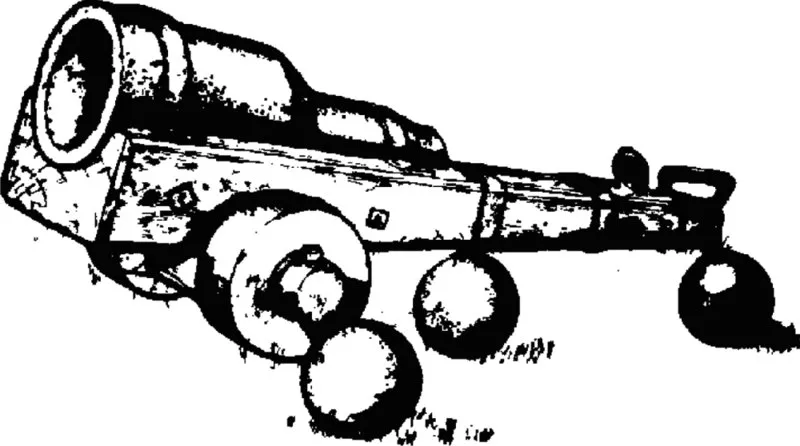
Figure 1.2 Crecy bombard 1346. Reproduced with permission from Cranfield University © 2014.
The naval cannon was mount...
Table of contents
- Cover
- Title Page
- Copyright
- Dedication
- About the Authors
- Preface
- Acknowledgements
- Chapter 1: Historical Background
- Chapter 2: Review of Laser Initiation
- Chapter 3: Lasers and Their Characteristics
- Chapter 4: General Characteristics of Energetic Materials
- Chapter 5: Recent Developments in Explosives
- Chapter 6: Explosion Processes
- Chapter 7: Decomposition Processes and Initiation of Energetic Materials
- Chapter 8: Developments in Alternative Primary Explosives
- Chapter 9: Optical and Thermal Properties of Energetic Materials
- Chapter 10: Theoretical Aspects of Laser Interaction with Energetic Materials
- Chapter 11: Laser Ignition – Practical Considerations
- Chapter 12: Conclusions and Future Prospect
- Index
- End User License Agreement
Trusted by 375,005 students
Access to over 1.5 million titles for a fair monthly price.
Study more efficiently using our study tools.
Frequently asked questions
Yes, you can cancel anytime from the Subscription tab in your account settings on the Perlego website. Your subscription will stay active until the end of your current billing period. Learn how to cancel your subscription
No, books cannot be downloaded as external files, such as PDFs, for use outside of Perlego. However, you can download books within the Perlego app for offline reading on mobile or tablet. Learn how to download books offline
Perlego offers two plans: Essential and Complete
- Essential is ideal for learners and professionals who enjoy exploring a wide range of subjects. Access the Essential Library with 800,000+ trusted titles and best-sellers across business, personal growth, and the humanities. Includes unlimited reading time and Standard Read Aloud voice.
- Complete: Perfect for advanced learners and researchers needing full, unrestricted access. Unlock 1.5M+ books across hundreds of subjects, including academic and specialized titles. The Complete Plan also includes advanced features like Premium Read Aloud and Research Assistant.
We are an online textbook subscription service, where you can get access to an entire online library for less than the price of a single book per month. With over 1.5 million books across 990+ topics, we’ve got you covered! Learn about our mission
Look out for the read-aloud symbol on your next book to see if you can listen to it. The read-aloud tool reads text aloud for you, highlighting the text as it is being read. You can pause it, speed it up and slow it down. Learn more about Read Aloud
Yes! You can use the Perlego app on both iOS and Android devices to read anytime, anywhere — even offline. Perfect for commutes or when you’re on the go.
Please note we cannot support devices running on iOS 13 and Android 7 or earlier. Learn more about using the app
Please note we cannot support devices running on iOS 13 and Android 7 or earlier. Learn more about using the app
Yes, you can access Laser Ignition of Energetic Materials by S Rafi Ahmad,Michael Cartwright in PDF and/or ePUB format, as well as other popular books in Physical Sciences & Industrial & Technical Chemistry. We have over 1.5 million books available in our catalogue for you to explore.