Reaction Mechanisms in Organic Synthesis
eBook - ePub

Reaction Mechanisms in Organic Synthesis

  1. English
  2. ePUB (mobile friendly)
  3. Available on iOS & Android
eBook - ePub

Reaction Mechanisms in Organic Synthesis

About this book

Organic chemistry is a core part of the chemistry curricula, and advanced levels texts often obscure the essential framework underlying and uniting the vast numbers of reactions as a result of the high level of detail presented. The material in this book is condensed into a manageable text of 350 pages and presented in a clear and logical fashion, focusing purely on the basics of the subject without going through exhaustive detail or repetitive examples. The book aims to bridge the gap between undergraduate organic chemistry textbooks and advanced level textbooks, beginning with a basic introductory course and arranging the reaction mechanisms according to an ascending order of difficulty. As such, the author believes the book will be excellent primer for advanced postgraduates

Reaction Mechanisms in Organic Synthesis is written from the point of view of the synthetic organic chemist, enabling students and researchers to understand and expand on reactions covered in foundation courses, and to apply them in a practical context by designing syntheses. As a further aid to the practical research student, the content is organized according to the conditions under which a reaction is executed rather than by the types of mechanisms. Particular emphasis is placed on controlling stereospecificity and regiospecificity.

Topics covered include:

  • Transition metal mediated carbon-carbon bond formation reactions
  • Use of stabilized carbanions, ylides and enamines for carbon-carbon bond formation reactions,
  • Advanced level use of oxidation and reduction reagents in synthesis.

As a modern text, this book stands out from its competitors due to its comprehensive coverage of recently published research. The book contains specific examples from the latest literature, covering modern reactions and the latest procedural modifications. The focus on contemporary and synthetically useful reactions ensures that the contents are specifically relevant and attractive to postgraduate students and industrial organic chemists.

Frequently asked questions

Yes, you can cancel anytime from the Subscription tab in your account settings on the Perlego website. Your subscription will stay active until the end of your current billing period. Learn how to cancel your subscription.
At the moment all of our mobile-responsive ePub books are available to download via the app. Most of our PDFs are also available to download and we're working on making the final remaining ones downloadable now. Learn more here.
Perlego offers two plans: Essential and Complete
  • Essential is ideal for learners and professionals who enjoy exploring a wide range of subjects. Access the Essential Library with 800,000+ trusted titles and best-sellers across business, personal growth, and the humanities. Includes unlimited reading time and Standard Read Aloud voice.
  • Complete: Perfect for advanced learners and researchers needing full, unrestricted access. Unlock 1.4M+ books across hundreds of subjects, including academic and specialized titles. The Complete Plan also includes advanced features like Premium Read Aloud and Research Assistant.
Both plans are available with monthly, semester, or annual billing cycles.
We are an online textbook subscription service, where you can get access to an entire online library for less than the price of a single book per month. With over 1 million books across 1000+ topics, we’ve got you covered! Learn more here.
Look out for the read-aloud symbol on your next book to see if you can listen to it. The read-aloud tool reads text aloud for you, highlighting the text as it is being read. You can pause it, speed it up and slow it down. Learn more here.
Yes! You can use the Perlego app on both iOS or Android devices to read anytime, anywhere — even offline. Perfect for commutes or when you’re on the go.
Please note we cannot support devices running on iOS 13 and Android 7 or earlier. Learn more about using the app.
Yes, you can access Reaction Mechanisms in Organic Synthesis by Rakesh Kumar Parashar in PDF and/or ePUB format, as well as other popular books in Physical Sciences & Industrial & Technical Chemistry. We have over one million books available in our catalogue for you to explore.

Chapter 1

Synthetic Strategies

1.1 An introduction to organic synthesis

Organic synthesis is the construction of complex organic compounds from simple starting compounds by a series of chemical reactions. The compounds synthesized in nature are called natural products. Nature provides a plethora of organic compounds and many of these possess interesting chemical and pharmaceutical properties. Examples of natural products include cholesterol (1.1), a steroid found in most body tissues; limonene (1.2), a terpene found in lemon and orange oils; caffeine (1.3), a purine found in tea leaves and coffee beans; and morphine (1.4), an alkaloid found in opium.
images
The synthesis of organic molecules is the most important aspect of organic chemistry. There are two main areas of research in the field of organic synthesis, namely total synthesis and methodology. A total synthesis is the complete chemical synthesis of complex organic molecules from simple, commercially available or natural precursors. Methodology research usually involves three main stages, namely discovery, optimization and the study of scope and limitations. Some research groups may perform a total synthesis to showcase the new methodology and thereby demonstrate its application for the synthesis of other complex compounds.
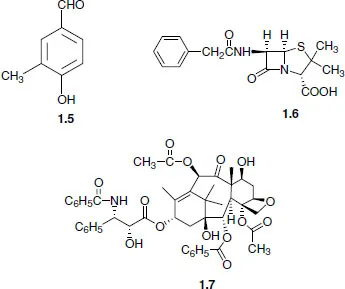
The compound to be synthesized may have a small carbon framework such as vanillin (1.5) (vanilla flavouring) or have more complex carbon framework such as penicillin G (1.6) (an antibiotic) and taxol (1.7) (used for the treatment of certain types of cancer). However, three challenges must be met in devising a synthesis for a specific compound: (1) the carbon atom framework or skeleton that is found in the desired compound must be assembled; (2) the functional groups that characterize the desired compound must be introduced or transformed from other groups at appropriate locations; and (3) if stereogenic centres are present, they must be fixed in a proper manner.
images
Thus, in order to understand the synthesis of a complex molecule, we need to understand the carbon–carbon bond forming reactions, functional groups interconversions and stereochemistry aspects.
Carbon–carbon bond forming reactions are the most important tool for the construction of organic molecules. The reaction in which one functional group is converted into another is known as functional group interconversion. The spatial arrangements of the substituents can have a significant impact on the reactivity and interaction towards other molecules. Many chiral drugs must be made with high enantiomeric purity because the other enantiomer may be inactive or has side effects. Thus, there is a need to develop methods to synthesize organic compounds as one pure enantiomer and the use of these techniques is referred to as asymmetric synthesis (section 1.5).
Therefore, carbon–carbon bond forming reactions, asymmetric synthesis, the design of new chiral ligands, environmental-friendly reactions and atom economical syntheses are the major aims of present-day research.

1.2 Retrosynthetic analysis (disconnection approach)

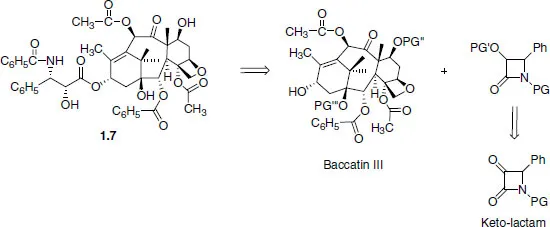
E. J. Corey1,2 brought a more formal approach to synthesis design, known as retrosynthetic analysis. The analysis of synthesis in reverse manner is called retrosynthetic analysis or alternatively a disconnection approach. Retrosynthetic analysis or retrosynthesis is a technique for solving problems in synthesis planning, especially those presented by complex structures. In this approach, the synthesis is planned backwards starting from a relatively complex product to available simpler starting materials (Scheme 1.1). This approach requires construction of a carbon skeleton of the target molecule, placing the functional groups and appropriate control of stereochemistry.
Scheme 1.1 Retrosynthetic analysis of taxol
images
Table 1.1 Synthetic versus retrosynthetic analysis
Direction Synthetic Retrosynthetic
Step Reaction Transform or retro-reaction
Arrow used in graphical depiction → ⇒
Starting structure Reactant Target
Resulting structure Product Precursor
Substructure required for operation Reacting functionality Retron
The terminology used in synthetic and retrosynthetic analysis is shown in Table 1.1.
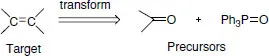
A transform in the case of the retrosynthetic counterpart of the Wittig reaction is shown below:
images
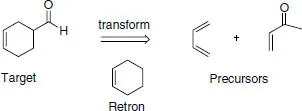
In a similar manner, the retrosynthetic analysis of the Diels–Alder reaction is represented below:
images
The retrosynthetic step involving the breaking of bond(s) to form two (or more) synthons is referred to as a disconnection. A synthon is an idealized fragment, usually a cation, anion or radical, resulting from a disconnection. One must select disconnections which correspond to the high yielding reactions.
Functional group interconversion is the process of the transformation of one functional group to another to help synthetic planning and to allow...
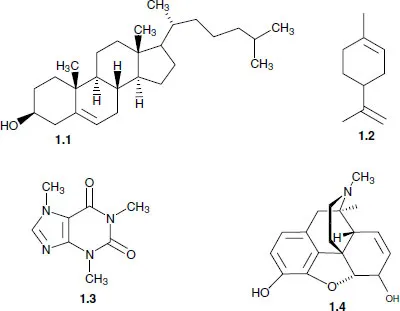
Table of contents

  1. Cover
  2. Contents
  3. Series
  4. Title
  5. Copyright
  6. Dedication
  7. Foreword
  8. Preface
  9. About the Author
  10. Abbreviations
  11. Chapter 1: Synthetic Strategies
  12. Chapter 2: Reactive Intermediates
  13. Chapter 3: Stabilized Carbanions, Enamines and Ylides
  14. Chapter 4: Carbon–Carbon Double Bond Forming Reactions
  15. Chapter 5: Transition Metal-Mediated Carbon–Carbon Bond Forming Reactions
  16. Chapter 6: Reduction
  17. Chapter 7: Oxidation
  18. Chapter 8: Pericyclic Reactions
  19. Index