- English
- ePUB (mobile friendly)
- Available on iOS & Android
eBook - ePub
About this book
The book is not an exposition on digital signal processing (DSP) but rather a treatise on digital filters. The material and coverage is comprehensive, presented in a consistent that first develops topics and subtopics in terms it their purpose, relationship to other core ideas, theoretical and conceptual framework, and finally instruction in the implementation of digital filter devices. Each major study is supported by Matlab-enabled activities and examples, with each Chapter culminating in a comprehensive design case study.
Information
CHAPTER 1
INTRODUCTION TO DIGITAL SIGNAL PROCESSING
INTRODUCTION
Signal processing refers to the art and science of creating, modifying, manipulating, analyzing, and displaying signal information and attributes. Since the dawn of time, man has been the quintessential signal processor. Human signal processing was performed using one of the most powerful signal processing engines ever developed: the 25-W human brain that commits about 10 W to information processing. In that context, this biological processor is comparable to the Intel mobile Pentium III processor. As humans evolved, other agents were added to man’s signal processing environment and repertoire, such as information coding in the form of intelligible speech, art, and the written word. In time, communication links expanded from local to global, global to galactic. It was, however, the introduction of electronics that enabled the modern information revolution. Analog electronics gave rise to such innovations as the plain old telephone system (POTS), radio, television, radar/sonar, and a host of other inventions that have revolutionized man’s life and landscape. With the introduction of digital technologies over a half century ago, man has witnessed a true explosion of innovations that has facilitated the replacement of many existing analog solutions with their digital counterparts. In other instances, digital technology has enabled solutions that previously never existed. Included in this list are digital entertainment systems, digital cameras, digital mobile telephony, and other inventions. In some cases, digital technology has been a disruptive technology, giving rise to products that were impossible to envision prior to the introduction of digital technology. An example of this is the now ubiquitous personal digital computer.
ORIGINS OF DIGITAL SIGNAL PROCESSING (DSP)
Regardless of a signal’s source, or the type of machine used to process that information, engineers and scientists have habitually attempted to reduce signals to a set of parameters that can be mathematically manipulated, combined, dissected, analyzed, or archived. This obsession has been fully realized with the advent of the digital computer. One of the consequences of this fusion of man and machine has been the development of a new field of study called digital signal processing, or DSP. Some scholars trace the origins of DSP to the invention of iterative computing algorithms discovered by the ancient mathematicians. One early example of a discrete data generator was provided in 1202 by the Italian mathematician Leonardo da Pisa (a.k.a. Fibonacci*). Fibonacci proposed a recursive formula for counting newborn rabbits, assuming that after mating an adult pair would produce another pair of rabbits. The predictive Fibonacci population formula is given by Fn = Fn − 1 + Fn − 2 for the initial conditions F0 = 1, F−1 = 0, and produces a discrete-time sequence that estimates the rabbit population {1, 1, 2, 3, 5, 8, 13, 21, 34, 55, …} as a function of discrete-time events. However, those who promote such action as evidence of DSP are overlooking the missing “D-word.” DSP, at some level, must engage digital technology in a signal processing activity.
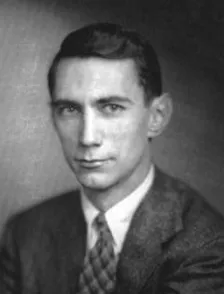
Claude Shannon (1916–2001)
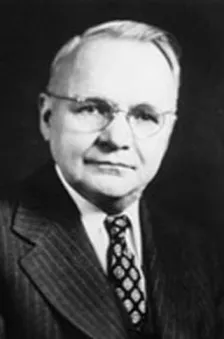
Harry Nyquist (1889–1976)
The foundations of DSP were laid, in fact, in the first half of the 20th century. Two agents of change were Claude Shannon and Harry Nyquist. They both formulated the now celebrated sampling theorem that described how a continuous-time signal can be represented by a set of sample values. Such representations were found to be so mathematically perfect that the original signal could be reconstructed from a set of sparsely distributed samples. Nyquist conjectured the sampling theorem in 1928, which was later mathematically demonstrated by Shannon in 1949. Their work provided the motivation and framework to convert signals from a continuous-time domain to and from the discrete-time domain. The sampling theorem, while being critically important to the establishment of DSP, was actually developed prior to the general existence of digital technology and computing agents. Nevertheless, it was the sampling theorem that permanently fused together the analog and discrete-time sample domain, enabling what is now called DSP.
During the 1950s, and into the 1960s, digital computers first began to make their initial appearance on the technology scene. These early computing machines were considered to be far too costly and valuable to be used in the mundane role of signal analysis, or as a laboratory support tool by lowly engineers. In 1965, Cooley and Tukey introduced an algorithm that is now known as the fast Fourier transform (FFT) that changed this equation. The FFT was indeed a breakthrough in that it recognized both the strengths and weaknesses of the classic von Neumann general-purpose digital computer architecture of the day, and used this knowledge to craft an efficient code for computing Fourier transforms. The FFT was cleverly designed to distribute data efficiently within conventional memory architectures and perform computation in a sequential manner. Nevertheless, early adopters of the FFT would not necessarily have considered themselves to be DSP engineers since the field of DSP had yet to exist.
Since the introduction of the FFT, digital computing has witnessed a continuous growth, synergistically benefiting from the increasing computing power and decreasing cost of digital technologies in accordance with Moore’s law.* The digital systems available in the 1970s, such as the general-purpose minicomputer, were capable of running programs that processed signals in an off-line manner. This process was often expensive, time-consuming, required considerable programming skills, and generally remained compute bound, limiting the type of applications that could be considered. During this epoch, early attempts witnessed the use of dedicated digital logic to build rudimentary digital filters and radar correlators for national defense purposes. These activities caused engineers and scientists to recognize, for the first time, the potential of DSP even though there was no formal field of study called DSP at that time. All this, however, was about to change.
In 1979, a true (albeit quiet) revolution began with the introduction of the first-generation DSP microprocessor (DSP μp) in the form of the Intel 2920, a device called an “analog signal processor” for marketing reasons. The 2920 contained on-chip analog-to-digital converter (ADC)/digital-to-analog converter (DAC), and a strengthened arithmetic unit that was able to execute any instruction in 200 µs. While initiating a fundamentally important chain of events that led to the modern DSP μp, by itself, the 2920 was a marketplace disappointment appearing in a few 300 b/s modems. It was, nevertheless, warmly embraced by a small but active group of digital audio experimenters. With the second generation of DSP μp (e.g., Texas Instruments TMS320C10), DSP technology exposed its potential value in a host of new applications. For the first time, products with embedded DSP capabilities became a practical reality establishing DSP as an enabling technology. The field, now called DSP, rapidly developed in the form of academic programs, journals, and societies, and developing infrastructure technology. These beginnings swiftly gave way to a third and fourth gen...
Table of contents
- Cover
- Series page
- Title page
- Copyright page
- Dedication
- PREFACE
- CHAPTER 1 INTRODUCTION TO DIGITAL SIGNAL PROCESSING
- CHAPTER 2 SAMPLING THEOREM
- CHAPTER 3 ALIASING
- CHAPTER 4 DATA CONVERSION AND QUANTIZATION
- CHAPTER 5 THE Z-TRANSFORM
- CHAPTER 6 FINITE IMPULSE RESPONSE FILTERS
- CHAPTER 7 WINDOW DESIGN METHOD
- CHAPTER 8 LMS DESIGN METHOD
- CHAPTER 9 EQUIRIPPLE DESIGN METHOD
- CHAPTER 10 FIR: SPECIAL CASES
- CHAPTER 11 FIR IMPLEMENTATION
- CHAPTER 12 CLASSIC FILTER DESIGN
- CHAPTER 13 IIR DESIGN
- CHAPTER 14 STATE VARIABLE FILTER MODELS
- CHAPTER 15 DIGITAL FILTER ARCHITECTURE
- CHAPTER 16 FIXED-POINT EFFECTS
- CHAPTER 17 IIR ARCHITECTURE ANALYSIS
- CHAPTER 18 INTRODUCTION TO MULTIRATE SYSTEMS
- CHAPTER 19 MULTIRATE FILTERS
- BIBLIOGRAPHY
- APPENDIX
- GLOSSARY
- INDEX
Trusted by 375,005 students
Access to over 1.5 million titles for a fair monthly price.
Study more efficiently using our study tools.
Frequently asked questions
Yes, you can cancel anytime from the Subscription tab in your account settings on the Perlego website. Your subscription will stay active until the end of your current billing period. Learn how to cancel your subscription
No, books cannot be downloaded as external files, such as PDFs, for use outside of Perlego. However, you can download books within the Perlego app for offline reading on mobile or tablet. Learn how to download books offline
Perlego offers two plans: Essential and Complete
- Essential is ideal for learners and professionals who enjoy exploring a wide range of subjects. Access the Essential Library with 800,000+ trusted titles and best-sellers across business, personal growth, and the humanities. Includes unlimited reading time and Standard Read Aloud voice.
- Complete: Perfect for advanced learners and researchers needing full, unrestricted access. Unlock 1.5M+ books across hundreds of subjects, including academic and specialized titles. The Complete Plan also includes advanced features like Premium Read Aloud and Research Assistant.
We are an online textbook subscription service, where you can get access to an entire online library for less than the price of a single book per month. With over 1.5 million books across 990+ topics, we’ve got you covered! Learn about our mission
Look out for the read-aloud symbol on your next book to see if you can listen to it. The read-aloud tool reads text aloud for you, highlighting the text as it is being read. You can pause it, speed it up and slow it down. Learn more about Read Aloud
Yes! You can use the Perlego app on both iOS and Android devices to read anytime, anywhere — even offline. Perfect for commutes or when you’re on the go.
Please note we cannot support devices running on iOS 13 and Android 7 or earlier. Learn more about using the app
Please note we cannot support devices running on iOS 13 and Android 7 or earlier. Learn more about using the app
Yes, you can access Digital Filters by Fred Taylor in PDF and/or ePUB format, as well as other popular books in Technology & Engineering & Electrical Engineering & Telecommunications. We have over 1.5 million books available in our catalogue for you to explore.