![]() 1 Sustainability in the wider context
1 Sustainability in the wider context![]()
1 Making the right choices – the sustainability dilemma
Exactly how do we make the right, sustainable choices? There are so many competing facts and figures, and a lot of conflicting information from well-meaning campaigners, business, government, non-governmental organisations (NGOs) and trade bodies. Everyone has their own agenda and opinions.
There is a wealth of information from industry as well as legislation and standards, and a lot of this creates conflict, which reflects opposing interests. In any process, in business or buildings, there are differing views and product loyalties, but in the field of sustainability the problem seems to be particularly acute. How do we cut through this? How do we create a transparent system to make sure that everyone gets the right technologies? There are so many claims for products, which can be oversold and mis-sold. Therefore we need a level playing field involving testing, transparency and accountability.
Objectivity is the key
I would argue that the only solution is to be as objective as possible. I would always approach every claim – and every adjustment to conventional technology such as proposed enhancements and renewable technology developments – as the ultimate sceptic.
I work on the basis that you always have to ask the question: does it do what it says on the tin? Just because the product literature says it does something, it doesn’t mean it does. Even when it does do what it says on the tin, is it the right application for the task in hand? How is it going to be used and, of course, we must ask: what is its true impact throughout the product’s lifecycle and how will it affect and influence the wider project or building? (This goes back to the implementation of the hierarchy of energy, as referenced in the introduction and throughout this book.)
So the key is to be objective. What I believe is lacking are national standards that would truly test every new sustainable product or claim. I think that, as an industry and a society, we are too trusting, and we often like to believe that things are the best thing since sliced bread. A good sales person can exert enough influence for the wrong decision to be made, and it may be only years later that the buyer, specifier or user finds out that the technology doesn’t live up to expectations.
An example would be large utility companies who, at the time of writing, are in the process of setting up significant installation businesses for renewable and low carbon technologies, as they see this as a major market opportunity. The big question is whether this will encourage the tendency for sales people to get carried away with sales targets. As more grants are made available for funding, the take-up of renewable and low carbon technology in the UK, we have to ask how that might influence the selling process. How often have you heard a sales person admit that this isn’t right for you and thereby not making a sale? This will be a crucial point, in that there need to be very responsible business attitudes, so internal systems of these large companies need to guard against mis-selling. As an industry, we’ve got to guard against risking our good reputation with potentially false claims or poor standards, like those associated with the double-glazing industry’s reputation of the 1970s and 1980s.
Legislation and industry and government action are required to police the markets and give people the correct information. If the industry is left to function as a free market, poor products will eventually fall out of the system, but this will only work to a small degree. And what will be the cost to the consumer as this process takes place? Surely it’s better to get this right from the start? It’s always been a difficult situation, because governments want to stay clear of market intervention. And yet, they are still intervening in the market by providing significant stimulus to encourage the take-up of sustainable products – for example, look at the feed-in tariff, or the renewable heat incentive.
It would seem logical for the government to set up national standards for energy-saving and low carbon renewable technologies, to test and rate all these new products. This would give the products more credibility. There could be a common label, independently verified, to promote rigorous national standards, perhaps based on an A to G rating model to measure and benchmark the operational performance. Put simply, A is good – G is not so good. This would create a simple and transparent system, which would allow everyone to judge the relative merits of what a technology does or claims to achieve. This could be done by a range of institutions, perhaps academic bodies, or the National Physical Laboratory. There are also other institutions that have a very good reputation, such as the Building Research Establishment (BRE) or the Building Services Research and Information Association (BSRIA). They could also become part of this scheme, and once this scheme is established, we would then have a baseline to start to judge relative merits of each technology.
At the same time we also need detailed notes and guidance for a product’s actual application in non-domestic and domestic buildings. This is because too often at the moment we see a perfectly good technology misused because it has been wrongly specified. For example, using the sun to warm water with solar thermal panels is a good idea in principle, but only if there is a reasonable need for hot water. Putting lots of panels into a small dwelling or office would not be a good application of the technology. So this would need to be part of any national standard involving the use of good application guides. In other words the technology could be A rated for good performance, but be totally wasted if installed in an inappropriate application.
Rigorous standards and enforcement
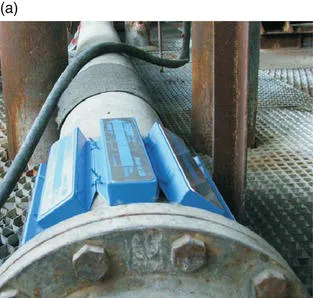
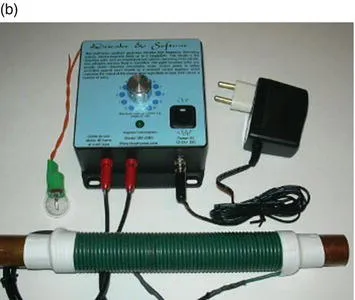
In the marketplace itself, we need to have a rigorous policing of the standards, and to stamp out bad practices. We have existing legislation that can be enforced by local authority trading standards bodies. These departments need to be significantly enhanced, since they tend to be very small and have limited resources. An example of helpful legislation would be the The Consumer Protection from Unfair Trading Regulations (2008). This superseded the Trade Descriptions Act (1968). This would provide a legal course for claims to be challenged and taken through the courts if necessary. I’ve always been astounded at how many ‘snake oil sellers’ there are in the market, an example of which might be magnets on fuel lines or water pipes, which claim to have energy saving properties. I believe these claims to be totally false, because when any of these sales people are challenged to provide robust independent scientifically verified reports, they can never do so. The ultimate question I always pose is if the technology is that good, why aren’t manufacturers fitting them as standard? Why aren’t the Automobile Association (AA) recommending them for vehicles? In fact, on the contrary, there have been scientifically based reports (Crabb 1997) and a review of tests carried out that showed little value in these claims and dismissed these particular products (Allen 2005; Powell 1998). The Advertising Standards Authority (ASA), upheld complaints from two local authority trading standards departments on misleading statements made by one of these companies (ASA 2002). Yet these companies continue to sell and advocate these products, and people still continue to buy a virtually useless bit of kit. It astounds me when I see these devices fitted in some major companies’ plant rooms (Figure 1.1a). The same applies to Electronic ‘descalers’ (Figure 1.1b) which are also questionable as to their effectiveness.
Ultimately we need a strong lead from the government to set up a system of standards for testing and transparent labelling. This should provide all the necessary information to show what actually works and contributes positively to increasing performance and saving energy. This government information could also be extended to the true costs and real-life performance of a whole range of sustainable or low carbon products. It’s always nice to feel like you’re doing your bit for the environment, which has led to a fashion for what I have termed ‘green bling’ (Malina 2010). Even Prime Minister David Cameron had a wind turbine fitted to his own house (Guardian 2012), which in reality was nothing more than an expensive ornament. The same applies to photovoltaic (PV) panels.
So many times in my career, I’ve come across people not understanding that PVs are a developing technology and that at the present time the efficiency and conversion rate of sunlight to electricity is 12–18% at best. Obviously this technology has to start somewhere, and those people that do adopt this early should be made aware of this. This is why the government intervened in the market and created a feed-in tariff (FIT), as it was the only viable way of making it financially economic. Saying that, this could still be regarded as marginal when compared to other technologies and practices, which have a far better energy and environmental performance and provide the best return technologically and financially, very much following the steps of the energy hierarchy methodology. If the FIT was removed or reduced significantly, then this would pull the rug from under the market. So the reality has to be laid out for everyone to see.
There are a number of variants to the way that companies are approaching this market. An example would be the 25 year leasing of domestic or commercial roof space, whereby a company gets the owner of a building to sign an agreement to allow them to place PV panels on the building’s roof. The leasing company get the benefit of the FIT, and the building occupier gets the benefit of the free electricity. This is useful from a sustainability point of view, but the offset of the payments for electricity use is far less than the feed-in tariff. That gives you guaranteed money for electricity generated. The owner would get the free electricity, but this is normally priced at 3p per unit, not the 43p offered by the original feed-in tariff prior to its reduction in 2012. The payback was in theory 10 years, but realistically you’re not guaranteed the weather pattern that is often used to calculate the projected performance and payback. There are also hidden costs for maintenance: panels will degrade over time, and the inverter devices – which transform the resulting (weather-variable) DC current of the PV panels into alternating current – degrade and will need replacing on average every eight years. They’re also costly, being priced at up to £2000, depending on the PV installation size
The other dilemma here is that the companies are leasing these PV panels on a contract signed by the owner of the building, which typically provides for a 25 year lease. So what happens if the owner moves? The contracts are designed so that when the building is sold, the new owner inherits the lease. You would think from a marketing point of view, that most people would agree, and see the benefit for the incentive of free electricity, and more so as prices rise. This may be true for some, but quite a few people would not like to have that feeling of loss of possession. This may create unforeseen problems when the original owner attempts to sell, and this underlines the fact that these things need to be properly thought through. The idea of this type of leasing agreement has been applied in the past to a whole range of major industrial products and plants, and it may well be a financial mechanism for encouraging the take-up of the developing renewable and lower carbon technologies, as many people whether domestic or business owners will not have capital to pay up front for them.
It’s the same with the Green Deal: the funding will be made available and all the payback will be funded from the electricity bills as the savings are made. Here again there is a potential pitfall: if you went out tomorrow and brought photovoltaics and then sold the house in three or four years, the panels would be seen as a bonus by some but as a negative by others. It may even be an obstacle to selling, as the contract is with the house rather than the owner. It’s a fixed item. We will need a culture change, however, to see this as part of the house, like the newly installed double glazing. Personally, I don’t see it as a problem, but it’s new and there may be resistance.
I often find myself in a difficult position, as I have wanted to see more deployment of these renewable and low carbon technologies. Nevertheless, in conversation with people who passionately believe in renewables for energy production, I often find myself almost playing devil’s advocate. This is because I always come back to the principle and concept of the energy hierarchy. Surely it is better to reduce energy use in the first place rather than to spend more money and waste energy generating even more? Even with sustainable energy, we don’t want to get into a culture where we think of electricity as too cheap to meter. This concept is a lesson from history, as this is what many in the nuclear energy industry were forecasting in the 1950s. Nuclear failed to deliver, and this demonstrates the impossibility of truly cost-free energy. We don’t want people to think that energy is limitless. There are always going to be some costs, including the energy that goes into manufacturing the PV panels, which are loaded with embodied energy and resources. They also require additional maintenance to the associated infrastructure and can degrade in performance over their operational lifetime.
Througho...