
- 192 pages
- English
- ePUB (mobile friendly)
- Available on iOS & Android
eBook - ePub
Adult Attachment
About this book
Attachment theory is one of the most popular theoretical perspectives currently influencing research in close relationships. Extremely interesting and well written, Adult Attachment draws together the diverse strands of attachment research as it exists today into a coherent account. Authors Judith Feeney and Patricia Noller give particular emphasis to dating and marital relationships and how an individual?s early social experiences affect intimacy later in life. Given that the quality of intimate relationships is a key determinant of subjective well-being, concepts explored by the authors are clearly of both theoretical and practical importance. This volume presents theory and empirical work on attachment as well as on issues of conceptualization and measurement, on the relationship between attachment and working models, and on the links between attachment and other central life tasks such as work and faith. The encompassing and readable Adult Attachment is an excellent supplementary text for advanced undergraduate and graduate students in psychology, sociology, communication, family studies, and social work and for professors, practitioners, and researchers in these and related fields.
Information
1

Attachments in Infancy and Beyond
Recent attempts to understand adults’ close relationships from an attachment perspective have been strongly influenced by Bowlby’s seminal work on attachment and loss (Bowlby, 1969, 1973, 1980). Bowlby explores the processes by which bonds of affection are formed and broken; in particular, he describes how infants become emotionally attached to their primary caregivers and emotionally distressed when separated from them. Bowlby is convinced that children need a close and continuous relationship with a primary caregiver to thrive emotionally. He sees existing psychological theories as inadequate for explaining the intense attachment of infants and young children to the caregiver and their dramatic responses to separation (Bretherton, 1992).
Bowlby (1969, 1973, 1980) draws on concepts from many sources, including ethology, psychoanalysis, and control systems theory. His theory is also based on a broad range of observations: of disturbed and maladjusted children in clinical and institutional settings, of infants and young children who were separated from their primary caregivers for varying periods of time, and of nonhuman primate mothers and their offspring. The theoretical formulation provides a detailed account of the development, function, and maintenance of attachment behavior.
The principles of attachment that Bowlby (1969, 1973, 1980) describes have made a vast theoretical contribution to the understanding of child development, but also have had a profound influence on psychological practice. Based on the work of Bowlby and his colleagues and students, revolutionary changes were made in the care of institutionalized children. Practices in hospitals have also changed dramatically to minimize separations between parents and children. For example, mothers are encouraged to spend a lot of time with their hospitalized children and to perform basic caring tasks for them (e.g., feeding). The events surrounding childbirth have also changed significantly, with fathers now present at births and both fathers and siblings being able to interact with the mother and the new infant while they are still in the hospital. In addition, Bowlby’s work has clear implications for those dealing with loss, grief, and mourning, and, more generally, for parenting behavior and child care practice. Because research into adult attachment has its basis in Bowlby’s work, this chapter is devoted to outlining the main principles of his formulation and to assessing the relevant empirical evidence.

Bowlby (1973) defines attachment behavior as “any form of behavior that results in a person attaining or retaining proximity to some other differentiated and preferred individual, usually conceived as stronger and/or wiser” (p. 292). Infant behaviors such as sucking, clinging, following, smiling, and crying tend to elicit protective responses from adult caregivers and bind the infant and caregiver to each other.
Given strong parallels between human attachment behavior and similar attachment behavior shown by nonhuman primate species, Bowlby (1973) hypothesizes that attachment behavior is adaptive, having evolved through a process of natural selection. That is, attachment behavior offers infants a survival advantage, protecting them from danger by keeping them close to the primary caregiver (usually the mother).
Bowlby (1973) further hypothesizes that attachment behavior forms an organized behavioral system. That is, a varied set of behaviors (e.g., smiling, crying, visual following) serves a single function (maintaining proximity to the caregiver). Bowlby sees the attachment system as one of several interlocking behavioral systems, including exploration, caregiving, and sexual mating, designed to ensure survival and procreation. From the viewpoint of the outsider, the goal of the attachment system is to regulate behaviors designed to establish or maintain contact with an attachment figure; from the viewpoint of the attached person, the goal of the system is “felt security.”
Bowlby (1973) describes behavioral systems as homeostatic control systems that maintain a relatively steady state between the individual and his or her environment. The attachment system maintains a balance between exploratory behavior and proximity-seeking behavior, taking into account the accessibility of the attachment figure and the dangers present in the physical and social environment. Infants perceive separation (actual or threatened) from their attachment figure as a threat to their well-being and try to remain within the protective range of this figure. The protective range is reduced in strange or threatening situations; hence, attachment behavior is more likely to be evident when the infant is in a situation of apparent threat.
Although Bowlby (1973) defines attachment behavior in terms of the goal of proximity maintenance, other interrelated functions of attachment have been identified. In general, the attachment figure serves as a secure base from which the infant feels safe to explore and master the environment. That is, in situations of no apparent threat, the infant is likely to engage in exploratory ac tivity rather than in attachment behavior. On the other hand, proximity to the caregiver is most likely to be sought when the infant perceives a threat in the immediate environment. Thus, the caregiver also serves as a safe haven to which the infant can turn for reassurance and comfort on such occasions. According to Bowlby, proximity seeking (including protest at separation), secure base, and safe haven are the three defining features, and the three functions, of an attachment relationship.
The basic features of the attachment system are illustrated in Figure 1.1. The model depicted in Figure 1.1 shows how attachment and exploratory behaviors are influenced by the child’s perceptions of the availability and responsiveness of the caregiver. When children feel secure and confident in the caregiver, they are likely to be more sociable and less inhibited and to engage in more play and exploration. On the other hand, when children feel insecure and lack confidence in the caregiver, they are likely to respond either with fear and anxiety or with defensiveness. Responding with fear and anxiety leads to such behaviors as crying and clinging, whereas responding with defensiveness leads to avoidance of close contact with the attachment figure.
Bowlby (1973) regards the attachment system as having evolved through natural selection and considers the processes comprising this system to be universal in human nature. Complementing this normative view of attachment behavior, he also addresses the issue of individual differences, as can be seen in the following key propositions of attachment theory (p. 235):
- When an individual is confident that an attachment figure is available whenever he or she desires it, that person is much less prone to either intense or chronic fear than an individual who, for any reason, has no such confidence.
- Confidence in the availability of attachment figures, or lack of such confidence, is built up slowly during the years of immaturity (infancy, childhood, and adolescence); whatever expectations are developed during those years tend to persist relatively unchanged throughout the rest of life.
- The varied expectations of the accessibility and responsiveness of attachment figures that individuals develop during the years of immaturity are tolerably accurate reflections of the experiences those individuals have actually had.
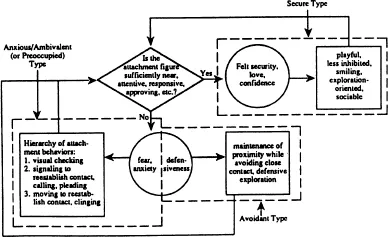
Figure 1.1. Basic Features of the Attachment System
SOURCE: Hazan and Shaver (1994).
Central to these key propositions is the role of the individual’s expectations of attachment figures. Expectations about the availability and responsiveness of attachment figures are thought to be incorporated into inner working models of attachment. Working models of attachment reflect memories and beliefs that develop from the individual’s early experiences of caregiving; they are carried forward into new relationships, where they play an active role in guiding perceptions and behavior.
Expectations concerning the availability and responsiveness of the caregiver are based on two variables: whether the attachment figure is judged to be the sort of person who generally responds to calls for support and protection, and whether the self is judged to be the sort of person toward whom others are likely to respond in a helpful way. These two variables (models of other and models of self) are logically independent; because both originate from actual interpersonal transactions, however, they tend to be complementary and mutually confirming (Bowlby, 1973).
Working models of the self and of social interaction partners usually develop in the context of relatively stable family settings and tend to persist throughout life. Because working models exert a continuing influence on behavior, attachment patterns are thought to show considerable stability over time. The concept of working models is taken up in greater detail in Chapter 5. The issue of the stability of attachment patterns is controversial, however, and is taken up at several later points in this book.
Describing Individual Differences in Attachment
The first detailed studies of individual differences in attachment were conducted by Ainsworth (who is heavily influenced by the ideas of Bowlby and who, in turn, has made major contributions to Bowlby’s thinking). Ainsworth conducted naturalistic observations of mother-infant interactions in Uganda and in Baltimore, Maryland; each of these projects involved intensive longitudinal data collection obtained during a series of home visits.
On the basis of these observations, Ainsworth and her colleagues (Ainsworth, Blehar, Waters, & Wall, 1978) suggest that organized patterns of infant behavior can be used to identify styles of infant-mother attachment. Ainsworth et al. delineate three such styles: insecurely attached-avoidant (Group A), securely attached (Group B), and insecurely attached-resistant or anxious-ambivalent (Group C). The patterns of infant behavior that define these three styles are systematically related to the amount of interaction between mother and infant and to the mother’s sensitivity and responsiveness to the infant’s needs and signals. These patterns are related to the variations in behavior shown in Figure 1.1: Group A children respond with defensiveness and avoidance of close contact; Group B children are sociable and engage in high levels of exploration; Group C children respond with anxious behaviors such as crying and clinging. Table 1.1 shows the behavioral characteristics of the three styles, together with the associated patterns of caregiving.
| Table 1.1 | Characteristics of the Three Major Infant Attachment Styles |
| Attachment Style | Infant Behavior | Quality of Caregiving |
| Avoidant (Group A) | Detachment behaviors; avoidance of caregiver | Rejecting; rigid; hostile; averse to contact |
| Secure (Group B) | Active exploration; upset by separation; positive response to caregiver | Available; responsive; warm |
| Anxious-ambivalent (Group C) | Protest behaviors; distress at separation; anger-ambivalence to caregiver | Insensitive; intrusive; inconsistent |
Ainsworth et al. (1978) developed a laboratory procedure for assessing attachment style based on an infant’s reactions to a series of separations from and reunions with the mother and a friendly stranger. The Strange Situation technique was designed to create mild but gradually increasing stress for the infant (see Table 1.2) so that consequent changes in the behavior of the infant toward the attachment figure could be observed. The Strange Situation technique has been widely used to assess infant attachment style and to study the relationship between early attachment behavior and later social and emotional development. (Criticisms have been leveled, however, at the tendency of researchers to rely on this technique as an assessment tool at the expense of considering behavior in more naturally occurring social situations.)
It is important to remember that the Strange Situation technique focuses on the infant’s behavior toward the primary caregiver when distressed by the departure of the caregiver and the approach of a stranger. According to attachment theory, attachment styles reflect rules that guide responses to emotionally distressing situations; that is, attachment theory can be described as a theory of affect regulation (Kobak & Sceery, 1988; Sroufe & Waters, 1977). Secure attachment is thought to reflect rules that allow the individual to acknowledge distress and to turn to others for comfort and support; avoidant attachment reflects rules that restrict the willingness to acknowledge distress and to seek support; anxious-ambivalent attachment is marked by hypersensitivity toward negative affect and by heightened expressions of distress.
| Table 1.2 | Series of Incidents Used in Strange Situation |
- Mother and infant together in a strange room with toys
- Mother and infant joined by female stranger
- Mother leaves the infant with the stranger
- Mother returns and stranger leaves
- Mother leaves infant alone
- Stranger returns
- Mother returns
SOURCE: Ainsworth et al. (1978).
It should be noted that revisions to the tripartite classification have been proposed. Because considerable differences in attachment behavior have been observed within attachment groups, more fine-grained categories have been devised. In particular, researchers have identified four subgroups within the secure classification based on differences in the quality of separation distress (see Belsky & Rovine, 1987).
In addition, researchers have often been unable to classify all infants into the three attachment categories outlined by Ainsworth and her colleagues (1978). For this reason, researchers have proposed a fourth group (the disorganized-disoriented category of insecure attachment; Main & Solomon, 1986). This group tends to show contradictory reunion behavior (e.g., approaching the attachment figure with head turned away), confusion or apprehension in response to the approaching attachment figure, and changeable or depressed affect. These characteristics overlap with those defining another recently proposed fourth group: the A-C group, which involves a combination of avoidant (Group A) and resistant (Group C) reunion behavior. The latter group has been reported by a number of infant researchers (Crittenden, 1985; Radke-Yarrow, Cummings, Kuczynski, & Chapman, 1985). Both of these extra categories are particularly relevant to the classification of infants in social risk groups (e.g., maternal depression and maltreatment; see Bretherton, 1987; Carlson, Cicchetti, Barnett, & Braunwald, 1989; Spieker, 1986).
Describing Multiple Attachments
Bowlby (1984) places strong emphasis on the bond between mother and infant and tends to see the role of fathers as secondary. (This emphasis reflects views prevailing at the time; see Bretherton, 1992. Later researchers and students in the attachment tradition have addressed the bond between infants and fathers in some detail.) According to Bowlby, the child is biased toward attaching himself or herself especially to one figure, mainly the mother.
Despite the significance attributed to the infant-mother bond, Bowlby (1984) clearly recognizes that a human infant can, and usually does, become attached to more than one figure (Ainsworth, 1979). In fact, Bowlby maintains that by 9 or 10 months of age, most children have multiple attachment figures. He maintains, however, that the principal caregiver becomes the primary attachment figure and the one who is preferred as a safe haven in times of distress. Other figures are secondary and supplementary to that primary figure, with fathers and older siblings being the most common secondary figures. This formulation implies a hierarchy of attachment figures.
Consistent with this formulatio...
Table of contents
- Cover page
- Title
- Copyright
- Contents
- Series Editors’ Introduction
- Preface
- 1. Attachments in Infancy and Beyond
- 2. Early Empirical Studies of Adult Attachment
- 3. Conceptualizing and Measuring Adult Attachment
- 4. Refining the Theory: Functions and Elicitors of Adult Attachment
- 5. Attachment Style, Working Models, and Communication
- 6. Adult Attachment: Broadening the Picture
- 7. Applications and Future Directions
- References
- Author Index
- Subject Index
- About the Authors
Trusted by 375,005 students
Access to over 1.5 million titles for a fair monthly price.
Study more efficiently using our study tools.
Frequently asked questions
Yes, you can cancel anytime from the Subscription tab in your account settings on the Perlego website. Your subscription will stay active until the end of your current billing period. Learn how to cancel your subscription
No, books cannot be downloaded as external files, such as PDFs, for use outside of Perlego. However, you can download books within the Perlego app for offline reading on mobile or tablet. Learn how to download books offline
Perlego offers two plans: Essential and Complete
- Essential is ideal for learners and professionals who enjoy exploring a wide range of subjects. Access the Essential Library with 800,000+ trusted titles and best-sellers across business, personal growth, and the humanities. Includes unlimited reading time and Standard Read Aloud voice.
- Complete: Perfect for advanced learners and researchers needing full, unrestricted access. Unlock 1.5M+ books across hundreds of subjects, including academic and specialized titles. The Complete Plan also includes advanced features like Premium Read Aloud and Research Assistant.
We are an online textbook subscription service, where you can get access to an entire online library for less than the price of a single book per month. With over 1.5 million books across 990+ topics, we’ve got you covered! Learn about our mission
Look out for the read-aloud symbol on your next book to see if you can listen to it. The read-aloud tool reads text aloud for you, highlighting the text as it is being read. You can pause it, speed it up and slow it down. Learn more about Read Aloud
Yes! You can use the Perlego app on both iOS and Android devices to read anytime, anywhere — even offline. Perfect for commutes or when you’re on the go.
Please note we cannot support devices running on iOS 13 and Android 7 or earlier. Learn more about using the app
Please note we cannot support devices running on iOS 13 and Android 7 or earlier. Learn more about using the app
Yes, you can access Adult Attachment by Judith A. Feeney,Patricia Noller in PDF and/or ePUB format, as well as other popular books in Psychology & Social Psychology. We have over 1.5 million books available in our catalogue for you to explore.