This reference collects the latest information from the International Conference on Heavy Vehicles, specifically as it relates to Heavy Vehicle Transport Technology. Among the topics detailed are: interactions between heavy vehicles or trains and the infrastructure, environment and other system users; heavy vehicle and road management information-measurements, data quality, data management; freight mobility and safety; vehicle classification, size and weight evaluation, regulations, and enforcement; and traffic and road safety.
eBook - ePub
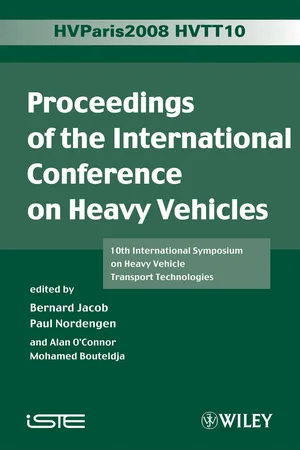
Proceedings of the International Conference on Heavy Vehicles, HVTT10
10th International Symposium on Heavy Vehicle Transportation Technologies
- English
- ePUB (mobile friendly)
- Available on iOS & Android
eBook - ePub
Proceedings of the International Conference on Heavy Vehicles, HVTT10
10th International Symposium on Heavy Vehicle Transportation Technologies
About this book
Trusted by 375,005 students
Access to over 1.5 million titles for a fair monthly price.
Study more efficiently using our study tools.
Information
FOREWORD 1
Ecole Nationale des Ponts et Chaussées
The mission of the École des ponts is to advance and disseminate knowledge, in a national, European, and world-wide perspective:
– by training engineers and specialists on the master’s and doctorate levels, giving them a high level of scientific, technical and managerial skills, enabling them to hold leadership positions in the areas of equipment, planning, construction, transports, the environment, industries and services,
– by promoting research and innovation,
– by making knowledge and innovative methods serve both the private and the public sector,
– by promoting critical thinking, professional competence, and citizenship.
Ecole des ponts trains both engineers and civil servant members of the State engineering corps (“Corps interministériel des Ponts et Chaussées”). The School was founded in 1747, under the supervision of Jean-Rodolphe Perronet, to provide specific training for State engineers in charge of maintaining and developing the royal roads network. In 1775, it finally took the name of “École nationale des ponts et chaussées”. In 1804 the School was organized as a school of instruction for students having attended the École polytechnique and wanting to enter the State engineering corps The first laboratory at the School was set up in 1831 (the current LCPC). Since 1997, the School has been located in Champs-sur- Marne, on the Cité Descartes site, but is also maintaining its former Paris site, 28 rue des Saints-Pères (MBA, Master in public policy, IHEDATE, continuing education, associations).
Historically recognized for its engineering training, École des ponts has over the years changed into a more global training and research institution, attended yearly by 1,500 students and 8,000 continuing education trainees. The School is qualified to issue PhD degrees and more than one third of the students are from abroad.
Ecole des ponts has developed an activity of research and of training to research. It today hosts 10 research centres, working in partnership and representing some 250 permanent staff.
Since 1994, École des ponts has the status of an EPSCP (that is, a state-dependent institution for scientific, cultural, and professional purposes), under the authority of the French Ministry of Public Works.
École des ponts is a member of two research and training cluster: ParisTech network, bringing together ten of the foremost French institutes of engineering education, and Université Paris-Est.
École des ponts now has two subsidiaries:
– Ponts Formation Édition, a limited company whose role is to promote continuing education,
– ENPC School of international management manages and develops the Master of Business Administration (MBA of École des ponts), accredited by AMBA and other programmes in management.
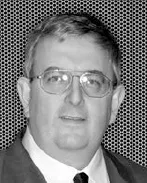
Philippe Courtier
General Director
ENPC
General Director
ENPC
AVANT-PROPOS 1
Ecole Nationale des Ponts et Chaussées
L’École des ponts a pour mission de faire progresser et diffuser les connaissances pour le bénéfice de la nation, de l’Europe et du monde :
– en formant aux niveaux master et doctorat des ingénieurs et des spécialistes possédant des compétences scientifiques, techniques et managériales de haut niveau les rendant aptes à exercer des fonctions de responsabilité dans les domaines de l’équipement, de l’aménagement, de la construction, des transports, de l’environnement, de l’industrie et des services,
– en découvrant de nouvelles connaissances par la recherche
– en contribuant à l’innovation,
– en mettant ces connaissances au service des entreprises et des politiques publiques,
– en promouvant l’éthique de l’ingénieur, l’esprit critique, la créativité scientifique et technique, l’esprit entrepreneurial, la compétence professionnelle et la citoyenneté.
À ce titre, elle forme des ingénieurs du corps interministériel des Ponts et Chaussées et des ingénieurs civils. L’École a été créée en 1747, en tant que formation spécifique des ingénieurs d’État chargés d’entretenir et développer le réseau royal des routes. Sa direction était confiée à Jean-Rodolphe Perronet. En 1775, elle prend définitivement le nom d’École nationale des ponts et chaussées. Le décret de 1804 définit l’organisation de l’École en tant qu’école d’application ainsi que celle du corps des Ponts et Chaussées. Le premier laboratoire de l’École des ponts est créé en 1831 (actuel LCPC). Installée depuis 1997 principalement à Champs-sur-Marne, sur le site de la Cité Descartes, l’École a également une implantation à Paris au 28, rue des Saints-Pères (MBA, MAP, IHEDATE, formation continue, associations).
Historiquement réputée pour sa formation d’ingénieur, l’École des ponts s’est transformée au fil des ans en une entreprise globale de formation et de recherche fréquentée chaque année par plus de 1 500 étudiants et 8 000 stagiaires en formation continue. Elle est habilitée à délivrer le doctorat et un tiers des étudiants est constitué d’étrangers.
L’École des ponts a développé une activité de recherche et de formation par la recherche. Elle accueille aujourd’hui dix centres de recherche, partenaires qui regroupent 250 permanents.
Depuis 1994, l’École est un établissement public à caractère scientifique, culturel et professionnel (EPSCP) placé sous la tutelle du ministère chargé de l’Équipement.
L’École s’est dotée de deux filiales :
– Ponts Formation Édition, société anonyme à conseil de surveillance et directoire, qui développe les actions de formation continue,
– ENPC School of international management, société anonyme à conseil de surveillance et directoire, qui gère et développe le MBA des ponts, accrédité par l’AMBA, et d’autres formations au management.
L’École des ponts s’inscrit dans plusieurs réseaux structurants :
– membre fondateur de ParisTech, PRES regroupant dix grandes écoles d’ingénieurs de Paris,
– membre fondateur du PRES Université Paris-Est, aux côtés de l’université Paris-Est Marne-la-Vallée, de l’université Paris12 Val de Marne, de l’ESIEE Paris et du Laboratoire central des ponts et chaussées.
– L’École des ponts s’inscrit dans le réseau scientifique et technique du ministère de l’Écologie, du développement et de l’aménagement durables (MEDAD).
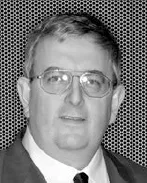
Philippe Courtier
Directeur Général
ENPC
Directeur Général
ENPC
FOREWORD 2
Laboratoire Central des Ponts et Chaussées
The Laboratoire Central des Ponts et Chaussées (LCPC), a public works research laboratory supported by the Ministry of Ecology, Sustainable Development and Planning and on the Ministry of Research and Higher Education, is very honoured to organise the International Conference on Heavy Vehicles, HVParis2008. We do this jointly with the Ecole Nationale des Ponts et Chaussées (ENPC) on behalf of the International Forum for Road Transport Technology (IFRTT) and the International Society for Weigh-In-Motion (ISWIM).
LCPC carries out research work in civil engineering, roads, materials, structures, geotechnics and natural hazards, road safety and operation, and environmental engineering. LCPC has 600 employees plus 80 PhD students, and leads a national technical network which comprises 17 regional laboratories involved in the same scientific and technical domains. The organisation operates from two main sites: Paris and Nantes, and runs several large testing facilities, e.g. a structure testing platform, a large cable testing machine, a circular pavement fatigue test track and device, a skid resistance and full scale test track, and a centrifuge. LCPC is involved in European and international research projects, carries on surveys and provides consultancy services. It supports innovation, provides scientific information, regulations and standards. It is a founding institute of the Forum of European Highway Research Laboratories (FEHRL).
LCPC has been involved in WIM activities for more than 20 years, initially for pavement design and maintenance purposes and bridge applications (assessment of bridge loading and development of the Eurocode for Traffic Loads on Road Bridges). Then it carried out research and development work at National and European levels to develop and improve WIM technologies to meet the overload detection and control requirements for the French Ministry of Transport (DGMT). LCPC chaired the COST323 action and led the WAVE project (4th Framework Programme (FP) of the European Commission), was involved in the REMOVE project (6th FP), and is currently leading a FEHRL cooperative project (FiWi).
LCPC is also carrying out research on heavy vehicles, e.g. the impacts on infrastructure and on road safety, heavy vehicle behaviour and interaction with the infrastructure and the environment. It was involved in the ITF/OECD/DIVINE project in the 90’s as an element leader, and then chaired a national PREDIT (Transportation Research and Study Programme) project on heavy vehicle safety (ARCOS2003 — theme 11), and is now involved in another PREDIT project VIF (Interactive heavy Vehicle of the Future) and a 6th FP project (Heavyroute). The expertise of LCPC in the heavy vehicles, road safety and infrastructure domains was recognised by the OECD/JTRC (Joint Transport Research Centre) when it appointed the organisation as a member of the Working Group on Heavy Vehicles Regulatory, Operational and Productivity Improvements.
The conditions for sustainable development require new obligations from the road freight transport sector and ...
Table of contents
- Cover
- Title Page
- Copyright
- Organization
- Scientific Committees
- Institutional Sponsors
- Major Sponsors
- Sponsors
- Exhibitors
- Foreword 1: Ecole Nationale des Ponts et Chaussées
- Avant-Propos 1: Ecole Nationale des Ponts et Chaussées
- Foreword 2: Laboratoire Central des Ponts et Chaussées
- Avant-Propos 2: Laboratoire Central des Ponts et Chaussées
- Preface
- Préface
- The International Forum for Road Transport Technology (IFRTT)
- Forum International Des Technologies Du Transport Routier (IFRTT)
- International Society for Weigh-in-Motion (ISWIM)
- Societe Internationale Du Pesage En Marche (ISWIM)
- Panel Discussion N°1: Road Freight Productivity, the Weight and Dimensions Issue
- Table Ronde N°1: Productivité du transport routier de marchandises, la question des poids et dimensions
- Plenary Session
- Session 1: Performance Based Standards
- Session 2: European Modular Concept
- Session 3: Vehicle Road Interaction
- Session 4: Safety
- Session 5: Routing
- Session 6: Vehicle Performance
- Session 7: Road Transport Policies and Operation
- Index of Authors
Frequently asked questions
Yes, you can cancel anytime from the Subscription tab in your account settings on the Perlego website. Your subscription will stay active until the end of your current billing period. Learn how to cancel your subscription
No, books cannot be downloaded as external files, such as PDFs, for use outside of Perlego. However, you can download books within the Perlego app for offline reading on mobile or tablet. Learn how to download books offline
Perlego offers two plans: Essential and Complete
- Essential is ideal for learners and professionals who enjoy exploring a wide range of subjects. Access the Essential Library with 800,000+ trusted titles and best-sellers across business, personal growth, and the humanities. Includes unlimited reading time and Standard Read Aloud voice.
- Complete: Perfect for advanced learners and researchers needing full, unrestricted access. Unlock 1.5M+ books across hundreds of subjects, including academic and specialized titles. The Complete Plan also includes advanced features like Premium Read Aloud and Research Assistant.
We are an online textbook subscription service, where you can get access to an entire online library for less than the price of a single book per month. With over 1.5 million books across 990+ topics, we’ve got you covered! Learn about our mission
Look out for the read-aloud symbol on your next book to see if you can listen to it. The read-aloud tool reads text aloud for you, highlighting the text as it is being read. You can pause it, speed it up and slow it down. Learn more about Read Aloud
Yes! You can use the Perlego app on both iOS and Android devices to read anytime, anywhere — even offline. Perfect for commutes or when you’re on the go.
Please note we cannot support devices running on iOS 13 and Android 7 or earlier. Learn more about using the app
Please note we cannot support devices running on iOS 13 and Android 7 or earlier. Learn more about using the app
Yes, you can access Proceedings of the International Conference on Heavy Vehicles, HVTT10 by Bernard Jacob, Paul Nordengen, Alan O'Connor, Mohamed Bouteldja, Bernard Jacob,Paul Nordengen,Alan O'Connor,Mohamed Bouteldja in PDF and/or ePUB format, as well as other popular books in Technology & Engineering & Mechanical Engineering. We have over 1.5 million books available in our catalogue for you to explore.