![]()
CHAPTER 1
SEND THEM HOME
(OR WHY WALK AWAY FROM $60 MILLION?)
Monday, April 17, 2000, and I was about to become a very rich man. Today my business partner and I would sell Clif Bar Inc., our company, for $120 million. I would have “more money than Carter has Pills,” as my dad always said. I’d never have to work again. But instead of feeling excited, I felt nauseated constantly and hadn’t slept well in weeks.
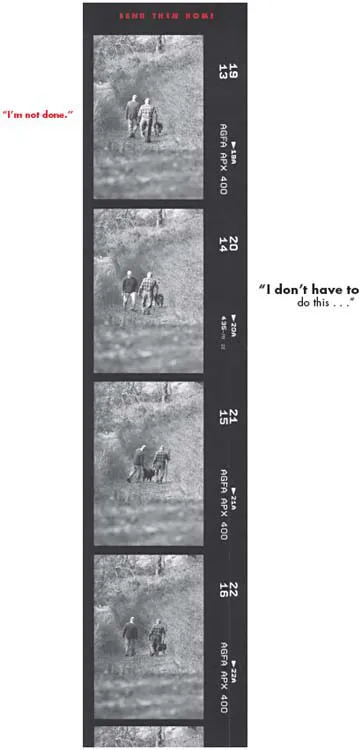
Attorneys from Clif Bar and Company X had worked feverishly all weekend. Head honchos flew in from the Midwest to finalize the details. Finally it was late Monday morning, and I stood in the office waiting to go out and sign the contract. Out of nowhere I started to shake and couldn’t breathe. I’d climbed big mountains, raced bicycles, played horn in jazz concerts: I handled pressure well, so this first-ever anxiety attack took me by surprise. I told my partner that I needed to walk around the block. Outside, as I started across the parking lot, I began to weep, overwhelmed. “How did I get here? Why am I doing this?” I kept walking. Halfway around the block I stopped dead in my tracks, hit by an epiphany. I felt in my gut, “I’m not done,” and then “I don’t have to do this.” I began to laugh, feeling free, instantly. I turned around, went back to the office and told my partner, “Send them home. I can’t sell the company.”
Now, selling the company is a distant thought. People thought I was crazy to pass up wealth beyond my wildest dreams. Investment bankers told me the company would go under within six months. My partner thought Clif Bar couldn’t compete against the big companies and demanded that I buy her out.
Today, instead of “hanging out on tropical islands” or writing big checks to my favorite causes, I’m working harder than I’ve worked in years. Why? This book is the story of why. It’s about following your passion and gut, about the freedom to create, about getting a company’s mojo back, about the jazz of business, about sustaining a business over the long haul, about living responsibly in a community and on the earth.
FOLLOWING THE NATURAL PATH, OR HOW DID I GET TO THE POINT OF SELLING?
In 1990, ten years before the almost sale of Clif Bar Inc., I lived in a garage in Berkeley with my dog, skis, climbing gear, and two trumpets. One of my passions was long-distance cycling. During one day-long 175-mile ride with my buddy Jay Thomas, I came up with the idea for Clif Bar. We’d been gnawing on some “other” energy bars all day. Suddenly, I couldn’t take another bite, despite being famished and needing to eat to keep going. It came to me: “I could make a better bar than this.” I call that moment “the epiphany.” Clif Bar exists because I wanted to make a better product for myself and for my friends. Two years later, after countless hours in Mom’s kitchen, I had a recipe that worked.
Clif Bar Inc. got its official launch in 1992. We make portable, convenient, nutritious energy bars for athletes and health-minded people. Today we’re one of the leaders in the category of energy and nutrition bars, and our products include Clif Bar, Luna Bar, Mojo Bar, Luna Glow, Clif Builders, and Clif Shot. Clif Bar Inc. is also the largest privately held company in its category. By the time we nearly sold the company, Clif Bar had grown from a guy making bars in his mom’s kitchen to a company with $40 million in annual sales. I loved Clif Bar—the product, the people, the spirit of the company. I felt that there was more ahead for Clif Bar, yet, on April 17, 2000, I nearly sold the company. Why?
One of the main reasons I didn’t fight the sale of Clif Bar Inc. was that selling seemed like the norm. The story went—and still goes—like this: You’re an entrepreneur. Your company grows and begins to feel too big for you. You’re tired, stressed out, and working really hard. You become convinced that you can’t compete against larger companies. You also become convinced that you can sell and maintain the company’s—and your own—integrity. An offer comes along. The money is appealing. You sell the company.
I had watched many peer companies go up for sale. Our archrival PowerBar went (like Clif) from humble kitchen origins to being the leading energy bar at the time. Nestlé purchased PowerBar for around $400 million, and the founder walked away with 60 percent—an outrageous amount of money. I watched my friends at Balance Bar, our other big competitor, sell to Kraft. I knew that many people began their companies with exit strategies in mind. I didn’t, yet accepted why people would exit, just as almost everyone accepted why we would sell the company. It seemed like selling was the natural path, the normal culmination to starting a small but successful company.
THE FEAR FACTOR
If I became convinced that selling was the norm, a big part of deciding to sell my own company had to do with fear. For years the refrain around Clif was “We are putting in all this work, and it could evaporate in a day,” and “We need external funding to grow.” We feared failure. My former partner and I told our employees that, with the sale of PowerBar to Nestlé and Balance Bar to Kraft, the two largest food companies in the world were competing against us, and we didn’t want it all to disappear. It seemed to make sense. Nestlé, a company with sales of $65 billion annually, could afford to spend $50 million to promote their product against ours. To them $50 million was pocket change; to us it was more than our entire annual sales. We feared that we couldn’t survive such fierce competition without a huge infusion of capital. Our investment banker, my business partner, and popular wisdom convinced me that the big companies would marginalize us. They would blow us away in advertising and marketing.
What was going on in the company didn’t always inspire fear in me. We were riding an incredible wave. Clif Bar had grown from $700,000 in annual sales in 1992 to over $40 million in 1999. I was thinking, “This is unbelievable. This is like getting on the biggest wave of life and you are actually riding it and enjoying the ride.” Yet others, including my partner, feared that it could all be gone tomorrow.
Fear grew at Clif Bar. Fear kept me from performing at my best, and it paralyzed others. Looking back at how fear drained Clif Bar’s spirit, I remember my days as a wilderness instructor guiding young people on trips in the spectacular Sierra Nevada range of northern California. We taught kids how to climb, how to use ropes, climbing harnesses, and techniques for climbing rock faces. One of those techniques is called belaying. Belaying secures the climber, using ropes and anchor, so that if the person falls, they just fall a few feet. I remember teaching kids belaying from the top of a cliff. We showed them how the rope would catch them if they fell, yet there were always students that would shout to me, “I can’t do it. I can’t make it. I can’t climb anymore.” It was their fear talking, not their actual physical ability to get over an overhang or climb a hard move. Again we’d explain the worst-case scenario, how under proper belay they would only fall a foot or two. Once they overcame the fear and started to trust they usually made it. And even if they couldn’t complete the climb they could say, “I gave it my all.”
Recently a former student wrote to me about a climb up the Doodad that we’d done together over twenty years ago. (The Doodad is a spectacular rock outcrop that soars a thousand feet above a northern Sierra valley floor and has a particularly airy summit block.) This student reminded me about how frightened he’d been because he couldn’t see me belaying him. All he could see was a thousand feet of air beneath his feet. He was forced to fully trust the rope and me. Once he trusted and managed his fear he enjoyed the climb so much that he wrote to me about it twenty years later.
The point is that fear paralyzes. Back in 2000 fear stopped me from seeing, at least for a while, that the worst-case scenario for Clif Bar was similar to falling while on belay. You fall a foot, not to your death. Yet fear was leading us to sell the company.
PROMISES, PROMISES
Why I almost sold also has to do with the process itself—the promises made and betrayed along the way. My business partner and I stood in front of the company and made a promise: “We are going to sell the company, but we will still be here.” We gave our word that we would never sell Clif Bar to anyone who wouldn’t let us continue to run the company. Now I wish that I could have been a “fly on the wall of their brains,” to hear inside our employees’ heads. I believe that I would have heard them laughing, thinking, “How ridiculous, they will not let you run the company.” Other people knew that everything would change, but I was led to believe the impossible and deluded myself. I promised that our continued management of the company was a nonnegotiable criterion.
I never forgot that commitment, yet a few weeks before the sale, the company that was going to purchase us made it very clear that our tenure as managers would be short, down to months. It shocked us to discover that within three to four months Clif Bar would move to company headquarters in the Midwest. Our employees would be on the street. This announcement came just before the contract was to be signed and the money wired. Had I been listening to my gut I would have seen this coming. I now tell people who plan to sell their companies to watch the process carefully. It often begins with a soft sell. At first you hear, “We love you guys. We think you are the greatest company. You are fantastic. We want you to continue with the company.” The sales job is full on, and they say everything you want to hear. As time goes on you commit to the process itself and start to focus on the finish line and the money. Soon you’ve gone so far down the road that it seems irreversible, and you begin to give up on the promises you’ve made.
I have seen this happen with many peers in the food industry. Afterward they often say that they felt manipulated in the process of selling and would do it differently now. You come to believe that in the end, when you see that fat check, the rest won’t matter. Keeping the employees, maintaining the integrity of your products, running the company won’t seem that important. The knowledge that a lot of money will be wired into your account looms larger and larger and you say, “Well, I can live with that.” You detach. By the end of the process I was feeling, “Let’s just get this done.”
What did I learn from this experience? In retrospect I realized that when you sell your company you sell your vision. You will not be able to fulfill promises made to your employees, consumers, or yourself.
LISTEN TO YOUR GUT
Maybe the biggest reason that I came so close to selling the company was that I wasn’t listening to my gut. I prided myself on being a person who listened to my gut. I listened to my gut when I created Clif Bar. I listened to my gut when I traveled around the world. I listened to my gut when I raced bicycles. I listened to my gut while rock climbing. I listened to my gut when I married Kit. I think I got good at acting intuitively. Operating from the gut or intuition isn’t about making random or illogical choices. It’s about being able to bring experience, logic, passion, and creativity to bear on the unknown, and, in a split second, make sense of it. My gut was yelling at me in the years and months preceding the sale, but I didn’t listen. I detached from the process. I remember thinking, “You feel sick to your stomach, and you are not sleeping because that is what anyone would be doing in this situation. You are selling the company you started, and you don’t have a choice [or so I thought]. Of course you feel bad. You wonder what will happen to the employees, to the products you have created, to the company.” I thought it was natural. Yet, looking back, the feeling I was having wasn’t the sort of nearly sick sensation I felt before bike races or playing music in front of hundreds of people. I call that “happy nervous.” I wanted to be racing. I wanted to be playing music. It made sense. My gut knew I was doing the right thing. The nervousness or anxiety felt good, it felt right. This new anxiety felt empty. But I kept saying, “This is the way it is.”
As I began to tell the people closest to me about my decision to sell, a lot of people spoke to my gut, but I couldn’t hear them. The hardest person to tell was Kit, my wife. I took her to a movie and told her we were selling the company. She started to cry. She knew Clif Bar had been my life for fourteen years. She saw Clif Bar as my means of self-expression in the world. Losing Clif Bar was like taking the brush away from the artist or the horn from the hand of the musician and saying, “find another way to express yourself.” She wondered how I could walk away from something like that so fast.
When I told my dad about selling the company, he was surprised. As always he was supportive, but he didn’t understand my decision. I tried to sell him on the idea, yet I felt sad that a large multinational food corporation would own a product named after my father.
Every bar we produce tells the story of why I named Clif Bar after my dad. My father introduced me to the love of adventure and of being independent and free. He took my brothers and me to the mountains at a young age, teaching us...