Chapter 1: Hooks and Yarn
Before you start crocheting, take some time to familiarize yourself with the tools that will help you along the way. Starting a project with the right tools on hand saves time. In this chapter you’ll find information to help you choose an appropriate hook for a project as well as suggestions for choosing, caring for, and winding yarn.
Hooks
Hook Sizes
Compare Hook-Size Labels
Other Tools and Notions
Yarn Fibers
Yarn Construction
How to Read Yarn Labels
Yarn Weight
Estimate Yarn Requirements
Substitute Different Yarn
How to Handle Store-Bought Yarn
Yarn Care and Storage
Hooks
Shape
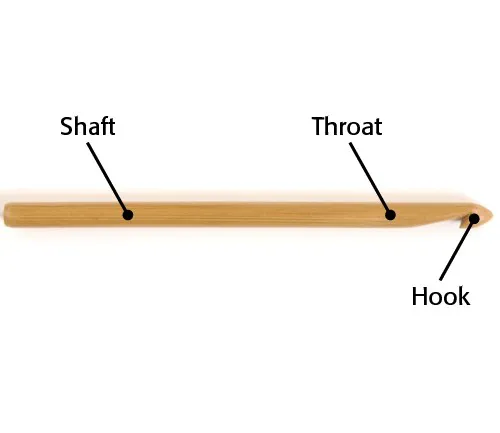
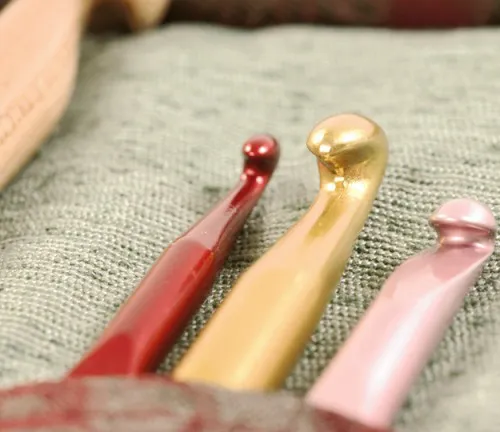
Crochet hooks are generally 5 to 7 inches long. There is a hook at one end, which you use to grab yarn or thread and pull it through the stitches of your work. You hold the hook along its shaft.
Manufacturers shape their hooks differently. The sharpness or bluntness of the hook’s point varies, as does the hook’s depth. Try out a few brands until you find the shape you think works best.
Hook Composition
Plastic hooks are usually hollow and lightweight. Most very large hooks are made of plastic. Metal hooks can be very smooth, enabling the yarn to slide with little resistance. Wood or bamboo hooks provide a bit of friction, which comes in handy when you’re crocheting with slippery yarns.
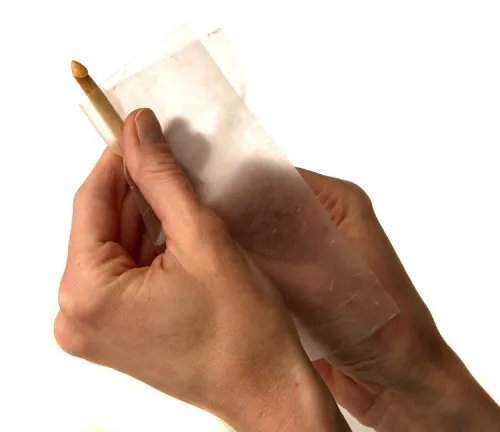
When using a wood or bamboo hook, rub the hook with a piece of wax paper to make the yarn slide more smoothly.
Some hooks are designed with a thick rubber handle to be easier to grip. Some hooks feature embellishments on the handle, but these are purely decorative.
Other Kinds of Hooks
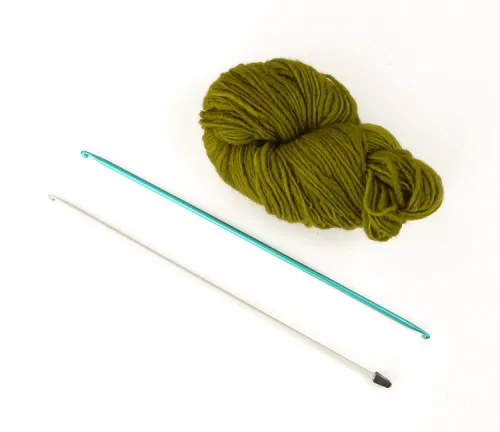
Tunisian crochet hooks are longer than standard crochet hooks. This extra length allows the hook to hold many stitches, much like a knitting needle does. (See page 92 for more on Tunisian crochet.)
There are also double-ended crochet hooks made for a technique called double-ended crochet or crochet on the double.
Hook Sizes
Hook size is determined by the diameter of the hook’s shaft. Hook size is marked differently in the United States, the United Kingdom, and the rest of the world.
Hook sizes in the United States and United Kingdom are marked by an arbitrary letter or number, respectively. Manufacturers often use slightly different labels for the same size hook, however. Hooks are most consistently labeled by the metric measurement of their diameter, which is an objective label. There is a growing effort to standardize sizes by using metric measurements only.
Deciding Which Hook Size to Use
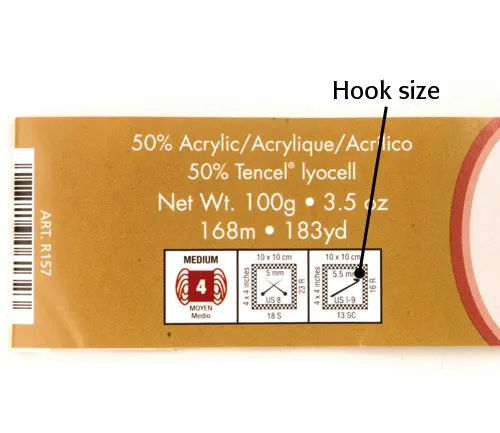
Most yarn labels suggest a hook size to use; most patterns also list a recommended hook size. You may need to change hook size in order to match the gauge listed in a pattern or to achieve a pleasing drape and feel. Matching the gauge of a pattern is more important than using the exact hook size listed. In some instances, a yarn label provides only a recommendation for a knitting needle size. In this case, use a hook that matches or is slightly larger than the metric size.
Determining a Hook’s Size
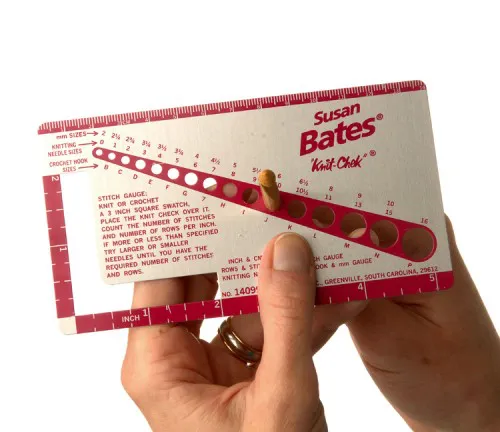
If you’re unsure of a hook’s size because it is old or the label has worn off, you can use a hook gauge to measure it. The size indicated beside the smallest hole that the shaft of the hook fits into is the size of your hook.
Compare Hook-Size Labels
Hook Sizes
This chart lists equivalent crochet-hook sizes.
Steel-Hook Sizes
Steel hooks have a narrow shaft and tiny hooks intended for ...