![]()
CHAPTER 1
Introduction
© Magixl 2009, www.magixl.com
Poor value is a people problem.
—Larry Miles
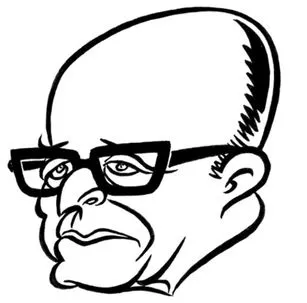
Lawrence Delos Miles was born in 1904 to Delos Miles, a public school superintendent, and Vinetta Miles, an elementary school teacher in Harvard, Nebraska. Miles was very bright, and he graduated from high school in three years rather than the usual four. He attended Nebraska Wesleyan University in Lincoln, Nebraska, with a degree in education. In 1925, he was a teacher and high school principal in Winnebago, Nebraska. In 1926, he made a career change and moved into banking. Dissatisfied with this, he returned to college to study engineering. In 1931, Miles graduated from the College of Engineering at the University of Nebraska with a degree in electrical engineering.
In 1932, Miles began a long and productive career at General Electric Co. in Schenectady, New York. His first assignment at GE was that of a design engineer in the Vacuum Tube Engineering Department. Over a six-year period in this position, he earned 12 patents for vacuum tubes and related circuitry. During this time, Miles developed awareness for unnecessary costs and began seeing the need for developing better ways of doing things.
This sensitivity to cost earned him a transfer to GE’s purchasing department, and in 1938 he was promoted to the position of purchasing engineer. During this time, Miles worked closely with vendors to reduce costs associated with electronic components, eventually moving on to precision-machined parts. In 1944, Miles was transferred to a subsidiary of GE called Locke Insulator. While at Locke, he began the development of the process that has now evolved into the function-oriented problem solving methodology known today as Value Methodology.
Miles was instrumental in the initial development and spread of Value Methodology. In 1959, he helped create the Society of American Value Engineers and served as its first president between 1960 and 1962. He was the author of the first book on the subject, Techniques of Value Analysis and Engineering, which was published in 1961. He taught seminars and lectured extensively throughout the United States and the rest of the world.
Larry Miles received many accolades and awards during his career, but none were greater than the honor bestowed on him by Japan. In 1984, he was posthumously awarded the Third Order of Merit with Cordon of Sacred Treasure by the emperor of Japan. The Japanese bestowed this honor on Miles due to the major impact that the use of Value Methodology had on making Japan an industrial and economic powerhouse. In addition, he received international recognition from Germany and South Africa for his contributions.
The story of Larry Miles is a fitting introduction to this book. Without him, the writing of this book would not have been possible. 1 Larry Miles also exemplified the role that Value Leadership can play in improving the value of products, services, and facilities. While other leaders in business improvement, like Dr. W. Edwards Deming and Phillip Crosby, have received greater notoriety, the work of Larry Miles has created a quiet legacy that endures today.
Today’s Challenges
Most people today would agree that long-term profitability is the main objective of private enterprise, while the timely delivery of needed services would describe the goal of public bodies. They would also quickly point out that the products and services these entities produce should be competitively priced and/or efficiently provided while meeting or exceeding the performance expectations of their customers. In order to adapt to an ever-changing environment, organizations are challenged to make better use of their most important resource, their people.
This idea has been demonstrated through the innovations introduced by the quality movement and by the evolution of program and project management that has been experienced in recent years. Executive management has learned that through the emphasis of programs and projects and by ingraining a culture of quality improvement, the effectiveness of an organization can realize significant gains. Despite the benefits of these innovations, they will amount to little unless the organization possesses an active understanding of the value that its customers place on its products and services, and is capable of defining, measuring, and improving it.
In late 2008, the world was confronted with the sudden end to the unbridled growth that the global economy had experienced earlier in the decade. At the heart of our “irrational exuberance”2 was the delusion that the market could only go up; that growth would be perpetual; that the uncertainty posed by risks could be completely avoided; and that value could be created from nothing. Looking back, it is remarkable to think that at least tacitly, the majority of us held these beliefs to be true. Like the laws of physics, the laws of value cannot be circumvented. Value is grounded in reality. It demands honesty. It does not suffer fools or charlatans.
One need only look at the following recent phenomenon to see how easily we can be led astray when we lack a means to anchor value to reality:
• The overvaluations of Internet companies during the growth of the “dot-com” bubble were fueled by wildly optimistic speculation on fast-growing Internet businesses. One Internet company spent $135 million in capital over its 18-month life span while never once generating a profit.3 Too great an emphasis was placed on rapid growth and not enough on the actual value of the service it provided.
• The development in the 1990s of the financial instruments known as collateral debt obligations (CDOs) and credit default swaps (CDSs) were touted by their creators as ways to essentially eliminate all investment-related risk. These instruments ran completely contrary to one of the basic tenants of the free market system, namely, the concept of “risk and reward.” What is all the more ironic is that the risk “experts” on Wall Street are the ones who concocted these schemes and drove the market into the ground, with many of them collecting huge bonuses for our pains. This proves the point that you cannot sweep uncertainty under the rug or hide it in the closet. It will most surely destroy value if it is not addressed in a rational, responsible manner.
• The proliferation of CDOs and CDSs in turn led banks to lower their lending requirements based on the false belief that the financial risks had been diluted to such an extent that they couldn’t possibly lose money on a bad loan. The availability of cheap adjustable-rate loans and the demand for housing led to the boom in house construction during this same period. Between 1997 and 2006, the price of the typical American house increased by 124 percent.4 During this same period, average U.S. incomes remained virtually flat. Inevitably, borrowers on the riskier loans began to default, which began increasing the supply of homes available and eventually burst the housing bubble. I can remember watching the value of homes in my neighborhood going up and up during this period while my income remained pretty constant. Chatting with my neighbors, we all agreed it couldn’t go on forever—and sure enough, it didn’t. Between 2006 and 2008, home prices fell an average of 20 percent nationwide and were still falling at the time of this writing. 5 Despite the fact that many of us, at a gut level, felt that something was terribly wrong, we all just went along with it, thinking that the market must be right. Many of us even further leveraged our overvalued homes with home equity loans to buy other things we couldn’t afford. When we do not have a clear yardstick for measuring value, we lack the information needed to make critical decisions.
While these examples apply to the general economy at a macro level, they are a reflection of the inability of both individuals and organizations to understand and measure value.
Dan Ariely, in his brilliant book on behavioral economics, Predictably Irrational, discusses at length his thoughts on the subprime mortgage crisis. He argues that individuals, organizations, and indeed the global market behave in a manner that is completely irrational with respect to economic decision making. If even only a few of the compelling points he makes are true, then it only further reinforces the importance of developing a rational framework that allows us to assess value.6
Lacking the compass of value, an organization is in danger of losing its way. Further, if it can find its compass, it must become fluent in its use in order to interpret its meaning. All of this first requires an acknowledgment that the organization lacks the tools, training, and necessary attitude by its leaders. Developing this insight is the first step, and the greatest hurdle, to overcome.
Managing the change that is necessary for an organization to stay competitive is a difficult challenge. However, the more successful it can become at managing change, the better it can become in meeting its customer’s needs, reducing inefficiencies, improving the performance of functions, and managing costs and risks. These changes not only result in improved profits and better efficiency in the present, but continue to pay dividends for years to come. In today’s economic environment, maintaining a focus on performance while controlling costs and managing risk are essential for long-term survival and sustainable growth.
In presenting the concept of value optimization, the author challenges the reader to look beyond the traditional indicators of value: price and customer satisfaction, and instead consider value from the perspective of functions and how they are performed relative to cost, time, and risk. This book presents a practical and proven approach, known as Value Methodology, which provides organizations with a cohesive theory, structured framework, and diverse toolset to identify, quantify, and optimize the real value they deliver by transforming the way it is perceived.
Value Methodology
This book is aimed at those new to the discipline with emphasis placed on the practical application of Value Methodology techniques to optimize the value of facilities, products, services, and processes. Value Methodology (VM) has existed under several different names over the years, such as Value Engineering (VE), Value Analysis (VA), and Value Management. There are no essential differences between these designations and they are, for all practical purposes, interchangeable. The term
value engineering has been traditionally used whenever the Value Methodology is applied to industrial design or to the construction industry; the term
value analysis for concept planning or process applications; and the term
value management for administration or management applications. Value
Methodology is the term most commonly used today and refers to the comprehensive body of knowledge related to improving value regardless of the area of application. Value Methodology is formally defined as:
A systematic process used by a multidisciplinary team to improve the value of projects through the analysis of functions.7
Value Methodology is an organized process that has been effectively used within a wide range of private enterprises and public entities to achieve their continuous improvement goals, and in government agencies to better manage their limited budgets. The success of the VM is due to its capacity to identify opportunities to remove unnecessary costs from projects, products, and services while assuring that performance, and other critical factors, meet or exceed the customer’s expectations.
The improvements are the result of recommendations made by multidiscipline teams under the guidance of a skilled facilitator, commonly referred to as a value specialist. The multidisciplined teams can comprise those that were involved in the design and development of the project, technical experts that were not involved with the project, or a combination of the two. There are two essential elements that set the Value Methodology apart from other techniques, methodologies, and processes:
1. The application of the unique method of function analysis and its relation to cost and performance
2. The organization of the concepts and techniques into a specific job plan
These factors differentiate Value Methodology from other analytical or problem-solving methodologies.
Value Methodology can be applied to products, manufacturing processes, administrative procedures, and the design and construction of facilities. The VM process is applied in basically the same way for each type of study; however, there are some differences in how preparations are made for the different types of studies and how some of the VM techniques are applied.
VM is often confused with cost reduction; however, cost reduction and VM are distinctly different. Cost reduction activities are component-oriented. This often involves the act of “cheapening” the item. In other words, reducing cost at the expense of performance. Examples of typical cost reduction measures include eliminating components or elements, substituting less expensive systems, relaxing tolerances, and/or the thinning or changing of material. At best, such an approach creates a stripped-down, less expensive version of the original item. At worst, it results in the wholesale degradation of ...