Dealing with digital filtering methods for 1-D and 2-D signals, this book provides the theoretical background in signal processing, covering topics such as the z-transform, Shannon sampling theorem and fast Fourier transform. An entire chapter is devoted to the design of time-continuous filters which provides a useful preliminary step for analog-to-digital filter conversion. Attention is also given to the main methods of designing finite impulse response (FIR) and infinite impulse response (IIR) filters. Bi-dimensional digital filtering (image filtering) is investigated and a study on stability analysis, a very useful tool when implementing IIR filters, is also carried out. As such, it will provide a practical and useful guide to those engaged in signal processing.
Trusted by 375,005 students
Access to over 1.5 million titles for a fair monthly price.
Throughout a range of fields as varied as multimedia, telecommunications, geophysics, astrophysics, acoustics and biomedicine, signals and systems play a major role. Their frequential and temporal characteristics are used to extract and analyze the information they contain. However, what importance do signals and systems really hold for these disciplines? In this chapter we will look at some of the answers to this question.
First we will discuss different types of continuous and discrete-time signals, which can be termed random or deterministic according to their nature. We will also introduce several mathematical tools to help characterize these signals. In addition, we will describe the acquisition chain and processing of signals.
Later we will define the concept of a system, emphasizing invariant discrete-time linear systems.
1.2. Signals: categories, representations and characterizations
1.2.1. Definition of continuous-time and discrete-time signals
The function of a signal is to serve as a medium for information. It is a representation of the variations of a physical variable.
A signal can be measured by a sensor, then analyzed to describe a physical phenomenon. This is the situation of a tension taken to the limits of a resistance in order to verify the correct functioning of an electronic board, as well as, to cite one example, speech signals that describe air pressure fluctuations perceived by the human ear.
Generally, a signal is a function of time. There are two kinds of signals: continuous and discrete-time.
A continuous-time or analog signal can be measured at certain instants. This means physical phenomena create, for the most part, continuous-time signals.
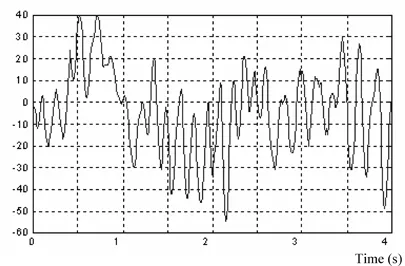
Figure 1.1.Example of the sleep spindles of an electroencephalogram (EEG) signal
The advancement of computer-based techniques at the end of the 20th century led to the development of digital methods for information processing. The capacity to change analog signals to digital signals has meant a continual improvement in processing devices in many application fields. The most significant example of this is in the field of telecommunications, especially in cell phones and digital televisions. The digital representation of signals has led to an explosion of new techniques in other fields as varied as speech processing, audiofrequency signal analysis, biomedical disciplines, seismic measurements, multimedia, radar and measurement instrumentation, among others.
The signal is said to be a discrete-time signal when it can be measured at certain instants; it corresponds to a sequence of numerical values. Sampled signals are the result of sampling, uniform or not, of a continuous-time signal. In this work, we are especially interested in signals taken at regular intervals of time, called sampling periods, which we write as
where fs is called the sampling rate or the sampling frequency. This is the situation for a temperature taken during an experiment, or of a speech signal (see Figure 1.2). This discrete signal can be written either as x(k) or x(kTs). Generally, we will use the first writing for its simplicity. In addition, a digital signal is a discrete-time discrete-valued signal. In that case, each signal sample value belongs to a finite set of possible values.
Figure 1.2.Example of a digital voiced speech signal (the sampling frequency fs is at 16 ...
Table of contents
Cover
Title Page
Copyright
Introduction
Chapter 1: Introduction to Signals and Systems
Chapter 2: Discrete System Analysis
Chapter 3: Frequential Characterization of Signals and Filters
Yes, you can cancel anytime from the Subscription tab in your account settings on the Perlego website. Your subscription will stay active until the end of your current billing period. Learn how to cancel your subscription
No, books cannot be downloaded as external files, such as PDFs, for use outside of Perlego. However, you can download books within the Perlego app for offline reading on mobile or tablet. Learn how to download books offline
Perlego offers two plans: Essential and Complete
Essential is ideal for learners and professionals who enjoy exploring a wide range of subjects. Access the Essential Library with 800,000+ trusted titles and best-sellers across business, personal growth, and the humanities. Includes unlimited reading time and Standard Read Aloud voice.
Complete: Perfect for advanced learners and researchers needing full, unrestricted access. Unlock 1.5M+ books across hundreds of subjects, including academic and specialized titles. The Complete Plan also includes advanced features like Premium Read Aloud and Research Assistant.
Both plans are available with monthly, semester, or annual billing cycles.
We are an online textbook subscription service, where you can get access to an entire online library for less than the price of a single book per month. With over 1.5 million books across 990+ topics, we’ve got you covered! Learn about our mission
Look out for the read-aloud symbol on your next book to see if you can listen to it. The read-aloud tool reads text aloud for you, highlighting the text as it is being read. You can pause it, speed it up and slow it down. Learn more about Read Aloud
Yes! You can use the Perlego app on both iOS and Android devices to read anytime, anywhere — even offline. Perfect for commutes or when you’re on the go. Please note we cannot support devices running on iOS 13 and Android 7 or earlier. Learn more about using the app
Yes, you can access Digital Filters Design for Signal and Image Processing by Mohamed Najim in PDF and/or ePUB format, as well as other popular books in Technology & Engineering & Signals & Signal Processing. We have over 1.5 million books available in our catalogue for you to explore.