- English
- ePUB (mobile friendly)
- Available on iOS & Android
eBook - ePub
About this book
It is crucial for process safety professionals to be aware of best practices for post merger integration at any level. A compilation of industry best practices from both technical and financial perspectives, this book provides a single reference that addresses acquisitions and merger integration issues related to process safety. Presently, there are limited references on how to handle acquisitions in several different CCPS publications and almost no coverage of the post-merger integration issue, so this reference fills a notable gap in the coverage.
Information
Chapter 1
AN OVERVIEW OF PROCESS SAFETY
“To know is to survive and to ignore fundamentals is to court disaster.”
H.H. Fawcett1
1.0 COURTNEY’S STORY – CONTINUED
If you have not read the preface, you will not have been introduced to Courtney. If you have a few minutes take the time to go back and become familiar with Courtney. Her story will continue at the beginning of each chapter.
Carla the VP of Compliance and Regulatory Affairs, and Courtney’s boss continued to explain the business aspects of the proposed acquisition of White Hot Chemicals. However Courtney’s mind continued to focus on what Carla had just said, that as part of Courtney’s responsibilities they wanted her to assess the state of White Hot’s process safety programs as well as all other HSE related matters. In their US operations Bland’s process safety matters were handled by the Asset and Operations Integrity (A&OI) group, not HSE. When Courtney raised this point, her boss explained because of the turn-around at Bland’s Pasadena, TX site and the expansion at Port Arthur, TX the A&OI group didn’t have anyone they could assign to the due diligence team. In fact, one of the reasons Courtney was assigned to the due diligence team was Courtney oversaw the major hazards programs of Bland’s Fawley, UK operations and was the HSE director there for three years. That plus Carla noted that White Hot’s Ternuezen facility was one of the potential real ‘gems’ in the acquisition and they felt Courtney’s previous experience with major hazard legislation in Europe would be a real plus. That is why they had every confidence Courtney could handle the process safety as well as all the other HSE related issues. Courtney thought to herself – “I wish I had that same level of confidence!”
1.1 WHY THIS GUIDELINE?
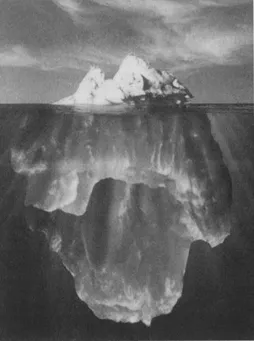
You have probably heard the adage that only 10% of an iceberg is visible above the waterline, the other 90% being submerged or hidden from view. The development and publication of this Guideline was based on similar findings of Center for Chemical Process Safety (CCPS) member companies – namely many process safety issues were found only after they had purchased a set of assets, facilities or operations. In other words, prior to the purchase and despite doing a due diligence review of the site or business, these process safety issues were ‘below the waterline’ only to be discovered later after the deal closed.
FIGURE 1 The Iceberg principle
This situation is not new to the health, safety and environmental community. Often in the past environmental legacy issues were not investigated prior to purchasing a site or business. Afterwards and with changing legislation many companies found they had ‘inherited’ significant environmental liabilities with the purchase. Sometimes these liabilities required investments of tens of millions of dollars in order to remediate or correct conditions left by the previous owners. Today, investigating environmental matters forms an integral part of the due diligence process when purchasing a facility that stores, processes, manufactures or handles hazardous materials or chemicals. The same holds for certain health issues such as those associated with asbestos. However, this practice has yet to become standard or routine when it comes to identifying and evaluating process safety or major accident hazard issues as an integral part of undertaking a due diligence investigation of a potential acquisition.
While there are a number of explanations for this, perhaps the primary reason is management not recognizing the potential costs that can accompany correcting or rectifying gaps in an operations approach to process safety or major hazard risks. Against this however, a number of the member companies of the Center for Chemical Process Safety investigated the costs they were incurring to rectify process safety issues found after they had closed on an acquisition. Arising out of their investigation they found it was common that another ten to thirty percent of the initial purchase price was being expended rectifying such issues. And these were not rare or extreme cases, rather they represented the average costs they were experiencing. Why so much? Examples included:
- Costs of between $30–40 Million just to build and equip a new control room, when studies found the current control room too near to major inventories of flammable materials exposing occupants to an unacceptable level of risk,
- A variety of issues with plant, equipment, control systems, etc. where on studying the issues further, the company found the costs of ‘retro-engineering’ corrections amounted to almost 100 times the costs of engineering a new facility.
- Following the Texas City refinery explosion and fires, new requirements for relief and blow-down systems and the siting of occupied buildings or structures are likely to require considerable rectification and upgrading of these systems in light of changes to standards, codes and recommended practices.
In summary, one CCPS member noted:
“Rectifying occupational health and safety issues generally runs us hundreds of thousands of dollars. Rectifying process safety issues has been costing us in the tens of millions of dollars. It was not until we were able to prove and present these hard facts to management that process safety became an integral part of our due diligence process.”
The above is ‘lesson one’ of this Guideline – i.e. the need to get process safety issues onto the agenda of your company’s due diligence investigations or studies.
Lesson two of this Guideline is also born out of hard experience. That integrating or merging the process safety approach or programs of two companies can be as equally challenging. This has been found even where a company acquiring a set of assets has itself, operated similar facilities or processes for a period of time. Case studies and discussions of these issues can be found later in sections 2.0 and 2.5 of Chapter 2.
As a result then, this Guideline was developed to:
- Pass some of these ‘learnings’ on to others to help you make a strong case to your management that process safety issues need to identified and investigated thoroughly in the M&A due diligence process,
- To provide assistance on the various types of process safety or major hazard issues that should be investigated, and
- Provide assistance with planning the process for integrating together the process programs of the two companies after the deal has closed.
1.2 UNDERSTANDING THE BASICS
This first chapter introduces basic concepts related to chemical process safety including an understanding of risk versus hazards. In addition, it is important for every organization to understand the key differences between occupational safety and chemical process safety.
When one hears the word “safety”, the general reaction is to think of personal injuries and/or minor accidents, such as cuts, bruises, falls, motor vehicle accidents, or muscle sprains and strains. All of these safety issues can be very serious. However this type of safety incident is typically isolated to a single individual and is generally called occupational safety. When a hazardous materials related incident occurs it often impacts more than one person in addition to property damage and interrupting business flow(s) and possibly off site impacts as well. Process safety hazards can give rise to major accidents involving the release of potentially dangerous materials, the release of energy (such as fires and explosions), or both. Process safety incidents can result in multiple injuries and fatalities, as well as substantial economic, property, environmental damage, and community impact.
The current working definition for Process Safety as used by the Center for Chemical Process Safety is:
Process Safety – is a disciplined framework for managing the integrity of operating systems and processes handling hazardous substances by applying good design principles, engineering and operating practices. It deals with the prevention and control of incidents that have the potential to release hazardous materials or energy. Such incidents can cause toxic effects, fire or explosion and could ultimately result in serious injuries, property damage, lost production and environmental impact.
1. A discipline that focuses on the prevention and mitigation of fires, explosions, and accidental chemical releases at process facilities. Excludes classic worker health and safety issues involving working surfaces, ladders, protective equipment, etc.
2. A discipline that focuses on the prevention of fires, explosions, and accidental chemical releases at chemical process facilities
1.3 HAZARD VERSUS RISK – IS THERE A DIFFERENCE?
Two other terms the reader should be familiar with, as they have very distinctly different meanings, are “risk” and “hazard”. Both terms are defined and discussed in numerous CCPS guidelines and materials. Below are two definitions extracted from such other material:
Hazard – A chemical or physical condition that has the potential for causing damage to people, property or the environment. A hazard is intrinsic to the material or to its conditions of storage or use. With respect to chemicals, “hazard” may include toxicity (acute or chronic), flammability, corrosivity or reactivity.
Risk – A measure of potential loss (for example, human injury, environmental insult, economic penalty) in terms of the magnitude of the loss and the likelihood that the loss will occur.
To provide an everyday example that might help explain these terms, the risk of injury in a motor vehicle accident is much higher than the risk of being fatally injured in an airplane accident. According to statistics published by the U.S. National Transportation Safety Board, the risk of being fatally injured in an aircraft accident is 0.0002 fatal injuries per one million miles flown as compared to the risk of being fatally injured in a traffic accident, which is 1.4 fatal injuries per one million miles driven or traveled. In other words within the United States, you are 7,000 times more likely to be fatally injured for every one million miles traveled in a car versus in an airplane. However, in an airplane crash more individuals are likely to be injured in a single accident. The likelihood of an event occurring causing injury to the passengers in a motor vehicle is extremely high relative to the likelihood of an airline crash causing injury to its passengers. This is an important concept when discussing chemical hazards and process safety. The public is willing to accept a large number of accidents that involve a few individuals as occur in motor vehicle accidents, but does not tolerate a single event that injures many individuals.
Figure 2 presents the various elements that make-up risk, namely the likelihood a hazard or event might occur coupled with the potential consequences that could arise. The Figure also demonstrates that as the consequences become more severe (e.g. multiple injuries or fatalities, major environmental damage, business interruption) the acceptance of those consequences becomes decreases. The same is true for the likelihood of a particular class of accident occurring. Simply stated, when incidents or accidents increase in frequency or their consequences become more severe the acceptance or tolerability of those accidents decreases. The Figure also shows the impact various risk control measures might have on any one hazard or risk. Risk controls that help mitigate the consequences of an accident move the ‘acceptability’ of those consequences to the left in the chart. Preventive risk ...
Table of contents
- Cover
- Half Title page
- Title page
- Copyright page
- Online Files Accompanying This Book
- Acronyms and Abbreviations
- Glossary
- Acknowledgments
- Preface
- Executive Summary
- Chapter 1: An Overview of Process Safety
- Chapter 2: The Merger and Acquisition Process
- Chapter 3: Screening Potential Candidates
- Chapter 4: The Due Diligence Phase
- Chapter 5: Developing the Integration Plan
- Chapter 6: Implementing the Integration Plan
- Chapter 7: M&A in the Future
- The Appendices
- Appendix B – An Exemplar Integration Plan & Budget
- References
- Index
Trusted by 375,005 students
Access to over 1.5 million titles for a fair monthly price.
Study more efficiently using our study tools.
Frequently asked questions
Yes, you can cancel anytime from the Subscription tab in your account settings on the Perlego website. Your subscription will stay active until the end of your current billing period. Learn how to cancel your subscription
No, books cannot be downloaded as external files, such as PDFs, for use outside of Perlego. However, you can download books within the Perlego app for offline reading on mobile or tablet. Learn how to download books offline
Perlego offers two plans: Essential and Complete
- Essential is ideal for learners and professionals who enjoy exploring a wide range of subjects. Access the Essential Library with 800,000+ trusted titles and best-sellers across business, personal growth, and the humanities. Includes unlimited reading time and Standard Read Aloud voice.
- Complete: Perfect for advanced learners and researchers needing full, unrestricted access. Unlock 1.5M+ books across hundreds of subjects, including academic and specialized titles. The Complete Plan also includes advanced features like Premium Read Aloud and Research Assistant.
We are an online textbook subscription service, where you can get access to an entire online library for less than the price of a single book per month. With over 1.5 million books across 990+ topics, we’ve got you covered! Learn about our mission
Look out for the read-aloud symbol on your next book to see if you can listen to it. The read-aloud tool reads text aloud for you, highlighting the text as it is being read. You can pause it, speed it up and slow it down. Learn more about Read Aloud
Yes! You can use the Perlego app on both iOS and Android devices to read anytime, anywhere — even offline. Perfect for commutes or when you’re on the go.
Please note we cannot support devices running on iOS 13 and Android 7 or earlier. Learn more about using the app
Please note we cannot support devices running on iOS 13 and Android 7 or earlier. Learn more about using the app
Yes, you can access Guidelines for Process Safety Acquisition Evaluation and Post Merger Integration by in PDF and/or ePUB format, as well as other popular books in Technology & Engineering & Chemical & Biochemical Engineering. We have over 1.5 million books available in our catalogue for you to explore.