
eBook - ePub
Leadership and the Sexes
Using Gender Science to Create Success in Business
- English
- ePUB (mobile friendly)
- Available on iOS & Android
eBook - ePub
Leadership and the Sexes
Using Gender Science to Create Success in Business
About this book
Michael Gurian's trademark use of brain science in gender studies together with real life examples of what is currently happening in business leadership make this an important resource for businesses and organizations. It provides new vision and useful practical applications, helping women and men in the workplace become more effective and fulfilled, and ultimately helping businesses and business leaders realize increased profits. Through examples and case studies from companies like Kodak, Nike, Nintendo, Home Depot, Proctor & Gamble, Avon, and Disney, the book shows readers how ignoring gender diversity actually impedes the true potential of any business.
Information
PART 1
The Theory
Gender Intelligence-The Natural Differences Between Men and Women
The workplace is a second home for most executives, managers, and employees, providing financial security, emotional connection, self-esteem, and at a very deep level, much of our sense of meaning and purpose. Into this workplace walk not only “people,” but women and men. A business can’t maximize its productivity, profit, and outreach unless it understands, from top to bottom, what makes males and females tick.
—PAM GOMEZ GIL, FORMER DIRECTOR, PROGRAM MANAGEMENT AND QUALITY CONTROL, HEWLETT PACKARD
1
Understanding the Science of Gender
Human evolution has created two different types of brains (male and female) designed for equally intelligent behavior.
—RICHARD HAIER, PROFESSOR OF PSYCHOLOGY, UC IRVINE
IT CAN BE DIFFICULT TODAY TO TALK COMPLETELY AND HONESTLY about how men and women feel at work. Respectful humor is often helpful.
A number of years ago, a story began to circulate on the Internet. Some people thought it began with Stephen R. Covey, though no one knows for sure. It is a fictional transmission between a U.S. Navy aircraft carrier and Canadian authorities that provides us in the gender world with a humorous metaphor for beginning a dialogue. We get a special chuckle from this story because Barbara is Canadian and Michael is American—but the story could involve any countries and any cultures.
CND: Please divert your course 15 degrees to the south to avoid collision.
USA: Recommend you divert your course 15 degrees to avoid collision.
CND: Negative. You divert your course 15 degrees to avoid collision.
USA: This is the captain of a U.S. Navy ship. Change your course now or countermeasures will be taken to ensure the safety of this ship.
CND: This is a lighthouse. It’s your call.
A lighthouse and a ship—they both have something essential to offer. At first, neither one understands what the other one is. Once they understand, perspectives change.
Is the lighthouse one gender and the ship another? No. For our purposes, the lighthouse represents human nature (gender), and the moving ship represents cultural shifts in use of gender (gender roles). In the science-based paradigm, gender comprises the male/female characteristics we are born with and the context in which we receive our early nurturing; gender roles are the roles that our society and we ourselves decide we should fulfill as women and men.
In this model, the lighthouse is “hard-wired”—it’s been there a long time. The ship can’t deny the lighthouse exists, nor change the “course” of the lighthouse—and, perhaps most important, it needs the light shining from the lighthouse to help chart its safe course. Though the ship initially feels threatened by the presence of the lighthouse (not knowing what it is), once it learns the character and value of this other presence, it can in fact navigate more safely.
The moving ship is the “soft-wired,” changing part of the gender equation. The ship represents the gender roles we each bring to the workplace. These can change from generation to generation and from person to person.
When the ship doesn’t have all the information the lighthouse possesses, our sense of gender roles, as individuals and a society, will often limit either women or men, increase gender stereotypes, misrepresent who we are as individuals, and lead to confusion, fear, and, ultimately, anger and anguish. When, however, the ship acquires crucial information about human nature—gender—it realizes the lighthouse is there, and it can more safely and more effectively navigate gender roles, gender issues, executive team development and trust, individual and personal concerns between women and men, and the whole workplace culture.
??? Did You Know ???
Gender Experiments Surprise Even the Experts
In the 1990s, the Canadian Broadcasting Corporation (CBC) created a short film that recorded an experiment in leadership styles between women and men. CBC didn’t tell the participants the objective of the work they would do that day; the director simply divided the male and female leaders into two teams, and gave those team leaders the same instructions: build an adventure camp. The teams were set up in a somewhat militaristic style at first, including team members wearing uniforms, but also with the caveat in place that the teams could alter their style and method as they wished, as long as they met the outcome in time.
Leader one immediately created a rank-and-file hierarchy and gave orders, even going so far as to assert authority by challenging members on whether they had polished their shoes.
Leader two did not have the “troops” line up and be inspected, but instead met with the other team members in a circle, asking, “How are we doing? Are we ready?” “Anything else we should do?” “Do you think they’ll test us on whether we’ve polished our shoes?” Instead of giving orders, leader two was touching team members on the arm to reassure them.
As part of the program, CBC arranged for corporate commentators to watch the teams prepare. Initially, the commentators (mostly men) were not impressed by the leadership style of leader two; the second team wasn’t under control, members weren’t lined up, and they lacked order (or so it seemed). The commentators predicted that team two would not successfully complete the task. Yet when the project was completed, team two had built an impressive adventure camp, as good as team one’s, with some aspects that were judged even better.
When debriefing their observations, the commentators noticed that when team one was building the structures for their camp, there had been discord regarding who stood in charge and who had completed which job and who hadn’t. Team one showed a lack of communication during the process of completion that created problems (for example, “Wasn’t someone else supposed to do this?”).
Team two, on the other hand, took longer to do certain things, but because of its emphasis on communication and collaboration during the building and enactment of the task (such as “Let’s try this” and “What do you think about that?”), the team met the goal of building the adventure camp in its own positive way, and on time.
Which leader do you think was a man, and which one a woman? You probably saw the answer coming—the woman was leader two. The commentators who watched this experiment certainly knew about authentic leadership, different management styles, and the idea of diversity. But they weren’t quite ready for the female leader to succeed so completely with her “nonmale” leadership style. They were—as many organizations’ succession planning committees can be—unconsciously (and consciously) thinking the woman “just doesn’t act like a leader,” “just doesn’t have things under control,” “won’t meet deadline,” “is run by her staff.” The committee may know she gets results, and it may even have her name on a short list, but the members can’t quite get their heads around the fact that a woman’s authentic leadership style doesn’t need to look like a man’s authentic leadership style.
The CBC experiment is just one ray of light coming from the lighthouse. The light being sent out into the world from experiments like this illuminates the differences between the male and female brain at work, especially in leadership roles. Although of course anything can happen in a social experiment that is being filmed—and in all the gender-related science we explore in this book, you’ll be able to think of “exceptions to the rule” (you’ll learn, in fact, about women and men who are actually hard-wired toward the middle of the gender/brain spectrum—that is, they have higher-than-average amounts of the other gender’s brain characteristics)—at the same time, wherever you travel in the world, you will find that female leaders often share certain traits that are different from male leaders. Let’s explore the biology of this difference, for it crosses all cultures, and it is fascinating!
Getting to Know the Gender/Brain Spectrum
The human brain is hard-wired (genetically coded with) its gender. As gender is not one thing or type, but very diverse, you will find throughout this book that your brain’s male/female coding fits somewhere on a wide gender/brain spectrum. To start very practically discovering where your particular brain fits on the spectrum, go to the Appendix and fill out the gender/brain spectrum survey. We have developed this as a personal tool, usable by anyone. You can also go to the website www.bbc.co.uk/science/humanbody/sex/add_user.shtml and take the BBC’s “What Sex Is Your Brain?” test. It is very detailed and accessible. If you have time, you may enjoy doing both.
Tools of Science: How the Female and Male Brain Are Studied
Beginning in the 1970s, researchers began to use medical technologies and computers to study gender in the brain. There are three techniques most used:
• A PET scan uses positron emission tomography to identify areas of neural activity. Scientists can locate the regions that become active while a person speaks, works, relates, loves, performs tasks. By comparing these “brain pictures” to those taken before or after a task, scientists gain insights about brain organization. PET scans from all over the world show that male and female brains are organized differently.
• MRI scan uses magnets to detect signals from particles with a positive electronic charge that act like compass needles in the magnetic field. Because the amount of oxygen found in blood affects its magnetic properties, MRI detects regions with changes in levels of blood oxygenation due to activity-related changes in blood flow. MRI can provide both anatomical and functional information for each subject, helping researchers accurately determine which brain regions are active in each task. MRI studies have shown that the regions of the male and female brain activate differently, no matter the subject’s culture or continent of origin.
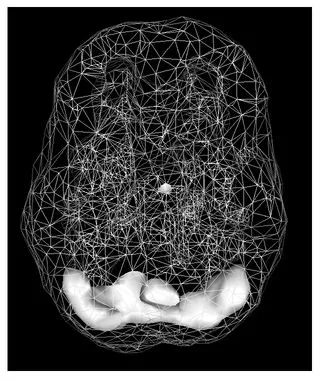
• SPECT imaging, similar to PET and MRI, uses single photon emission computed tomography to provide lower-resolution images; it is much less expensive than PET. As you can see in the SPECT scans in Figures 1.1 and 1.2, the male and female brain look quite different in terms of brain activity. (These SPECT scans appear courtesy of one of the Gurian Institute’s scientific advisors, Daniel Amen, M.D. He and his team at the Amen Clinics have done thirty-eight thousand brain scans.)
Figure 1.1. Female at Rest.
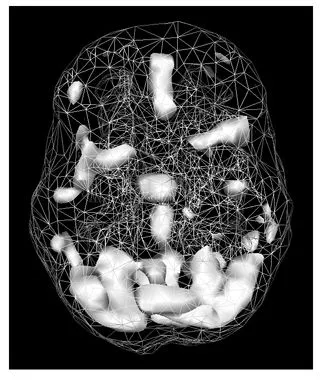
Figure 1.2. Male at Rest.
Source: Brain scans courtesy of Dr. Daniel Amen. Used by permission
Equal but Different Intelligence
As brain science becomes more sophisticated, the results of studies consistently indicate that although men and women produce equivalent intellectual performance, their brains do it differently.
We are different in the following ways:
• How and what we remember. Women take in more through each of their five senses than men do, on average, and store more of this material in the brain for later use. Thus they tend to remember more details during a conversation, for instance.
• How we process words (and how many and what kind we use). Women use more words than men. This includes reading and writing, not just speaking; that is, a man and a woman may speak the same amount of words in a week, but will not generally read and write the same amount.
• How we experience the world. New studies are indicating that even the cells in our retina may well be different, with female retinas tending to have more P ganglion cells (which see color and fine detail), and male retinas tending toward more M ganglion cells, which more easily see physical motion of objects moving in space around them.
• What we buy and why we buy it. Because of these sensory differences, women’s buying is often more linked to immediate complex sensory experience than men’s; for example, women more readily enjoy walking through a store and touching and feeling objects, while men will get less pleasure from this. Men, on the other hand, link more of their buying to both spatial enjoyment (such as video games, which are all about objects moving around in virtual space) and to performance competition and aggression identification. Thus we find more men interested in buying memorabilia from sports teams with which they passionately identify.
• The way our midbrain (limbic system) and emotional processing works. The approach to developing self-esteem and emotional intelligence can be quite different in women and men, especially because women’s brains tend to link more of the emotional activity that is going on in the middle of the brain (the limbic system) with thoughts and words in the top of the brain (the cerebral cortex). Thus a man might need many hours to process a major emotion-laden experience, whereas a woman may be able to process it quite quickly. This often creates a lot of tension between women and men.
• The amounts of white matter and gray matter in the brain. Women have more white matter and men have more gray matter related to cognitive functioning in the brain. White matter connects brain centers in the neural network, whereas gray matter tends to localize brain activity into a single active brain center. The white/gray matter difference is one reason the genders bring different perspectives to the same problem or design. Women tend often to be able to make crucial connections between widely disparate elements that men don’t make; simultaneously, men tend to task-focus on one element or pattern without distraction better than women do.
How Does the Brain Get Hard-Wired for Gender Differences?
Each of us is a woman or man at a certain place on a gender/brain spectrum. Michael, for instance, might have more gray matter than his brother has, as well as more than Barbara has; Barbara might have more white matter than her sister or another woman, and so on. Although all women will tend to have more white matter and all men more gray matter, within these gender characteristics there is variety—that is the gender/brain spectrum.
How do the gender characteristics along this spectrum get wired into us individually? The answer can be best understood as a three-stage process. Where you fit as a particular woman or man on the broad gender/brain spectrum depends, in large part, on these elements:
1. On every X and Y chromosome are genetic markers for fetal development of female and male in the body and brain. You have your own genetic markers, coming from your parents and their genetic lines. This first stage of wiring occurred in you at your ...
Table of contents
- Praise
- ALSO BY THE AUTHORS
- Title Page
- Copyright Page
- Dedication
- Acknowledgments
- Introduction
- PART 1 - The Theory
- PART 2 - The Tools
- PART 3 - The Applications
- EPILOGUE: THE FUTURE OF GENDER
- NOTES AND RESOURCES
- APPENDIX: GENDER/BRAIN SPECTRUM SURVEYS FOR MEN AND WOMEN
- THE AUTHORS
- INDEX
Trusted by 375,005 students
Access to over 1.5 million titles for a fair monthly price.
Study more efficiently using our study tools.
Frequently asked questions
Yes, you can cancel anytime from the Subscription tab in your account settings on the Perlego website. Your subscription will stay active until the end of your current billing period. Learn how to cancel your subscription
No, books cannot be downloaded as external files, such as PDFs, for use outside of Perlego. However, you can download books within the Perlego app for offline reading on mobile or tablet. Learn how to download books offline
Perlego offers two plans: Essential and Complete
- Essential is ideal for learners and professionals who enjoy exploring a wide range of subjects. Access the Essential Library with 800,000+ trusted titles and best-sellers across business, personal growth, and the humanities. Includes unlimited reading time and Standard Read Aloud voice.
- Complete: Perfect for advanced learners and researchers needing full, unrestricted access. Unlock 1.5M+ books across hundreds of subjects, including academic and specialized titles. The Complete Plan also includes advanced features like Premium Read Aloud and Research Assistant.
We are an online textbook subscription service, where you can get access to an entire online library for less than the price of a single book per month. With over 1.5 million books across 990+ topics, we’ve got you covered! Learn about our mission
Look out for the read-aloud symbol on your next book to see if you can listen to it. The read-aloud tool reads text aloud for you, highlighting the text as it is being read. You can pause it, speed it up and slow it down. Learn more about Read Aloud
Yes! You can use the Perlego app on both iOS and Android devices to read anytime, anywhere — even offline. Perfect for commutes or when you’re on the go.
Please note we cannot support devices running on iOS 13 and Android 7 or earlier. Learn more about using the app
Please note we cannot support devices running on iOS 13 and Android 7 or earlier. Learn more about using the app
Yes, you can access Leadership and the Sexes by Michael Gurian,Barbara Annis in PDF and/or ePUB format, as well as other popular books in Business & Business General. We have over 1.5 million books available in our catalogue for you to explore.