![]()
1.0 OVERVIEW
1.1 THE IMPORTANCE OF WATER RESOURCES
Is it really necessary to have a chapter on the importance of water resources? How about I simplify this section and get to the point: Without water, there would be no life on this planet. Water is the major environmental issue of the 21st century; all other concerns pale in comparison.
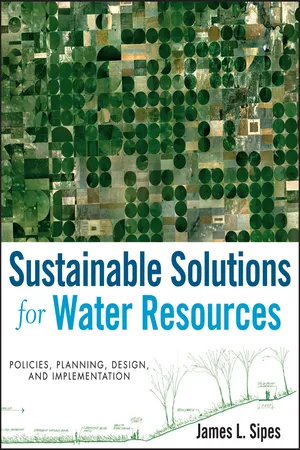
We think of Earth as a water world, and it certainly is, with ocean waters covering nearly 71% of Earth’s surface. Ninety-eight percent of the water on the planet is in the oceans and therefore unusable for drinking. Of the 2% of the fresh water, the majority is in glaciers and the polar ice caps. Approximately 0.36% is in underground aquifers, and about the same amount makes up our lakes and rivers. (See Figure 1.1.)
But although there is plenty of water on Earth, it is not always in the right place, and it is not always there when we need it. The world’s population is expected to expand to over 9.4 billion people by 2050, and scientists are concerned that our water resources will not be able to accommodate this mass of people. According to the Stockholm International Water Institute, more than 1 billion people worldwide do not have adequate clean drinking water, and 2.5 billion lack safe sanitation (U.S. Census Bureau).
Figure 1.1 Water is the most important environmental issue of this or any other century. Image courtesy NRCS.
Figure 1.2 Water is essential for life on this planet. The question is how to protect existing water resources while meeting all the demands for water. Image courtesy NRCS.
In most parts of the United States, people take for granted that cheap, clean water will always be available to us. In other parts of the world, tens of millions of people do not have access to safe water. The United Nations calls it a crisis of epic proportion. According to the U.S. Census Bureau, at the beginning of 2000, one-sixth (1.1 billion people) of the world’s population was without access to improved water supply and two-fifths (2.4 billion people) lacked access to improved sanitation. The majority of these people live in Africa and Asia.
In recent years, though, even the United States has experienced severe droughts that rival the dust bowl days of the Great Depression. Water is a natural resource that is already in short supply in many parts of the nation, and the situation is only going to get worse. As the population continues to grow, demands for water increase, and climate change mucks up the hydrologic cycle, water will become even scarcer. (See Figure 1.2.)
For example, the state of Georgia is one of the fastest-growing states in the United States. In the past two decades, however, Georgia has experienced the two worst droughts on record. According to the U.S. Army Corps of Engineers, on August 14, 2008, Lake Lanier, which supplies most of the water for the Atlanta metropolitan area, had fallen to 16 feet below full pool. This is a full 9 feet lower than the lake level during the droughts of 2007. Within a matter of days, Atlanta was running out of water.
It is important to point out, though, that the issue is not just about water availability. Water quality is increasingly becoming a major concern. Poor water supply and sanitation have a high health toll. Much of our water is polluted to the point where it is no longer safe for human use. One of the keys to ensuring we have sufficient water for the future is our ability to use small amounts of clean water to bring large productivity gains.
Since this book is about “sustainable” solutions to water resources, I would be remiss if I did not talk about the amount of energy it takes to meet water demands and the environmental impact of our actions. According to the National Resources Defense Council (2009), the collection, distribution, and treatment of drinking water and wastewater nationwide produce as much carbon dioxide each year as would 10 million cars on the road (www.nrdc.org/water/energywater.asp). We need to develop sustainable water resource policies that allow us to meet all of our needs.
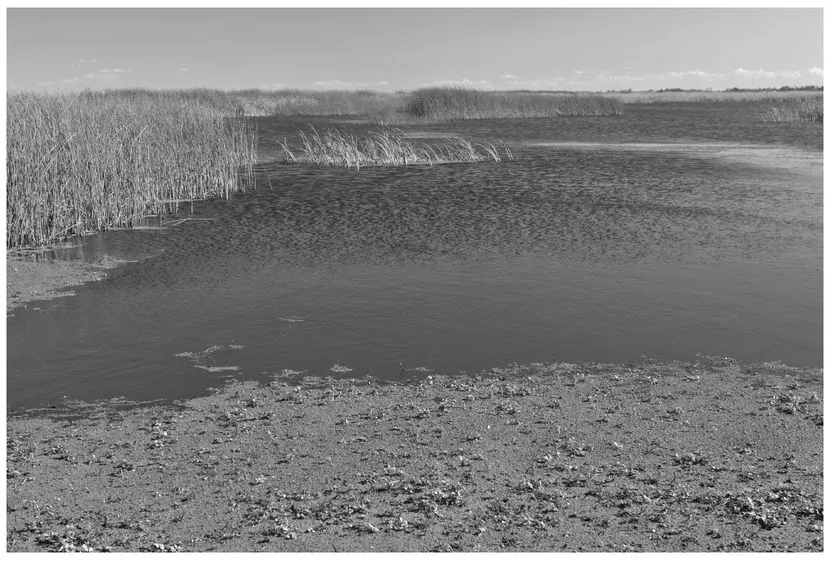
The 1987 Bruntland report from the World Commission on Environment and Development defined sustainable development as development that “meets the needs of the present generation without compromising the ability of future generations to meet their needs. ” One objective of the Commission is to find the right balance between society’s needs for economic growth, protection from floods, and affordable power, with environmental concerns such as water quality, the preservation of wetlands, and the protection of threatened or endangered species. (See Figure 1.3.)
Figure 1.3 The Yolo Bypass Wildlife Area is a 3,700-acre restoration project that opened in 1997 near Sacramento and Davis, California. It is part of the 59,000-acre Yolo Bypass, which provides flood control for the cities in the area. Image courtesy NRCS.
1.2 OVERVIEW OF WATER RESOURCES
Water resources involve surface water, water below ground, and water that falls from the sky. Most cities meet their needs for water by withdrawing it from the nearest river, lakes, reservoir, or aquifer. In some parts of the United States, precipitation is considered to be public domain because it is such a valuable resource.
One thing discovered over the years is that groundwater and surface water are fundamentally interconnected and are integral components of the hydrologic cycle. They have to be thought of as one cohesive system.
The United States Geological Survey (USGS) compiled estimates of surface-water and groundwater withdrawals for the nation at five-year intervals since 1950. The data are compiled at the county, state, and national levels for eight categories of water use. These include:
1. Public supply
2. Domestic
3. Irrigation
4. Livestock
5. Aquaculture
6. Self-supplied industrial
7. Mining
8. Thermoelectric power
1.2.1 Rivers and Streams
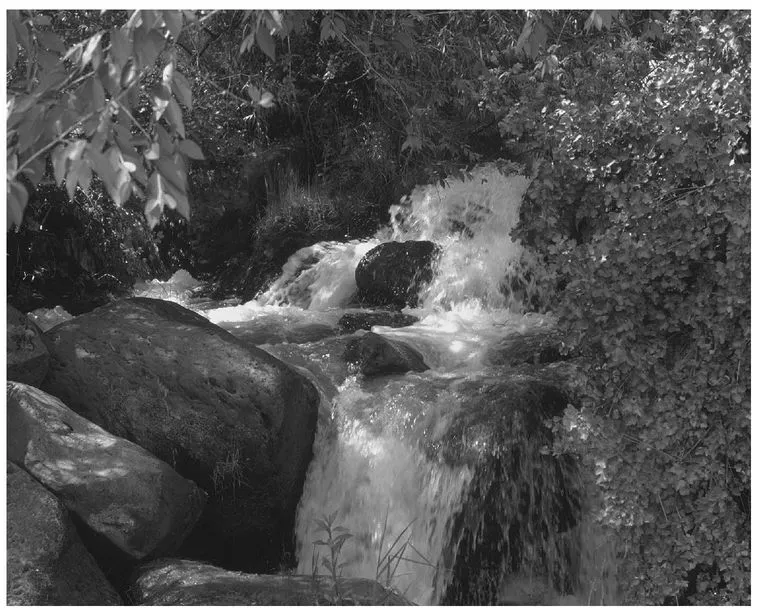
When we talk about water resources, most people probably think of rivers and streams. The United States has more than 250,000 rivers that collectively make up 3.7 million river miles in length. The longest river in the United States is the Missouri, which is approximately 2,500 miles in length, and the largest is the Mississippi, which has a flow volume of 593,000 cubic feet per second at its mouth (www.americanrivers.org/library/river-facts/river-facts.html). (See Figure 1.4.)
Figure 1.4 The NRCS in Idaho has developed the Conservation Stewardship Program, which encourages producers to adopt new conservation practices and improve or maintain existing conservation practices that address resource concerns. The program has had a significant impact on water quality in the state. Image courtesy NRCS.
Of the country’s rivers and streams, 45% were reported as impaired according to the 2002 National Assessment Database. Sediment, pathogens, and habitat alterations are the biggest problems associated with the nation’s rivers and streams. This fact obviously raises some big concerns.
The 2002 National Assessment Database includes water quality information for all states as well as the District of Columbia and the U.S. Virgin Islands. Alabama, North Carolina, Washington, Puerto Rico, the tribal nations, and the island territories of the Pacific did not provide data electronically in 2002.
A watershed is defined by the U.S. Environmental Protection Agency (EPA) as “the geographic region within which water drains into a particular river, stream, or body of water” (www.epa.gov/adopt/defn.html). Watershed drainage areas are large, ranging from 20 to 100 square miles or more. Each watershed is composed of a number of smaller “subwatersheds,” which typically range from 5 to 10 square miles in size.
Rivers have had a major impact on settlement patterns in the United States. Most of the nation’s major cities in the eastern part of the country were built along rivers. Rivers provide water needed for drinking, sanitation, growing crops, and even navigation.
Unfortunately, many rivers and streams have been seriously impacted by human activities. The EPA considers urban runoff and pollution from other diffuse sources the greatest contaminant threat to the nation’s waters. More than 235,000 river miles in the United States have been channelized, 25,000 river miles have been dredged, and another 600,000 river miles are impounded behind dams. Nearly 40% of the rivers and streams in the United States are too polluted for fishing and swimming. Thirty percent of the native freshwater fish species in North America are threatened, endangered, or of special concern (www.americanrivers.org/library/river-facts/river-facts.html).
Floodplains
Floodplains are areas along rivers, streams, or creeks that may be inundated with water following storms. Floodplains help reduce the number and severity of floods, filter stormwater, and minimize nonpoint source pollution. Water expands into the floodplain areas and infiltrates into the ground, slowing water flow and allowing groundwater recharge. Floodplains also provide habitat for both flora and fauna. One significant problem, though, is that human activities have had significant adverse impacts on the effectiveness of a stream’s floodplain to convey and store floodwater.
Riparian Corridors
Riparian corridors include grass, trees, shrubs, and a combination of natural features along the banks of rivers and streams. Protecting these corridors is critical for preserving water quality. Riparian zones also harbor a disproportionately high number of wildlife species and perform a disparate number of ecological functions compared to most plant habitats (Fischer and Fischenich, April 2000). Riparian corridors often are considered to coincide with the 100-year floodplain.
Impaired Rivers and Streams Database
Information on state-reported causes and sou...