![]()
1
The 40 “Know It or Blow It” Rules of Email Marketing
Email marketing is an amazingly cost-effective way to build relationships that drive business success. In today’s challenging economic times, this cost advantage makes email marketing arguably the most powerful tool for building any business.
But the main advantage of email marketing is not cost. Email is simply the most effective way to stay in touch with most of your customers. If you’re like many businesses, the 2009 recession forced you to hunker down and focus on driving business and sales from those most likely to buy—people you already have a relationship with—and that’s what email marketing is all about.
Email marketing is powerful, but it’s also a challenge because the inbox is a hostile environment. Whether your email is noteworthy or not-worthy depends on your ability to stick to the fundamentals of authentic relationship building with your customers. That’s what this book is about—how to use email to build long-lasting customer relationships.
Over the years, we at Constant Contact have made it our mission to collect, create, refine, and share email marketing best practices with our customers. We’re proud to now share these with you in this book—strategies that have contributed to the success of hundreds of thousands of businesses around the globe. On a daily basis we interact with thousands of business owners and non-profits just like you on the phone, online via webinars, and in person at live seminars held throughout the United States. These interactions provide us with regular feedback and fascinating lessons on the rapidly evolving world of email marketing.
Here are some examples of small businesses and non-profits who have discovered a broad range of benefits of email marketing:
“We track all of our participants and have found that more than 53% of them found out about us through the Internet or our email newsletter. Email marketing is only a fraction of the cost of print ads and it brings in a phenomenal ROI.”
—Girls Learn to Ride
“I can’t believe the number of people who walk into our restaurants and redeem coupons. Before I tried email marketing, I would put a coupon in the local newspaper—but fewer than 10 people would redeem it. I then put the same coupon in an email and sent it to 400 people. I saw 100 email coupons redeemed that month!”—Fajita Grill
“For our 35th anniversary, we sent a ‘save the date’ email to 3,000 people. At 42 cents a stamp, that would be over $
1,000 worth of postage we’ve saved from just one mailing.”—Women Employed
“Most of all, email marketing has helped us stay connected, build community, and inspire people.”—Episcopal Diocese of Atlanta
“Our revenue from return customers has increased about 30% since we began sending out our ‘New Arrivals’ email campaign. We’ve found that a number of customers who have never purchased from us before will buy after we send out an email campaign.”—Bijoux Mart International
I know the email strategies in this book work because I have personally taught them to thousands of small business owners and watched the results. Constant Contact’s success is directly attributable to the fact that we have helped so many of them grow their organizations. In addition, I used these same email strategies to help build Constant Contact from an unknown technology startup into an industry-leading public company. When I arrived in 2001, we had 10 customers and roughly $100 a month in revenue. Now, we are the largest provider of email marketing services for small- to medium-sized businesses, with 300,000 customers in 120 countries and 500+ employees. I hope you’ll find a path to greater business success in the pages that follow.
Since this book is for busy leaders who don’t have a lot of time, I’ve decided to use Chapter 1 to summarize all the email marketing success fundamentals contained in this book, so you can quickly decide which of your own email practices need immediate attention.
The rest of the book will help you build a comprehensive email marketing strategy for your business.
Ten Keys to Your Overall Email Marketing Success
If you learn nothing else from this book, I recommend you master the following ten principles. Most of the statistics that suggest high returns on email marketing investment depend on how closely you adhere to these basics.
1. Only send email to people who know you. People open email from people they know, and they delete email from people they don’t recognize or mark it as spam. It doesn’t even matter what’s legal or ethical. If your business makes a habit of emailing total strangers, then your reputation, your budget, and your growth will suffer for it. You can read about building a good email list in Chapter 5.
2. Don’t treat email addresses like email addresses; treat them like relationships. An email address is one of the most personal things someone can share with your business because it’s an invitation to send your messages to a place where he or she sends and receives personal communications as well as business ones. Email doesn’t work if it feels like a computer-generated HTML document. It has to come across as being part of a meaningful relationship. You can read about building relationships in Chapter 2.
3. Send relevant content that has value to your recipient. You probably weren’t going to send irrelevant, valueless content on purpose, but content with good intentions isn’t the same thing as value and relevance. In order to ensure that your emails are valuable and relevant, you have to know exactly what your audience wants. You have to be a good listener to be a good communicator. You can find more about creating relevance and value in your content in Chapter 7.
4. Engage your audience in the content you write. This requires attention-grabbing subject lines, clear headlines, and thoughtful content. You can read about what makes email content engaging in Chapter 7.
5. Maximize your delivery rate. Getting email delivered is harder than you might think. Internet Service Providers (“ISPs”) such as Yahoo!, AOL, and Hotmail work diligently to block emails from unwanted senders. If your email isn’t up to professional standards in reputation, technology, or permission, you might as well be sending your email directly to the junk folder. You can read about maximizing delivery in Chapter 11.
6.
Don’t share email lists with anyone. Your email list is a valuable asset. It will lose value if you loan it to someone else because the people on your list won’t recognize a foreign sender. You should never borrow an email list from someone else. That list is full of people who aren’t familiar with your business, and you
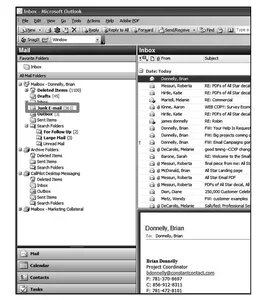
Figure 1.1 Avoiding the junk folder is one of the keys to successful email marketing.
are likely to attract more enemies than friends. You can read about protecting your email list in Chapter 6.
7. Set expectations with your recipients. When someone signs up to receive your email communications, they do so with the expectation of receiving something of value. If you don’t communicate clearly what that value is, your audience will draw their own conclusions. Tell your audience what you’ll be sending and how often you’ll be sending it. That way, you’ll defeat any value, relevance, and frequency objections before your audience even signs up. You can read more about setting expectations in Chapter 4.
8. Look professional whenever you communicate. If you’re a salesperson, you know how to dress for success. Similarly, if you’re an email, you need to look familiar, inviting, and consistent. You can read more about creating an email with a friendly professional identity in Chapter 9.
9. Be ready to respond. Email communications can be highly automated, in an off-putting way that distances you from your customers. Don’t set an email auto reply in your in-box and take a mental vacation. Keep an eye on your communications and your responses so you can take action, make changes, and repeat positive results. You can read more about responding to your emails in Chapter 12.
10. Regularly review your campaign results. The longer you practice marketing the more you realize how unpredictable your results will be if you don’t analyze your past and make adjustments based on your data. Use email tracking reports to help you improve, progress, and grow. You can read about email tracking reports in Chapter 12.
Ten Things Your Customers Expect You to Do
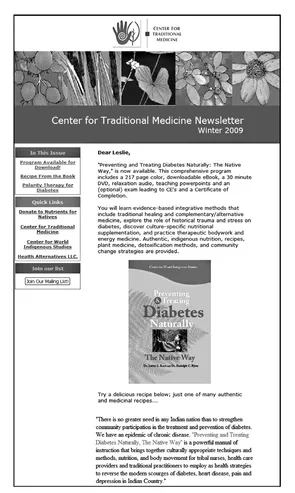
Figure 1.2 Professional looking emails reinforce your brand and identity.
Most marketing failures happen because the business worries more about what to expect from its customers than what its customers expect from the company. The problem is, it’s not easy to know exactly what your customers expect. You have to ask them constantly, and you have to believe them, which is even harder than asking. Here’s what Constant Contact has learned about meeting customer expectations when it comes to email marketing. Your customers expect you to:
1. Protect them. Storing data in a secure environment is critical, but that’s not all there is to privacy. You need a privacy policy, and you need to be sensitive to the amount of intrusion you cause your customers. You can read more about privacy in Chapter 4.
2.
Know them. Your customers don’t lack information, they lack
personalized relevant information. You don’t need to know every detail about your customers, but you have to make them feel like you know them so you can target your communications to their interests. You can find out how to determine what your customers want you to know about them in Chapter 5.
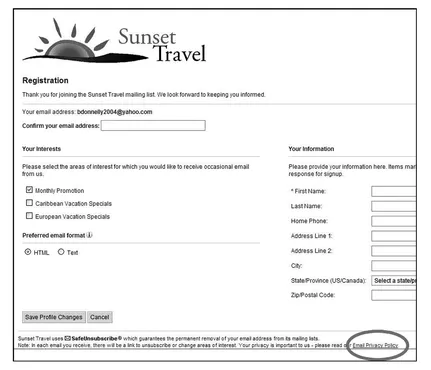
Figure 1.3 Give your subscribers a link to your privacy policy.
3. Help them. Email is noise when it doesn’t solve a problem or leave the recipient better off than she was before reading the email. To be successful at email marketing, your emails have to help save time, money, and angst. You can read more about helpful email content in Chapter 7.
4. Promise them. Your business makes promises, regardless of whether you intend to. When you send out a message that describes your products or services, someone has to believe it in order to buy it. When someone believes you, it’s a promise you need to keep if you want to keep that customer. When someone subscribes to your email list, you have also made a promise to send only what the subscriber believes he will receive. You can read more about making promises and sending only what you promised in Chapter 4.
5. Respond to them. Email is a two-way form of communication. Your audience wants you to respond when they interact with your emails. They can reply, click, block, unsubscribe, and forward your emails, and every form of response deserves an appropriate follow up from you. You can read more about responding to email interaction in Chapter 12.
6. Teach them. People make more educated decisions than they used to because there is so much information available. Consumers want to justify their purchase decisions with good information, and emails are perfect for delivering quality information in a concise format. You can read about creating good email content that makes your audience smarter in Chapter 7.
7.
Grab them. Email inboxes are crowded with messages because of spam and because people subscribe to a lot of email lists. Most people don’t have time to read all the emails they receive, and they want someone to help them prioritize the information in their inbox. Your emails have to grab attention and deliver your message clearly. You can read more about grabbing your audience’s attention in Chapter 7.
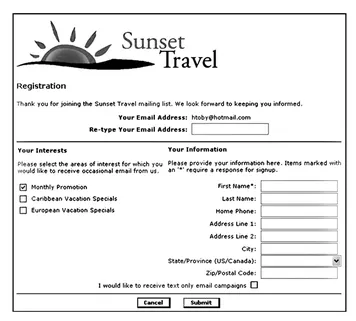
Figure 1.4 Ask your email subscribers to share their interests.
8. Ask them. It’s just as classy to ask for your customer’s permission to start periodic emailing as it is to ask your girlfriend’s parents to start dating. It’s old-fashioned, effective, and will probably make you look better than your competition. You can read more about asking for permission in Chapter 4.
9. Give them options. Your audience isn’t likely to simply respond to an offer to “Join Our Email Blast.” You need to give people choices so they can choose the information they want to receive and make changes when their interests shift. You can read more about providing list options in Chapter 5.
10. Free them. It’s easy to think that your email list is too valuable to let anyone easily remove herself. Think again. You need to make it easy for someone to unsubscribe or move from one email list to another. Put an unsubscribe link in every email and let your audience remove themselves f...