Managing the Unknown offers a new way of looking at the problem of managing projects in novel and unknown environments. From Europe's leading business school, this book shows how to manage two fundamental approaches that, in combination, offer the possibility of coping with unforeseen influences that inevitably arise in novel projects:
* Trial-and-Error Learning allows for redefining the plan and the project as the project unfolds
* Selectionism pursues multiple, independent trials in order to pick the best one at the end
Managing the Unknown offers expert guidelines to the specific project mindsets, infrastructures, and management methods required to use these project management approaches and achieve success in spite of unforeseen obstacles. This book equips readers with:
* Causal explanations of why unforeseeable factors in novel projects make traditional project planning and project risk management insufficient
* Directly applicable management tools that help managers to guide novel and high-uncertainty projects
* Real-world case studies of both successful and unsuccessful approaches to managing high uncertainty in novel projects
eBook - ePub
Managing the Unknown
A New Approach to Managing High Uncertainty and Risk in Projects
- English
- ePUB (mobile friendly)
- Available on iOS & Android
eBook - ePub
Managing the Unknown
A New Approach to Managing High Uncertainty and Risk in Projects
About this book
Information
PART I:
A New Look at Project Risk Management
Imagine you are planning a climbing expedition up the Matterhorn, one of the most spectacular mountains in the Alps. As a project management expert, you produce a detailed plan and specify routes, expected distance travel times, budgets for equipment, shelter and food, and so on. In addition, you have to worry about what might go wrong: A storm may move in, for example. For such an eventuality, you need to build buffers into the plan: extra time and/or extra equipment (perhaps an emergency tent or ice picks). You also need to plan decision points; for example, if the storm moves in before noon, we turn around, and if it catches us at 4:00 P.M., we take refuge in an emergency shelter. This exercise of anticipating risks is the essence of project risk management (PRM).

Project risk management can be defined as the “art and science of identifying and responding to project risk throughout the life of a project and in the best interest of its objectives.” PRM extends project planning by identifying, appraising, and managing project-related risks. Risk, in turn, is defined as “the implications of the existence of significant uncertainty about the level of project performance achievable” and is seen as having two components: first, the probability of occurrence, and second, the consequences or impacts of occurrence.1
PRM has become an established, formalized, and widely used project management method.2 This method offers a powerful set of tools that help companies to keep downside risks under control and to take advantage of upside opportunities. In some industries, such as engineering, construction, or pharmaceuticals, anticipating and managing downside risks is essential to remain in business. In other industries, the ability to seize opportunities can greatly enhance profitability. For example, the manager of one power generation engineering company told us, “Thinking proactively through risks enables us to fill the ‘white spaces’ in our contracts to our advantage. We proactively interpret undefined events in our favor. ‘User training costs money? Well, that was not specified, so it’s clear that you must pay it.’ This protects us from the customer interpreting the event in his favor, and sometimes, we even manage to seize an opportunity and sell it to the client for additional profit.”
PRM, then, is concerned with achieving the stated project goals in spite of risks (see Smith and Merritt 2002), although it ideally includes influencing the “base plan” and even the project design, and revising the targets when necessary.3 While the details differ, authors agree that PRM consists of four conceptual steps (see Figure I.1): Identify risks beforehand; classify and prioritize them according to probability and impact; manage them with a collection of preventive, mitigating, and contingent actions that are triggered by risk occurrence; and embed these actions into a system of documentation and knowledge transfer to other projects.
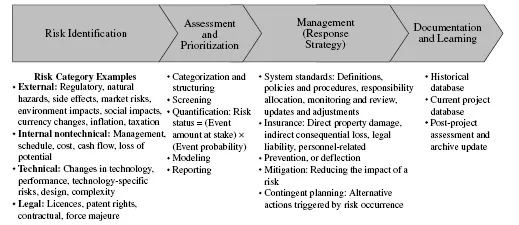
Figure I.1 Conceptual steps of the PRM process
In Part I of this book, we present two examples of project risk management. The first example, the PCNet project, describes one of the many IT integration projects undertaken as part of the takeover of RBD, Inc. by the diversified resources company Metal Resources Co. from July 2001 to September 2002. We consider this to be an excellent example of how solid application of PRM techniques in the appropriate project environment can produce good results.
The second example, the Circored project, describes the design and construction of a plant in Trinidad to produce direct-reduced iron (DRI), as part of a joint venture between Cleveland Cliffs, one of the largest iron ore suppliers to blast furnace integrated steelmakers in the United States, Lurgi Metallurgie GmbH, a metallurgical process engineering company, and LTV Steel, who wanted to use DRI in a mini-mill they were building in Alabama. We consider this to be an excellent example of what happens when standard PRM techniques are applied to novel, first-of-a-kind projects. As is often seen in such cases, the project ran into unexpected problems that delayed completion for several months, it ran over budget, and it was eventually blindsided by an unexpected turn in the market.
In Chapter 3, we draw the lessons from the two examples and characterize the types of uncertainty that require PRM. Based on this classification, we outline under what circumstances which of the various methods of PRM are appropriate. In addition, we extend the PRM toolbox by discussing additional methods that are relevant but have not been presented in the same context. Control-and-fast-response is a method of dealing with high task complexity, and project contracts are used to coordinate multiple stakeholders in the presence of relationship complexity. Finally, we introduce two approaches to unforeseeable uncertainty, both of which can extend PRM: trial-and-error learning, or the repeated redefinition of the project over time, and selectionism, or the use of parallel candidate trials, the best of which is chosen ex post. These will be further discussed in Part II of the book.
Endnotes
1
PRM Best Practice: The PCNet Project1
1.1 Background
In 2002, the first-tier diversified resource company, Metal Resources Co., headquartered in Austin, Texas, announced a cash offer for the Winnipeg-based metals company, RBD, Inc. The offer was recommended by the RBD board to its shareholders and then swiftly executed. The combined companies formed the second largest mining and resources company in the world. In 2004, Metal Resources Co. had activities in 28 countries, with $29 billion in sales, 40,000 employees, and leadership positions in aluminum, nickel, copper, uranium, gold, carbon steel metals, diamonds, manganese, and various specialty metals used in steel production.
The acquisition execution placed heavy emphasis on synergies, that is, on gross annual cost savings. Five top-level integration areas were put in place to capture the savings: IT infrastructure, HR systems and processes, financial systems and processes, operational integration, and organizational integration. The total synergy target amounted to $1.9 billion in annual gross operating cost savings.
One of the important merger activities was a consolidation of the IT systems of the two companies, a huge undertaking involving 900 IT employees throughout the combined company. Not only had the IT integration achieved its own target of $210 million in savings, but it also critically enabled the other merger areas by providing a transparent, integrated, and reliable application platform. Max Schmeling, the enterprise CIO, was responsible for executing the IT integration.
A pre-integration team planned the integration project in detail over a period of nine months, up to October 2002. The team started from an overall target (“get $210 million in annual savings by consolidating the IT structure”) and successively broke this target down to more and more detailed tasks. Within each consolidation area, large projects were defined, then subprojects, and then detailed tasks that could be assigned. In total, 110 projects were to be executed in parallel by project managers and subproject managers, supported by a central project office. The projects would have to be carefully coordinated, as some of them served as enablers for others, and all competed for the same scarce staff time.
In September 2002, Max Schmeling pulled his direct reports and operating company CIOs into one room (about a dozen people). He presented them with the work breakdown structure that the planning team had produced. He said, “Nobody leaves this room before every one of the 110 savings opportunities has a name on it.” The first outcome of this two-day marathon meeting was a project structure that clearly assigned project accountabilities, as well as a corporate sponsor for each project, to help them drive change through the organization. The key projects within the IT integration were “General” (mainframe decommissioning, Unix integration, and office consolidation at the various sites of the previous companies), knowledge management (including the consolidation of portals, intranets, yellow pages, instant messaging, collaboration tools, and publishing), the ERP program (moving to an enterprisewide SAP installation encompassing HR systems and financial reporting across both companies), the Web applications center, IT strategy (which was to connect the IT changes to head counts and reengineered processes, and strategic IT sourcing), and the PCNet project, on which our project risk management (PRM) example focuses.
The last piece, not producing bankable savings but critical nonethe-less, was the “Time Zero” p...
Table of contents
- Cover
- Contents
- Title Page
- Copyright
- Foreword
- Introduction
- PART I: A New Look at Project Risk Management
- PART II: Managing the Unknown
- PART III: Putting Selectionism and Learning into Practice
- PART IV: Managing the Unknown: The Role of Senior Management
- References
- Index
- End User License Agreement
Trusted by 375,005 students
Access to over 1.5 million titles for a fair monthly price.
Study more efficiently using our study tools.
Frequently asked questions
Yes, you can cancel anytime from the Subscription tab in your account settings on the Perlego website. Your subscription will stay active until the end of your current billing period. Learn how to cancel your subscription
No, books cannot be downloaded as external files, such as PDFs, for use outside of Perlego. However, you can download books within the Perlego app for offline reading on mobile or tablet. Learn how to download books offline
Perlego offers two plans: Essential and Complete
- Essential is ideal for learners and professionals who enjoy exploring a wide range of subjects. Access the Essential Library with 800,000+ trusted titles and best-sellers across business, personal growth, and the humanities. Includes unlimited reading time and Standard Read Aloud voice.
- Complete: Perfect for advanced learners and researchers needing full, unrestricted access. Unlock 1.5M+ books across hundreds of subjects, including academic and specialized titles. The Complete Plan also includes advanced features like Premium Read Aloud and Research Assistant.
We are an online textbook subscription service, where you can get access to an entire online library for less than the price of a single book per month. With over 1.5 million books across 990+ topics, we’ve got you covered! Learn about our mission
Look out for the read-aloud symbol on your next book to see if you can listen to it. The read-aloud tool reads text aloud for you, highlighting the text as it is being read. You can pause it, speed it up and slow it down. Learn more about Read Aloud
Yes! You can use the Perlego app on both iOS and Android devices to read anytime, anywhere — even offline. Perfect for commutes or when you’re on the go.
Please note we cannot support devices running on iOS 13 and Android 7 or earlier. Learn more about using the app
Please note we cannot support devices running on iOS 13 and Android 7 or earlier. Learn more about using the app
Yes, you can access Managing the Unknown by Christoph H. Loch,Arnoud DeMeyer,Michael Pich in PDF and/or ePUB format, as well as other popular books in Technology & Engineering & Industrial Engineering. We have over 1.5 million books available in our catalogue for you to explore.