Timely and accessible content on the traditional project management activities of control, risk, time and cost, and quality and value
The Wiley Guides to the Management of Projects address critical, need-to-know information that will help professionals successfully manage projects in most businesses and help students learn the best practices of the industry. They contain not only well-known and widely used basic project management practices but also the newest and most cutting-edge concepts in the broader theory and practice of managing projects.
This second book in the series explains the "traditional" project management activities of control, risk, time, cost, and quality. The expert contributors show that project control represents more than the simple evaluation of project performance. They detail the principles of project time and cost control and offer a detailed review of critical chain project management. In addition, they provide a framework for project performance measurement, show how to make risk management more effective, and tell how to improve quality management.
Touching on all of the fundamental levers of project control, this book will prove to be a comprehensive "owner's manual" for project and team managers, project team members, engineers, business consultants, and all those involved in any aspect of project management.
Complete your understanding of project management with these other books in The Wiley Guides to the Management of Projects series:
*
The Wiley Guide to Project Organization & Project Management Competencies
*
The Wiley Guide to Project Technology, Supply Chain & Procurement Management
*
The Wiley Guide to Project, Program & Portfolio Management
- English
- ePUB (mobile friendly)
- Available on iOS & Android
eBook - ePub
The Wiley Guide to Project Control
About this book
Information

CHAPTER ONE
PROJECT CONTROL
Peter Harpum
Project control is about ensuring that the project delivers what it is set up to deliver. Fundamentally, the process of project control deals with ensuring that other project processes are operating properly. It is these other processes that will deliver the project’s products, which in turn will create the change desired by the project’s sponsor. This chapter provides an overview of the project control processes, in order to provide the conceptual framework for the rest of this section of the book.
Introduction
Control is fundamental to all management endeavor. To manage implies that control must be exercised. Peter Checkland connects the two concepts as follows:
The management process. . .is concerned with deciding to do or not to do something, with planning, with alternatives, with monitoring performance, with collaborating with other people or achieving ends through others; it is the process of taking decisions in social systems in the face of problems which may not be self generated.
Checkland, 1981
In short to
• plan
• monitor
• take action
One may ask what is the difference between project control and any other type of management control? Fundamentally there is little that project managers must do to control their work that a line manager does not do. Managers of lines and projects are both concerned with planning work; ensuring it is carried out effectively (the output from the work “does the job”) and efficiently (the work is carried out at minimum effort and cost). Ultimately, managers of lines and projects are concerned with delivering what the customer wants. The line management function is usually focussed on maximizing the efficiency of an existing set of processes—by gradual and incremental change—for as long as the processes are needed. The objective of operations management (or “business-as-usual”) is rarely to create change of significant magnitude. Projects, on the other hand, are trying to reach a predefined end state that is different to the state of affairs currently existing; projects exist to create change. Because of this, projects are almost always time-bound. Hence, the significant difference is not in control per se, but in the processes that are being controlled—and in the focus of that control.
Project management is seen by many people as mechanistic (rigidly follow set processes and controlled by specialist tools, apropos a machine) in its approach. This is unsurprising given that the modern origins of the profession lie in the hard-nosed world of defense industry contracting in America. These defense projects (for example, the Atlas and Polaris missiles) were essentially very large systems engineering programs where it was important to schedule work in the most efficient manner possible. Most of the main scheduling tools had been invented by the mid-1960s. In fact, virtually all the mainstream project control techniques were in use by the late 1960s. A host of other project control tools were all available to the project manager by the 1970s, such as resource management, work breakdown structures, risk management, earned value, quality engineering, configuration management, and systems analysis (Morris, 1997).
The reality, of course, is that project management has another, equally important aspect to it. Since the beginning of the 1970s research has shown that project success is not dependent only on the effective use of these mechanistic tools. Those elements of project management to do with managing people and the project’s environment (leadership, team building, negotiation, motivation, stakeholder management, and others) have been shown to have a huge impact on the success, or otherwise, of projects (Morris, 1987; Pinto and Slevin, 1987—see also Chapter 5 by Brandon. Both these two aspects of project management—“mechanistic” control and “soft,” people-orientated skills—are of equal importance, and this chapter does not set out to put project control in a position of dominance in the project management process. Nevertheless, it is clear that effective control of the resources available to the project manager (time, money, people, equipment) is central to delivering change. This chapter explains why effective control is fundamentally a requirement for project success.
The first part of the chapter explains the concept of control, starting with a brief outline of systems theory and how it is applied in practice to project control. The second part of the chapter outlines the project planning process—before project work can be controlled, it is critical that the work to be carried out is defined. Finally, the chapter brings project planning and control together, describing how variance from the plan is identified using performance measurement techniques.
Project Control and Systems Theory
Underlying control theory in the management sciences is the concept of the system. The way that a project is controlled is fundamentally based on the concept of system control—in this case the system represents the project. Taking a systems approach leads to an understanding of how projects function in the environment in which they exist. A system describes, in a holistic manner, how groups are related to each other. These may, for instance, be groups of people, groups of technical equipment, groups of procedures, and so on. (In fact, the systems approach grew out of general systems theory, which sought to understand the concept of “wholeness”—see Bertalanffy, 1969.) The systems approach exists within the same conceptual framework as a project; namely, to facilitate change from an initial starting position to an identified final position.
The Basic Open System
A closed system is primarily differentiated from an open system in that the former has impermeable boundaries to the environment (what goes on outside the system does not affect the system), while the latter has permeable boundaries (the environment can penetrate the boundary and therefore affect the system). In a closed system, fixed “laws” enable accurate predictions of future events to be made. A typical example of this is in physical systems (say, for instance, a lever) where a known and unchanging equation can be used to predict exactly what the result will be of applying a force to one part of the system. Open systems do not allow such accurate predictions to be made about the future, because many influences cross the boundary and interact with the system, making the creation of predictive laws impossible.
The key feature of the open system approach that makes it useful in the analysis and control of change is that the theory demands a holistic approach be taken to understanding the processes and the context they are embedded in. It ensures that account is taken of all relevant factors, inputs or influences on the system, and its environmental context. Another key feature of an open system is that the boundaries are to a large extent set arbitrarily, depending on the observer’s perspective. Moreover, wherever the boundaries are placed, they are still always permeable to energy and information from the outside. It is this quality that allows the relationships between the system and its environment to be considered in the context of change, from an initial condition to a final one.
A critical part of this theory that is useful when considering management control is that the open system always moves toward the achievement of superordinate goals. This means that although there may be conflicting immediate goals within the creative transformation process(es), the overall system moves toward predefined goals that benefit the system as a whole (see Katz and Kahn, 1969). In a project system these goals are the project objectives.
In simple terms the basic open system model is shown in Figure 1.1.
The Open System Model Applied to Project Control
If the generic system diagram is redrawn to represent a project and its environment, the relationship of control to planning (how the project is going to achieve its objectives) can be made clear (see Figure 1.2).
FIGURE 1.1. THE BASIC SYSTEMS MODEL.
Source: After Jackson (1993).

The value of the open system model of the project shows how the “mechanistic” control meta process attempts to ensure that the project continues toward achievement of its objectives and the overall goal. The “softer” behavioral issues are evident throughout the project system: within the project processes, acting across the permeable boundaries with the project stakeholders and wider environment, and indeed around the “outside” of the project system but nevertheless affecting the project goal—and hence the direction the project needs to move in to reach that goal.
The boundaries of the project are defined by the project plans. These plans define what the project processes need to do to reach the system’s goals (defined by the project’s environment). The plans also determine where in the organizational hierarchy the project exists, because projects have subsystems (work packages) and exist within a supra-system (programs and portfolios of projects). This is shown in Figure 1.3.
FIGURE 1.2. THE PROJECT AS A SYSTEM.
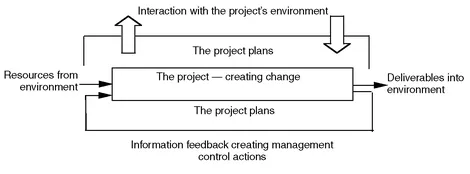
FIGURE 1.3. THE HIERARCHICAL NATURE OF PROJECT CONTROL SYSTEMS.

To make the distinctions clear between portfolio and program, their definitions are listed in the following, elaborated for clarity from the Association for Project Management Body of Knowledge, 4th edition (APM, 2000):
| Program management | Often a series of projects are required to implement strategic change. Controlling a series of projects that are directed toward a related goal is program management. The program seeks to integrate the business strategy, or part of it, and the projects that will implement that strategy in an overarching framework. |
| Portfolio management | In contrast to a program, a portfolio comprises a number of projects, or programs, that are not necessarily linked by common objectives (other than at the highest level), but rather are grouped together to enable better control to be exercised over them. |
The feedback loop measures where the project is deviating from its route (the plans) to achieving the project goals and provides inputs to the system to correct the deviation. Control is therefore central to the project system; it tries to ensure that the project stays on course to meet its objectives and to fulfill ...
Table of contents
- THE WILEY GUIDES TO THE MANAGEMENT OF PROJECTS
- Title Page
- Copyright Page
- Introduction
- CHAPTER ONE - PROJECT CONTROL
- CHAPTER TWO - TIME AND COST
- CHAPTER THREE - CRITICAL CHAIN PROJECT MANAGEMENT
- CHAPTER FOUR - PROJECT PERFORMANCE MEASUREMENT
- CHAPTER FIVE - QUALITATIVE AND QUANTITATIVE RISK MANAGEMENT
- CHAPTER SIX - MAKING RISK MANAGEMENT MORE EFFECTIVE
- CHAPTER SEVEN - IMPROVING QUALITY IN PROJECTS AND PROGRAMS
- CHAPTER EIGHT - THE PROJECT MANAGEMENT SUPPORT OFFICE
- INDEX
Trusted by 375,005 students
Access to over 1.5 million titles for a fair monthly price.
Study more efficiently using our study tools.
Frequently asked questions
Yes, you can cancel anytime from the Subscription tab in your account settings on the Perlego website. Your subscription will stay active until the end of your current billing period. Learn how to cancel your subscription
No, books cannot be downloaded as external files, such as PDFs, for use outside of Perlego. However, you can download books within the Perlego app for offline reading on mobile or tablet. Learn how to download books offline
Perlego offers two plans: Essential and Complete
- Essential is ideal for learners and professionals who enjoy exploring a wide range of subjects. Access the Essential Library with 800,000+ trusted titles and best-sellers across business, personal growth, and the humanities. Includes unlimited reading time and Standard Read Aloud voice.
- Complete: Perfect for advanced learners and researchers needing full, unrestricted access. Unlock 1.5M+ books across hundreds of subjects, including academic and specialized titles. The Complete Plan also includes advanced features like Premium Read Aloud and Research Assistant.
We are an online textbook subscription service, where you can get access to an entire online library for less than the price of a single book per month. With over 1.5 million books across 990+ topics, we’ve got you covered! Learn about our mission
Look out for the read-aloud symbol on your next book to see if you can listen to it. The read-aloud tool reads text aloud for you, highlighting the text as it is being read. You can pause it, speed it up and slow it down. Learn more about Read Aloud
Yes! You can use the Perlego app on both iOS and Android devices to read anytime, anywhere — even offline. Perfect for commutes or when you’re on the go.
Please note we cannot support devices running on iOS 13 and Android 7 or earlier. Learn more about using the app
Please note we cannot support devices running on iOS 13 and Android 7 or earlier. Learn more about using the app
Yes, you can access The Wiley Guide to Project Control by Peter W. G. Morris,Jeffrey K. Pinto,Peter Morris in PDF and/or ePUB format, as well as other popular books in Technology & Engineering & Industrial Engineering. We have over 1.5 million books available in our catalogue for you to explore.