eBook - ePub
The Brave New World of eHR
Human Resources in the Digital Age
- English
- ePUB (mobile friendly)
- Available on iOS & Android
eBook - ePub
The Brave New World of eHR
Human Resources in the Digital Age
About this book
The Brave New World of eHR is an important resource, filled with the most current information and practical advice on eHR for human resource professionals and industrial and organizational psychologists. Written by an expert group of scholars, practitioners, and subject matter experts, this book offers an overview of the major technological trends in eHR, and shows how to use technology to enhance organizational effectiveness. Comprehensive in scope, the book includes information on a wide variety of topics and
- Reviews the transformation of human resources from manual processes to sophisticated CRM and ERP systems
- Examines the effectiveness of online strategies for attracting talent
- Offers valuable guidelines that can help organizations design, deliver, implement, and sustain e-selection systems
- Includes a review of the recent research on the effectiveness of distance learning in educational and organizational settings
- Analyzes the potential advantages and disadvantages of using eHR to manage employee performance
- Shows how technology supports the administration of compensation systems
- Outlines recent trends in delivering HR products and services
- Considers the functional and dysfunctional consequences of using eHR to attract, select, and manage the performance of employees in organizations
- Presents a fascinating and futuristic look at HR and technology for decades to come
Frequently asked questions
Yes, you can cancel anytime from the Subscription tab in your account settings on the Perlego website. Your subscription will stay active until the end of your current billing period. Learn how to cancel your subscription.
No, books cannot be downloaded as external files, such as PDFs, for use outside of Perlego. However, you can download books within the Perlego app for offline reading on mobile or tablet. Learn more here.
Perlego offers two plans: Essential and Complete
- Essential is ideal for learners and professionals who enjoy exploring a wide range of subjects. Access the Essential Library with 800,000+ trusted titles and best-sellers across business, personal growth, and the humanities. Includes unlimited reading time and Standard Read Aloud voice.
- Complete: Perfect for advanced learners and researchers needing full, unrestricted access. Unlock 1.4M+ books across hundreds of subjects, including academic and specialized titles. The Complete Plan also includes advanced features like Premium Read Aloud and Research Assistant.
We are an online textbook subscription service, where you can get access to an entire online library for less than the price of a single book per month. With over 1 million books across 1000+ topics, we’ve got you covered! Learn more here.
Look out for the read-aloud symbol on your next book to see if you can listen to it. The read-aloud tool reads text aloud for you, highlighting the text as it is being read. You can pause it, speed it up and slow it down. Learn more here.
Yes! You can use the Perlego app on both iOS or Android devices to read anytime, anywhere — even offline. Perfect for commutes or when you’re on the go.
Please note we cannot support devices running on iOS 13 and Android 7 or earlier. Learn more about using the app.
Please note we cannot support devices running on iOS 13 and Android 7 or earlier. Learn more about using the app.
Yes, you can access The Brave New World of eHR by Hal Gueutal, Dianna L. Stone, Hal Gueutal,Dianna L. Stone in PDF and/or ePUB format, as well as other popular books in Business & Human Resource Management. We have over one million books available in our catalogue for you to explore.
Information
CHAPTER 1
From Personnel Administration to Business-Driven Human Capital Management
The Transformation of the Role of HR in the Digital Age
Patricia A. K. Fletcher
What an exciting time to be in HR! Over the past thirty-plus years, we have seen the emergence of the personnel department and have participated in the transformation of this role from that of an administrator to, more recently, a critical component in the competitive success of the business. When HR (the Personnel Department) first began to surface as a function in business, executives and other decision makers were focused on tangible goods and financial resources. HR’s role was to support back-office functions, mainly legislation requirements, payroll, and personnel data maintenance. Fast forward to today—now, every CEO speaks of the people behind the corporation’s success. In fact, many corporations brand their workforce as part of their marketing campaigns to attract not only the right talent, but also to attract business and consumer buyers.
Savvy executives understand that, in a tighter, tougher, less predictable economic climate, they have to take maximum advantage of the skills and expertise available in the existing employee pool. During these past few years, corporations have begun to embrace a “human capital approach,” one that considers the money spent on fostering innovation in the workforce as an investment. As with any asset, by nurturing, protecting, and growing this investment, organizations that align workforce strategies with business goals and objectives will benefit from capturing and focusing the attention of the workforce.
Just as HR’s role continues to change, technology has continued to evolve. If HR’s role has always been to deliver the workforce support and management based on the needs of the business, then technology’s role has been that of an enabler. Over the past years, HR processes and procedures have been supported by everything from complicated file-folder systems to automation, going from usage of multiple systems and databases to a single version of the truth with comprehensive HRMS. Now companies are not only leveraging technology to support the function of the HR department, but they are also leveraging human capital technologies for use by everyone in the business. Human resources as a function has evolved into human capital management (HCM). Where HR was the responsibility of a centralized, or sometimes decentralized, department, HCM is the job of everyone in the business, from employees to executives.
Using the Transformation of HR to HCM in Business graph (Figure 1.1) as a guide, in this chapter I review the transformation of HR from the emergence of the personnel department to the current HR and talent organizations as they stand today. This chapter also provides a review of the evolution of HR processes from manual to complete automation. The transformation of HR is broken down into three main categories that talk not just to the focus of the HR department, but more important, to the value of HR total company value.
Efficiency and Control: Polite and Police Phase
Key Business Issues
For the many who lived through them, the 1970s were turbulent times at best. The collapse of the gold standard and the oil crisis were just a few factors of the struggling economy. With a mostly opposed and controversial war that resulted in dramatic social change and disillusionment with government, the United States, as a nation, was in a state of chaos. As America struggled internally with conflict and distrust, businesses surged forward with the emergence of new industrial nations, while new legislature promised to ensure employment equality and worker safety. With mostly manual processes in place to support compliance, the worry from the corporate world was not necessarily the legislation itself, but the increased and new burden of paperwork and processes and no internal group to support these new requirements. For many companies, this is when the personnel department was born and employee rights and relations began to take a more focused role in business and the press.
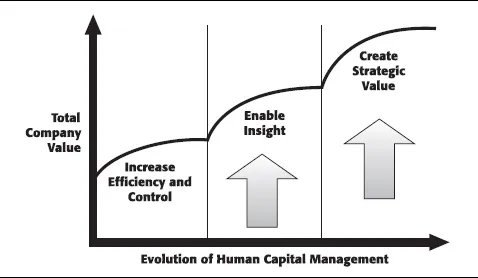
Figure 1.1. Transformation of HR to HCM in Business.
Despite new legislation to protect them, the 1970s and 1980s also marked the beginning of a new feeling for employees: the lack of job security. With the promise of cheaper labor in developing countries, manufacturers began to close down factories in the United States in favor of cheaper facilities and labor in developing countries. This resulted in the same products for less money to consumers, but a loss of jobs for Americans. At the same time, lower-cost items from foreign companies, particularly Japanese car manufacturers, made a huge impact on the U.S. GDP.
As Detroit was struggling with the unforeseen competition of smaller, more economic cars, Americans worried about the impact of closing down factories combined with the increase in foreign goods consumption. Economic forecasters began to assure the public that, with millions of service jobs being created during this decade and into the next, the economy would not suffer as long as there was a shift in skills and training among the workforce.
The continued shake-up in the corporate world added to budding workforce fears beyond the 1970s. Leveraged buy-outs, mergers and acquisitions, and hostile takeovers resulted in market consolidation and, at times, confused business models. The effects of market consolidation on business efficiency, insight, and effectiveness became even more critical as much of Eastern Europe opened up when the Cold War ended and the Berlin Wall came down, giving new opportunities for globalization. Western companies knew that they needed to act fast on the emerging market opportunities and often did so, with little understanding of the impact on the existing business. With so many changes to business dynamics, combined with a fluctuating economy and increasing customer demands for better goods at lower prices, executives struggled to maintain control and competitiveness in operational efficiency with little insight into business operations and efficiency. The first step for these executives to compete in the rapidly changing business environment was clear: efficiency in and control of business operations.
HR Transformation in the Digital Age
In the early part of the 20th century, tax and wage legislation was introduced to businesses, and by 1943 federal tax was mandated. To comply with these new requirements, a new function/profession was created—the payroll professional. This was a huge responsibility, with significant consequences for miscalculation and non-compliance. Payroll clerks struggled manually through hundreds and, at larger firms, thousands of payroll records, often with human error, making auditing, efficiency, and control a virtual impossibility. For some companies, technology could not come soon enough. Those who could afford it, like GE, pioneered the automation of the complicated and cumbersome payroll process. GE implemented the first homegrown mainframe payroll solution; they also had the first automated payroll system to process the tens of thousands of employees across the United States.
At the end of the 20th century, social legislation such as Affirmative Action, Equal Employment Opportunity, the Occupational Safety and Health Act, and the Employee Retirement Income Securities Act created a demand for companies to collect, store, manage, and report more personnel data than ever before. It had become very difficult to keep up with legislation and to put it into a practice that did not cost significant time and money. At the same time, employees were becoming more and more aware of their rights, evidenced by the emergence of lawsuits and challenges to corporate policies. What had previously been accepted was now under scrutiny. The consequences for noncompliance or discriminatory practices were significant fines and monetary rewards for victims of wrongdoing.
Due to legislated corporate responsibility for compliance of workforce practices and worker safety, a new function was created—the personnel department. Combined with the payroll department in many businesses, the personnel department was primarily responsible for managing personnel information, data, and processes, and ensuring that the business was compliant with employment legislation. The HR function served as a police officer of sorts to ensure that employment practices were adhered to throughout the business. But HR was also the polite group in the business—often responsible for coordinating company picnics and other outings, sending birthday notes to employees, and carefully treading in a business where little value was placed on the business impact of HR.
As the century progressed, so did technology. As mentioned above, some companies, like GE, forced the issue by creating their own technology before one was available on the market. Payroll vendors began to emerge, offering not only technology, but in some cases, also services to outsource this function.
With the onslaught of legislation, companies began to look seriously at technology to gain control over workforce information without significantly increasing costs to the business. With other companies, sophisticated, and often complicated color-coded filing systems were used to store employee data, but reporting remained an issue. Vendors began to promote ERP solutions that combined personnel data and payroll applications. Some vendors also integrated financial controlling systems with the HR systems, so that companies could not only make more efficient financial decisions, but also increase control over where corporate dollars were spent. Companies could leverage the HR systems to generate reports that demonstrated compliance with legislation, thereby protecting against costly fines, lawsuits, and bad publicity. With technology, businesses were beginning to automate processes that, although important and critical to achieve, did not contribute value. The payoff of technology was not just compliance, operational efficiency, and control; it also helped to focus resources on other activities beyond keeping manual records.
As the 1980s came to a close, academics discussed the changing role of HR. They speculated that many HR organizations would transform from a police and polite administrator role into a more strategic role in the business. Many thought leaders were beginning to suggest practices through which employees were actual resources, who, if taken care of, could improve their contribution to the company. This, of course, required that the HR function move closer to the business. This was also a time for legitimizing the HR function. Professional organizations such as the International Association for Human Resource Information Management (IHRIM) were founded as a place for HR professionals to meet, learn about, and share new practices and technologies to help their businesses be more efficient.
Enable Insight: Partner Phase
Key Business Issues
As the 1990s approached, the pace of competition continued to quicken as customers became more sophisticated in their demands and Internet technologies began to emerge and tear down the barriers to entry for competition. Manufacturing and services organizations alike began to decentralize functions, while trying to maintain centralized control through standardized processes and information. Many manufacturing organizations, which had long embraced such quality improvements as Total Quality Management (TQM), began to rely more heavily on offshore facilities and companies that were spun off into separate businesses to bring products and services to market. While TQM and other similar business methodologies may have remained, manufacturers struggled with the human side of decentralized business, including basic insight into the demographics of the extended global workforce. For example, until a few years ago, Dow Corning maintained a decentralized organizational structure with a fragmented IT architecture. Employees reported in to a region, a country, or a division, resulting in a lack of insight, coordination, and best practices and processes. In addition to perceived enhancements of operational excellence, Dow Corning wanted a change to the decentralized structure in order to improve workforce performance. Dow Corning found both tangible benefits as well as intangible gains from streamlining HR and other business processes through a global installation of an HRMS. The benefits that Dow Corning realized included a reduction in global organization barriers, a decrease in redundant activities, and a reduction in cycle time for key processes.1
In other markets that rely heavily on “knowledge workers,” such as services and high-tech industries, companies were beginning to embrace telecommuting or virtual work as part of everyday operations. With a much more diversified workforce in terms of location, gender, race, talent/skills, career aspirations, and culture, companies not only required better, more dynamic insight into personal data, but also tools through which employees could feel “empowered” and connected to the corporation.
From the mid- to late 1990s, for the United States and many other Western countries, the dot-com era was alive and well. Venture capital was being plugged into companies, promising new technologies that would change the way we live and the way we do business. Many of these companies were promoting fairy dust, with little or no technology having been developed, compounded by the fact that many of these start-ups lacked solid business plans or business models that clearly defined how the new products or services would or could make money. This was a time when technology was being dreamed up and, in some cases, created for technology’s sake, rather than for an actual market need. With sites like e-Bay and Amazon.com, online commerce broke down competitive barriers and opened new opportunities for budding businesses and a new breed of entrepreneurs. Established businesses such as bookstores, particularly in the west, were feeling the pressure of the Internet push by consumers, business partners, and even employees.
As the century came to a close, companies were not only focused on the Internet, but the entire market was scrambling, waiting with bated breath to see what would happen when the new year began. Consumers with the same fears of data loss were withdrawing savings from banks with the worry that all of their savings would be lost if the bank systems failed when the clock turned at midnight on New Year’s Eve 1999. The Y2K scare enabled many software vendors to sell solutions at record rates with the promise of protection against data loss. Businesses needed to ensure that valuable customer, employee, financial, inventory, and supply-chain information would not be lost due to a feared glitch in many software solutions that would not recognize “000” when the new decade began. For many, this meant a migration of core data from old, legacy systems to new enterprise solutions that promised foolproof protec...
Table of contents
- Cover Page
- Contents
- Title Page
- Copyright Page
- Foreword
- Preface
- The Authors
- The Brave New World of eHR
- CHAPTER 1: From Personnel Administration to Business-Driven Human Capital Management: The Transformation of the Role of HR in the Digital Age
- CHAPTER 2: e-Recruiting: Online Strategies for Attracting Talent
- CHAPTER 3: e-Selection
- CHAPTER 4: Research-Based Guidelines for Designing Distance Learning: What We Know So Far
- CHAPTER 5: eHR and Performance Management: A Consideration of Positive Potential and the Dark Side
- CHAPTER 6: e-Compensation: The Potential to Transform Practice?
- CHAPTER 7: eHR: Trends in Delivery Methods
- CHAPTER 8: The Effects of eHR System Characteristics and Culture on System Acceptance and Effectiveness
- CHAPTER 9: The Next Decade of HR: Trends, Technologies, and Recommendations
- Name Index
- Subject Index
- End User License Agreement