eBook - ePub
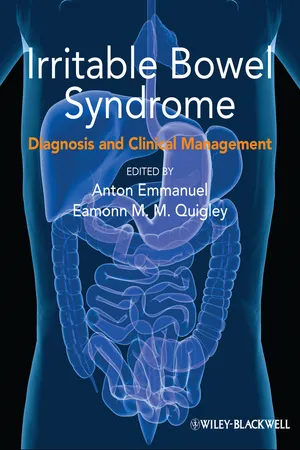
Irritable Bowel Syndrome
Diagnosis and Clinical Management
- English
- ePUB (mobile friendly)
- Available on iOS & Android
eBook - ePub
Irritable Bowel Syndrome
Diagnosis and Clinical Management
About this book
This comprehensive yet concise guide to the diagnosis and management of IBS is divided into four main parts: Overview, Diagnosis, Symptom-specific Treatment, and What's Next in IBS. Each chapter includes a summary of key points, and most chapters include cases and multiple choice questions for rapid review. Clinicians who manage patients with IBS will want to keep this dependable reference close at hand.
Information
PART 1
Overview of Irritable Bowel Syndrome
CHAPTER 1
Definitions and Classifications of Irritable Bowel Syndrome
Key points
- Irritable bowel syndrome is common.
- The condition can be difficult to diagnose.
- Physicians should try to make a positive diagnosis, without need for extensive investigation.
- Existing symptom-based diagnostic criteria for the diagnosis of IBS perform modestly.
- The Rome criteria have not been extensively validated.
Background
Irritable bowel syndrome (IBS) is a chronic functional gastrointestinal disorder characterized by abdominal pain or discomfort, in association with altered bowel habit. The natural history of the condition is a relapsing and remitting one [1–4], with most sufferers experiencing episodes of exacerbation of symptoms and other periods where symptoms are less troublesome, or even quiescent. The prevalence of IBS in the general population varies between 5 and 20% in cross-sectional surveys [5–7], and may be influenced by the demographics of the population under study. For example, IBS is commoner in females [8, 9] and younger individuals [7, 10, 11], although evidence for any effect of socioeconomic status is conflicting [12–14]. The prevalence of IBS appears to be comparable among Western nations and those of the developing world and the Far East [7, 10, 15, 16], although there are fewer data available from the latter regions. Prevalence is also higher in those with coexisting functional gastrointestinal diseases [17], particularly dyspepsia and gastro-oesophageal reflux disease [18, 19], and other functional disorders, such as fibromyalgia and chronic fatigue [20].
At the time of writing, there is no known structural, anatomical, or physiological abnormality that accounts for the symptoms that IBS sufferers experience, and it seems unlikely that there is a single unifying explanation for them. It is more plausible that a combination of factors contributes to the abdominal pain and disturbance in bowel habit. Proposed etiological mechanisms that may be involved in the disorder include altered gastrointestinal motility [21, 22], visceral hypersensitivity [23, 24], abnormal pain processing in the central nervous system [25, 26], dysregulated intestinal immunity [27], low-grade inflammation and altered gastrointestinal permeability following enteric infection [28, 29], imbalances in intestinal flora [30] and altered psychological state [31]. Irritable bowel syndrome also aggregates in families [32] but whether this is due to genetic factors, shared upbringing, or both is unclear.
Individuals with IBS are more likely to consume healthcare resources than those without gastrointestinal symptoms [33]. Up to 80% of sufferers may consult their primary care physician as a result of symptoms [34, 35], and the condition accounts for approximately 25% of a gastroenterologist’s time in the outpatient department [36]. Diagnosing IBS can be challenging for the physician, due to the potential for overlap between the symptoms that sufferers report and those of organic gastrointestinal conditions such as coeliac disease, small intestinal bacterial overgrowth, bile acid diarrhoea, exocrine pancreatic insufficiency, inflammatory bowel disease and even colorectal cancer. Several studies have examined the yield of diagnostic testing for these conditions in individuals with symptoms suggestive of IBS [37–41], but clear evidence for the routine exclusion of any of these disorders, with the exception of coeliac disease, is lacking. Attempts to identify a biomarker for the condition have, to date, been unsuccessful [42].
As a result of this uncertainty, and despite recommendations made by various medical organizations for a diagnosis of IBS to be made on clinical grounds alone [43–46], many patients with symptoms suggestive of IBS will undergo investigation, in an attempt to reassure both the patient and the physician that there is no organic explanation for the symptoms [47]. However, once a diagnosis of IBS is reached it is unlikely to be revised following further investigations of the gastrointestinal tract for the same symptoms in the future [48], and the subsequent detection of a ‘missed’ diagnosis of organic disease, which may have been the underlying explanation for the patient’s original presentation with symptoms, is unlikely [49].
Medical treatment for IBS is considered to be unsatisfactory, with patients representing a significant financial burden to health services. The annual cost of drug therapy for IBS has been estimated at $80 million in the US [50]. Placebo response rates in treatment trials for IBS are high [51], perhaps because there is no structural abnormality that can be corrected by successful therapy, and therefore any benefit following treatment is often assessed by an improvement in global symptoms, an endpoint that may be less objective than those used in trials conducted for organic diseases. Despite this, there is evidence that fibre, antispasmodic drugs, antidepressants and probiotics are all more effective than placebo in the short-term therapy of IBS [52–54], although no single medical treatment has been demonstrated to alter the long-term natural history of the disorder.
The definition and classification of IBS are both of paramount importance to the management of sufferers. Accurate definitions allow physicians to diagnose IBS with confidence, hence reducing the costs of managing the condition to the health service. Whether or not this approach is cost effective is uncertain [55], but it should discourage physicians from over-investigating young patients who are otherwise well and clearly meet these criteria, and in whom the diagnostic yield of such investigations is likely to be low. It may also avoid unnecessary surgery in patients with IBS. Cholecystectomy, appendectomy and hysterectomy rates in IBS patients have been shown to be two to threefold higher than those observed in controls without IBS [56]. Classification of IBS according to symptoms allows the tailoring of therapy according to the predominant symptom reported by the patient, as well as the assessment of which of the existing, as well as novel, treatments are effective in particular subgroups of patients.
Definitions of irritable bowel syndrome
Functional bowel disorders were described in the medical literature as early as the nineteenth century, but it was not until 1950 that the term irritable bowel syndrome was first coined [57], eventually replacing spastic colon or irritable colon syndrome as the accepted nomenclature. There were descriptions of case series of patients in the 1960s that studied the clinical features of the condition as well as reporting the prognosis [58, 59], but it was not until the 1970s that attempts were made to define the condition using the symptoms reported by sufferers.
Individual symptoms in irritable bowel syndrome
Medical students are taught that up to 90% of diagnoses are made through obtaining a thorough symptom history from the patient. Subjects with IBS often report abdominal pain or discomfort that is relieved by defaecation, altered stool form (looser or harder), altered stool frequency (more or less frequent), a sensation of bloating or visible abdominal distension, a sensation of incomplete evacuation and the passage of mucus per rectum. The presence of these symptoms suggests a diagnosis of IBS and it has often been assumed that the more of them that are present, the higher the likelihood of the patient having IBS. However, there have been few studies that have examined the diagnostic utility of individual symptoms in predicting a diagnosis of IBS.
A recent systematic review and meta-analysis examined the accuracy of these individual symptoms in discriminating IBS from organic lower gastrointestinal diseases [60]. Four studies reported on the presence of passage of mucus per rectum, tenesmus, looser stools at onset of abdominal pain, more frequent stools at onset of abdominal pain and abdominal pain relieved by defaecation [61–64], and three collected data on patient-reported visible abdominal distension [62–64]. Pooled sensitivity of these individual symptom items ranged from 39 to 74%, and pooled specificity from 45 to 77%.
This suggests that individual symptoms are only modestly accurate, at best, in terms of reaching a diagnosis of IBS. This may be due to differences in the perceived connotation of individual symptom items between patients, such that standardizing the meanings of these from one patient to another is difficult. In addition, it is rare that a physician uses only one item from the clinical history in reaching a diagnosis; more often, individual items are combined with other symptoms, as well as patient characteristics, such as age and gender. It is therefore not surprising that diagnostic criteria, consisting of a combination of symptoms, were developed; these are discussed in the following sections.
The Manning criteria
In a now seminal paper published in the British Medical Journal in 1978 [63], Adrian Manning and colleagues collected symptom data from 65 unselected outpatients presenting to a gastroenterology clinic with gastrointestinal symptoms and followed these individuals up in order to record the ultimate diagnosis. They reported that four symptoms: distension, relief of abdominal pain with a bowel movement, looser bowel movements with the onset of abdominal pain and more frequent bowel movements with the onset of abdominal pain were all significantly more common in patients with an ultimate diagnosis of IBS. Another two symptoms: tenesmus and passage of mucus per rectum, were also more common in those with IBS, but the difference in frequency in individuals with and without IBS for these was not statistically significant.
These symptoms became known as the Manning criteria; they are detailed in Table 1.1. As a result of their findings, the authors speculated that the use of these symptoms to positively diagnose IBS may reduce the need for investigati...
Table of contents
- Cover
- Title page
- Copyright page
- List of Contributors
- Foreword
- Preface
- PART 1: Overview of Irritable Bowel Syndrome
- PART 2: Diagnosis of Irritable Bowel Syndrome
- PART 3: Symptom-specific Treatment of Irritable Bowel Syndrome
- PART 4: What’s next in Irritable Bowel Syndrome
- Index
Trusted by 375,005 students
Access to over 1.5 million titles for a fair monthly price.
Study more efficiently using our study tools.
Frequently asked questions
Yes, you can cancel anytime from the Subscription tab in your account settings on the Perlego website. Your subscription will stay active until the end of your current billing period. Learn how to cancel your subscription
No, books cannot be downloaded as external files, such as PDFs, for use outside of Perlego. However, you can download books within the Perlego app for offline reading on mobile or tablet. Learn how to download books offline
We are an online textbook subscription service, where you can get access to an entire online library for less than the price of a single book per month. With over 1.5 million books across 990+ topics, we’ve got you covered! Learn about our mission
Look out for the read-aloud symbol on your next book to see if you can listen to it. The read-aloud tool reads text aloud for you, highlighting the text as it is being read. You can pause it, speed it up and slow it down. Learn more about Read Aloud
Yes! You can use the Perlego app on both iOS and Android devices to read anytime, anywhere — even offline. Perfect for commutes or when you’re on the go.
Please note we cannot support devices running on iOS 13 and Android 7 or earlier. Learn more about using the app
Please note we cannot support devices running on iOS 13 and Android 7 or earlier. Learn more about using the app
Yes, you can access Irritable Bowel Syndrome by Anton Emmanuel, Eamonn M. M. Quigley, Anton Emmanuel,Eamonn M. M. Quigley in PDF and/or ePUB format, as well as other popular books in Medicine & Gastroenterology & Hepatology. We have over 1.5 million books available in our catalogue for you to explore.