Molecular biotechnology continues to triumph, as this textbook testifies - edited by one of the academic pioneers in the field and written by experienced professionals. This completely revised second edition covers the entire spectrum, from the fundamentals of molecular and cell biology, via an overview of standard methods and technologies, the application of the various "-omics", and the development of novel drug targets, right up to the significance of system biology in biotechnology. The whole is rounded off by an introduction to industrial biotechnology as well as chapters on company foundation, patent law and marketing.
The new edition features:
- Large format and full color throughout
- Proven structure according to basics, methods, main topics and economic perspectives
- New sections on system biology, RNA interference, microscopic techniques, high throughput sequencing, laser applications, biocatalysis, current biomedical applications and drug approval
- Optimized teaching with learning targets, a glossary containing around 800 entries, over 500 important abbreviations and further reading.
The only resource for those who are seriously interested in the topic.
Bonus material available online free of charge: www.wiley-vch.de/home/molecbiotech
eBook - ePub
An Introduction to Molecular Biotechnology
Fundamentals, Methods and Applications
- English
- ePUB (mobile friendly)
- Available on iOS & Android
eBook - ePub
About this book
Information
1
The Cell as the Basic Unit of Lifes
Learning Objectives
This chapter offers a short introduction into the structure of prokaryotic and eukaryotic cells, as well as that of viruses.
This chapter offers a short introduction into the structure of prokaryotic and eukaryotic cells, as well as that of viruses.
The base unit of life is the cell. Cells constitute the base element of all prokaryotic cells (cells without a cell nucleus, e.g., Bacteria and Archaea) and eukaryotic cells (or Eukarya) (cells possessing a nucleus, e.g., protozoa, fungi, plants, and animals). Cells are small, membrane-bound units with a diameter of 1–20 μm and are filled with concentrated aqueous solutions. Cells are not created de novo, but possess the ability to copy themselves, meaning that they emerge from the division of a previous cell. This means that all cells, since the beginning of life (around 4 billion years ago), are connected with each other in a continuous lineage. In 1885, the famous cell biologist Virchow conceived the law of omnis cellula e cellulae (all cells arise from cells), which is still valid today.
The structure and composition of all cells are very similar due to their shared evolution and phylogeny (Fig. 1.1). Owing to this, it is possible to limit the discussion of the general characteristics of a cell to a few basic types (Fig. 1.2):
- Bacterial cells.
- Plant cells.
- Animal cells.
Fig. 1.1 Tree of life – phylogeny of life domains. Nucleotide sequences from 16S rRNA, amino acid sequences of cytoskeleton proteins, and characteristics of the cell structure were used to reconstruct this phylogenetic tree. Prokaryotes are divided into Bacteria and Archaea. Archaea form a sister group with eukaryotes; they share important characteristics (Tables 1.1 and 1.2). Many monophyletic groups can be recognized within the eukaryotes (diplomonads/trichomonads, Euglenozoa, Alveolata, Stramenopilata (heterokonts), red algae and green algae/plants, fungi and animals; see Tables 6.3–6.5 for details).
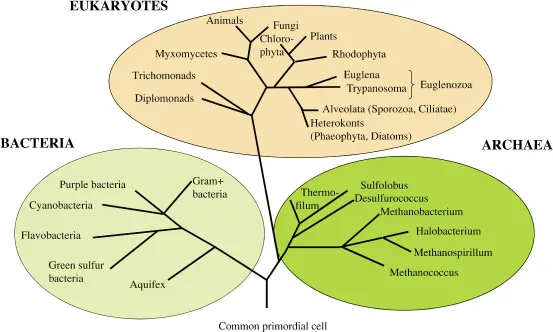
Fig. 1.2 Schematic structure of prokaryotic and eukaryotic cells. (A) Bacterial cell. (B) Plant mesophyll cell. (C) Animal cell.
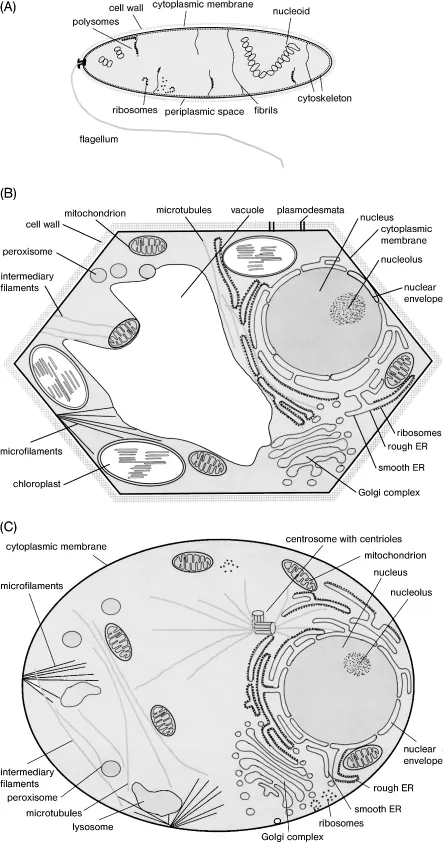
Table 1.1 Comparison of important biochemical and molecular characteristics of the three domains of life.
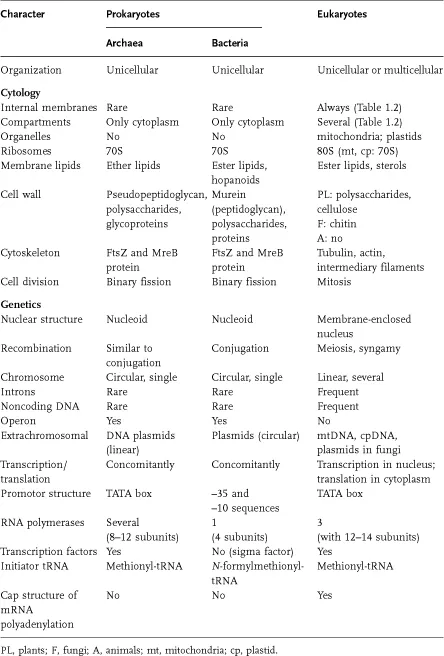
Fig. 1.3 Schematic structure of bacteriophages and viruses. (A) Bacteriophage T4. (B) Structure of a retrovirus (human immunodeficiency virus causing AIDS).
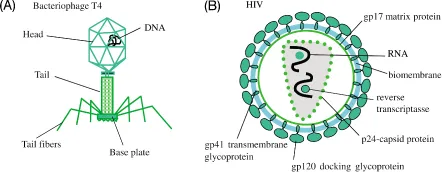
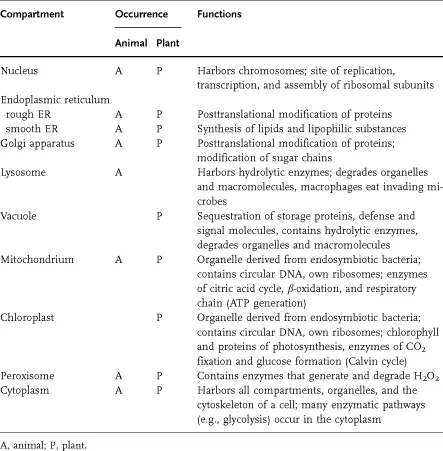
Table 1.2 Compartments of animal and plant cells and their main functions.
The most important biochemical and cell biological characters of Archaea, Bacteria, and Eukarya are summarized in Table 1.1.
As viruses and bacteriophages (Fig. 1.3) do not have their own metabolism they therefore do not count as organisms in the true sense of the word. They share several macromolecules and structures with cells. Viruses and bacteriophages are dependent on the host cells for reproduction, and therefore their physiology and structure are closely linked to that of the host cell.
Eukaryotic cells are characterized by compartments that are enclosed by biomembranes (Table 1.2). As a result of these compartments, the multitude of metabolic reactions can run in a cell at the same time.
In the following discussion on the shared characteristics of all cells, the diverse differences that appear in multicellular organisms should not be forgotten. The human body has more than 200 different cell types, which show diverse structures and compositions. These differences must be understood in detail if cell-specific disorders, such as cancer, are to be understood and consequently treated.
Before a detailed discussion of cellular structures and their functions (see Chapters 3–5), a short summary of the biochemical basics of cellular and molecular biology is given in Chapter 2.
2
Structure and Function of Cellular Macromolecules
Learning Objectives
This chapter introduces the structure of polysaccharides, lipids, proteins, and nucleic acids, built from simple monomers (sugars, amino acids, and nucleotides), and illustrates how they are derived from simple monomers. Their most important functions are summarized.
This chapter introduces the structure of polysaccharides, lipids, proteins, and nucleic acids, built from simple monomers (sugars, amino acids, and nucleotides), and illustrates how they are derived from simple monomers. Their most important functions are summarized.
In contrast to the diversity of life forms found in nature with several million species, the cells that make up all of these diverse organisms contain only a limited number of types of ions and molecules (Table 2.1). Among the most important macromolecules of prokaryotic and eukaryotic cells are polysaccharides, lipids, proteins, and nucleic acids, which are constructed from comparatively few monomeric building blocks (Table 2.2). The membrane lipids (phospholipids, cholesterol) will also be considered in this context because they spontaneously form supramolecular biomembrane structures in the aqueous environment of a cell.
Inorganic ions, sugars, amino acids, fatty acids, organic acids, nucleotides, and various metabolites are counted among the low-molecular-weight components and building blocks of the cell. The qualitative composition of cells is similar in prokaryotes and eukaryotes (Table 1.1), even though eukaryote cells generally have a higher protein content, and bacterial cells a higher RNA content. Animal cells have a volume that is 103 times larger than that of bacterial cells.
Owing to their shared evolution, the structure and function of the important cellular molecules is very similar in all organisms, often even identical. Apparently, reliable and functional biomolecules were developed and, if useful for the producer, were selected early in evolution (Table 2.2) and are therefore still used today.
Table 2.1 Molecular composition of cells.
| Contents | Bacterium (% of cell mass) | Anim al cell (% of cell mass) |
| Water | 70 | 70 |
| Inorganic ions | 1 | 1 |
| Small molecules (sugars, acids, amino acids) | 3 | 3 |
| Proteins | 15 | 18 |
| RNA | 6 | 1.1 |
| DNA | 1 | 0.25 |
| Phospholipids | 2 | 3 |
| Other lipids | − | 2 |
| Polysaccharides | 2 | 2 |
| Cell volume (ml) | 2×10⁻¹² | 4×10⁻⁹ |
| Relative cell volume | 1 | 2000 |
Table 2.2 Formation and function of the cellular macromolecules.
| Basic building blocks | Macromolecule | Function |
| Simple sugar | Polysaccharide | Structural substances: composition of the cell walls (cellulose, chitin, peptidoglycan); constituents of connective tissues Storage substances: starch, glycogen |
| Amino acids | Proteins | Enzymes: important catalysts for anabolic and catabolic reaction processes Hemoglobin: O2 and CO2 transport Receptors: recognition of external and internal signals Ion ch... |
Table of contents
- Cover
- Contents
- Series
- Title Page
- Author
- Copyright
- Preface
- List of Contributors
- Abbreviations
- Part I: Fundamentals of Cellular and Molecular Biology
- Part II: Standard Methods in Molecular Biotechnology
- Part III: Key Topics
- Part IV: Biotechnology in Industry
- Appendix
- Further Reading
- Glossary
- Subject Index
Trusted by 375,005 students
Access to over 1.5 million titles for a fair monthly price.
Study more efficiently using our study tools.
Frequently asked questions
Yes, you can cancel anytime from the Subscription tab in your account settings on the Perlego website. Your subscription will stay active until the end of your current billing period. Learn how to cancel your subscription
No, books cannot be downloaded as external files, such as PDFs, for use outside of Perlego. However, you can download books within the Perlego app for offline reading on mobile or tablet. Learn how to download books offline
Perlego offers two plans: Essential and Complete
- Essential is ideal for learners and professionals who enjoy exploring a wide range of subjects. Access the Essential Library with 800,000+ trusted titles and best-sellers across business, personal growth, and the humanities. Includes unlimited reading time and Standard Read Aloud voice.
- Complete: Perfect for advanced learners and researchers needing full, unrestricted access. Unlock 1.5M+ books across hundreds of subjects, including academic and specialized titles. The Complete Plan also includes advanced features like Premium Read Aloud and Research Assistant.
We are an online textbook subscription service, where you can get access to an entire online library for less than the price of a single book per month. With over 1.5 million books across 990+ topics, we’ve got you covered! Learn about our mission
Look out for the read-aloud symbol on your next book to see if you can listen to it. The read-aloud tool reads text aloud for you, highlighting the text as it is being read. You can pause it, speed it up and slow it down. Learn more about Read Aloud
Yes! You can use the Perlego app on both iOS and Android devices to read anytime, anywhere — even offline. Perfect for commutes or when you’re on the go.
Please note we cannot support devices running on iOS 13 and Android 7 or earlier. Learn more about using the app
Please note we cannot support devices running on iOS 13 and Android 7 or earlier. Learn more about using the app
Yes, you can access An Introduction to Molecular Biotechnology by Michael Wink in PDF and/or ePUB format, as well as other popular books in Biological Sciences & Biotechnology. We have over 1.5 million books available in our catalogue for you to explore.