Covering the latest technologies in process engineering, this handbook and ready reference features high pressure processing, alternative solvents and processes, extraction technologies and biotransformations -- describing greener, more efficient and sustainable techniques. The result is an expert account of engineering details from lab-scale experiments to large-scale industrial design.
The major focus is on the engineering aspects of extraction with organic and supercritical solvents, ionic liquids or surfactant solutions, and is supplemented by aspects of both up- and downstream processing, biotransformation, as well as a survey of typical products in food, pharmaceutical and cosmetic applications. This is rounded off by market developments, economic considerations and regulations requirements in the field
Authored by experts from leading industrial and academic institutions, this is essential reading for the hands-on scientist and office manager alike.
- English
- ePUB (mobile friendly)
- Available on iOS & Android
eBook - ePub
Industrial Scale Natural Products Extraction
About this book
Information
Chapter 1
Extraction of Natural Products from Plants – An Introduction
1.1 Introduction
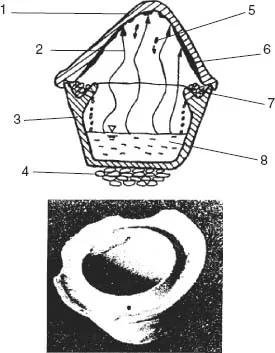
The history of the extraction of natural products dates back to Mesopotamian and Egyptian times, where production of perfumes or pharmaceutically-active oils and waxes was a major business. In archeological excavations 250 km south of Baghdad extraction pots (Figure 1.1) from about 3500 BC were found [1], made from a hard, sandy material presumably air-dried brick earth. It is supposed that in the circular channel was the solid feed, which was extracted by a Soxhlet-like procedure with water or oil. The solvent vapors were condensed at the cap, possibly cooled by wet rags. The condensate then did the leaching and was fed back through holes in the channel to the bottom.
Figure 1.1 Extraction pot (oil or water).
Several Sumerian texts also confirm that a sophisticated pharmaceutical and chemical technology existed. In the oldest clay tablets of 2100 BC (Figure 1.2), found 400 km south of Baghdad, is a description of a simple batch extraction: “purify and pulverize the skin of a water snake, pour water over the amashdubkasal plant, the root of myrtle, pulverize alkali, barley and powered pine tree resin, let water (the extract) be decanted; wash it (the ailing organ) with the liquid; rub tree oil upon it, let saki be added” [2].
Figure 1.2 Sumerian text (2100 BC).

The pulverization, admixture of NaCl, alkali (potash) or as reported also KNO3, shows some basic knowledge of chemical engineering [3]. Also well-documented are recipes to obtain creams and perfumes, from the time of the Assyrian king Tukulti-Ninurta I, 1120 BC. The natural feedstock was crushed in a mortar, and then leached in boiled water for one day. New feed was then added gaining higher concentrations. After percolation, oil was added while increasing the temperature. After cooling, the top oil extract can be removed, and the use of demisters (sieves of clay filled with wool or hair) is also reported [4–6].
In a papyrus of 1600 BC, beer and wine were used as alcoholic solvents [7], which give the distinct advantages of achieving a higher solubility for a solute when producing perfumes. Otherwise up to 40 repetitive extraction procedures as above were necessary to give a high yield. There was not much development until medieval times, when pure ethanol became available as a solvent in about 900 AD [3].
After this short historical review we should consider the language used. In German “natural plant extraction” is equivalent to “phyto-extraction”, which in English terms means extraction (of e.g., metal ions from soil) achieved by plants. The term “natural products” is perhaps also something of a misnomer [8]. A natural product is a chemical compound or substance produced by a living organism. They may be extracted from tissues of terrestrial plants, marine organism or micro-organism fermentation [9]. In that respect any biological molecule is a natural product, but in general the term is reserved for secondary metabolites (carotinoids, phytosterines, saponines, phenolic compounds, alkaloids, glycosinates, terpenes etc.), produced by an organism. They are not essential for normal growth, development or reproduction and its survival.
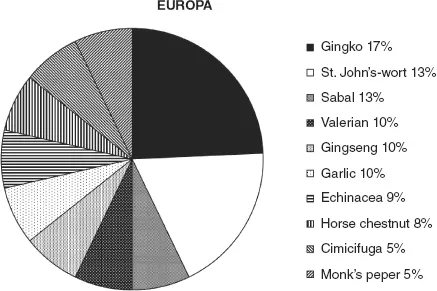
Besides venoms, toxins, and antibiotic peptides from animals (frogs, spider, snake etc.), a new focus is nowadays on the marine world (e.g., curacin A with antitumor activity from marine cyano bacteria). The use of micro-organisms is already well-established in industrial fermentation [10]. Alternative to this, extracts from plant tissue are a rich source of lead compounds for nutraceutical or pharmaceutical applications [11,12]. The market alone for herbs for nutritional supplements, for example, green tea, melissa, blueberry, is about 6.7 billion euros in Europe and 17.5 billion worldwide. In respect to this, the average trading volume of medicinal plant raw material is, according to FAO, 1 billion US$, and was 440 million US$ in USA in 1997. The annual growth rates for nutraceuticals and pharmaceuticals derived by industrial product extraction is about 6 to 8% (see Table 1.1) [13]. Here triterpenes have the highest growth rates (Figure 1.3). In 2002 the world market for pharmaceuticals from natural plants was estimated to be 30.7 billion US$, and the share of triterpenes is given in Figure 1.4 and the market in Europe depicted in Figure 1.5 [14].
Table 1.1 Market and annual market growth.
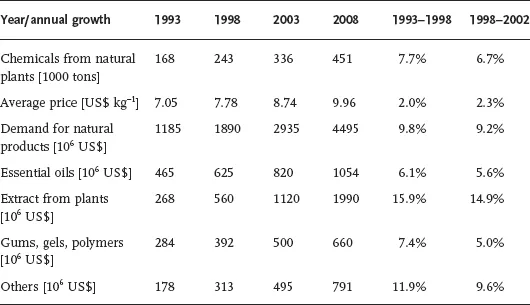
Figure 1.3 Annual growth rates (1997–2002).
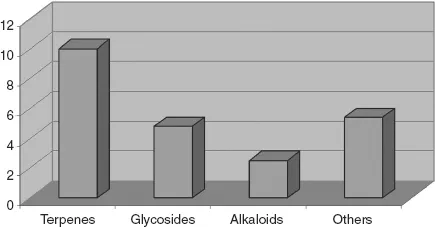
Figure 1.4 Market share of active pharmaceutical ingredients.
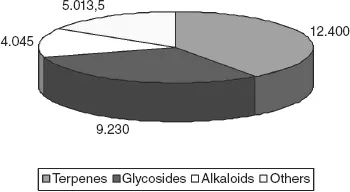
Figure 1.5 Natural plant extracts in Europe (2002).
The feed material for the extraction of natural products from plants can be leaves, flowers, branches, bark, rhizomes, roots, seed and fruits, and the active pharmaceutical ingredient (API) content is usually in the region from 0.3 to 3% with seasonal fluctuations in period and producing area. Table 1.2 gives an overview, where the API can be found in the plant materials. The recovery of secondary metabolites is depicted in Figure 1.6. The most economic route is via (cold) pressing, mainly for oily constituents. Volatile compounds can be removed either by conventional (vacuum) distillation or hydrodistillation. The vapors from steam distillation are condensed and a two-phase distillate (oil and water) is obtained. The boiling point of this practically immis...
Table of contents
- Cover
- Half Title page
- Related Titles
- Title page
- Copyright page
- Preface
- List of Contributors
- Chapter 1: Extraction of Natural Products from Plants – An Introduction
- Chapter 2: Solubility of Complex Natural and Pharmaceutical Substances
- Chapter 3: Alternative Solvents in Plant Extraction
- Chapter 4: High Pressure Processing
- Chapter 5: Process Engineering and Mini-Plant Technology
- Chapter 6: Extraction Technology
- Chapter 7: Extraction of Lignocellulose and Algae for the Production of Bulk and Fine Chemicals
- Chapter 8: Natural Products – Market Development and Potentials
- Chapter 9: Regulations and Requirements
- Index
Trusted by 375,005 students
Access to over 1.5 million titles for a fair monthly price.
Study more efficiently using our study tools.
Frequently asked questions
Yes, you can cancel anytime from the Subscription tab in your account settings on the Perlego website. Your subscription will stay active until the end of your current billing period. Learn how to cancel your subscription
No, books cannot be downloaded as external files, such as PDFs, for use outside of Perlego. However, you can download books within the Perlego app for offline reading on mobile or tablet. Learn how to download books offline
Perlego offers two plans: Essential and Complete
- Essential is ideal for learners and professionals who enjoy exploring a wide range of subjects. Access the Essential Library with 800,000+ trusted titles and best-sellers across business, personal growth, and the humanities. Includes unlimited reading time and Standard Read Aloud voice.
- Complete: Perfect for advanced learners and researchers needing full, unrestricted access. Unlock 1.5M+ books across hundreds of subjects, including academic and specialized titles. The Complete Plan also includes advanced features like Premium Read Aloud and Research Assistant.
We are an online textbook subscription service, where you can get access to an entire online library for less than the price of a single book per month. With over 1.5 million books across 990+ topics, we’ve got you covered! Learn about our mission
Look out for the read-aloud symbol on your next book to see if you can listen to it. The read-aloud tool reads text aloud for you, highlighting the text as it is being read. You can pause it, speed it up and slow it down. Learn more about Read Aloud
Yes! You can use the Perlego app on both iOS and Android devices to read anytime, anywhere — even offline. Perfect for commutes or when you’re on the go.
Please note we cannot support devices running on iOS 13 and Android 7 or earlier. Learn more about using the app
Please note we cannot support devices running on iOS 13 and Android 7 or earlier. Learn more about using the app
Yes, you can access Industrial Scale Natural Products Extraction by Hans-Jörg Bart,Stephan Pilz in PDF and/or ePUB format, as well as other popular books in Technology & Engineering & Chemical & Biochemical Engineering. We have over 1.5 million books available in our catalogue for you to explore.