![]()
CHAPTER 1
Free to Choose in Value Land
Walter Schloss
Walter & Edwin Schloss Associates
What does not destroy me, makes me stronger.
—Friedrich Nietzsche
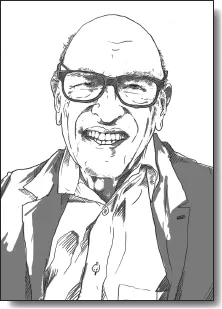
Walter J. Schloss founded Walter J. Schloss and Associates in 1955. A student of Benjamin Graham, the father of value investing, Schloss had been finding undervalued securities in America since the 1930s. Having served as a securities analyst at the Graham-Newman Partnership in 1946, Schloss started his own fund when Graham decided to retire in 1955. Schloss’s son Edwin joined the fund in the late 1960s, prompting an official name change in 1973 to Walter & Edwin Schloss Associates.
Charging no management fees but taking a 25 percent share of the profits, Schloss started off with $100,000 capital. At one point, the fund grew to roughly $350 million. From 1956 to 2002, it generated a 16 percent compound return annually (roughly 21 percent before profit sharing) versus the 10 percent per annum generated by the Standard & Poor’s (S&P) 500.
Although a difference of 6 percent may not sound like much, the magic of compounding means that over this 46-year period, a $10,000 investment in the S&P 500 would have generated close to $900,000, whereas a Schloss investor would have made close to $11 million on the same investment.
A chartered financial analyst since 1963, Schloss was also the treasurer of Freedom House, a Washington, DC–based international nongovernmental organization that conducts research and advocacy on democracy, political freedom, and human rights.
Walter Schloss passed away on February 19, 2012, in Manhattan, New York. He was 95 years old.
•••
Walter J. Schloss received his famous moniker, the “super-investor from Graham-and-Doddsville,” not from any ordinary man but from the most admired and respected investing legend of all time—Warren Buffett—and it seems appropriate to allow the “sage of Omaha” to introduce him here.
Buffett singled Schloss out for praise in his 2006 letter to Berkshire Hathaway shareholders, noting that he had managed a “remarkably successful investment partnership” without taking “a single dime” unless his investors made money. Furthermore, he had done so without attending business school or even college, working “without a secretary, clerk or bookkeeper, his only associate being his son Edwin,” an arts graduate, and generally flying in the face of prevailing business theories.
The letter continued: “When Walter and Edwin were asked in 1989 by Outstanding Investors Digest, ‘How would you summarize your approach?’ Edwin replied, ‘We try to buy stocks cheap.’ So much for Modern Portfolio Theory, technical analysis, macroeconomic thoughts and complex algorithms.”
Buffett said that when he first publicly discussed Schloss’s remarkable record in 1984, efficient market theory (EMT) held sway at most major business schools. According to EMT, as it was commonly taught at the time, Buffett noted, “No investor can be expected to overperform the stock market averages using only publicly-available information (though some will do so by luck). When I talked about Walter 23 years ago, his record forcefully contradicted this dogma.”
Instead of taking the example of Schloss’s obvious success on board, however, business school faculties went “merrily on their way presenting EMT as having the certainty of scripture,” Buffett stated. “Typically, a finance instructor who had the nerve to question EMT had about as much chance of major promotion as Galileo had of being named Pope.
“Walter meanwhile went on over-performing, his job made easier by the misguided instructions that had been given to those young minds. After all, if you are in the shipping business, it’s helpful to have all of your potential competitors be taught that the earth is flat.”
Buffett concluded: “Maybe it was a good thing for his investors that Walter didn’t go to college.”
Living through the Great Depression
Walter Schloss was born in 1916 in New York City. He recalled: “When I was born, the world was at war, and there was a flu epidemic in the United States. My mother, Evelyn, was worried about catching the illness at the hospital, so she gave birth to me at home.”
During the next two years, the flu pandemic that started in Europe (known as the Spanish flu) spread worldwide, killing more people than the total number killed in World War I. Fears of the disease prompted the Schloss family to move to Montclair, New Jersey, in 1918. However, “the place was too remote and inaccessible,” Schloss said, “so after a while we moved back to New York City, and that’s where I grew up.”
From a young age, Schloss enjoyed traveling around the city by trolley car. He was so fascinated by the driver and his apparent privilege to travel freely wherever he liked that becoming a trolley car driver was his childhood dream job.
“Sometimes luck puts you in the right place at the right time! If I had been born a little earlier, I seriously would have considered becoming a trolley car driver. Luckily, trolley cars began to fade out and were replaced by buses in the 1930s and 40s, and so I ended up going to Wall Street,” Schloss remarked.
Although still in middle school, Schloss was keenly aware of the 1929 stock market crash and the difficulties it unleashed. His mother lost her entire inheritance, and his father, Jerome, who had bought a U.S. company called Mathieson Alkali on margin, lost everything.
“My parents were honest people, but they had trouble financially because they were poor investors,” Schloss said. “During the depression, my father learned his lesson and said to me, ‘Anything terrible that doesn’t happen to you is profit!’ I took the advice to heart, so when I entered Wall Street, my goal was to not lose money!”
Turning 18 and finishing high school in 1934, Schloss decided to look for a job. With his mother’s help, he found a job as a runner at brokerage house Carl M. Loeb & Co., which later changed its name to Loeb Rhoades, earning $15 per week.
“My father lost his job during the Depression, so I could not attend college and had to help my family,” Schloss explained. “The economy was grim, and I remember seeing men on every street corner selling apples for a nickel apiece. Some family friends even criticized my mother for letting me work at a brokerage firm, as they believed there would be no more Wall Street by 1940. That was how pessimistic people were in those days.”
As a runner, Schloss’s duties included delivering paperwork and stock certificates to various brokerage houses for trade settlements each day. In effect, he was a messenger. Shortly after joining the company, he was promoted to the cashier’s department—the “cage,” as it was called—looking after and keeping track of stock certificate transfers between stockbrokers.
Schloss recollected, “After working for a year, I asked one of the partners, Mr. Armand Erpf, who was in charge of the statistical department, which is similar to the research department today, if I could become a securities analyst. He said that job wouldn’t bring in any brokerage commissions, and so the answer was no.
“In those days, and perhaps it is true even to this day, bringing in business was the priority, and so business connections were more important than investment knowledge. Since a research analyst in those days would not advance very far within a company, who you knew was more important than what you knew.”
Mr. Erpf did give young Schloss one very valuable piece of advice. He told him about a new book by Benjamin Graham and David Dodd called Security Analysis. “Read that book, and when you know everything in it, you won’t have to read anything else,” Schloss recalled him saying.
Reading the book gave Schloss the impetus to go to the New York Stock Exchange Institute to take finance and accounting courses. Completing these courses then made him eligible to take “Security Analysis,” a course taught by the one and only Benjamin Graham. Paying roughly $15 per semester, he attended Graham’s class from 1938 to 1940.
Learning directly from the father of value investing was a life-changing experience for Schloss: “Ben was simple, straightforward, and brilliant. Because he had a rough time during the Great Depression, his investment strategy was mainly to look for stocks that would provide downside protection, such as stocks selling below their working capital. The idea simply made a lot of sense to me, and I fell in love with his investment philosophy.”
Schloss was particularly impressed by Graham’s use of real-life examples to show which stocks were cheap and which were expensive: “He would also compare companies that came close to each other in alphabetical order. For example, he compared Coca-Cola to Colgate-Palmolive and statistically deduced that Colgate was cheaper.
“A lot of investment professionals took his class just to get investment tips, and they made money off his ideas, but Ben didn’t mind because he was more into the academic exercise than making money. Unfortunately, I didn’t profit from his ideas [at the time] because I had no money, but I learned a great deal.”
The Meaning of Survival
World War II broke out in 1939, with the United States joining the war at the end of 1941 following the Japanese attack on Pearl Harbor. The patriotic 23-year-old Schloss decided to contribute to his country’s war effort: “I remember it was the first Sunday of December when America was attacked. The next day, I went into the office and asked my boss whether I would still get my year-end bonus if I enlisted in the military. He said yes, and so I went straight to lower Manhattan to enlist. By Friday of that week, I had taken the oath of enlistment and was sent straight for training.
“I got on a big ship in New York, and we went zigzagging across the ocean so that submarines wouldn’t sink us. We passed through Rio de Janeiro, then crossed the Atlantic Ocean to the Cape of Good Hope and the Indian Ocean to Bombay. Then, as the water was too shallow in the Persian Gulf, we had to switch to a British troopship named the HMT Rohna to get to Iran. I was lucky because if I had boarded that ship a few months later, I would have been on board when it was hit and sunk.”
The Luftwaffe’s sinking of the HMT Rohna in the Mediterranean in November 1943 constituted the single largest loss of U.S. troops at sea at one time.
Schloss served in the U.S. Army until 1945. He had been stationed in Iran, trained in code decryption, and was later assigned to the U.S. Signal Service Co., based at the Pentagon in Washington.
Having lived through roughly 18 economic recessions in his long life, Schloss felt that life is fragile, and when it comes to survival, money is of secondary importance in the grand scheme of things: “Life is tricky, and you really need to be lucky just to survive. When I joined the military, I really thought I’d never come home. My mother was so upset when I enlisted, but serving my country was my duty. This land has provided me with freedom and opportunities, and I am grateful for that!”
Schloss said that people frequently asked him how he survived the Great Depression and why he invested the way he did. “Obviously, Ben Graham was the teacher who showed me the way, but it was also my four years of military experience that shaped me into who I am. I learned that if I can simply survive in the market, just like surviving in the war, and not lose money, eventually I will make something.
“I also learned that life is short, so you need to be confident in yourself, and stick with what you like to do rather than do something you don’t like but that will make you money!”
During his army years, Schloss often sent postcards to Benjamin Graham. One day, Graham sent him a letter explaining that his security analyst was leaving the company and asked whether Schloss would consider replacing him. It was too good an opportunity to pass up, and shortly after the war ended Schloss went to work for Graham, taking up his new position on January 2, 1946, for a salary of $50 a week.
Net-Nets
Schloss and Graham had very similar investment mindsets. Schloss’s priorities were not to lose money and to survive in the market, whereas Graham’s were to seek downside protection and to diversify his investment portfolio to minimize individual stock risks.
Working for Graham from 1946 to 1955, Schloss’s duty was to find stocks that were selling below their working capital—“net-nets.” The idea behind a net-net is to value a company based on its current net assets by taking cash and cash equivalents at full value, then giving a discount to accounts receivable and inventory, and finally deducting all of the company’s liabilities. The net-net value is then derived by dividing the resulting sum by the total shares outstanding.
Because financial information was not easily accessible in the old days and investor sentiment was generally poor after the Great Depression, many stocks traded well below their net-net value. Buying these stocks was similar to paying 50 cents for a dollar.
Schloss elaborated: “There were many net-net stocks in the 1930s and 1940s. Our idea was to find stocks that were trading at two-thirds of working capital because when they eventually matched their working capital per share, then we would have made 50 percent on our investment. In the 1950s, these stocks we...