![]()
Chapter 1
Envisioning information
We must create a new language, consider a transitory state of new illusions and layers of validity and accept the possibility that there may be no language to describe ultimate reality, beyond the language of visions.
(Denes, 1979, p. 3)
1.1 Visual thinking
Envisioning means bringing into the condition of vision for the purposes of contemplation, making visible, to enable visualization. It is what this book practises. For at least a century we have known that envisioning is about giving information to people in a form that is better suited to all our minds.
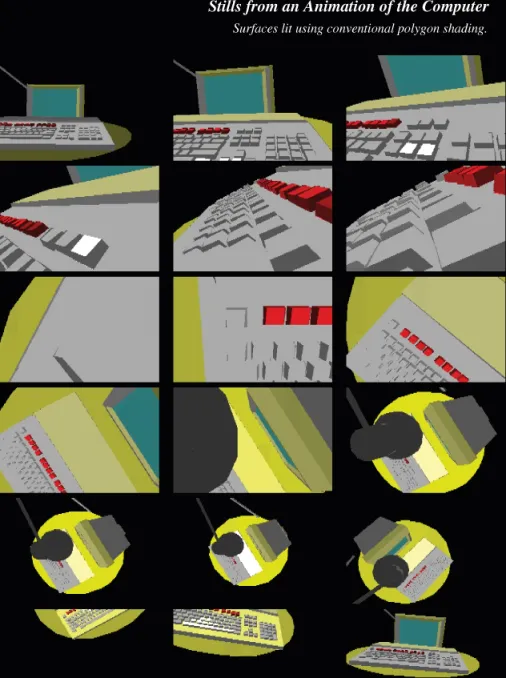
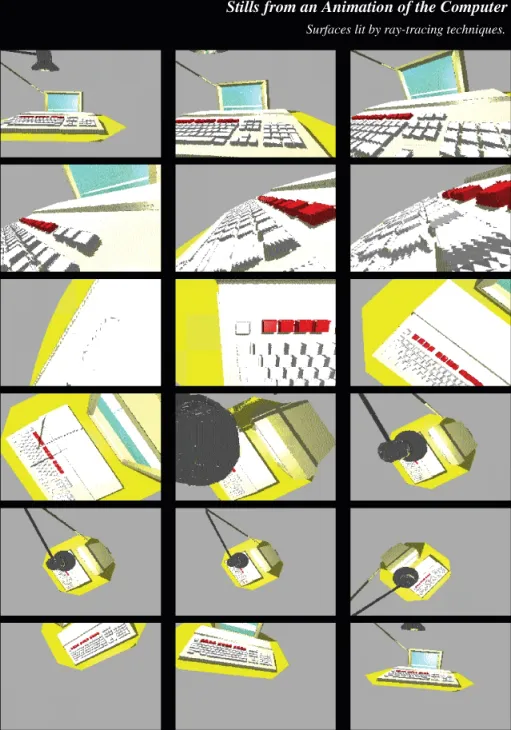
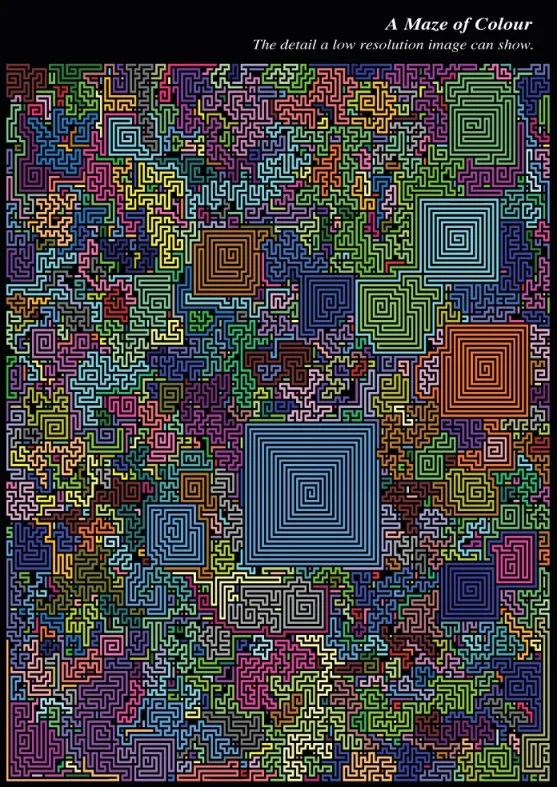
This work does not concentrate on the mechanics of getting information into and out of the machine, but instead with how you get it out to people (Figures 1.1 and 1.2). To communicate spatial structure is hard without involving the sense of sight.1 Language, along with music, the most sophisticated use of hearing, is an excellent means of conveying ideas and thoughts, but cannot present a large amount of information in a structured form at speed.2 Neither can touch or our other senses.
When you look out of the window you can see a great deal in an instant.3 The mind has an extremely powerful system for processing imagery that can instantly analyse a pattern of colours, of light and shade, and know that these are trees, houses or people. How long would it take to describe all that you can see in words?
Pictures alone are insufficient. This little book is only held together by its text. We have travelled a long way with our little symbols, the letters of the alphabet, which exist only because they were easy to scratch with a stick or form quickly with lips and tongue. Did our ancestors develop the most efficient means of communication or did they make do with what was possible?
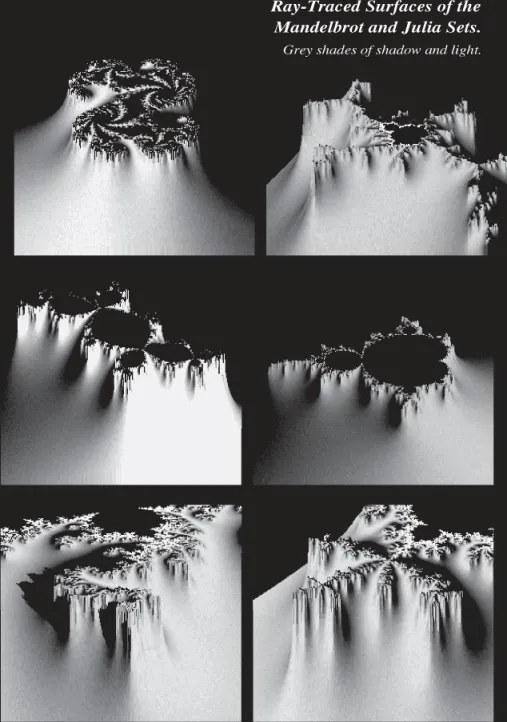
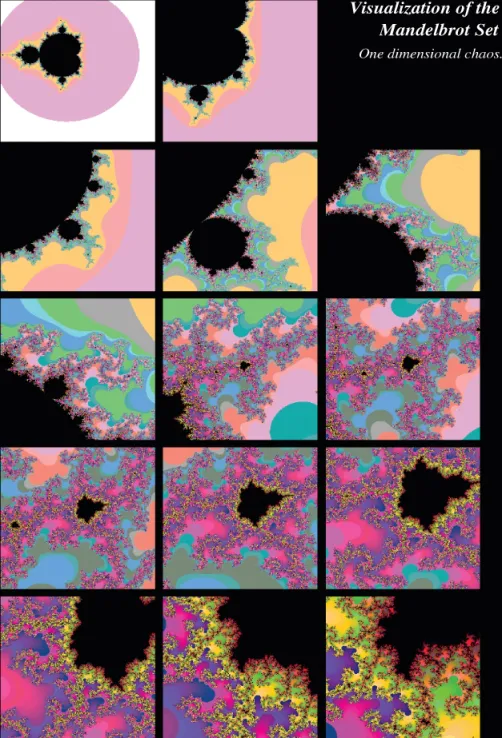
The spatial structure of 1980s British society, which is envisaged in these pages, was made up of far more than a few large regions that can be named and divisions that could be measured. Social structure has a texture to it, a fine pattern, an elaborate organization, not unlike the fractal patterns to what were thought to be chaos, which were first revealed in the 1980s (Figure 1.3).
We depend on vision, we think visually, we talk in visual idioms and we dream in pictures, but we cannot easily turn a picture in our mind into something other people can see (and not everyone can see). An artist will take days to paint a single portrait. My parents' generation were the first to have easy access to the camera and mine were the first to receive the computer, which can turn a huge amount of data into pictures—snapshots of our society. In the future we may be able to speak visually and may be able to summon up an image to explain what we are trying to say. For now we still have to learn how.
1.2 Pictures over time
One of the great potentials of computer graphics is to provide a vision of what we might not otherwise be able to see in a photograph or real life.
(Dooley and Cohen, 1990, p. 307)
Our first permanent communications were cave paintings and our first textual scripts were made of pictures. Today the liquid-crystal display screen, which abounds with icons, is the modern cave wall (Figure 1.4); we have rushed forward to the beginnings of visual communication.4
The first detailed maps were drawn on clay. They were invaluable objects for the control of territory or the projection of religious truth about the world. Maps were accumulations of innumerable stories, reams of parchment and hordes of figures, but they were also about power.
As map-making developed into the art of cartography, rules were formalized and conventions defined. Cartography is no longer a major discipline or even an important aspect of geography. Its modern tools can be used by children (Figure 1.5) and its conventions have been challenged as stale. It may currently be merging into a new, as yet unlabelled, discipline. This could be the discipline needed to collate knowledge on the graphical design of all that which now appears within touch-sensitive liquid-crystal displays, now that the displays interact. Disciplines change.
The nineteenth century saw the growth of an aversion, in science, to pictures. The graphs, which instruments traced on to paper, were immediately turned into supposedly more accurate and readable tables. Even in the early 1960s diagrams were said to be for people without mathematical imagination.5 Nevertheless, statistical graphics did germinate in these surroundings.
The graph, bar chart and scatter diagram were invented and formalized. Rules for their construction were produced, while their supposed subservience to more advanced methods was made clear. By 1990 the cycle had come round again and a new breed of statistician appeared who saw visualization as paramount.
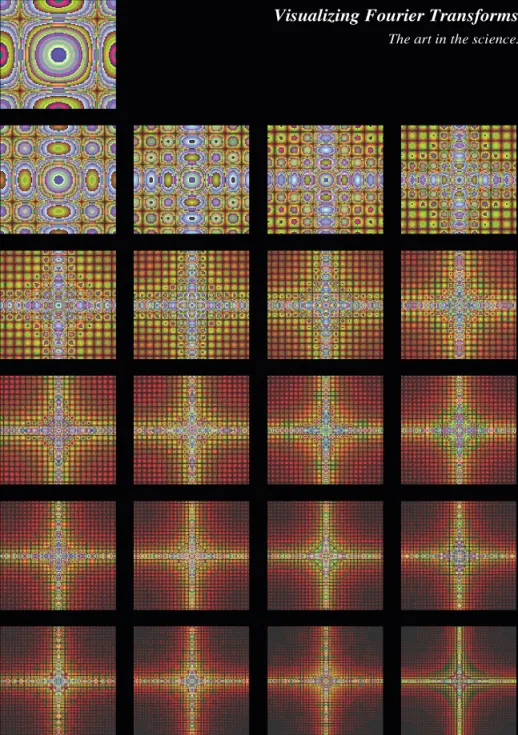
Computer graphics in the 1960s changed the picture. Swirling images were produced from simple formulae. It was immediately obvious that reading an equation told you little about what secrets it held. Before computer graphics, people were blind to the behaviour of relationships they thought they could easily understand (Figure 1.6). The programmers then turned their efforts to the possibilities of rendering abstract worlds.
Graphics have come in and out of favour in cycles through time. Their resurgences usually have more to do with taking advantage of new printing technologies and the availability of more abundant information than a basic understanding of their value.
Box 1.1 shows how computer graphics are constructed. At the time it was first drawn, being able to combine all these separate elements in a single ‘graphics file’ was novel. Creating such files required knowing that to place an island in a river within a ...