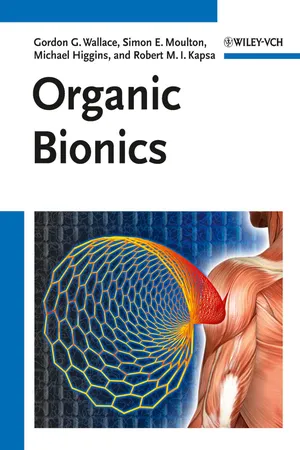
The first reference on this emerging interdisciplinary research area at the interface between materials science and biomedicine is written
by pioneers in the field, who address the requirements, current status and future challenges. Focusing on inherently conducting polymers,
carbon nanotubes and graphene, they adopt a systematic approach, covering all relevant aspects and concepts: synthesis and fabrication,
properties, introduction of biological function, components of bionic devices and materials requirements. Established bionic devices, such as
the bionic ear are examined, as are emerging areas of application, including use of organic bionic materials as conduits for bone re-growth,
spinal cord injury repair and muscle regeneration. The whole is rounded off with a look at future prospects in sustainable energy generation and storage.
Invaluable reading for materials scientists, polymer chemists, electrotechnicians, chemists, biologists, and bioengineers.
eBook - ePub
Organic Bionics
- English
- ePUB (mobile friendly)
- Available on iOS & Android
eBook - ePub
Organic Bionics
About this book
Information
1
Medical Bionics
The term “bionics” is synonymous with “biomimetics” and in this context refers to the integration of human-engineered devices to take advantage of functional mechanisms/structures resident in Nature. In this book, we refer to the field of bionics, and in particular medical bionics, as that involved with the development of devices that enable the effective integration of biology (Nature) and electronics to achieve a targeted functional outcome.
Since the early experiments of Luigi Galvani and Alessandro Volta (see insets), the use of electrical conductors to transmit charge into and out of biological systems to affect biological processes has been the source of great scientific interest. This has inspired many to explore the possible use of electrical stimulation in promoting positive health outcomes. Some of the earliest examples of using electrical stimulation in a controlled manner to achieve specific clinical outcomes were developed by Guillaume-Benjamin-Amand Duchenne (see inset) (Figure 1.1). Duchenne's interests in physiognomic esthetics of facial expression led to the definition of neural conduction pathways. During this important period in the history of science, Duchenne developed nerve conduction tests using electrical stimulation and performed pioneering studies of the manner in which nerve lesions could be diagnosed and possibly treated.
Figure 1.1 Demonstration of the mechanics of facial expression using electrical stimulation. The test subject, a cobbler by trade and a patient of Duchenne's, is “faradized” by Duchenne (right) and his assistant (left). The stimulation was applied to the cobbler's mimetic (facial) muscles and caused a change in his facial expression.

To date, medical bionic devices have been largely targeted toward the primary “excitable cell” systems, muscle, and nerve, whose functions are inherently capable of being modulated by electrical stimulation. There have also been numerous studies of the use of electrical stimulation for bone regrowth and wound healing. The effects of electrical stimulation are thought to be promoted through the induced movement of positive and negative charged ions in opposite directions (polarization) across cells and tissues that activates sensory or motor functions [2].
Landmark developments such as the artificial heart in 1957 (Kolff and Akutsu) [3, 4] the external (1956) [5] and then implantable (1958) [6] cardiac pacemaker; the artificial vision system (1978) [7]; the cochlear implant (1978) [8, 9] deep brain stimulation (DBS) electrodes (1987) [10]; and, more recently, electroprosthetic limbs [11] are now being used along with a broad spectrum of parallel developmental projects that aim to alleviate human afflictions.
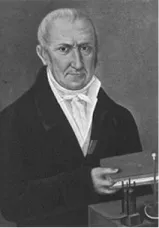
Galvani was dissecting a frog on a table near a wheel that generated static electricity, which he had been using for a physics experiment. As Galvani put the scalpel to the sciatic nerve, which innervates the muscles in the frog's legs, a spark was discharged from the wheel and the frog's legs jerked. The static electricity was picked up by the scalpel and passed to the nerve. Galvani conducted other experiments in this area, one of which used the electricity from a thunderstorm to enable a frog's legs to appear to “dance.”

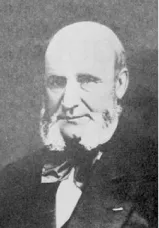
After practicing as a physician in Boulogne for four years, in 1835, Duchenne began experiments on the potential of subcutaneous “electrotherapy” to treat various muscle conditions. Duchenne returned to Paris in 1842, where his research yielded a noninvasive electrical technique for muscle stimulation that involved the delivery of a localized faradaic shock to the skin (“faradization”). He articulated these theories in his work, On Localized Electrization and its Application to Pathology and Therapy, first published during 1855 [1].
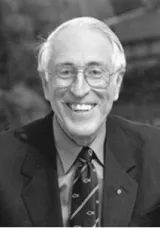
In 1927, at age 22, his father, a pharmacist, noticed a decrease in his hearing and was fitted with a hearing aid in 1945. Graeme's fascination with medical science and his father's plight led him on a journey to create the multielectrode bionic ear implant, which has now been implanted in more than 100 000 adults and children around the world.
Clark's story [1] is an inspiration not only in the science behind the invention but also in the tenacity and determination shown in building a multidisciplinary research team while “securing” funding and traversing adversity.

MacDiarmid went on to discover organic conducting polymers (OCPs) and, together with his colleagues, Hideki Shirakawa and Alan Heeger, was awarded the Nobel Prize in the year 2000. MacDiarmid continued to pioneer applications for OCPs until he passed away in 2006. He was an inspiration to all researchers young and old, mentoring all with his view on success published in his Nobel Prize autobiography: “Success is knowing that you have done your best and have exploited your God-given or gene-given abilities to the next maximum extent. More than this, no one can do.”
Advances in medical bionics technology are dependent on eliciting precise control of the electrical energy to deliver beneficial health outcomes. The advent of carbon-based organic conductors, through the pioneering works of Alan MacDiarmid, Alan Heeger, and Hideki Shirakawa (see inset), now provides the platform for unprecedented possibilities by which electrical energy can be used to modulate the function of medical devices.
There are three main application paradigms where the use of organic conductors as electrodes or electrode arrays in medical bionic devices could be beneficial – where the organic polymer is used to functionally stimulate the target tissue, stimulate a regenerative event in the target tissue, or stimulate communication between the nervous system and an electronically driven prosthesis.
1.1 Medical Bionic Devices
1.1.1 Electrodes and Electrode Arrays
Electrodes may be surgically implanted within the body to record (e.g., brain activity) and/or stimulate (i.e., cardiac pacing, DBS, and bone growth) function. The specific material requirements for these electrodes will differ markedly in accordance with their proposed interaction with the tissues that they are intended to stimulate. In all instances, the conducting surface needs to be able to facilitate control of the electron flux, without the promotion of adverse effects on the implant's tissue environment. Furthermore, for some applications, the conducting surface needs to be in direct contact with the surrounding tissue, while in other applications, no direct contact is required. It is in the modulation of the interaction between the target tissue and conducting surface that nonmetallic conductors, such as OCPs and/or conducting carbon materials, are able to add value toward further optimization of electrodes [12].
Neurophysiologists have used sharpened wire metal (e.g., tungsten) electrodes for over 50 years to study brain function [13], and recently, neural probes have been fashioned from silicon [14], ceramic [15], and flexible substrates [16, 17]. However, in all cases, the surfaces from which the bioelectrical impulses are transferred between tissue (e.g., neural) and electronic circuitry remain predominantly metallic. Traditionally, the materials of choice for implantable electrodes have been based on inert metals.
The type of metal, its area of exposure, and the texture of the metal surface determine the properties of the electrodes and therefore the area of application. Activated Ir oxide has been shown to have excellent charge transfer properties (3000 C μm−2), making it the material of choice for microelectrodes, but the surface is chemically unstable [18].
To enhance the metal electrode sensitivity or increase the electrode's capacity to conduct charge for use in stimulation or sensory monitoring, the impedance must be lowered [18]. This step generally involves increasing the geometric surface area of the electrode tip, often associated with a concomitant loss in resolution or either the stimulatory or recording process. Larger area electrodes cause increased tissue damage during insertion [19] or, if required, during removal.
Platinum (Pt) has been employed in cochlear implant electrodes as well as in other functional stimulation electrodes, such as pacemakers, early DBS electrodes, and vision stimulator applications. Gold, iridium (Ir) oxide [20], and alloys of Pt and Ir have likewise been incorporated into bioelectrodes for a wide variety of applications [21–23].
1.1.1.1 Bionic Hearing
The earliest report of electrical stimulati...
Table of contents
- Cover
- Related Titles
- Title Page
- Copyright
- Foreword by Professor Graeme Clark
- References
- Acknowledgments
- Chapter 1: Medical Bionics
- Chapter 2: Carbon
- Chapter 3: Organic Conducting Polymers
- Chapter 4: Organic Conductors – Biological Applications
- Chapter 5: Materials Processing/Device Fabrication
- Chapter 6: Organic Bionics – Where Are We? Where Do We Go Now?
- Index
Trusted by 375,005 students
Access to over 1.5 million titles for a fair monthly price.
Study more efficiently using our study tools.
Frequently asked questions
Yes, you can cancel anytime from the Subscription tab in your account settings on the Perlego website. Your subscription will stay active until the end of your current billing period. Learn how to cancel your subscription
No, books cannot be downloaded as external files, such as PDFs, for use outside of Perlego. However, you can download books within the Perlego app for offline reading on mobile or tablet. Learn how to download books offline
Perlego offers two plans: Essential and Complete
- Essential is ideal for learners and professionals who enjoy exploring a wide range of subjects. Access the Essential Library with 800,000+ trusted titles and best-sellers across business, personal growth, and the humanities. Includes unlimited reading time and Standard Read Aloud voice.
- Complete: Perfect for advanced learners and researchers needing full, unrestricted access. Unlock 1.5M+ books across hundreds of subjects, including academic and specialized titles. The Complete Plan also includes advanced features like Premium Read Aloud and Research Assistant.
We are an online textbook subscription service, where you can get access to an entire online library for less than the price of a single book per month. With over 1.5 million books across 990+ topics, we’ve got you covered! Learn about our mission
Look out for the read-aloud symbol on your next book to see if you can listen to it. The read-aloud tool reads text aloud for you, highlighting the text as it is being read. You can pause it, speed it up and slow it down. Learn more about Read Aloud
Yes! You can use the Perlego app on both iOS and Android devices to read anytime, anywhere — even offline. Perfect for commutes or when you’re on the go.
Please note we cannot support devices running on iOS 13 and Android 7 or earlier. Learn more about using the app
Please note we cannot support devices running on iOS 13 and Android 7 or earlier. Learn more about using the app
Yes, you can access Organic Bionics by Gordon G. Wallace,Simon E. Moulton,Robert M.I. Kapsa,Michael Higgins,Simon Moulton in PDF and/or ePUB format, as well as other popular books in Biological Sciences & Biotechnology. We have over 1.5 million books available in our catalogue for you to explore.