![]()
Chapter One
A summer art class. The United States Army. The halls of an urban elementary school. A colored high school in Apartheid-era South Africa. The streets of Philadelphia. A church basement. And three separate classrooms where it was impossible to hide.
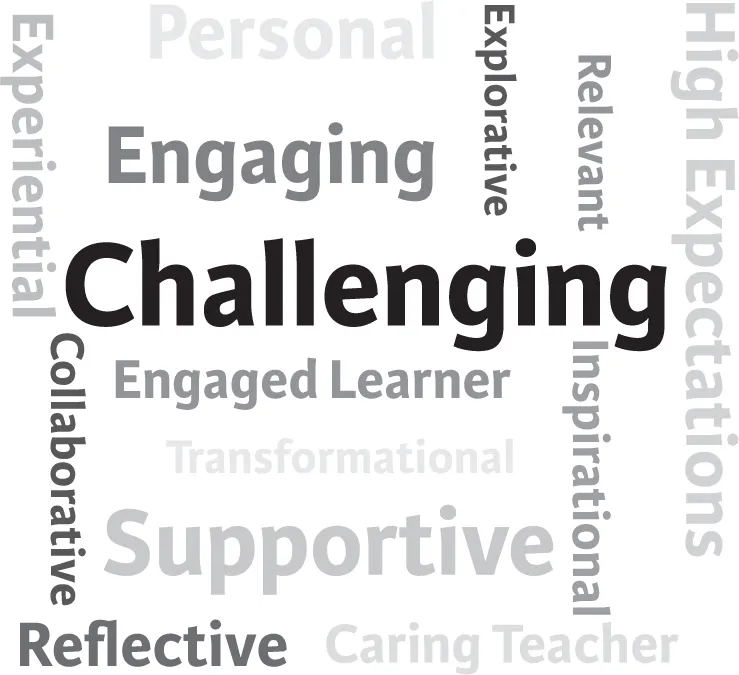
As these stories remind us, the best learning experiences are never the easy ones. It's only when we're challenged beyond our usual limits that we have the possibility of discovering something new about ourselves, each other, and the larger world.
Meaningful learning can be risky, difficult, and sometimes painful. It can also be the moment when we first discover what we're capable of, and why we can never go back to the way we were before.
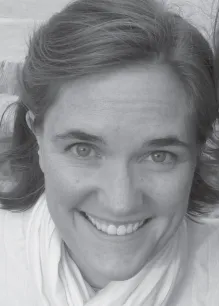
Jenna Fournel
Hometown: Castro Valley, California
Job title: director of communications and outreach, Center for Inspired Teaching
Current home: Alexandria, Virginia
My ideal school is a place where: children's imaginations are revered and their individuality is honored
My personal heroes: my parents, who were my first teachers; my husband, who is a teacher; and my two-year-old son, who is my current teacher
My personal motto: No doubt the universe is unfolding as it should.
My idea of perfect happiness: watching my son discover the world; through him I am learning about it all over again
My present state of mind: agitated by the slow pace of progress
My greatest achievement: raising a kind and gentle human being
Quotable: “The teacher who is indeed wise does not bid you to enter the house of his wisdom but rather leads you to the threshold of your mind.”—Kahlil Gibran
When I was seventeen, I went to the Rhode Island School of Design for a summer pre-college program. I went there to see what it would be like to be an art student and to experience life away from my family for the first time. I was a fairly sheltered child, a do-gooder who thrived on pleasing the adults in my life. As a strong student, I was unaccustomed to failure or, really, even challenge. So, understandably, many things happened that summer that would qualify as powerful learning experiences. But the one that sticks with me to this day happened in the drawing class of Bo Joseph.
Bo was an almost stereotypical artist-teacher, with his exclusively black wardrobe, passionate but sparse speech, and infuriatingly mysterious instructional style. He would give us enigmatic assignments like: “Go outside. Find something. Make a drawing with it.” In my quest to please my instructor I would stress over the specifics of each direction, vacillating between thinking I was supposed to take them literally and searching for the higher symbolic meaning in his words. My peers did not seem so encumbered. They'd return in minutes with dog feces and popsicle sticks, creating bizarre abstract pieces that always seemed to get Bo's nodding approval. I would sit in a corner trying to draw a bird's nest with a broken twig and he would hardly give me the time of day. “That's not quite it,” he would frequently say of my pieces. “I'm not seeing your inspiration yet. Keep looking.”
My anxiety about his class grew and grew with each assignment as I agonized over how to create what he wanted—and fell flat every time. I was baffled by the ease with which it seemed my colleagues were grasping Bo's ideas and my apparent inability to create anything that would warrant event a grunt of approval.
Finally the last day of class came, and we were to work with a live model for the first time. Bo's instructions were predictably vague: “Create.” Nearly in tears, I gave up. I found my favorite corner; pulled out a large sheet of paper, a jar of gesso, and some crusty watercolor paints; looked at the model for a few moments; and started to move the paint around the paper. For the first time all summer I lost track of the students around me, lost track of time, lost track of that tall figure in black for whom I'd failed in every artistic performance. It was just me, the model, the paint, and something in my head that was telling me what to do. “Finally,” said a voice out of nowhere. I awoke from my reverie to see a familiar shadow across the page. I looked up at Bo and cowered in anticipation of his critique. He lowered himself to my level and looked straight into my eyes. “You've heard your inner voice,” he said. “Now don't you ever, ever, stop listening.”
Years later, after being a teacher myself, I know that Bo took on a brave experiment with me. I like to believe he knew it would work, but I shudder to think what I would have become without the breakthrough he inspired. He saw that my desire to please was hampering my ability to create and he pushed and pushed and pushed until I got past the quest for outside approval and found my inner self. The picture is nothing outstanding. It's a reclining nude made of thick gesso with green and blue watercolor paint that has fallen into various scratches and recesses along the form. But I consider it the first piece of art I ever created.
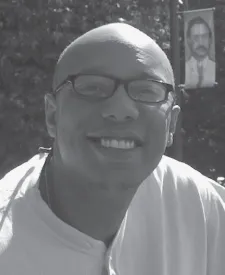
Mark Rockeymoore
Hometown: Paducah, Texas
Job title: consultant, Earth Node GIS
Current home: Montreal, Quebec
My ideal school is a place where: learning is emphasized as a lifelong process, and the skills for living a life of curiosity and exploration are fostered from the earliest ages
My personal heroes: my parents, sacrificial avatars, children from abusive backgrounds
My personal motto: life in the now
My idea of perfect happiness: perfect peace
My present state of mind: manifesting innate potential
My greatest achievement: fatherhood
Quotable: If you feel what I'm saying, it means that somewhere within you, you already know it as truth.
In 1987, when I was a very young man, I joined the army and went to basic training at Fort Jackson in Columbia, South Carolina, and then advanced individual training at the signal center in Augusta, Georgia. I did well on the Army Services Vocational Aptitude Battery and chose to train as a single-channel radio operator, which was a combat military occupational specialty that also gave me access to both the GI Bill and the Army College Fund. I was also chosen to learn International Morse Code (IMC), which was an additional skill identifier. That course was one month long and consisted of sitting at a desk wearing headphones and armed with a Morse code tapper of Vietnam War vintage. I proceeded to embark upon an amazing inner journey.
The training regime was relaxed. In the first week, we were responsible for tapping out and being able to interpret three groups, repeating what we heard in our headphones. Each group consisted of five dits and dashes (didadadittydadadittyda) that represented numbers and letters. The second week we were responsible for three more, and so on, until the final group of ten that we had to learn in order to pass the course and become certified in IMC.
The first week was simple enough. I was, along with everyone else, progressing normally, and we made our quota. Then, late in the second week, something happened: I progressed from three to twelve groups in the space of fifteen minutes. The sergeant, who had been teaching there for twelve years, could not—would not—believe I'd never learned Morse code before. I remember the room was dark, our desks were side by side, and the groups blended together like a song. One moment I was listening and tapping code, understanding some and having to think to get the meanings of other letters and numbers, engaging in the reminiscence and recognition pattern that typifies all rote memorization learning methods. And then at some point I entered a mode of reverie, where the dits and dashes were only audible as echoes, as my mind blurred the distinction and what had been aural became graphical—there was an actual, physical bending of mental space as if I'd flexed a previously unknown muscle and switched over to another mode where, suddenly, there appeared a depiction of Morse code in a perfect pattern of resonance and harmonics. It was as if I'd entered a hidden space that was infinite in nature.
I remember the sensation of openness, impossibly deep within my mind, and of texture and depth beyond my current needs available and waiting for input. As I was listening and experiencing this, my fingers moved faster and I instantly knew the code, could see the code, and could utilize this precious insight to cement my understanding. Coming out of it, that unknown muscle flexed once again, leaving me drained but utterly clear, and excited beyond belief.
Watching the instructor walk over to me with a confused expression was confirmation that something strange had indeed just occurred. I've never returned to that space since. I've also never been challenged like that since. But knowing that it exists, having experienced it, is like a tantalizing glimpse into possibility, into the potential of the human mind to access capabilities that normally lie dormant and unused.
It is like this for us all, in every situation that leads to learning. Our ability to concentrate and utilize our innate gifts is either challenged or left unused, depending upon our desire. Whether it is in our secondary, postsecondary, community-oriented or personal educations, the choice to learn is always a choice, and our minds are often an underutilized resource, subject to distractions that engage our egocentric tendencies to the detriment of our inherent capabilities. A classroom setting can be either helpful or not, but real learning originates and comes, always, from within.
Jan Resseger
Hometown: Cleveland, Ohio
Job title: minister for public education and witness, United Church of Christ Justice & Witness Ministries
Quotable: “I said to my children, '…I don't ever want you to forget that there are millions of God's children who will not and cannot get a good education, and I don't want you feeling that you are better than they are. For you will never be what you ought to be until they are what they ought to be.'”—Dr. Martin Luther King Jr.
My primary school in an upwardly mobile neighborhood of a small western town in the early 1950s ...