![]()
Chapter 1
The Social Media Manifesto
THE SOCIALIZATION OF MEDIA IS YEARS IN THE MAKING
In my 20-year marketing career, I've dedicated the last 14 years specifically to the practice of and experimentation in online interaction. My findings are based solely on the chemistry of failure, success, and, well, ambivalence, which equals either defeat or promise. The constant theme throughout has been the sustained balance between the pursuit of new influencers and the incorporation of proven traditional methods. This experience, and the experiences of others, ultimately serves as the foundation for creating a new communications bridge between companies and customers.
Socialized media has:
- Rewired the processes by which consumers share experiences, expertise, and opinions
- Broadened the channels available to consumers who seek information
- Changed how companies approach markets
- Altered how companies develop products
- Remodeled the processes by which companies connect with and show appreciation for their customers
- Transformed the method of influence, augmenting the ranks of traditional market experts and thought leaders with enthusiasts and innovators who self-create content-publishing platforms for their views
- Facilitated customers’ direct engagement in the conversations that were previously taking place without their participation
A fundamental shift in our culture is under way and it is creating a new landscape of influencers, as well as changing how we define influence. By establishing an entirely new ecosystem that supports the socialization of information, this shift is facilitating new conversations that start locally, but ultimately have a global impact.
The days of “hear no evil, see no evil, speak no evil” have passed without lament.
Monologue has given way to dialogue.
The message is clear. Social media has introduced a new layer of influencers across all industries. It is the understanding of the role people play in the process of not only reading and disseminating information, but also how they create and share content in which others can participate. This, and only this, allows us to truly grasp the future of business, which is, for all intents and purposes, already unfolding today.
The socialization of information and the tools that enable it are the undercurrent of interactive media—and serve as the capital infrastructure that defines the social economy.
Content is the new democracy and we, the people, are ensuring that our voices are heard.
This is your chance to reinvigorate the tired and aging models of marketing and service, enliven a corporate brand, and increase revenue, all while paving the way for a brighter and more rewarding career.
How can companies implement an integrated social strategy quickly in this new social landscape? By focusing on desirable markets and influencers where they connect. This will have a far greater impact on brand resonance and the bottom line than trying to reach the masses through any one message, venue, or tool.
Our actions speak louder than our words.
New media is constantly evolving and has yet to reveal its true impact across the entire business publishing and marketing landscape. But, social media is only one chapter in a never-ending resource that continues to evolve as new media permeates every facet of every business. In fact, new media is only going to become more pervasive and, as such, prove to be a critical factor in the success or failure of any business.
The life of the information offered in this book is interminable. New tools and strategies will be revealed, and they will be tied to exciting case studies that document the challenges, tactics, lessons, and successes for each.
We're just getting started.
The evolution of new media is also inducing an incredible transformation within the organization, introducing opportunities for internal and external collaboration in customer service, product, sales, community relations, and public—its most dramatic evolution in decades. In the world of customer and product support, socialized media is putting the “customer” back in customer service. Likewise, in the world of communications, the democratization of media is putting the “public” back into public relations. It creates entirely new roles and teams within organizations to proactively listen, learn, engage, measure, and change in real time. And we'll soon see it have a profound effect in the financial sector.
This new genre of media is not a game played from the sidelines however. Nor is this book written merely to inform you of the benefits only to have you go back to your day-to-day routine. Those who participate will succeed—everyone else will either have to catch up or miss the game altogether.
Businesses will evolve, customers will gain in prominence, and brands will humanize—with or without you.
THE FUTURE OF BUSINESS IS ALREADY HERE
The secret to successfully navigating the new landscape of marketing and service is understanding that social media is less about technology and more about anthropology, sociology, and ethnography. New media marketing and services are mash-ups of new and traditional media and processes that span across advertising, public relations (PR), customer service, marketing communications (marcom), human resources (HR), sales, and community relations. We take the best practices from each and also introduce new social processes in and around them.
Communication, whether inbound or outbound, is now powered by conversations, and the best communicators always start as the best listeners. And the best listeners are those who empathize.
This is where and how the future of influence takes shape.
- It begins with respect and an understanding of how you connect with and benefit those whom you're hoping to help.
- Intent is defined by a genuine desire to evolve into a resource.
- Genuine participation is a form of new marketing, but is not reminiscent of traditional marketing formats and techniques—it's a new blueprint for unmarketing.
- Meaningful content can earn the creator trust, authority, and influence.
- Conversations can forge relationships, which are measured by social capital and trust.
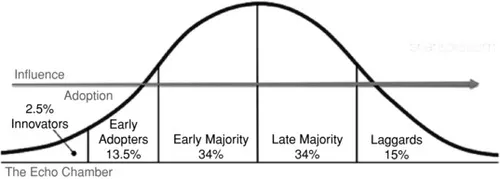
Figure 1.2 shows the range of people you will be interacting with, from innovators to laggards.
WE ARE THE CHAMPIONS, WE ARE NOT MESSENGERS
While we lead the transformation of our company's marketing, sales, and service infrastructure, we must also ensure that our actions are discernible. Much in the same way that we attempt to create ambassadors by empowering our customers and advocates in the Social Web, we must become their ambassadors within—representing their concerns, ideas, questions, and experiences. Internal change is part of the game.
Since this is a powerful new form of social media, it begins with how we think and act. This is the point at which most companies fall down, when they rely on traditional marketing models instead of creating or adapting new methodologies.
Messages are not conversations. Targets and audiences are not people. The inability to know people for who they are and what they represent prevents us from truly seeing and hearing them—which then impedes our efforts to connect. As Doc Searls, coauthor of The Cluetrain Manifesto, wisely stated, “There is no market for messages.”
The market for self-promotion is finite. Yet brands, even those that experiment with social media, confuse their role and place within these new digital societies. People do not create accounts on Facebook, YouTube, Twitter, or any other social network to hear from brands. The bottom line is that people are seeking answers and direction, not messages or sales pitches.
People just don't speak or hear things in the same way companies speak about their products and services. For us to be heard, we have to engage as though we were speaking person to person.
Social networks are hubs between the company and its customers. How we participate in each network defines our stature within them and also determines our ability to earn friends and followers while also promoting and instilling advocacy.
Everything we're integrating into the marketing mix is now aimed at sparking and cultivating conversations, as well as continuously expanding a network of lasting relationships.
CONVERSATIONS HAPPEN WITH OR WITHOUT YOU
In his great essay titled “We Are the People Formerly Known as the Audience,” Jay Rosen introduced us to the people we're now trying to reach. In many ways, Rosen's essay served as a manifesto for the marketing, media, and advertising industries, serving as an eye-opener to the world of democratized influence and how to recognize and embrace the opportunity it represents.
To best reach people, we have to first figure out who they are and where they connect and how they share and find information. In the process, you'll quickly discover that there is no magic bullet for reaching everyone, all at once. The strategy is in how to segment active communities from audiences.
Social media is about speaking with, not at people. This means engaging in a way that works in a conversational medium, that is, serving the best interest of both parties, while not demeaning any actions or insulting the intelligence of anyone involved.
So what of those skeptics or apprehensive executives who claim that participating on social networks will only invoke negative responses and ignite potential crises?
As we're coming to realize, the social landscape is a vast sea filled with unforgiving predators—most of whom would love nothing more than to have marketers for every meal of the day. Nevertheless, succeeding here is the future.
The truth is that there will be negative commentary. However, that should not deter you from experimenting or piloting programs. Even without your participation, negative commentary already exists. In most cases, you just aren't listening in all of the right places. This is why I like to ask business leaders the following question: “If a conversation takes place online, and you weren't there to hear it, did it actually happen?”
Yes. Yes, it did and still does.
Assuredly, every negative discussion is an opportunity to learn and also to participate in a way that may shift the discussion in a positive direction. If there's nothing else that we accomplish by participating, we at least acquire the ability to contribute toward a positive public perception.
The conversations that don't kill you only make you stronger. And those negative threads that escalate in social networks will only accelerate without the involvement of inherent stakeholders.
SOCIAL MEDIA IS ONE COMPONENT OF A BROADER COMMUNICATIONS AND MARKETING STRATEGY
It's true that everything is changing. And in many cases, it's also true that everything old eventually becomes new again. The underlying principles of customer focus and service certainly aren't new. Instead, the attention on these elements may have waned, as businesses expand, contract, shift, and evolve based on market needs and trends, profit, and peer influence, as governed by the guidance of stakeholders and shareholders.
Social media force businesses to reflect and adapt to markets and the people who define them.
Social media are never-ending fountains of lessons and insight, and they flow both ways.
Social media present a means, not an end.
Social media spark a revelation that we...