The study of Bacillus Anthracis remains at the forefront of microbiology research because of its potential use as a bioterror agent and its role in shaping our understanding of bacterial pathogenesis and innate immunity. Bacillus Anthracis and Anthrax provides a comprehensive guide to all aspects of the organism, ranging from basic biology to public health issues associated with anthrax. This book will be a premier reference for B. Anthracis and anthrax to microbiologists, medical and public health professionals, bioterror research and preparedness, immunologists, and physiologists.
Anthrax (Latin, a carbuncle) is derived from the Greek
(anthrax) meaning coal and referring to the characteristic black eschar in human cutaneous anthrax. Other older names for the disease, such as “malignant pustule” or “black bane,” and names in other languages, such as charbon (French) and carbonchio (Italian), similarly reflect these features. Yet other names reflect other manifestations of the disease in humans and/or animals or its sources of infection, such as woolsorter’s/ragpicker’s/Bradford disease and the German equivalent Hadernkrankheit (rag disease), splenic fever, Milzbrand (German, meaning “spleen fire”), Siberian plague, Lodiana fever, and Pali plague in India, and many more. The many names in many languages reflect the historical and widespread recognition of the numerous features of anthrax before it was understood that they were all manifestations of a single etiological agent.
The earliest application of the name “anthrax” to the afflictions caused by Bacillus anthracis is uncertain. “Bloody murrain” was probably the most common term for the disease in animals in early English language texts, and carbuncle—or malignant carbuncle to distinguish it from other carbuncular manifestations—was the term used for the cutaneous infection in humans. From a book of 1766, Viljoen (1928) cites “Visit to your servant girl suffering from a considerable anthrax and found several furuncles on the back; cured same” but believes that “anthrax” at that time was a common term embracing any severe localized dermatitis and this was not a B. anthracis infection. According to Swiderski (2004), physicians attending George Washington diagnosed as “an anthrax” “a very large and painful tumor” which developed on his left thigh about 6 weeks after his inauguration as first president of the United States in 1789. However, that description and the description of “anthrax, or carbuncle” in the American edition of The Surgeon’s Vade-Mecum (1813) similarly appear unlikely to have been B. anthracis infections.
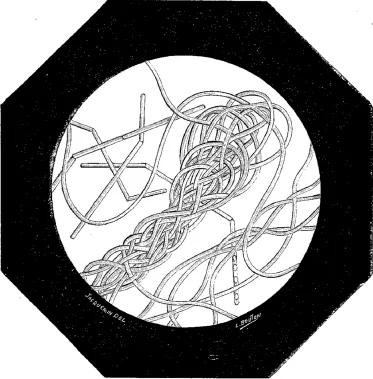
Figure 1.1 From a culture of anthrax blood in chicken broth at 24–48 h.
(From Ch Chamberland’s celebrated book Charbon et Vaccination Charbonneuse d’après les travaux de Mr Pasteur, 1883.)
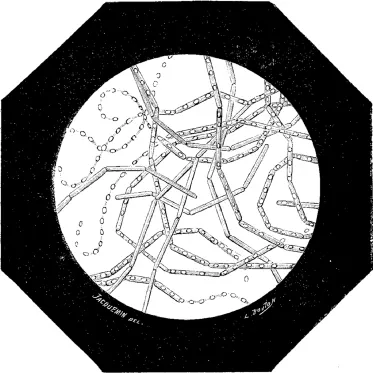
Figure 1.2 The same culture after several days, with spores now apparent.
(From Ch Chamberland’s celebrated book Charbon et Vaccination Charbonneuse d’après les travaux de Mr Pasteur, 1883.)
From Ancient Egypt to 1892
The allegedly long history of anthrax features in numerous papers and articles. Most scholarly among those readily accessible today are probably the papers of Klemm and Klemm (1959) and Blancou (2000) which, together, supply a brief but comprehensive review of earlier literature attesting to the historical familiarity with the disease through the ages. Klemm and Klemm (1959) suggest anthrax originated in early Egypt and Mesopotamia, where agriculture was established some 5000 years BC, and then address the feasibility of the frequently cited statement that the fifth plague of Egypt in the time of Moses (ca 1250 BC)—“a grievous murrain affecting cattle, horses, asses, camels, oxen and sheep”—was the earliest instance of systemic anthrax on record. As Ebedes (1981) points out, no other disease kills such a wide spectrum of species. Others also consider the sixth plague—boils breaking out in sores on man and beast—to have been cutaneous anthrax. Ebedes (1981) suggests these lesions affected only the Egyptians because only the Egyptians would have handled the carcasses of affected animals, the Israelites being forbidden to touch dead animals. Not everyone concurs with these hypotheses; Morens (2002), for example, considers the evidence that the fifth Pharaonic plague in the biblical book of Exodus was anthrax to be weak.
Klemm and Klemm (1959) and Blancou (2000) also summarize the evidence that early Greece was familiar with anthrax as depicted by Homer in his “Iliad” (ca 1230 BC), Hippocrates’ writings (ca 400 BC) and the plague of Athens in 430 BC (see also Morens and Littman, 1992), Aristotle in his History of Animals (ca 333 BC), Plutarch (ca AD 120), and Galen (ca AD 200); that it was described in Hindu literature of around 500 BC and that, based on the writings of Livius (ca 460 BC), Virgil (70 BC–90 BC), and Vegetius (ca AD 400), the Romans were well acquainted with it. Dirckx (1981) had no doubt that the Norican plague (now Bavaria) in Virgil’s third Georgic (ca 32 BC) was anthrax. Klemm and Klemm (1959) even suggest that anthrax may have contributed to events that led to the fall of Rome. According to Dong (1990), anthrax has featured in Chinese animal husbandry for millennia, being especially well described in the Jin and Sui dynasties (AD 500–600) by Ge Hong in his Handbook of Prescriptions and Ch’ao Yaun Fang in the General Treatise on the Etiology and Symptomatology of Diseases.
Klemm and Klemm (1959) believe that records of the occurrence of anthrax in post-Roman Europe begin with references to what is likely to have been this disease in the Hippiatrika (horse medicine), a tenth-century collection of veterinary writings, and the eleventh century The Medicine of Quadrupeds Blancou (2000) summarizes records of the death of a clan chief in Ireland in 1030 from what may well have been anthrax; of Arab authors in the twelfth and thirteenth centuries describing anthrax-like signs in cattle; the description in 1250 by German Emperor Frederick II’s chief veterinarian of what appears to have been anthrax in horses; a description by one Pietro di Crescenzi (Italy) of what is thought to have been anthrax in sheep in the late 1200s; and further descriptions of probable anthrax in animals and humans in 1316, 1523, 1673, and 1745. D. E. Salmon (after whom Salmonella species were named) informs us that “anthrax was frequently confounded with the rinderpest, but is described with sufficient precision to identify outbreaks of it in epizoötic form in 996 A.D. and 1090 in France; in 1552 at Lucca, Italy; in 1617 at Naples, where numbers of human beings died from eating the flesh of animals affected with the disease” (Salmon, 1896). He further documents references to the disease in animals in Venice in 1598, extensive outbreaks in Germany, Hungary, and Poland in 1709–1714, its extensive spread in the early 1800s in Russia, Holland, and England, and again in Russia during the mid-1800s when, in 1864, “more than 10,000 horses and nearly 1000 persons perished from the disease.” In Novogrod (Russia), between 1867 and 1870, 528 people and 56,000 cattle died of anthrax (Klemm and Klemm, 1959; Koch, 1877). Some 60,000 people were reported to have died in the 1617 Naples epidemic, and 15,000 people allegedly died from anthrax in San Domingo (now Haiti) within 6 weeks in 1770 (Higgins, 1916; Morens, 2002).
In America, anthrax was first introduced into Louisiana at the time of French settlement in the early 1700s. Evidence is that it had spread to Kentucky by 1819 and to Philadelphia by 1836 reaching New York, New England, and California in the second half of the1800s (Hanson, 1959; Klemm and Klemm, 1959). The appearance in 1819 of the disease in horses, cows, sheep, and humans in contact with infected animals was clearly documented by Kentucky physician Dr. J. Kercheval in 1824 (Hanson, 1959). Purdom (1954), presumably unacquainted with Kercheval’s report, claimed it was the “unenviable distinction” of Philadelphia to be the first city in the United States in which a recorded case of human anthrax was described in 1834 following skinning of cattle that had died of the disease. More human cases were reported in Louisiana in 1830, with further reports over “the next several years” of the disease in animals and humans in Texas, Wisconsin, New York, Mississippi, Vermont, Massachusetts, and California (Brachman, 1965).
In Africa, recently described as the “cradle of anthrax” (Smith et al., 1999), explorer Dr. Andrew Smith described the clinical form of anthrax in man and domestic animals in 1836, naming the disease “bloodzichte” or “quatsie.” That it was already endemic before the arrival of Europeans is clear from missionary Robert Moffat’s description in 1842 of what appears to have been anthrax as “… endemial, which assumes the form of a carbuncle, and carries off many cattle, and as the natives will on no account abstain from eating the dead meat … always accompanied by considerable swelling attended with great stupor, though … little pain.” The “horsesickness” described by famous explorer David Livingstone in 1857, also observed in zebras, was almost certainly anthrax (De Vos and Turnbull, 2004; Viljoen, 1928). It was clearly well recognized as a livestock disease by the 1870s (Gilfoyle, 2006) although still being confused with other diseases (Viljoen, 1928).
Clinical (as opposed to historical) descriptions of the cutaneous disease in humans were first given by Maret in 1752 and by Fournier in 1769, and Chabert gave a clear description of the disease in animals in 1780 (Wilson and Miles, 1964). Fournier recognized that anthrax could be transmitted to humans through the handling of animal hair and wools (Martin, 1975).
Order of Events in the Nineteenth Century
The causative agent of anthrax was established in the nineteenth century, but there are some discrepancies in the more readily accessible historical reviews as to the precise order of events and the appropriate credits. The reports and events in the first 75 years of the nineteenth century would clearly benefit from being carefully revisited by a proficient scholar with appropriate linguistic skills in at least French and German as well as English. Wilson and Miles (1964) and Blancou (2000) credit Barthélémy in 1823 as the first to demonstrate transmissibility by injecting a horse and a sheep with blood from a horse that had died of anthrax, this being repeated by Leuret in 1824. Contenders for being the first to associate anthrax with the presence of rod-shaped bodies in the blood of animals that had died from the disease are Brauell, Pollender, Davaine, and Rayer between 1855 and 1859, with Delafond apparently being the first to call these bacteria in 1860. Cohn (1872) believed these to belong to the spore-forming Bacillus group and accordingly named them B. anthracis.
Davaine, in a series of papers in 1863–1864, showed how anthrax could affect a range of species, demonstrating that the disease could be transmitted to sheep, horses, cattle, guinea pigs, and mice by the subcutaneous inoculation of infected but not of normal blood. Finding this same bacillus in a malignant pustule in 1864, Davaine and Raimbert established the etiological connection between the disease in humans and animals for the first time (Wilson and Miles, 1964). Demonstration that infectivity was lost on passage of infective fluid through a clay filter was attributed to Tiegel and Klebs in 1864 by Wilson and Miles (1964), and to Davaine in 1873 by Klemm and Klemm. The first recorded observation of the intestinal form of anthrax was made by Wahl in 1861 and the first to recognize that woolsorter’s disease was the inhalational manifestation of the disease was Bell in Bradford, England, in 1879 (Martin, 1975).
Generally undisputed is that the final proof of the bacterial cause was established by Robert Koch (1877), who detailed the sporulating characteristics of B. anthracis, the ability of the spores to survive long periods in vitro and to reproduce the disease after such periods when injected into animals. While giving credit to Koch for the observation of spore formation in the anthrax bacillus, Louis Pasteur pointed out in a communication to Koch in 1883 that 7 years previously he had noted the phenomenon in the microbe causing silkworm disease (might this have been B. thuringiensis?) and in consequence claimed priority for the discovery of this process (Mason, 1937). Certainly, Pasteur was working on anthrax in 1877 using his fermentation techniques to culture the bacterium from the blood and reproducing the disease with such a culture.
The observation by Koch in the 1870s that a piece of spleen from a mouse that had died of anthrax inserted under the skin on the back of a frog induced phagocytosis of the anthrax bacilli by frog leucocytes led to Metchnikoff’s remarkable studies in the early 1880s on phagocytosis and what became known as opsonization in the blood or lymph of immunized animals (Metchnikoff, 1884). Metchnikoff also laid the foundation for studies on the pathogenesis of anthrax with early explanations for differing resistance in various species and apparently being the first to observe the capsule of B. anthracis—although he did not relate the capsule to resistance to phagocytosis.
Weichselbaum noted the methylene blue staining characteristic of the capsule in 1892 (M’Fadyean, 1904). M’Fadyean (1903) then immortalized this in the simple methylene blue capsule staining procedure which became, and remains today, the primary rapid diagnostic test for animals ...
Table of contents
Cover
Title page
Copyright page
Dedication
Preface
Contributors
Chapter 1 Anthrax from 5000 BC to AD 2010
Chapter 2 Outer Structures of the Bacillus anthracis Spore
Chapter 3 Anthrax Spore Germination
Chapter 4 Genetic Manipulation Methods in Bacillus anthracis
Chapter 5 The Bacillus anthracis Genome
Chapter 6 Bacillus anthracis Plasmids: Species Definition or Niche Adaptation?
Chapter 10 The Interactions between Bacillus anthracis and Macrophages
Chapter 11 Bacillus anthracis and Dendritic Cells: A Complicated Battle
Chapter 12 Bacillus anthracis Dissemination through Hosts
Chapter 13 Pathology, Diagnosis, and Treatment of Anthrax in Humans
Chapter 14 Anthrax Vaccines
Chapter 15 Anthrax as a Weapon of War and Terrorism
Index
Color Plates
Trusted by 375,005 students
Access to over 1.5 million titles for a fair monthly price.
Study more efficiently using our study tools.
Frequently asked questions
Yes, you can cancel anytime from the Subscription tab in your account settings on the Perlego website. Your subscription will stay active until the end of your current billing period. Learn how to cancel your subscription
No, books cannot be downloaded as external files, such as PDFs, for use outside of Perlego. However, you can download books within the Perlego app for offline reading on mobile or tablet. Learn how to download books offline
Perlego offers two plans: Essential and Complete
Essential is ideal for learners and professionals who enjoy exploring a wide range of subjects. Access the Essential Library with 800,000+ trusted titles and best-sellers across business, personal growth, and the humanities. Includes unlimited reading time and Standard Read Aloud voice.
Complete: Perfect for advanced learners and researchers needing full, unrestricted access. Unlock 1.5M+ books across hundreds of subjects, including academic and specialized titles. The Complete Plan also includes advanced features like Premium Read Aloud and Research Assistant.
Both plans are available with monthly, semester, or annual billing cycles.
We are an online textbook subscription service, where you can get access to an entire online library for less than the price of a single book per month. With over 1.5 million books across 990+ topics, we’ve got you covered! Learn about our mission
Look out for the read-aloud symbol on your next book to see if you can listen to it. The read-aloud tool reads text aloud for you, highlighting the text as it is being read. You can pause it, speed it up and slow it down. Learn more about Read Aloud
Yes! You can use the Perlego app on both iOS and Android devices to read anytime, anywhere — even offline. Perfect for commutes or when you’re on the go. Please note we cannot support devices running on iOS 13 and Android 7 or earlier. Learn more about using the app
Yes, you can access Bacillus anthracis and Anthrax by Nicholas H. Bergman in PDF and/or ePUB format, as well as other popular books in Biological Sciences & Microbiology. We have over 1.5 million books available in our catalogue for you to explore.