- The most interdisciplinary collection of its kind
- Provides a contemporary update on urban thinking that builds on well established debates in the field
- Uses the city to explore economic, social, cultural, environmental and political issues more broadly
- Includes contributions from non Western perspectives and cities
eBook - ePub
The New Blackwell Companion to The City
- English
- ePUB (mobile friendly)
- Available on iOS & Android
eBook - ePub
The New Blackwell Companion to The City
About this book
This book considers the state of the city and contemporary urbanisation from a range of intellectual and international perspectives.
Information
Part I: City Materialities
1 Reflections on Materialities
Gary Bridge and Sophie Watson
2 Neoliberal Urbanism: Cities and the Rule of Markets
Nik Theodore, Jamie Peck, and Neil Brenner
3 The Liquid City of Megalopolis
John Rennie Short
4 Ups and Downs in the Global City: London and New York in the Twenty-First Century
Susan S. Fainstein, Ian Gordon, and Michael Harloe
5 Ethnography of an Indian City: Ahmedabad
Amrita Shah
6 Landscape and Infrastructure in the Late-Modern Metropolis
Matthew Gandy
7 Objects and the City
Harvey Molotch
8 Ecologies of Dwelling: Maintaining High-Rise Housing in Singapore
M. Jacobs and Stephen Cairns
9 The Urbanization of Nature: Great Promises, Impasse, and New Beginnings
Maria Kaika and Erik Swyngedouw
10 One Hundred Tons to Armageddon: Cities Combat Carbon
Peter Droege
11 The New Military Urbanism
Stephen Graham
12 The City’s New “Trinity” in Contemporary Shanghai: A Case Study of the Residential Housing Market
Wang Xiaoming, translated by Tyler Rooker
13 Residence Through Revolution and Reform
Ray Forrest
Chapter 1
Reflections on Materialities
Towards Active Urban Materialities
In the original Companion to the City there was a section of writings on city economies. In this new Companion some of those discussions are found here in Part I on materialities, and to some extent Part II on mobilities. That is not to say that considerations of economic activity in the city are any less central than they have always been but it is to say that ways of conceiving of economic activity and its relationships have shifted in interesting ways that open up new vistas in thinking about what cities are and how they fit into broader economic processes across the globe. One of the areas of discussion that have expanded over the last ten years since the first Companion is to do with ideas of materials and materiality. This in itself is not new. Marxist inspired analyses of the economy and what David Harvey called the urban process in capitalism have been established for 40 years or more.
Historical materialism is one guiding framework that has informed the dominant strand of urban analysis of long-term trends as well as the particularities of city life in capitalism. Those insights were there when Marx was writing and can be seen in his collaborator Friedrich Engels’s analysis of capitalist urbanization in Manchester and London in the mid-nineteenth century. In The Condition of the Working Class in England in 1844 (sections of which are edited in the sister volume to this Companion – The Blackwell City Reader 2nd edn) Engels identified material qualities of the city that are now the focus of sustained analysis (although in slightly different ways). Engels went into close details of the material life of factory workers in east Manchester – the poor quality of their dwellings, their clothes, their employer-provided foodstuffs adulterated with non-food materials. Engels is also informed by Marx’s arguments about how materials, commodities, are imbued with the wider social relations of their production and the class exploitation and profit extraction from these materials. Objects as commodities are congealed forms of labor and that labor expresses the social relations of its organization and exploitation – literally materialized in the woven cotton produced in the factory but also evident in debased commodities, in the bulked-out food and the thinness of partition walls in the terraced housing in which the workers had to live. Materiality has been discussed in a number of ways that we consider in this section.
Another feature of Engels’s observations that has contemporary resonance is his attention to the body. He describes in unrelenting detail the mutations to bodies that result from poor health, poor nutrition, and sub-standard accommodation. He catalogues the diseases that afflict the bodies he sees in the streets because of their miserable living conditions. And, rather more directly in terms of the processes of production that Marx was so concerned with, Engels shows how he is able to read from the distortions of body shape and limb development the particular interminably repeated task in the factory production process that the body was involved in. Objects, machines, and bodies are brought into a destructively intimate relationship.
The detailed divisions of labor that were found in the factory system describe a narrow, instrumental, tight relationship between objects and bodies. Contemporary understandings of materiality have loosened and expanded the idea of material human relationships. This suggests how objects can assemble human relationships in ways that are not just embedded and implicit (or mystified as Marx suggested) but more active and evident. There is a good deal of vitalist pragmatics here in thinking about objects acting back on humans and in suggesting a flatter relationship of significance between humans, objects, and other non-human actors. In fact much of actor–network theory or relational analysis sees objects not as solid lumpen things off which human activity can be understood but as processes themselves and co-constitutive of human/object/non-human actor relations (Latour 2005). In Paris: Invisible City (2006: 63, 64) Latour and Hermant see objects as keeping
life in the big city together: objects despised under the label “urban setting,” yet whose exquisite urbanity holds the key to our life in common … each of these humble objects from public toilet to rubbish bin, tree protector to street name, phone booth to illuminated signpost, has a certain idea of the Parisians to whom, through colour or form, habit or force, it brings a particular order, a distinct attribution, an authorization or prohibition, a promise or permission.
Here we have almost a sense of objects as alive and breathing in the city streets.
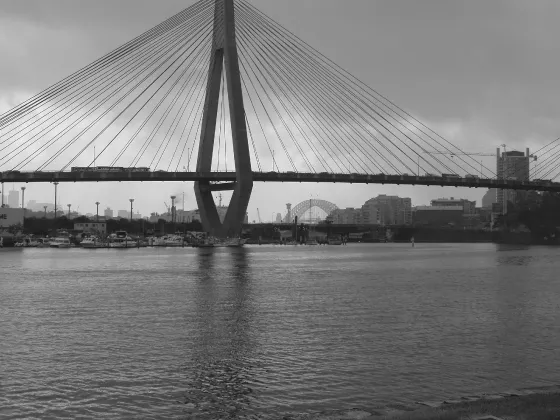
Figure 1.1 Sydney bridges. Photo S. Watson.
Chapter 6 by Matthew Gandy and Chapter 7 by Harvey Molotch capture the big stuff and small stuff of the material environment of cities. Gandy’s research has been concerned with the materiality of the city and the way that big stuff such as urban infrastructure embeds social relations in its production and in its ongoing-ness, as it continues to assemble human and object relations in different ways. Gandy suggests how, far from being inert, urban infrastructures, in common with understandings of any landscape, bring into play complex layerings that involve experiences of space, different aesthetic sensibilities, memory, and indeed discourses and ideologies that connect powerfully to understandings of the public realm. Harvey Molotch’s chapter deploys similar assumptions to show how humans and materials co-produce in urban environments. They range from body and object relations such as subway turnstiles and public toilets through to the co-production of city neighborhoods, such as SoHo in Manhattan, where the occupation of former industrial lofts – large uncluttered spaces – facilitated an artistic practice involving large canvasses and art objects. These objects produced an art market in which the value of the objects raised the real estate value of the neighborhood which resulted in the displacement of the artists and the gentrification of the neighborhood (a process that Sharon Zukin noted in Loft Living, and which she discusses here in Chapter 49 on the retail landscape of lower Manhattan). Jane M. Jacobs and Stephen Cairns, in Chapter 8, illustrate how buildings as assemblages are held together in a continual process of building. Developing the approach from Science and Technology Studies (STS) they look at the socio-technical–material interrelations that continuously build the high rise. In the case of the Singapore residential high-rise buildings they study how this holding together involves a continuous process of maintenance and repair with inventories, purchase orders, observations, surveillance technologies – in combination with other actants such as wind, water, mould – that are working on the building in other ways.
The city can be seen as the site or arena where the continuities and co-effects of the social, the technical, and the material on each other and as an ongoing infrastructural ecology can be seen to greatest effect. This blending of the influence of actor–network theory and STS along with a revised view of the acting powers of the material raises issues of transhumanism, cyborg life, and a more distributed view of agency (between human, non-human, and technological actants). There is also the idea of performative enactments and events rather than linear causal change in terms of understanding urban processes (Amin and Thrift 2002; Latour 2005; Farias and Bender 2009). This view of urban life (in its broadest sense) powerfully and very usefully repositions the idea of the city as a supremely and exclusively human environment and achievement. At the same time it flattens the view of intentionality and rationality and power to such a degree that critical human political dilemmas and directions can be left hanging somewhat.
Neoliberalism, the Market, and the City
The focus on materiality is not just about the relationship between materials and humans but also between materials and the seemingly more dematerialized elements of the global economy. The links here were shown by a landmark study of Chicago by urban historian William Cronon (Nature’s Metropolis (1991) – abstracted in the Blackwell City Reader). In fascinating detail Cronon shows how changing transport technology (boats to trains) meant that the volume of grain to be traded at the Chicago market, coupled with another technical innovation (the grain elevator), resulted in general grading of the quality of wheat the consistency of which had to be guaranteed by the newly formed Chicago Board of Trade. With these guarantees, paper contracts for quantities of different grades of wheat could be traded and, with the invention of the telegraph, this trading expanded across the US and increasingly across the globe. Furthermore paper contracts could be issued for quantities of grain “to arrive” at a certain date in the future. This gave traders opportunity to speculate on the future trajectory of grain prices. If they thought the price of grain would rise between their purchase of the paper contract and its completion they could sell the contract on later and make a profit simply on the movement of prices. Thus, the physicality of the commodity itself (in this case grain) combined with technical developments over its handling, movement, and categorization, along with technical developments in communications and institutional arrangements that supported a market for exchange over future states of the physical world (giving the price of grain in the future), created a futures market. The materiality of this process was intimately related to the more abstract and speculative trades that occurred in markets far away from the grain silos, the physical environment, and objects in which the grain was processed. But those abstract trades required physical infrastructure of communications, offices, and networks of human contacts for the market to operate. The expansion of this “market” also acted back on the urban fabric of Chicago, both in the immediate environment of the market and also in terms of Chicago’s rising position in a developing urban hierarchy across the US.
The growth of markets and ever more remote and complex forms of abstraction over the trading of commodities has been one long-term trend in capitalist urbanization. The symbolic aspects of market abstraction have also become more powerful over time such that claims over market mechanisms have become hegemonic in all areas of life. The idea is that the pure competitive market model should be the preferred mechanism for the delivery not only of consumer products but also of public services through to large-scale urban infrastructures (from shopping malls to mass transit systems). This is a privileging of a certain idea of the market that has come to be known as neoliberalism (see Harvey 2005). It advocates unfettered market processes and a reduced role for governments. The underlying political message relies on the idea that markets are better at picking up on what Hayek (2007) called people’s tacit knowledge, their wants and needs, than states are able to understand and plan for. The sustained critiques of neoliberalism have targeted its naivety about pure market processes that are in fact supported by governments and other institutional frameworks, in all kinds of ways. Also discussed is the overly extended idea of consumer sovereignty which is highly individualistic and ignores social needs and wider moral questions (Leitner et al. 2007).
Neoliberalism has impacted on cities and cities play a role in wider processes of neoliberal capitalism in a number of ways. The kind of speculative trading that Cronon showed in incipient form in the growing city of Chicago two centuries ago has expanded greatly since. This investment and speculative activity has grown as a proportion of all economic activity – the process of financialization. Financialization has grown disproportionately in certain cities that have command and control functions in the global economy. These global cities (traditionally London, New York, and Tokyo but now increasingly involving Shanghai, Mumbai, and others) are particular manifestations of neoliberal capitalism. They carry the institutional and sociological evidence of financialization – investment houses of the major banks and the producer services that support them (such as accountancy and legal services) and the highly paid professional workforces they employ. The economy of global cities themselves is increasingly bifurcated between highly paid professionals in the financial services sector and the poorly paid (often immigrant) labor forces that service the domestic, childcare, and consumption demand of the professional population: the two sides of the global city (as Saskia Sassen’s research has established and as she argues in Chapter 18).
The continuities and discontinuities of global capitalism and global cities are also discussed in a comparison of London and New York in Chapter 4 by Susan Fainstein, Ian Gordon, and Michael Harloe. They trace the ups and downs of the global economy, the key roles played by these two finance capitals, and the economic outcomes for these two cities over the last 40 years. Economic bust and boom (and bust again) has accompanied a growing similarity between New York and London in terms of ever higher levels of social inequality and the clear emergence of a dual labor market, with high-earning private sector professionals at one end and an uneducated, low-paid class of workers servicing the demands of the professional class. These inequalities are likely to be even more marked as New York and London resume (banking) business as usual after the 2008 crash. However Fainstein, Gordon, and Harloe raise questions about the future limits to growth of the financial and producer services sectors as well as the continued dispersal (and regionalization) of activity away from the urban cores (regional urbanization is analyzed by Short in Chapter 3 and Soja in Chapter 59).
Aside from the particular effects on a few global cities, the effects of neoliberal economics on other layers of the urban hierarchy have been profound. First there are the distinctions between cities of the global north and south as the indebtedness of many countries of the global south and the neoliberal restructuring programs they have been forced to adopt by the International Monetary Fund and World Bank to meet debt requirements (under the so called Washington Consensus) provide the context for increasingly uneven development and social inequalities.
Within cities of the global north an...
Table of contents
- Cover
- Half title page
- Wiley-Blackwell Companions to Geography
- Title page
- Copyright page
- List of Contributors
- Preface
- Acknowledgments
- Part I: City Materialities
- Part II: City Mobilities
- Part III: City Affect
- Part IV: City Publics and Cultures
- Part V: City Divisions and Differences
- Part VI: City Politics and Planning
- Index
Trusted by 375,005 students
Access to over 1.5 million titles for a fair monthly price.
Study more efficiently using our study tools.
Frequently asked questions
Yes, you can cancel anytime from the Subscription tab in your account settings on the Perlego website. Your subscription will stay active until the end of your current billing period. Learn how to cancel your subscription
No, books cannot be downloaded as external files, such as PDFs, for use outside of Perlego. However, you can download books within the Perlego app for offline reading on mobile or tablet. Learn how to download books offline
Perlego offers two plans: Essential and Complete
- Essential is ideal for learners and professionals who enjoy exploring a wide range of subjects. Access the Essential Library with 800,000+ trusted titles and best-sellers across business, personal growth, and the humanities. Includes unlimited reading time and Standard Read Aloud voice.
- Complete: Perfect for advanced learners and researchers needing full, unrestricted access. Unlock 1.5M+ books across hundreds of subjects, including academic and specialized titles. The Complete Plan also includes advanced features like Premium Read Aloud and Research Assistant.
We are an online textbook subscription service, where you can get access to an entire online library for less than the price of a single book per month. With over 1.5 million books across 990+ topics, we’ve got you covered! Learn about our mission
Look out for the read-aloud symbol on your next book to see if you can listen to it. The read-aloud tool reads text aloud for you, highlighting the text as it is being read. You can pause it, speed it up and slow it down. Learn more about Read Aloud
Yes! You can use the Perlego app on both iOS and Android devices to read anytime, anywhere — even offline. Perfect for commutes or when you’re on the go.
Please note we cannot support devices running on iOS 13 and Android 7 or earlier. Learn more about using the app
Please note we cannot support devices running on iOS 13 and Android 7 or earlier. Learn more about using the app
Yes, you can access The New Blackwell Companion to The City by Gary Bridge, Sophie Watson, Gary Bridge,Sophie Watson in PDF and/or ePUB format, as well as other popular books in Social Sciences & Urban Sociology. We have over 1.5 million books available in our catalogue for you to explore.