Systematics: A Course of Lectures is designed for use in an advanced undergraduate or introductory graduate level course in systematics and is meant to present core systematic concepts and literature. The book covers topics such as the history of systematic thinking and fundamental concepts in the field including species concepts, homology, and hypothesis testing. Analytical methods are covered in detail with chapters devoted to sequence alignment, optimality criteria, and methods such as distance, parsimony, maximum likelihood and Bayesian approaches. Trees and tree searching, consensus and super-tree methods, support measures, and other relevant topics are each covered in their own sections.
The work is not a bleeding-edge statement or in-depth review of the entirety of systematics, but covers the basics as broadly as could be handled in a one semester course. Most chapters are designed to be a single 1.5 hour class, with those on parsimony, likelihood, posterior probability, and tree searching two classes (2 x 1.5 hours).
Systematics has its origins in two threads of biological science: classification and evolution. The organization of natural variation into sets, groups, and hierarchies traces its roots to Aristotle and evolution to Darwin. Put simply, systematization of nature can and has progressed in absence of causative theories relying on ideas of “plan of nature,” divine or otherwise. Evolutionists (Darwin, Wallace, and others) proposed a rationale for these patterns. This mixture is the foundation of modern systematics.
Originally, systematics was natural history. Today we think of systematics as being a more inclusive term, encompassing field collection, empirical comparative biology, and theory. To begin with, however, taxonomy, now known as the process of naming species and higher taxa in a coherent, hypothesis-based, and regular way, and systematics were equivalent.
1.1. Aristotle
Systematics as classification (or taxonomy) draws its Western origins from Aristotle1. A student of Plato at the Academy and reputed teacher of Alexander the Great, Aristotle founded the Lyceum in Athens, writing on a broad variety of topics including what we now call biology. To Aristotle, living things (species) came from nature as did other physical classes (e.g. gold or lead). Today, we refer to his classification of living things (Aristotle, 350 BCE) that show similarities with the sorts of classifications we create now. In short, there are three features of his methodology that we recognize immediately: it was functional, binary, and empirical.
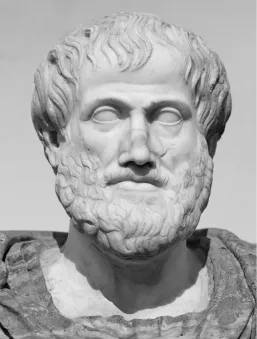
Roman bust of Aristotle (384–322 BCE)
Ibn Rushd (Averroes) (1126–1198)
Aristotle's classification divided animals (his work on plants is lost) using functional features as opposed to those of habitat or anatomical differences: “Of land animals some are furnished with wings, such as birds and bees.” Although he recognized these features as different in aspect, they are identical in use.
Features were also described in binary terms: “Some are nocturnal, as the owl and the bat; others live in the daylight.” These included egg- or live-bearing, blooded or non-blooded, and wet or dry respiration.
An additional feature of Aristotle's work was its empirical content. Aspects of creatures were based on observation rather than ideal forms. In this, he recognized that some creatures did not fit into his binary classification scheme: “The above-mentioned organs, then, are the most indispensable parts of animals; and with some of them all animals without exception, and with others animals for the most part, must needs be provided.” Sober (1980) argued that these departures from Aristotle's expectations (Natural State Model) were brought about (in Aristotle's mind) by errors due to some perturbations (hybridization, developmental trauma) resulting in “terata” or monsters. These forms could be novel and helped to explain natural variation within his scheme.
Blooded Animals
Live-bearing animals
humans
other mammals
Egg-laying animals
birds
fish
Non-Blooded Animals
Hard-shelled sea animals: Testacea
Soft-shelled sea animals: Crustacea
Non-shelled sea animals: Cephalopods
Insects
Bees
Dualizing species (potential “terata,” errors in nature)
Whales, seals and porpoises—in water, but bear live young
Bats—have wings and can walk
Sponges—like plants and like animals.
Aristotle clearly had notions of biological progression (scala naturae) from lower (plant) to higher (animals through humans) forms that others later seized upon as being evolutionary and we reject today. Aristotle's classification of animals was neither comprehensive nor entirely consistent, but was hierarchical, predictive (in some sense), and formed the beginning of modern classification.
1.2 Theophrastus
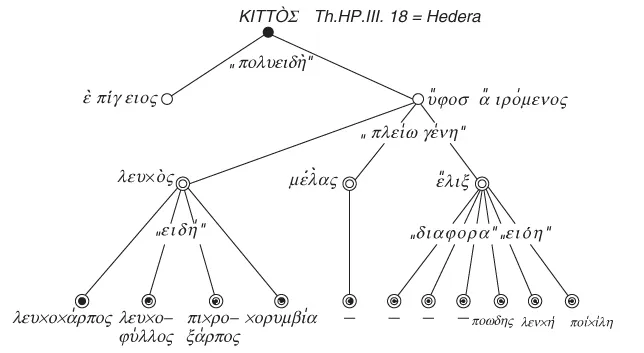
Theophrastus succeeded Aristotle and is best known in biology for his Enquiry into Plants and On the Causes of Plants. As a study of classification, his work on ivy (κιττó
) discussed extensively by Nelson and Platnick (1981), has been held to be a foundational work in taxonomy based (in part at least) on dichotomous distinctions (e.g. growing on ground versus upright) of a few essential features.
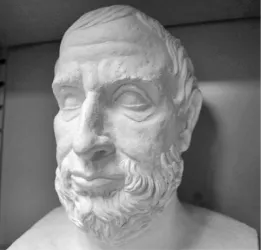
Theophrastus (c.371–c.287 BCE)
Theophrastus distinguished ivies based on growth form and color of leaves and fruit. Although he never presented a branching diagram, later workers (including Nelson and Platnick) have summarized these observations in a variety of branching diagrams (Vácsy, 1971) (Fig. 1.1).
Figure 1.1 Branching diagram after Theophrastus (Vácsy, 1971).
1.3 Pierre Belon
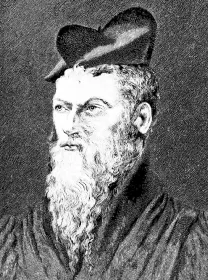
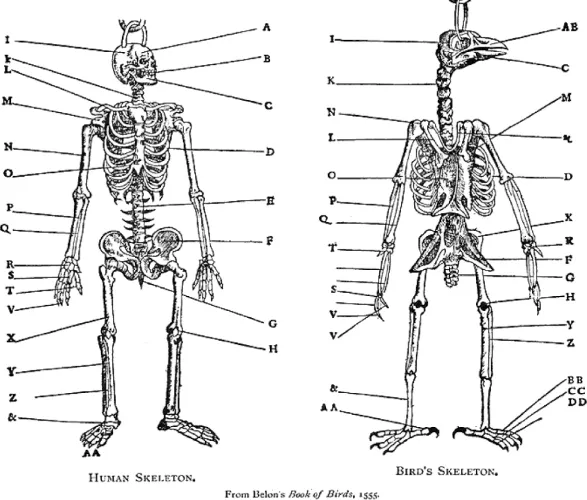
Trained as a physician, Pierre Belon, studied botany and traveled widely in southern Europe and the Middle East. He published a number of works based on these travels and is best known for his comparative anatomical representation of the skeletons of humans and birds (Belon, 1555) (Fig. 1.2).
Pierre Belon (1517–1564)
Figure 1.2 Belon's funky chicken (Belon, 1555).
1.4 Carolus Linnaeus
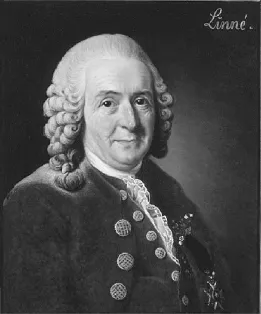
Carolus Linnaeus (Carl von Linné) built on Aristotle and created a classification system that has been the basis for biological nomenclature and communication for over 250 years. Through its descendants, the current codes of zoological, botanical, and other nomenclature, his influence is still felt today. Linnaeus was interested in both classification and identification (animal, plant, and mineral species), hence his system included descriptions and diagnoses for the creatures he included. He formalized the custom of binomial nomenclature, genus and species we use today.
Carl von Linné (1707–1778)
Linnaeus was known, somewhat scandalously in his day,...
Table of contents
Cover
Title Page
Copyright
Dedication
Preface
List of Algorithms
Part I: Fundamentals
Part II: Homology
Part III: Optimality Criteria
Part IV: Trees
Part V: Applications
Bibliography
Index
Trusted by 375,005 students
Access to over 1.5 million titles for a fair monthly price.
Study more efficiently using our study tools.
Frequently asked questions
Yes, you can cancel anytime from the Subscription tab in your account settings on the Perlego website. Your subscription will stay active until the end of your current billing period. Learn how to cancel your subscription
No, books cannot be downloaded as external files, such as PDFs, for use outside of Perlego. However, you can download books within the Perlego app for offline reading on mobile or tablet. Learn how to download books offline
Perlego offers two plans: Essential and Complete
Essential is ideal for learners and professionals who enjoy exploring a wide range of subjects. Access the Essential Library with 800,000+ trusted titles and best-sellers across business, personal growth, and the humanities. Includes unlimited reading time and Standard Read Aloud voice.
Complete: Perfect for advanced learners and researchers needing full, unrestricted access. Unlock 1.5M+ books across hundreds of subjects, including academic and specialized titles. The Complete Plan also includes advanced features like Premium Read Aloud and Research Assistant.
Both plans are available with monthly, semester, or annual billing cycles.
We are an online textbook subscription service, where you can get access to an entire online library for less than the price of a single book per month. With over 1.5 million books across 990+ topics, we’ve got you covered! Learn about our mission
Look out for the read-aloud symbol on your next book to see if you can listen to it. The read-aloud tool reads text aloud for you, highlighting the text as it is being read. You can pause it, speed it up and slow it down. Learn more about Read Aloud
Yes! You can use the Perlego app on both iOS and Android devices to read anytime, anywhere — even offline. Perfect for commutes or when you’re on the go. Please note we cannot support devices running on iOS 13 and Android 7 or earlier. Learn more about using the app
Yes, you can access Systematics by Ward C. Wheeler in PDF and/or ePUB format, as well as other popular books in Biological Sciences & Biology. We have over 1.5 million books available in our catalogue for you to explore.