![]()
CHAPTER 1
From Traditional to Breakthrough Nonprofit Branding
“Brand is not the name, the tag line, or the pretty colors. . . . The brand is the set of expectations and beliefs the marketplace has about what you do.”1
—DAVID PLACEK, PRESIDENT AND CEO, LEXICON BRANDING, AND BOARD OF DIRECTORS, NATUREBRIDGE
“Our brand is our key asset. We don’t sell widgets; we have a brand and a community tied to it.”
2—EMILY CALLAHAN, VICE PRESIDENT, MARKETING AND COMMUNICATIONS, KOMEN FOR THE CURE
The world now boasts more than 2 million nonprofits, fueled by a 35 percent increase in the number of organizations in the United States and Canada in the past decade alone. In this complicated philanthropic marketplace, people are overwhelmed by a deluge of overlapping messages from a vast array of organizations—which are often difficult to distinguish.
How can you help your organization stand out among this long list of choices? How can you maintain and grow a vibrant community of supporters through unpredictable political and economic ups and downs? How do you become a charity of choice? The answer lies in building a breakthrough nonprofit brand.
WHAT IS A BRAND?
A brand is a collection of perceptions about an organization, formed by its every communication, action, and interaction. It is what people collectively say, feel, and think about your organization. In short, it’s your reputation, identity, and good will with stakeholders and in the community.
A strong brand can be a nonprofit’s most valuable asset. It can carry an organization through good times and bad as well as predispose people toward a personal and emotional connection to the group it represents. Because it is linked to reputation, a strong brand drives tremendous economic, social, and political gains for its organization. In fact, in most cases, brand accounts for more than 50 percent of a nonprofit organization’s market value.3
You have probably noticed the growing global recognition of the value a strong brand can provide to a range of entities, from countries and individuals, to political parties and major multinational corporations, to the local corner store. So it is not surprising that some nonprofits are consciously strengthening their organizations by building compelling brands. This process creates deeper, longer-term, and more loyal relationships with their constituents—and, when it is done with care and consistency, will inspire others to join in. It results in the building of a breakthrough nonprofit brand.
BREAKTHROUGH NON PROFIT BRAND
A breakthrough nonprofit brand (BNB) articulates what an organization stands for: the compelling, focused idea that sets it apart and is meaningful to its supporters. An organization that cultivates a BNB puts its constituents at the heart of its identity. It makes the brand personally and emotionally relevant and creates a sense of community around unifying values, commitments, and concerns.
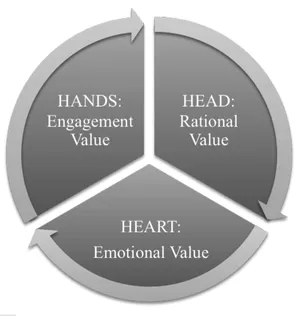
A breakthrough nonprofit brand has a three-dimensional value proposition (see
Figure 1.1):
1. Convinces the head: People respond to an organization’s need for support only after they understand what it stands for and see how it can be relevant and meaningful to them. Effective nonprofits rationally articulate a unique and differentiated idea that explains what their organization does better than others. Then, they go further and demonstrate how this core concept is relevant to their supporters.
2. Touches the heart: A BNB goes beyond institutional survival to serve a higher purpose. It puts a larger cause and the outcomes they seek ahead of its organizational needs. While this approach may seem risky, it can act as a magnet for those who are passionate about the issue at the core of a nonprofit’s mission.
3. Engages the hands: People believe what they are told only if their experience is consistent with that message. Stakeholders want the chance to get involved with the entire organization. When asking for support, offer a variety of ways to engage them. Knowing that people like to be around other people who share the same beliefs and care about similar issues, a BNB creates a sense of community, both inside and outside the organization. It unites groups of strangers in an experience of kinship by fostering shared experiences and commitments.
FIGURE 1.1 Three-Dimensional Value Proposition of Breakthrough Nonprofit Brand
Brand building is not a haphazard process. A BNB is strategically focused and thoughtfully built. As you will see as this book unfolds, a high-performance nonprofit carefully defines its brand and what it means to constituents. It uses the brand to prioritize and make decisions about its operations. And it brings the brand to life by aligning mission-based programs, development activities, and communications outreach around it.
With the backing of the CEO and senior leadership, brand building can become the catalyst for continual self-assessment and innovation. It is a must-do for creating a unique organizational identity that is infused with passion and trust. Forward-looking senior leaders ensure that this brand-centric philosophy is embraced by the whole organization. They leverage the brand to strengthen donor loyalty, recruit top executives, rally staff members, meaningfully engage volunteers, drive diversified funding streams, and, ultimately, make a greater social impact.4
TRADITIONAL NON PROFIT BRANDING
Every nonprofit has a brand—regardless of whether it is a priority. As more nonprofits try to set themselves apart, branding is an increasingly hot topic. As suggested in studies by the Association of Fundraising Professionals and the authors, a growing number of nonprofits want a breakthrough brand, but many are not quite sure what such a thing is, how to do it, or how to ensure that the resources invested will benefit their organization.
Traditional thinking is that a brand is more or less just an organization’s logo or suite of communications materials. Some nonprofits develop brand usage guidelines that prescribe fonts, color palettes, and design parameters. More sophisticated traditional branding exercises get closer to the heart of the brand by providing a clear statement of values and a unified set of messages that express the organization’s identity. Yet, most still lack a compelling, overriding idea that drives strategy and infuses every decision, activity, and communication with a deeper and distinctive purpose.
When nonprofits conduct traditional branding exercises focused on enhancing communications and stimulating fund raising, the result is typically new packaging, which has the potential for moderate short-term gains. However, when these efforts do not yield significant, long-term revenue growth or attract media attention, the organization typically experiences a wave of disappointment and confusion. Ultimately, questions are raised about how other organizations, often with a simpler design and messaging, could have developed the lucrative breakthrough nonprofit brand position the traditional brander aimed to achieve.
Kids Help Phone, a Canadian nonprofit, is one such BNB with a straightforward logo and tagline: being there for kids. And yet, Kids Help Phone is recognized internationally as a leader in the delivery of anonymous, bilingual phone and online counseling for kids. The charity services more than 3,000 communities and handles in excess of 2 million calls annually. It has articulated and lived a brand that has attracted more than 10,000 volunteers in communities throughout Canada, as well as dozens of leading government, education, nonprofit, and corporate partners, including four companies that have been partners for 20 years.
How did they do it? The answer lies in the difference between traditional and breakthrough nonprofit brands.
TRADITIONAL VERSUS BREAKTHROUGH NON PROFIT BRANDING
Breakthrough nonprofit brands know that their brand identity must outlive individual management teams and economic fluctuations to become an enduring embodiment of their organization’s essence. This requires a profound shift in philosophy, as well as a sophisticated approach to ensuring that what they stand for is communicated and lived through every stakeholder interaction. You recognize a BNB when you experience one. There is a discernible difference in the way it walks and talks, a palpable shift away from traditional branding practices:
A shift from campaign to commitment: In the traditional view, branding equals a new look, logo, or language and is often expressed in conjunction with an annual campaign. A BNB aligns its brand meaning—and every brand expression—with an aspirational idea and higher cause. It uses that bigger purpose to tell an enduring story that helps unify its actions from year to year. With this shift, nonprofits can avoid the common pitfall of appearing to put style before substance. The breakthrough approach positions the nonprofit as a hero pursuing solutions that advance the cause and as a convener inviting others to join the movement. This is new thinking. Even the American Heart Association (AHA), a large and innovative organization, only in the past decade recognized itself as a brand.
A shift from communicating activities to benefits: There is an old saying that activities tell and benefits sell. Rather than just reporting on activities, a BNB focuses its communications on the benefits and outcomes that deliver value and address values. This involves making a rational case for the value of an organization’s work to the individual and the community. It includes making a personal, emotional connection by addressing constituents’ values, aspirations, and concerns. The most effective nonprofits take it a step further by inviting supporters to experience the brand in action as a primary benefit of membership. By issuing compelling, personally relevant offers, a BNB makes association with its brand a top choice over all other alternatives.
A shift from transactions to relationships: A traditional fund raiser or marketer emphasizes annual numbers and dollars raised. A BNB invests in and rewards staff for building long-term relationships. It takes the time to engage in a meaningful dialogue with donors. This ongoing conversation helps illuminate what the organization means to its supporters and what their involvement says about them to others. An effective nonprofit builds trust and long-term loyalty by meeting or exceeding supporter expectations, by listening, meaningfully responding, and doing what it says it will do. It goes beyond the easy, one-time ask and works to create mission-aligned donor experiences that delight and engage while building sustainable revenue streams. It creates a true community of believers.
A shift from being well known to well owned: Being better known does not equate to being better understood or valued. Mass awareness is helpful, but it does not necessarily lead to support and even less surely to love. A BNB appreciates the importance of awareness and fund raiser but spends just as much time engaging internal and external communities around the cause. It believes in the power of many and meaningfully engages a critical mass of people in its cause. Inclusive, not exclusive, it creates owner-based relationships with constituents; rather than experiencing themselves as mere names on a list, supporters feel pride of ownership and view the organization as an extension of themselves and a means to achieve goals they value. The most successful nonprofits distribute power to shape the brand through tools, resources, and training that encourage creative engagement. Meaningful two-way engagement accomplishes far more than any controlled message from the top ever could. By empowering an army of supporters who call the organization their own, a BNB causes people to take another look and creates waves of new recruits eager to commit to the cause.
A shift from organizational silos to integration: In traditional settings, the marketing or communications team is singularly responsible for branding. Although marketing is critical in shaping and presenting a brand, brand building and marketing are not the same. A high-performance nonprofit uses brand as the force behind everything that an organization does, making it the central management preoccupation for the CEO, board, executive team, and all staff and volunteers. Brand is at the heart of governance, operations, and mission achievement. Because a BNB views its brand as synonymous with the organization itself, care for the brand belongs to everyone. Breakthrough nonprofit brands make a concerted effort to break dow...