![]()
Chapter 1
Introduction to Pharmaceutical Analysis
This chapter briefly reviews the life of medical products and the manufacture of medical products according to international regulations and guidelines. Based on this review the major areas and usage of pharmaceutical analysis are identified.
1.1 Applications and Definitions
The European Pharmacopeia defines a medical product as:
(a) Any substance or combination of substances presented as having properties for treating or preventing disease in human beings and/or animals; or (b) any substance or combination of substances that may be used in or administered to human beings and/or animals with a view either to restoring, correcting or modifying physiological functions by exerting a pharmacological, immunological or metabolic action, or to making a medical diagnosis.
A medical product contains a substance that is pharmacologically active and that substance is called the active ingredient (AI) or active pharmaceutical ingredient (API) defined as follows:
Any substance intended to be used in the manufacture of a medicinal product and that, when so used, becomes an active ingredient of the medicinal product. Such substances are intended to furnish a pharmacological activity or other direct effect in the diagnosis, cure, mitigation, treatment or prevention of disease, or to affect the structure and function of the body.
An herbal medical product is:
A medicinal product, exclusively containing as active ingredients one or more herbal drugs or one or more herbal drug preparations, or one or more such herbal drugs in combination with one or more such herbal drug preparation.
Drug substances are administered very rare as the pure active substance. Typically the active substance and excipients (auxiliary substances) are combined into dosage forms to produce the final medical product. An excipient is:
Any constituent of a medicinal product that is not an active substance.
Adjuvants, stabilizers, antimicrobial preservatives, diluents, antioxidants, for example, are excipients.
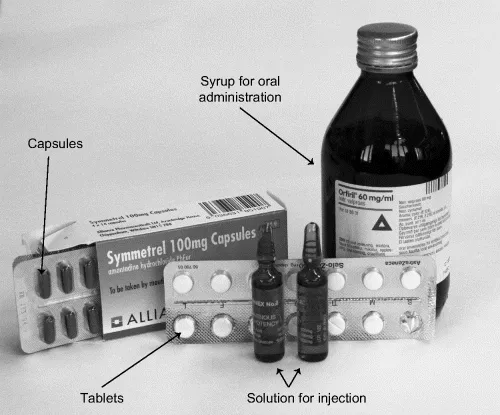
The dosage form can be, for example, a tablet or a capsule or syrup to be administered orally, injections that are for parenteral administration into the body, or ointments for topical administration. Figure 1.1 shows typical dosage forms.
Formulation is the process in which different chemical substances, including the active ingredient and excipients are combined to produce a final medical product. It involves developing a preparation of the drug that is both stable and acceptable to the patient. For orally taken drugs this usually involves incorporating the drug and excipients in a solid dosage form such as a tablet or a capsule or a liquid dosage forms such as a syrup. The main function of excipients is summarized as follows:
- Ensure that the preparation has a shape and size that is easy to use for the patient;
- Ensure that the active substance is optimally adsorbed in the patient;
- Ensure that the preparation has an acceptable shelf life;
- Ensure that the preparation does not have an unpleasant taste or odor;
- Ensure easy production.
There is a wide spectrum of different excipients, which varies widely from preparation to preparation. To illustrate this, Table 1.1 shows the excipients of a tablet and syrup which both contain paracetamol as the active ingredient. Paracetamol is both an analgesic (an = no, algesis = pain) and a antipyretic (anti = against, pyretos = fever), which means that it is used against pain and fever.
Table 1.1 Excipients of a paracetamol tablet and a paracetamol syrup.
| Tablet (weight 285 mg) |
| Paracetamol | 250 | Active ingredient |
| Hydroxypropyl cellulose | | Binder |
| Maize starch | | Disintegrant |
| Talcum | | Glidant |
| Magnesium stearate | | Lubricant |
| Syrup (volume 1 ml) |
| Paracetamol | 24 | Active ingredient |
| Sorbitol | | Sweetener |
| Glycerol | | Sweetener |
| Polyvinylpyrrolidone | | Thickening agent |
| Saccharine sodium salt | | Sweetener |
| Methylparabene | | Preservative |
| Ethylparabene | | Preservative |
| Propylparabene | | Preservative |
| Sodium metabisulfite | | Antioxidant |
| Citric acid | | pH regulator |
| Sodium citrate | | pH regulator |
| Strawberry aroma | | Flavoring agent |
| Water | | Solvent |
The tablets, which in this example, have a total weight of 285 mg contains 250 mg of paracetamol (active ingredient), while the remaining 35 mg is made up of excipients. The excipients are a disintegrating agent, a lubricant, a glidant and a binder. Binders, lubricating and gliding agents are added to facilitate manufacture. A disintegrating agent ensures rapid disintegration of the tablet in the stomach.
Paracetamol syrup, which contains 24 mg/ml of paracetamol, is composed mainly of water. In addition, it is added sweetening and flavoring agents for better taste. Antimicrobial preservatives and antioxidants are added to prevent bacterial growth and chemical degradation. In addition agents that increase the viscosity and stabilizes the pH are added.
Medical products may be divided into over the counter drugs (OTC), which may be sold directly to the consumer in pharmacies and supermarkets without restrictions, and prescription only medicine (POM) that must be prescribed by a licensed practitioner. Medical products are predominantly produced by the pharmaceutical companies, only in rare occasions are pharmaceutical products produced in hospitals and in pharmacies. New products are often patented to give the developer exclusive right to produce them. Those that are not patented or with expired patents, are called generic drugs since they can be produced by other companies without restrictions or licenses from the patent holder. According to the European Federation of Pharmaceutical Industries and Associations (EFPIA), the pharmaceutical industry in Europe employed some 630 000 people, including 110 000 in research and development, in 2009. The trade surplus was Euro 55 200 million, and Euro 26 000 million was spent on pharmaceutical research and development. The retail value of the pharmaceutical market was Euro 215 000 million, which is just under 30% of the world market.
1.2 The Life of Medicines
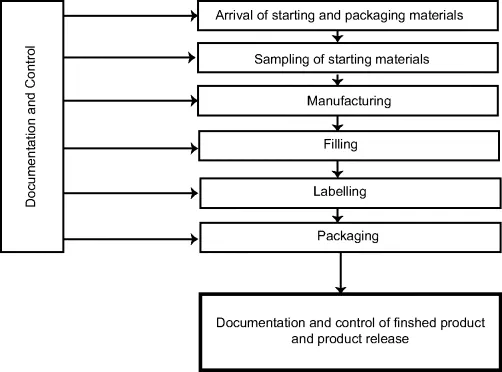
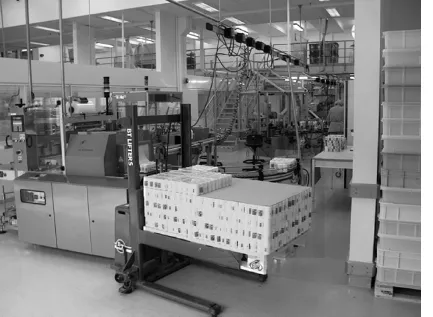
Figure 1.2 outlines a typical industrial production of a pharmaceutical product.
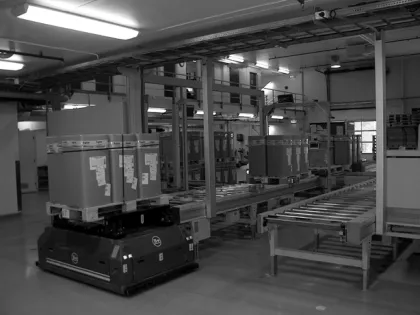
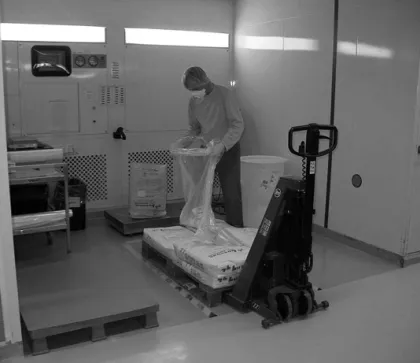
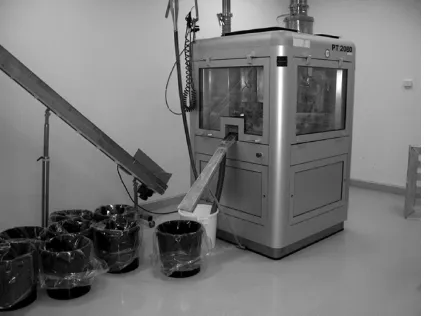
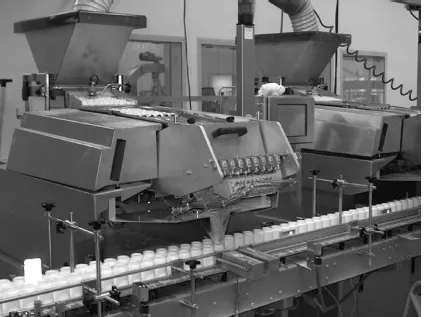
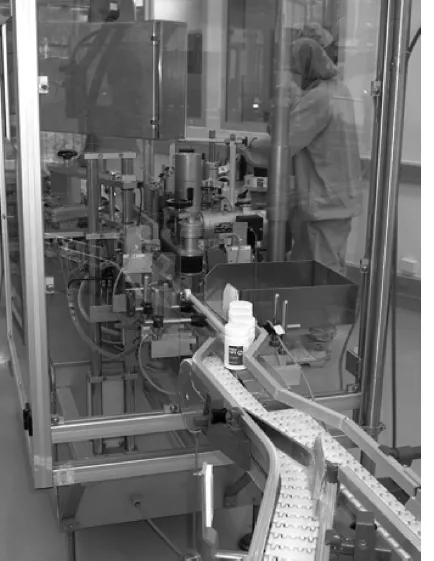
Production starts by ordering the current active ingredient and the necessary starting materials. In some cases, the company produces some of the ingredients, but most commonly they are produced elsewhere by various industrial raw material suppliers. The raw materials arrive in relatively large quantities (1–500 kg) and are typically packed in cardboard drums or in plastic containers. Figure 1.3 shows an example of a received batch of raw material in the photo gallery from a manufacturing facility.
Figure 1.4 shows an outline of some areas found...