![]()
Chapter 1
Introduction
THE DENTAL TEAM
Dental materials are used daily in the dental surgery. It is imperative that the dental team is knowledgeable in relation to a variety of dental materials and their distinguishing characteristics. Biocompatibility, durability, aesthetics and cost must all be taken into account when choosing a dental material. New dental materials are introduced to the market continually, and it is the responsibility of the dental team to keep their knowledge base up to date through Continual Professional Development (CPD) opportunities.
Loss of, or damage to tooth structure requires the use of a variety of dental materials to repair and/or replace the missing structure. Missing tooth structure may be as a result of trauma, caries (decay) or various other causes. Dental materials are often categorised by their usage, as they will be in this text.
THE DENTAL NURSE
The role of the dental nurse in relation to dental materials is important. The dental nurse must be knowledgeable in the areas of instrument set-up, armamentarium (complete set-up for treatment), mixing, manipulation, proper disposal of used instruments and materials, material constituents, material storage, stock maintenance and health and safety in relation to the materials.
In areas of the world where dental nurses or dental assistants have intraoral responsibilities including the placement of dental materials, their knowledge must be expanded to include the comprehensive understanding of material placement, which is not included in this text.
DENTAL MATERIALS – DISPENSING, MANIPULATION AND APPLICATION
Dispensing
Dental materials are dispensed in various forms as shown below:
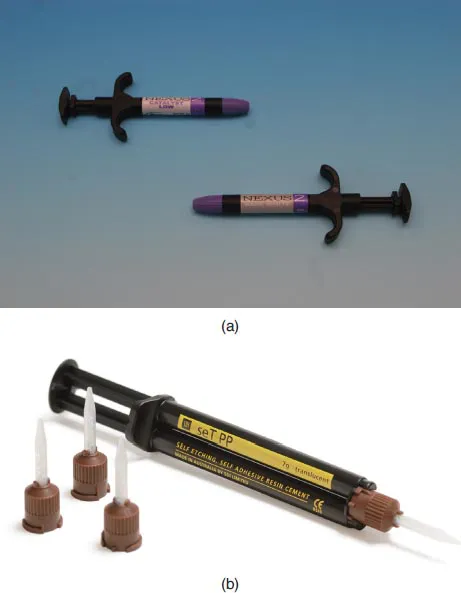
A. Two-paste systems (Figure 1.1a and 1.1b)
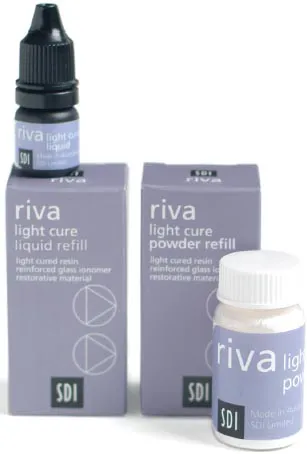
B. Powder and liquid form (Figure 1.2)
C. Capsule form (Figure 1.3)
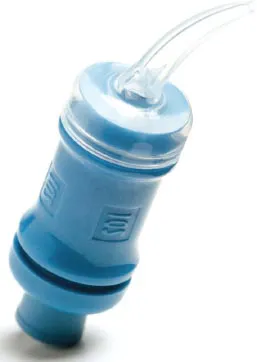
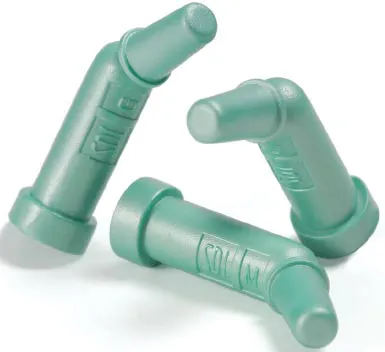
D. Compule form (Figure 1.4)
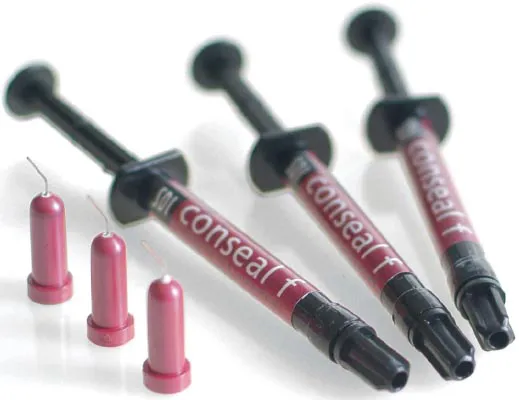
E. Syringe form (Figure 1.5)
Figure 1.1 Two-paste system.
Figure 1.2 Powder and liquid form.
Figure 1.3 Capsule form.
Figure 1.4 Compule form.
Figure 1.5 Syringe form.
Both two-paste systems and powder and liquid forms are manually manipulated, whilst the capsule form is preloaded with the exact ratios of materials and is mechanically manipulated. The compule and syringe forms are preloaded and ready to be dispensed with no mixing required (trituration may be required).
Mixing
Manual manipulation requires using a mixing spatula and some type of mixing surface.
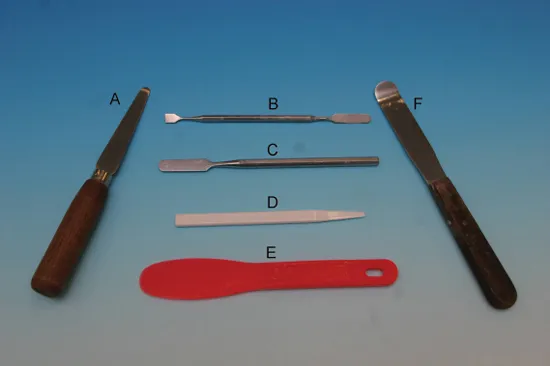
Various mixing spatulas, which will be referred to within this text, are depicted in Figure 1.6.
A. Wooden-handled spatula
B. Weston spatula
C. Broad-bladed spatula
D. Plastic spatula
E. Fishtail spatula
F. Plaster spatula
Figure 1.6 Mixing spatulas.
Mixing surfaces
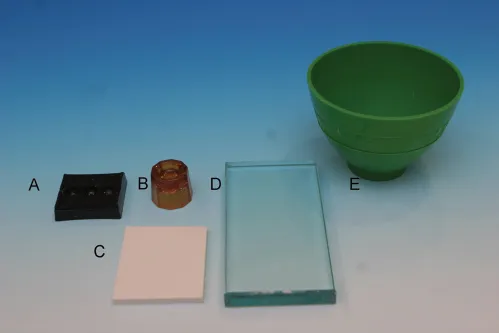
Figure 1.7 depicts various mixing surfaces, which will be referred to within this text.
A. Dispensing well (can be used in conjunction with an amber shield that slides over the wells to shield light-sensitive materials from the light)
B. Glass dappen dish
C. Waxed paper pad (available in various sizes)
D. Glass slab
E. Flexible mixing bowl
Figure 1.7 Mixing surfaces.
Applicators
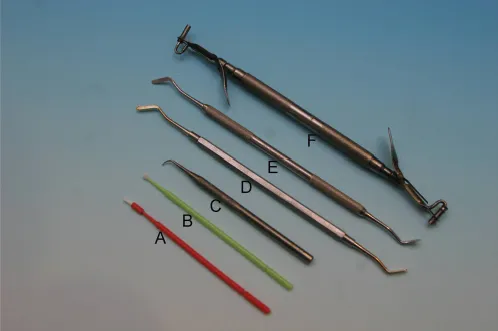
Figure 1.8 depicts various applicators, which will be referred to within this text.
A. Disposable brush
B. Disposable applicator
C. Calcium hydroxide applicator
D. Teflon-tipped flat plastic
E. Flat plastic
F. Amalgam carrier
Figure 1.8 Applicators.
DISPENSING POWDER AND LIQUID
The powder and liquid forms of dental materials require the dental nurse to take care when dispensing, ensuring the correct amount of material is dispensed following the manufacturer’s instructions.
Altering the ratios of dispensed materials will adversely affect the final mix, properties and behaviour of the dental material.
When dispensing powder that is supplied with a powder scoop
- Always fluff the powder prior to dispensing by shaking the bottle with the lid intact
- Dispense using the supplied powder scoop following the manufacturers instructions
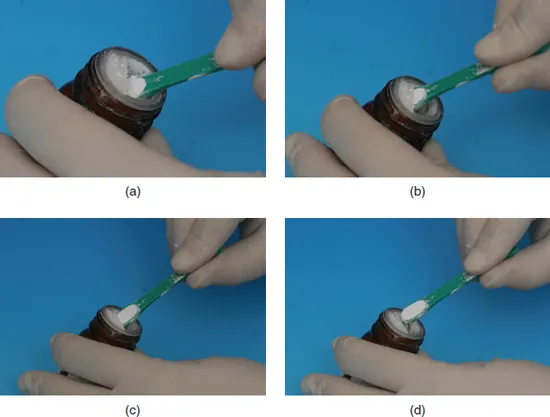
- If the bottle has a ledge, use this to level the powder in the scoop. (Figures 1.9a–1.9d)
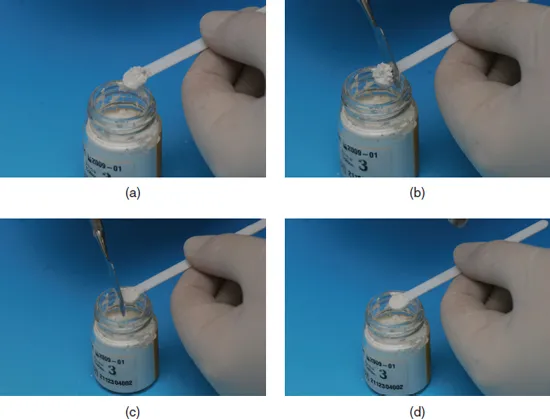
- If the bottle does not have a ledge, use a sterile spatula to level the powder in the scoop. (Figures 1.10a–1.10d)
- Replace the cap on the bottle immediately
Figure 1.9 Using the bottles ledge to level powder with the dispensing scoop.
Figure 1.10 Using a sterile spatula to level the powder with the dispensing scoop.
When dispensing liquid
- Do not dispense until ready to use
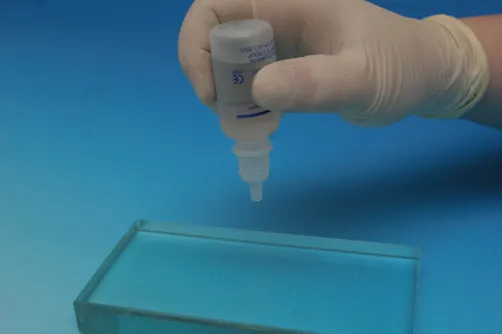
- Hold the bottle perpendicular to the mixing surface (Figure 1.11)
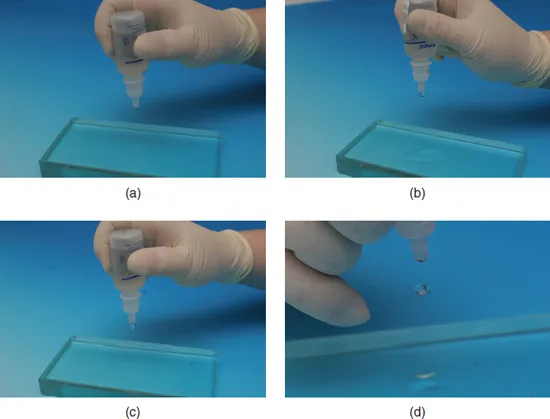
- Depending on the dispensing system, the dental nurse will gently squeeze the bottle until one drop is released, then release the pressure and repeat the process until the desired amount of drops are dispensed. For calibrated dispensing systems, hold the bottle vertically until a drop is released from the bottle (Figures 1.12a–1.12d)
- Replace the cap on the bottle immediately
Figure 1.11 Holding bottle perpendicular to the mixing surface.
Figure 1.12 Dispensing liquid.
INVENTORY AND STORAGE OF DENTAL MATERIALS
It is important that the dental nurse takes care when ordering and storing dental materials. Dental materials must be stored as per the manufacturer’s instructions, some may require refrigeration, etc. It is often the responsibility of the dental nurse to maintain the stock within a surgery. Dental nurses must familiarise themselves with the amounts of specific materials consumed and keep an adequate supply. ‘Overstocking’ should be avoided as it costs money and increases waste. Dental materials have an expiry date, and if they are not used within this time, they must be discarded. There should be a list kept of items that need reordering, and it is imperative to restock a supply when it is close to depletion. Running short or out of dental materials is unnecessary with proper planning, management and stock control. When new stock is received into the dental surgery, it is often the responsibility of the dental nurse to ensure that the order is complete, to check that the amount charged is correct and to put the stock in its place. When putting away dental materials, ...