- English
- ePUB (mobile friendly)
- Available on iOS & Android
eBook - ePub
Supramolecular Polymer Chemistry
About this book
Presenting the work of pioneering experts in this exciting field of supramolecular polymer chemistry, this monograph covers an extensive range of applications, including drug delivery and catalysis. It focuses on new structures and phenomena of cyclodextrin-based supramolecular polymers and many other compound classes. While providing a deeper insight in macromolecular recognition and the mechanisms of living systems, this book also introduces fascinating novel phenomena beyond natural systems.
Information
Part One
Formation of Supramolecular Polymers
Chapter 1
Multiple Hydrogen-Bonded Supramolecular Polymers
Wilco P.J. AppelMarko M.L. Nieuwenhuizen, and E.W. Meijer
1.1Introduction
1.1.1 Historical Background
Since the introduction of the first synthetic polymer more than a hundred years ago by Leo Hendrik Baekeland, covalent polymers have become indispensable in everyday life. The term ‘polymeric’ was first introduced in 1832 by Jöns Jacob Berzelius to describe a compound with a higher molecular weight than that of the normal compound but with an identical empirical formula as a result of the repetition of equal units [1]. In 1920, Hermann Staudinger defined polymers, which he called macromolecules, to be multiple covalently bound monomers. For this work he was awarded with the Nobel Prize in 1953 [2]. Today, our knowledge of organic synthesis and polymer chemistry allows the preparation of virtually any monomer and its associated polymer. In addition, an in-depth understanding of ‘living’ types of polymerization facilitates tuning of the molecular weight and molecular weight distribution, at the same time creating the possibility to synthesize a wide variety of copolymers [3].
The macroscopic properties of polymers are directly linked to their molecular structure. As a result, polymer chemists devised synthetic approaches to control the sequence architecture. More recently, the importance of introducing supramolecular interactions between macromolecular chains has become evident, and many new options have been introduced. The final step in this development would be to develop polymers entirely based on reversible, noncovalent interactions. Rather than linking the monomers in the desired arrangement via a series of polymerization reactions, the monomers are designed in such a way that they autonomously self-assemble into the desired structure. As with covalent polymers, a variety of structures of these so-called supramolecular polymers are possible. Block or graft copolymers, as well as polymer networks, can be created in this way.
The first reports on supramolecular polymers date back to the time when many scientists studied the mechanism by which aggregates of small molecules gave rise to increased viscosities. To the best of our knowledge it was Louise Henry who proposed the idea of molecular polymerization by associative interactions in 1878, approximately at the same time that van der Waals proposed his famous equation of state, which took intermolecular interactions in liquids into account, and was only 50 years after Berzelius coined the term polymers. Stadler and coworkers were the first to recognize that hydrogen bonds can be used to bring polymers together [4]. Lehn and coworkers synthesized the first main-chain supramolecular polymer based on hydrogen bonding [5]. In our group, we introduced the self-complementary ureido-pyrimidinone (UPy) quadruple hydrogen-bonding motif that shows a high dimerization constant and a long lifetime. In this chapter, we review the field of supramolecular polymers based on multiple hydrogen bonds and discuss some general approaches to the creation of supramolecular materials based on multiple hydrogen-bonded supramolecular polymers.
1.1.2 Supramolecular Chemistry
Jean-Marie Lehn defined supramolecular chemistry as ‘.. . a highly interdisciplinary field of science covering the chemical, physical, and biological features of chemical species of higher complexity, which are held together and organized by means of intermolecular (noncovalent) binding interactions [5] .’ This exciting new field introduced the possibility of self-sorting of subunits during the self-assembly process. At the same time large, complex structures can be created by the assembly of small supramolecular building blocks, thereby allowing the elimination of elaborate synthetic procedures. Complex self-assembly processes are widely recognized to have played an important part in different elements of the origin of life. As a result, many researchers explored different aspects of the field of supramolecular chemistry, using noncovalent interactions to self-assemble molecules into well-defined structures. Noncovalent interactions can vary in type and strength, ranging from very weak dipole-dipole interactions to very strong metal-ligand or ion-ion interactions with binding energies that can approach that of covalent bonds [6]. The most obvious benefits of noncovalent interactions are their reversible nature and their response to external factors such as temperature, concentration, and the polarity of the medium. A subtle interplay between these external factors allows precise control of the self-assembly process. Due to their directionality and the possibility to tune the dynamics and lifetime, hydrogen bonds are among the most interesting assembly units for supramolecular polymers. Before focusing on hydrogen bonding, we shall first address the different mechanisms for the formation of supramolecular polymers.
1.1.3 Supramolecular Polymerization Mechanisms
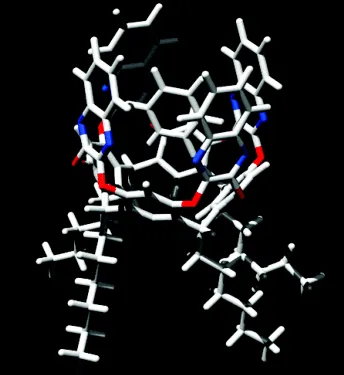
The mechanism of noncovalent polymerization in supramolecular chemistry is highly dependent on the interactions that play their part in the self-assembly process. In contrast to covalent bonds, noncovalent interactions depend on temperature and concentration, thereby affecting the degree of polymerization. The mechanisms of supramolecular polymerizations can be divided in three major classes, these being isodesmic, cooperative, or ring-chain equilibria (Figure 1.1) [7].
Figure 1.1 Schematic representation of the major supramolecular polymerization mechanisms. Reprinted with permission from Nature Publishing Group [7].
Isodesmic polymerizations occur when the strength of noncovalent interactions between monomers is unaffected by the length of the chain. Because each addition is equivalent, no critical temperature or concentration of monomers is required for the polymerization to occur. Instead, the length of the polymer chains rises as the concentration of monomers in the solution is increased, or as the temperature decreases.
The ring-chain mechanism is characterized by an equilibrium between closed rings and linear polymer chains. In this mechanism, below a certain monomer concentration the ends of any small polymer chain react with each other to generate closed rings. Above this critical concentration, linear chain formation becomes more favored, and polymer growth is initiated. The degree of polymerization changes abruptly once the critical conditions are reached. The critical polymerization concentration is largely dependent on the length and rigidity of the monomers. Especially at low concentrations, the presence of cyclic oligomers can drastically influence the macroscopic properties.
Cooperative polymerizations occur in the growth of ordered supramolecular polymers in which there are additional interactions present besides the formation of linear polymers, such as those that form helices. This involves two distinct phases of self-assembly: a less favored nucleation phase followed by a favored polymerization phase. In this mechanism, the noncovalent bonds between monomers are weak, hindering the initial polymerization. After the formation of a nucleus of a certain size, the association constant is increased, and further monomer addition becomes more favored, at which point the polymer growth is initiated. Long polymer chains will form only above a minimum ...
Table of contents
- Cover
- Related Titles
- Title Page
- Copyright
- Preface
- List of Contributors
- Part One: Formation of Supramolecular Polymers
- Part Two: Supramolecular Polymers with Unique Structures
- Part Three: Properties and Functions
- Index
Trusted by 375,005 students
Access to over 1.5 million titles for a fair monthly price.
Study more efficiently using our study tools.
Frequently asked questions
Yes, you can cancel anytime from the Subscription tab in your account settings on the Perlego website. Your subscription will stay active until the end of your current billing period. Learn how to cancel your subscription
No, books cannot be downloaded as external files, such as PDFs, for use outside of Perlego. However, you can download books within the Perlego app for offline reading on mobile or tablet. Learn how to download books offline
Perlego offers two plans: Essential and Complete
- Essential is ideal for learners and professionals who enjoy exploring a wide range of subjects. Access the Essential Library with 800,000+ trusted titles and best-sellers across business, personal growth, and the humanities. Includes unlimited reading time and Standard Read Aloud voice.
- Complete: Perfect for advanced learners and researchers needing full, unrestricted access. Unlock 1.5M+ books across hundreds of subjects, including academic and specialized titles. The Complete Plan also includes advanced features like Premium Read Aloud and Research Assistant.
We are an online textbook subscription service, where you can get access to an entire online library for less than the price of a single book per month. With over 1.5 million books across 990+ topics, we’ve got you covered! Learn about our mission
Look out for the read-aloud symbol on your next book to see if you can listen to it. The read-aloud tool reads text aloud for you, highlighting the text as it is being read. You can pause it, speed it up and slow it down. Learn more about Read Aloud
Yes! You can use the Perlego app on both iOS and Android devices to read anytime, anywhere — even offline. Perfect for commutes or when you’re on the go.
Please note we cannot support devices running on iOS 13 and Android 7 or earlier. Learn more about using the app
Please note we cannot support devices running on iOS 13 and Android 7 or earlier. Learn more about using the app
Yes, you can access Supramolecular Polymer Chemistry by Akira Harada in PDF and/or ePUB format, as well as other popular books in Naturwissenschaften & Organische Chemie. We have over 1.5 million books available in our catalogue for you to explore.