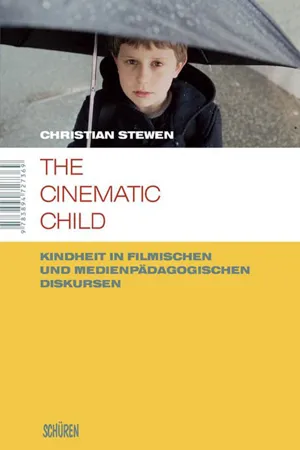
The cinematic child
Kindheit in filmischen und medienpädagogischen Diskursen
- 256 pages
- English
- PDF
- Available on iOS & Android
About this book
Die kulturellen Diskurse, innerhalb derer Vorstellungen von Kind und Kino miteinander verschaltet werden, sind insbesondere in den letzten Jahren allgegenwärtig, vielgestaltig und komplex vernetzt. Mithilfe des Begriffs des "Cinematic Child" lassen sich zentrale Deutungsebenen auffächern und miteinander in Beziehung setzen.Die Bezeichnung eröffnet den Blick auf eine spezifisch filmisch generierte Vorstellung von Kindheit. Mit Bezug auf aktuelle US-amerikanische Spielfilme der 1990er und 2000er Jahre stellen sich anhand der vier Analysekategorien Fantasie, Unschuld, Geschichte und Störung die Fragen nach medialen Konstruktionsformen und -mechanismen von Kindheit. Detaillierte Filmanalysen leiten über in die Betrachtung populärer, medienpädagogisch motivierter Diskurse, die in der Auseinandersetzung mit den filmischen Strukturen ganz ähnliche Vorstellungen von Kindheit und Medialität und ihrer wechselseitigen Beziehungen entwickeln. Innerhalb verbreiteter "Moral Panics" wird das zuschauende Kind als gleichsam fremd bestimmtes Opfer medialer Gewalteinwirkungen und in diesem Sinne als ein negativ geprägtes "Cinematic Child" sinnhaft.Der Band bietet u.a. Analysen der Filme THE CHRONICLES OF NARNIA (USA/UK 2005-2008), HARRY POTTER (UK/USA 2001-2007), ROAD TO PERDITION (USA 2001), HEARTS IN ATLANTIS (USA 2001), WALK THE LINE (USA 2005), THE OTHERS (USA u.a. 2001) und THE RING (USA 2002).Die Arbeit wurde mit dem Medius-Sonderpreis ausgezeichnet, der seit 2008 von der Freiwilligen Selbstkontrolle Fernsehen (FSF), der Gesellschaft für Medienpädagogik und Kommunikationskultur (GMK) sowie dem Deutschen Kinderhilfswerk (DKHW) vergeben wird.
Frequently asked questions
- Essential is ideal for learners and professionals who enjoy exploring a wide range of subjects. Access the Essential Library with 800,000+ trusted titles and best-sellers across business, personal growth, and the humanities. Includes unlimited reading time and Standard Read Aloud voice.
- Complete: Perfect for advanced learners and researchers needing full, unrestricted access. Unlock 1.4M+ books across hundreds of subjects, including academic and specialized titles. The Complete Plan also includes advanced features like Premium Read Aloud and Research Assistant.
Please note we cannot support devices running on iOS 13 and Android 7 or earlier. Learn more about using the app.
Information
Table of contents
- Cover
- Impressum
- Inhalt
- Vorwort
- 1 Einleitung
- 2 Fantasie
- 3 Unschuld
- 4 Geschichte
- 5 Störung
- 6 Schlussbetrachtung
- 7 Anhang