The book is intended for scientists, brewers and students, who wish to delve more deeply into the world of hops. From the seedling to the bottled beer, this book communicates and clearly elucidates the latest scientific and technical findings as well as the principal elements in the value chain of hops. This book provides those curious about hops with an up-to-date and comprehensive guide to all relevant aspects of this fascinating plant.
eBook - ePub
Hops
Their Cultivation, Composition and Usage
- 336 pages
- English
- ePUB (mobile friendly)
- Available on iOS & Android
eBook - ePub
Hops
Their Cultivation, Composition and Usage
About this book
Information
Subtopic
BiotechnologyIndex
Biological Sciences1 Hop Cultivation
Hops are an indispensible raw material for brewing beer. Numerous hop cultivation regions are scattered across the world’s continents. Together, they produce a broad range of hop varieties, easily fulfilling the diverse quality demands of brewers around the globe. Tracking the progression of the average cost of hop additions over time - independent of a general trend towards using smaller quantities of hops - provides a clear indication of the past and current focus of advancements in hop cultivation. For example in 1960, the average cost of hops was 0.80 €/hl of beer; by 2010, it had dropped to merely one quarter of that. However, what has remained unchanged is the insistence by brewers on hops free of pests and disease, that is, healthy hops with good appearance and aroma.
The following chapter provides an overview of the practices and measures employed to reach these goals.
1.1 BIOLOGICAL CLASSIFICATION AND DESCRIPTION OF HOPS
Hops cultivated commercially are classified as Humulus lupulus L. and belong to the same taxonomic family as hemp (Cannabaceae) and to the same order as nettles (Urticales).
Hops are perennials, and in the spring, new growth emerges from rootstock. If the plants are well maintained, they are capable of producing uniform crops every season for up to 25 years. In Central Europe and Oregon (USA), hop plants are pruned back after the winter months. The hop vines or bines, as they are known, from the previous season are removed except for the new buds under the soil bed (cultivation system), thereby reducing the presence of the organisms, which cause downy and powdery mildew. A method employed in other growing regions is to mechanically or chemically remove the new shoots emerging from the ground (non-cultivation system), in order to limit initial growth and restrict disease.
Of the many shoots sprouting from the rootstock, only two or three of the strongest are trained onto the wire or twine used for support. Any extra shoots are removed. This is usually performed by hand and marks the period when the workload during the hop-growing season reaches its peak. As climbing plants, hops possess hooked hairs, which enable them to cling to the support, winding around it in a clockwise direction. The bines can grow up to 30 cm in length per day.
Even before reaching the top of the supporting structure or trellis, lateral branches form on the plants where the hop cones will later develop (see fig. 1). Depending on the variety and year, short branches also bearing hop cones may form on the primary bines. After the plant blooms and produces hop cones, the hop plant is completely mature (see fig. 2).
Hops are dioecious; therefore, on a single plant they produce either male or female inflorescences. Only female plants are cultivated, because they alone produce hop cones. Botanically, a hop cone is known as a strobilus, consisting of up to 60 individual flowers. Each of these individual flowers can be fertilized by male pollen and produce a seed.
Male plants must be eradicated from the regions where the female plants are cultivated to prevent any pollen from being released there and to preclude the formation of seeds in the female plants. The high fatty acid content in the seeds can negatively impact the foam and flavor stability of beer. Male plants are only needed for the creation of new varieties through crossbreeding.
The hop cone (see fig. 3) consists of a strig and bracts. The structure and shape of the cone represent important botanical criteria for differentiating hop varieties. However, the focus is principally on lupulin, a yellow powder, which is predominantly located on the bracteoles, smaller structures positioned under the bracts and is found in the lupulin glands.
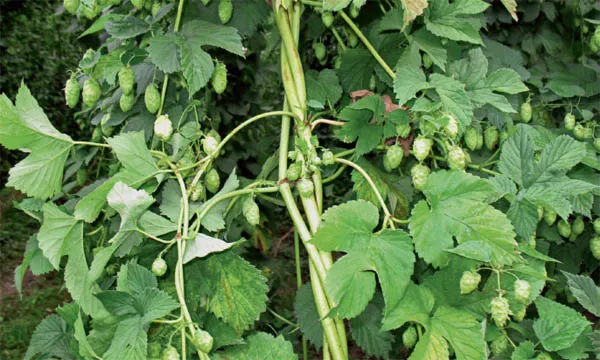
Figure 1: Hop cones growing on lateral branches
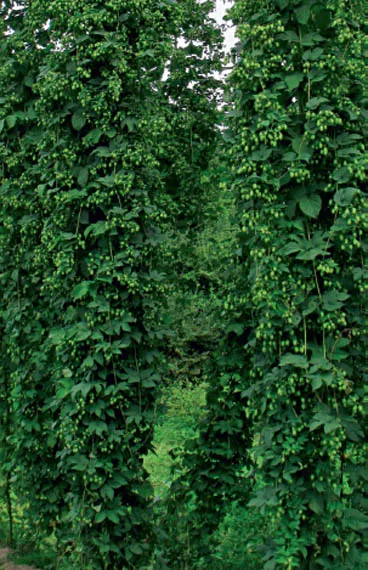
Figure 2: Hop bines on support structures 5.5 to 7.5 m in height
Hops naturally occur in river valleys (flood plains), where both male and female plants are present. For perpetuation of the species, seeds are produced, which mature in autumn. New plants grow from these seeds in the spring.
For commercial hop production, propagation is purely vegetative, meaning that pieces are cut from the rootstock and planted. Buds or “eyes” develop and form new plants. This is the primary method used by hop farmers to propagate new plants for their hop yards. Vegetative propagation may also be achieved by cutting young shoots above a layer of leaves and planting them in soil. With vegetative propagation, the genetic composition of the plant or hop variety remains entirely unchanged.
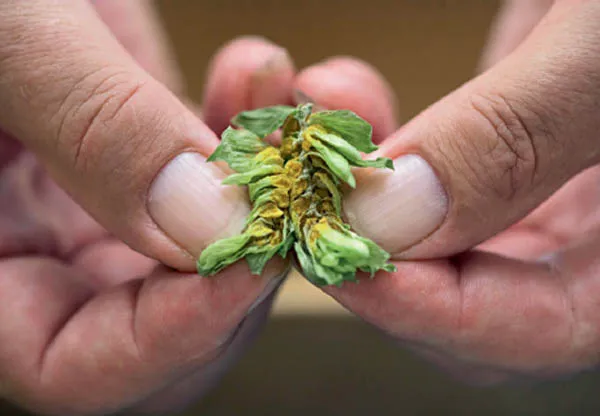
Figure 3: The structure of a hop cone
1.2 SUPPORT STRUCTURES
In their natural habitat, hops require trees or bushes upon which to climb as they grow, whereas those cultivated agriculturally must be supported on wires spanned tautly on wooden or concrete support structures to allow the plants to reach their full height at maturity. In hop-growing regions around the world, such structures can be, for example, 5.5 m in height in the USA and England, 7.0 m in the Hallertau and 7.5 m in Tettnang. These structures are referred to as a tall trellis or wirework. Disadvantages include their high cost, the difficulty associated with applying pesticides and their vulnerability to inclement weather. On the other hand, the yield for the varieties cultivated in this manner is optimal.
In order to eliminate the disadvantages inherent to this kind of structure, a different type of trellis has been developed, one that is only 2.5 to 3.0 m tall (see fig. 4). These structures have been subject to testing for a number of years now. The invention of new techniques for tilling the soil, applying pesticides and harvesting has also been necessary. In order to promote the further use of these so-called low trellises, new varieties adapted to growing on them must be developed. The varieties cultivated up to the present on the low trellises have yielded 30 to 50 % fewer hops. The potential savings in production costs cannot yet be compensated by the lower yield. In China, due to strong north winds, a unique low trellis form has been employed. The climbing support is comparable to an arbor-like structure used in viticulture and requires a substantial amount of manual labor.
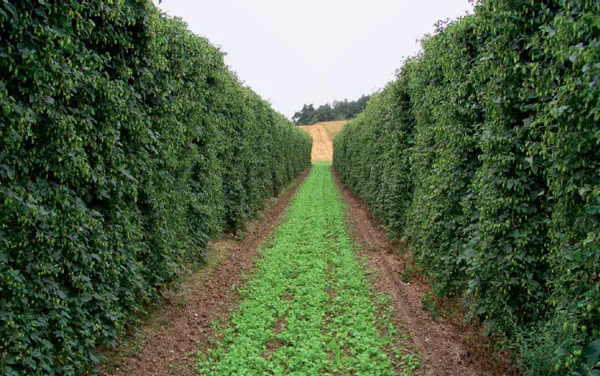
Figure 4: A low trellis system 3 m in height
1.3 CULTIVATION REGIONS
The central constraint on the cultivation of hops does not involve soil or climatic conditions but rather the light conditions and the length of the day. The shift from vegetative to generative growth (oriented towards sexual reproduction) occurs at a day length of 16 to 18 hours. When the hours of sunlight per day begin to wane again, the plants begin to flower. Such conditions only exist in two belts encircling the globe between 35 and 55 degrees latitude in the northern and southern hemispheres (see fig. 5). On the margins of these two belts, for example in the George cultivation region of South Africa, only very late maturing varieties can be grown.
Since this zone only encompasses the tips of South America, Africa, Australia (Tasmania) and New Zealand (the south island) in the southern hemisphere, the primary hop-growing regions are found in countries located in the northern hemisphere.
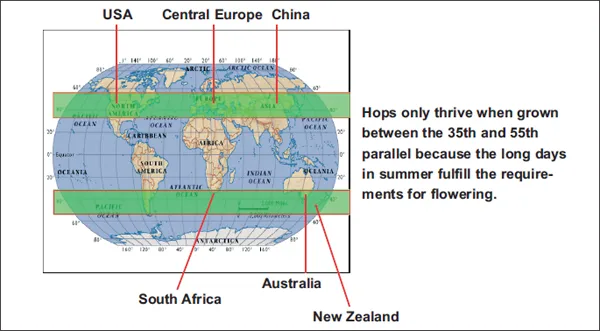
Figure 5: Hop-growing countries in the northern and southern hemispheres (world map from http://www.mapquest.de)
1.3.1 Central Europe
The most extensive hop-growing region in the world is the Hallertau in Bavaria, a southern state in the Federal Republic of Germany. Both the climate and soil there are favorable for hop cultivation. Historically, businesses in the Hallertau were also structured around an agrarian economy. Together these factors have led to a concentration of hop cultivation in the region over the course of two centuries, since the early 19th century. In Germany, there are also other cultivation regions in Tettnang (the Lake Constance region), Spalt (south of Nuremberg), and in the area around the Elbe and Saale rivers. Other significant hop-growing regions in Europe are found in the Czech Republic, Poland, Slovenia, the UK, France and Spain.
In Central Europe, the precipitation needed in the summer for hop cultivation sometimes does not fall. If this is the case, there is a lower yield at harvest and diminished alpha acid production. In the n...
Table of contents
- Cover
- Titel
- Impressum
- Acknowledgements to the Sponsors, Authors and Translators
- Foreword
- Contents
- Introduction
- 1 Hop Cultivation
- 2 The Hop Market
- 3 Chemical Compounds in Hops
- 4 Quality Assurance
- 5 Hop Varieties
- 6 Hop Products
- 7 Hops in Beer
- 8 Outlook
Trusted by 375,005 students
Access to over 1.5 million titles for a fair monthly price.
Study more efficiently using our study tools.
Frequently asked questions
Yes, you can cancel anytime from the Subscription tab in your account settings on the Perlego website. Your subscription will stay active until the end of your current billing period. Learn how to cancel your subscription
No, books cannot be downloaded as external files, such as PDFs, for use outside of Perlego. However, you can download books within the Perlego app for offline reading on mobile or tablet. Learn how to download books offline
Perlego offers two plans: Essential and Complete
- Essential is ideal for learners and professionals who enjoy exploring a wide range of subjects. Access the Essential Library with 800,000+ trusted titles and best-sellers across business, personal growth, and the humanities. Includes unlimited reading time and Standard Read Aloud voice.
- Complete: Perfect for advanced learners and researchers needing full, unrestricted access. Unlock 1.5M+ books across hundreds of subjects, including academic and specialized titles. The Complete Plan also includes advanced features like Premium Read Aloud and Research Assistant.
We are an online textbook subscription service, where you can get access to an entire online library for less than the price of a single book per month. With over 1.5 million books across 990+ topics, we’ve got you covered! Learn about our mission
Look out for the read-aloud symbol on your next book to see if you can listen to it. The read-aloud tool reads text aloud for you, highlighting the text as it is being read. You can pause it, speed it up and slow it down. Learn more about Read Aloud
Yes! You can use the Perlego app on both iOS and Android devices to read anytime, anywhere — even offline. Perfect for commutes or when you’re on the go.
Please note we cannot support devices running on iOS 13 and Android 7 or earlier. Learn more about using the app
Please note we cannot support devices running on iOS 13 and Android 7 or earlier. Learn more about using the app
Yes, you can access Hops by Martin Biendl, Benhard Engelhard, Adrian Forster, Andreas Gahr, Anton Lutz, Willi Mitter, Roland Schmidt, Christina Schönberger in PDF and/or ePUB format, as well as other popular books in Biological Sciences & Biotechnology. We have over 1.5 million books available in our catalogue for you to explore.