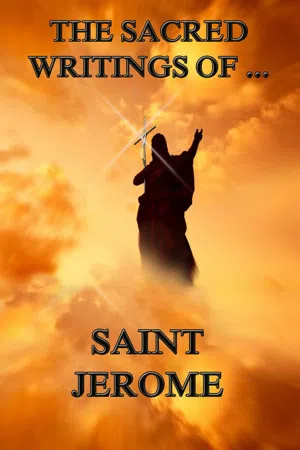
"The Sacred Writings Of..." provides you with the essential works among the Christian writings. The volumes cover the beginning of Christianity until medieval times. Contents: The Letters of St. Jerome Letter I. To Innocent.Letter II. To Theodosius and the Rest of the Anchorites.Letter III. To Rufinus the Monk.Letter IV. To Florentius.Letter V. To Florentius.Letter VI. To Julian, a Deacon of AntiochLetter VII. To Chromatius, Jovinus, and Eusebius.Letter VIII. To Niceas, Sub-Deacon of Aquileia.Letter IX. To Chrysogonus, a Monk of Aquileia.Letter X. To Paul, an Old Man of Concordia.Letter XI. To the Virgins of Aemona.Letter XII. To Antony, Monk.Letter XIII. To Castorina, His Maternal Aunt.Letter XIV. To Heliodorus, Monk.Letter XV. To Pope Damasus.Letter XVI. To Pope Damasus.Letter XVII. To the Presbyter Marcus.Letter XVIII. To Pope DamasusLetter XIX. From Pope Damasus.Letter XX. To Pope Damasus.Letter XXI. To DamasusLetter XXII. To Eustochium.Letter XXIII. To Marcella.Letter XXIV. To Marcella.Letter XXV. To Marcella.Letter XXVI. To Marcella.Letter XXVII. To Marcella.Letter XXVIII. To Marcella.Letter XXIX. To Marcella.Letter XXX. To PaulaLetter XXXI. To Eustochium.Letter XXXII. To Marcella.Letter XXXIII. To Paula.Letter XXXIV. To Marcella.Letter XXXV. From Pope Damasus.Letter XXXVI. To Pope Damasus.Letter XXXVII. To Marcella.Letter XXXVIII. To Marcella.Letter XXXIX. To Paula.Letter XL. To Marcella.Letter XLI. To Marcella.Letter XLII. To Marcella.Letter XLIII. To Marcella.Letter XLIV. To Marcella.Letter XLV. To Asella.Letter XLVI. Paula and Eustochium to Marcella.Letter XLVII. To Desiderius.Letter XLVIII. To Pammachius.Letter XLIX. To Pammachius.Letter L. To Domnio.... and more... The Life of Paulus the First HermitThe Life of S.
- 808 pages
- English
- ePUB (mobile friendly)
- Available on iOS & Android
eBook - ePub
The Sacred Writings of Saint Jerome
About this book
Information
Topic
Theologie & ReligionSubtopic
Biblische StudienThe Sacred Writings of St. Jerome
Contents:
Saint Jerome – A Biography
The Letters of St. Jerome
Letter I. To Innocent.
Letter II. To Theodosius and the Rest of the Anchorites.
Letter III. To Rufinus the Monk.
Letter IV. To Florentius.
Letter V. To Florentius.
Letter VI. To Julian, a Deacon of Antioch
Letter VII. To Chromatius, Jovinus, and Eusebius.
Letter VIII. To Niceas, Sub-Deacon of Aquileia.
Letter IX. To Chrysogonus, a Monk of Aquileia.
Letter X. To Paul, an Old Man of Concordia.
Letter XI. To the Virgins of Aemona.
Letter XII. To Antony, Monk.
Letter XIII. To Castorina, His Maternal Aunt.
Letter XIV. To Heliodorus, Monk.
Letter XV. To Pope Damasus.
Letter XVI. To Pope Damasus.
Letter XVII. To the Presbyter Marcus.
Letter XVIII. To Pope Damasus
Letter XIX. From Pope Damasus.
Letter XX. To Pope Damasus.
Letter XXI. To Damasus
Letter XXII. To Eustochium.
Letter XXIII. To Marcella.
Letter XXIV. To Marcella.
Letter XXV. To Marcella.
Letter XXVI. To Marcella.
Letter XXVII. To Marcella.
Letter XXVIII. To Marcella.
Letter XXIX. To Marcella.
Letter XXX. To Paula
Letter XXXI. To Eustochium.
Letter XXXII. To Marcella.
Letter XXXIII. To Paula.
Letter XXXIV. To Marcella.
Letter XXXV. From Pope Damasus.
Letter XXXVI. To Pope Damasus.
Letter XXXVII. To Marcella.
Letter XXXVIII. To Marcella.
Letter XXXIX. To Paula.
Letter XL. To Marcella.
Letter XLI. To Marcella.
Letter XLII. To Marcella.
Letter XLIII. To Marcella.
Letter XLIV. To Marcella.
Letter XLV. To Asella.
Letter XLVI. Paula and Eustochium to Marcella.
Letter XLVII. To Desiderius.
Letter XLVIII. To Pammachius.
Letter XLIX. To Pammachius.
Letter L. To Domnio.
Letter LI. From Epihanius, Bishop of Salamis, in Cyprus, to John, Bishop of Jerusalem.
Letter LII. To Nepotian.
Letter LIII. To Paulinus.
Letter LIV. To Furia.
Letter LV. To Amandus.
Letter LVI. From Augustine
Letter LVII. To Pammachius on the Best Method of Translating.
Letter LVIII. To Paulinus.
Letter LIX. To Marcella.
Letter LX. To Heliodorus
Letter LXI. To Vigilantius.
Letter LXII. To Tranquillinus.
Letter LXIII. To Theophilus.
Letter LXIV. To Fabiola.
Letter LXV. To Principia.
Letter LXVI. To Pammachius.
Letter LXVII. From Augustine.
Letter LXVIII. To Castrutius.
Letter LXIX. To Oceanus.
Letter LXX. Tomagnus an Orator of Rome.
Letter LXXI. To Lucinius.
Letter LXXII. To Vitalis.
Letter LXXIII. To Evangelus.
Letter LXXIV. To Rufinus of Rome.
Letter LXXV. To Theodora.
Letter LXXVI. To Abigaus.
Letter LXXVII. To Oceanus.
Letter LXXVIII. To Fabiola.
Letter LXXIX. To Salvina.
Letter LXXX. From Rufinus to Macarius.
Letter LXXXI. To Rufinus.
Letter LXXXII. To Theophilus Bishop of Alexandria.
Letter LXXXIII. From Pammachius and Oceanus.
Letter LXXXIV. To Pammachius and Oceanus.
Letter LXXXV. To Paulinus.
Letter LXXXVI. To Theophilus.
Letter LXXXVII. From the Ophilus to Jerome.
Letter LXXXVIII. To Theophilus.
Letter LXXXIX. From Theophilus to Jerome.
Letter XC. From Theophilus to Epiphanius.
Letter XCI. From Epiphanius to Jerome.
Letter XCII. The Synodical Letter of Theophilus to the Bishops of Palestine and of Cyprus.
Letter XCIII. From the Bishops of Palestine to Theophilus.
Letter XCIV. From Dionysius to Theophilus.
Letter XCV. From Pope Anastasius to Simplicianus.
Letter XCVI. From Theophilus.
Letter XCVII. To Pammachius and Marcella.
Letter XCVIII. From Theophilus.
Letter XCIX. To Theophilus.
Letter C. From Theophilus.
Letter CI. From Augustine.
Letter CII. To Augustine.
Letter CIII. To Augustine.
Letter CIV. From Augustine.
Letter CV. To Augustine.
Letter CVI. To Sunnias and Fretela.
Letter CVII. To Laeta.
Letter CVIII. To Eustochium.
Letter CIX. To Riparius.
Letter CX. From Augustine.
Letter CXI. From Augustine to Prsidius.
Letter CXII. To Augustine.
Letter CXIII. From Theophilus to Jerome.
Letter CXIV. To Theophilus.
Letter CXV. To Augustine.
Letter CXVI. From Augustine.
Letter CXVII. To a Mother and Daughter Living in Gaul.
Letter CXVIII. To Julian.
Letter CXIX. To Minervius and Alexander.
Letter CXX. To Hedibia.
Letter CXXI. To Algasia.
Letter CXXII. To Rusticus.
Letter CXXIII. To Ageruchia.
Letter CXXIV. To Avitus.
Letter CXXV. To Rustics.
Letter CXXVI. To Marcellinus and Anapsychia.
Letter CXXVII. To Principia.
Letter CXXVIII. To Gaudentius.
Letter CXXIX. To Dardanus.
Letter CXXX. To Demetrias.
Letter CXXXI. From Augustine.
Letter CXXXII. From Augustine.
Letter CXXXIII. To Ctesiphon.
Letter CXXXIV. To Augustine.
Letter CXXXV. From Pope Innocent to Aurelius.
Letter CXXXVI. From Pope Innocent to Jerome
Letter CXXXVII. From Pope Innocent to John, Bishop of Jerusalem
Letter CXXXVIII. To Riparius.
Letter CXXXIX. To Apronius.
Letter CXL. To Cyprian the Presbyter.
Letter CXLI. To Augustine
Letter CXLII. To Augustine.
Letter CXLIII. To Alypius and Augustine.
Letter CXLIV. From Augustine to Optatus
Letter CXLV. To Exuperantius.
Letter CXLVI. To Evangelus.
Letter CXLVII. To Sabinianus
Letter CXLVIII. To the Matron Celantia.
Letter CXLIX. On the Jewish Festivals.
Letter CL. From Procopius to Jerome.
The Life of Paulus the First Hermit
The Life of S. Hilarion
The Life of Malchus, the Captive Monk
The Dialogue Against the Luciferians
The Perpetual Virginity of Blessed Mary
Against Jovinianus
Against Vigilantius
To Pammachius Against John of Jerusalem
Against the Pelagians
Book I.
Book II.
Book III.
Prefaces
Prefaces to Jerome’s Early Works.
Prefaces to the Vulgate Version of the New Testament.
Prefaces to the Books of the Vulgate Version of the Old Testament.
Translations from the Septuagint and Chaldee.
The Commentaries.
The Sacred Writings of St. Jerome
Jazzybee Verlag Jürgen Beck
86450 Altenmünster, Germany
ISBN: 9783849621513
www.jazzybee-verlag.de
Cover Design: © Sue Colvil - Fotolia.com
Saint Jerome – A Biography
Saint Sophronius Eusebius Hieronymus (Jerome), one of the four great doctors of the Latin church, born at Stridon, on the confines of Pannonia and Dalmatia, about 340, died in Bethlehem Sept. 30, 420. His own writings furnish an almost complete autobiography. His father Eusebius was a wealthy Christian. In 363 he was sent to Rome with his countryman Bonosus, and studied Greek and Latin literature and eloquence. In 365 he was baptized and took the name of Hieronymus. He afterward visited with Bonosus the southern and northern provinces of Gaul and the coast of Britain, and studied for some time at Treves. Returning to Italy, Jerome became the inmate of a monastery at Aquileia, and under the direction of Valerianus, bishop of that city, devoted himself to the study of Scripture and theology. While there he transcribed a commentary on the Psalms and a treatise on synods by St. Hilary of Poitiers, and published his first known treatise, addressed to Innocentius, De Muliere septies Percussa. There he formed the acquaintance of Rufinus, afterward his most determined theological opponent. In 372 he was called to Stridon to reclaim one of his sisters, and this incident seems to have determined him to leave Italy for ever.
After a brief stay in Rome, he set out for Syria with several friends, travelled on foot through Thrace and Asia Minor, and stopped at Antioch to follow a course of lectures on Biblical exegesis by the future heresiarch Apollinaris, bishop of Laodicea. He afterward withdrew into the desert of Chalcis near Antioch, where he spent four years in a hermit's cell, assiduously studied the Hebrew language, and wrote a letter on Manichaeism and two letters to Pope Damasus, one of which was in relation to the schism reigning in the church of Antioch, where there were at that time three rival bishops. The pope having advised him to acknowledge Paulinus as bishop, Jerome returned to Antioch, and in 376 consented to receive priestly orders, on the condition that he should not be forced to accept any pastoral charge. He immediately applied himself to acquire an accurate knowledge of Biblical topography and a thorough familiarity with the Hebrew and Chaldee, visiting the most celebrated scenes of Bible history, and consulting everywhere the most learned Jews. To perfect himself in Greek and to have the Bible interpreted to him by the best living masters, he went to Constantinople about 380, and became the disciple of St. Gregory Nazianzen, whom he calls his father and master.
In that city he wrote a commentary on the 6th chapter of Isaiah, and translated 14 homilies of Origen and the chronicle of Eusebius. His version only follows the original to the siege of Troy; in the second part Jerome confesses to his having arranged the matters in his own way as far as the 20th year of Constantine, the remainder being entirely his work down to the death of Valens (378). Being called to Rome by Pope Damasus in 382,. he acted as notary to the council held there in that year, and afterward remained as secretary or referendarius to the pope until the death of the latter in 384. Jerome resided in a monastery, and at the pope's request began his revision of the old Latin or Italic version of the Bible. He produced the translation of the Psalms called Psalterium Romanum, and another of the Gospels dedicated to the pope, wrote a commentary on the parable of the prodigal son, a letter on the hierarchy, and a treatise against Helvidius, who denied the perpetual virginity of Mary the mother of Christ. His love of monastic seclusion induced him to win converts by voice and pen to this mode of life. A large number of noble persons, particularly Roman ladies, forsook all worldly pursuits, and placed themselves under his direction.
This, and Jerome's denunciation of the worldly lives led by the generality of Roman Christians, made him many enemies, lay and clerical; while his frequent instructions on the Scriptures and Christian virtues to his numerous female converts afforded an opportunity for spreading malignant reports against him. So long as Pope Damasus lived he supported Jerome against his slanderers; but after the election of Siricius, Jerome, taking with him his younger brother Politian, set out once more for the East. In order to find the most perfect models of monastic life, he visited the monasteries of Upper and Lower Egypt, and finally fixed his abode at Bethlehem, the birthplace of Christ. Thither he was soon followed by some of his distinguished Roman converts, who devoted a portion of their wealth to the erection of monasteries. One of these, for men, was placed under Jerome's direction, and to it he soon added a hostelry and hospital for pilgrims, and for the numerous refugees who fled from Rome after its sack by Alaric in 410. There he completed his Latin version of the Scriptures, which became in the western churches what the Septuagint was in the East, and served as a basis for nearly all the earlier translations of the Scriptures subsequently made into the vernacular tongues of Europe. From Bethlehem Jerome also issued treatises against the heretics of his time, such as Jovinian, Vigilantius, and Pelagius. He combated the doctrines of John, bishop of Jerusalem, and of his old friend Rufinus, who was propagating Origenism. In 416 the Pelagians, who were in the ascendancy in Palestine, burned his establishment at Bethlehem, and compelled him to fly for his life.
Having remained in concealment for more than two years, he returned to Bethlehem in 418, exhausted by privations, anxiety, and infirmities. He was buried amid the ruins of one of his monasteries; but his remains were afterward taken to Rome, and placed in the basilica of Santa Maria Maggiore, near the tomb of Sixtus V. His feast is celebrated on Sept. 30. - The personal character of St. Jerome has been the subject of much censure and much praise. His writings show him to have been a man of ardent nature, invincibly attached to what he conceived to be the truth and the right; but his very impetuosity was apt to hurry him into extremes. He advocated evangelical poverty and self-denial under the form of monasticism among the Roman patricians, as a remedy for the low morality which everywhere prevailed; but no one denounced with greater energy than he both false monks and false penitents. Biblical scholars are unanimous in acknowledging the incomparable services which his labors rendered to the church.
The Letters of St. Jerome
Letter I. To Innocent.
Not only the first of the letters but probably the earliest extant composition of Jerome (c. 370 a.d.). Innocent, to whom it is addressed, was one of the little band of enthusiasts whom Jerome gathered round him in Aquileia. He followed his friend to Syria, where he died in 374 a.d. (See Letter III., 3.)
1. You have frequently asked me, dearest Innocent, not to pass over in silence the marvellous event which has happened in our own day. I have declined the task from modesty and, as I now feel, with justice, believing myself to be incapable of it, at once because bureau language is inadequate to the divine praise, and because inactivity, acting like rust upon the intellect, has dried up any little power of expression that I have ever had. You in reply urge that in the things of God we must look not at the work which we are able to accomplish, but at the spirit in which it is undertaken, and that he can never be at a loss for words who has believed on the Word.
2. What, then, must I do? The task is beyond me, and yet I dare not decline it. I am a mere unskilled passenger, and I find myself placed in charge of a freighted ship. I have not so much as handled a rowboat on a lake, and now I have to trust myself to the noise and turmoil of the Euxine. I see the sh...
Table of contents
- Saint Jerome – A Biography
- The Life of Paulus the First Hermit
- The Perpetual Virginity of Blessed Mary
- Against Vigilantius
- Prefaces
Trusted by 375,005 students
Access to over 1.5 million titles for a fair monthly price.
Study more efficiently using our study tools.
Frequently asked questions
Yes, you can cancel anytime from the Subscription tab in your account settings on the Perlego website. Your subscription will stay active until the end of your current billing period. Learn how to cancel your subscription
No, books cannot be downloaded as external files, such as PDFs, for use outside of Perlego. However, you can download books within the Perlego app for offline reading on mobile or tablet. Learn how to download books offline
Perlego offers two plans: Essential and Complete
- Essential is ideal for learners and professionals who enjoy exploring a wide range of subjects. Access the Essential Library with 800,000+ trusted titles and best-sellers across business, personal growth, and the humanities. Includes unlimited reading time and Standard Read Aloud voice.
- Complete: Perfect for advanced learners and researchers needing full, unrestricted access. Unlock 1.5M+ books across hundreds of subjects, including academic and specialized titles. The Complete Plan also includes advanced features like Premium Read Aloud and Research Assistant.
We are an online textbook subscription service, where you can get access to an entire online library for less than the price of a single book per month. With over 1.5 million books across 990+ topics, we’ve got you covered! Learn about our mission
Look out for the read-aloud symbol on your next book to see if you can listen to it. The read-aloud tool reads text aloud for you, highlighting the text as it is being read. You can pause it, speed it up and slow it down. Learn more about Read Aloud
Yes! You can use the Perlego app on both iOS and Android devices to read anytime, anywhere — even offline. Perfect for commutes or when you’re on the go.
Please note we cannot support devices running on iOS 13 and Android 7 or earlier. Learn more about using the app
Please note we cannot support devices running on iOS 13 and Android 7 or earlier. Learn more about using the app
Yes, you can access The Sacred Writings of Saint Jerome by Saint Jerome, Philipp Schaff in PDF and/or ePUB format, as well as other popular books in Theologie & Religion & Biblische Studien. We have over 1.5 million books available in our catalogue for you to explore.