- English
- ePUB (mobile friendly)
- Available on iOS & Android
About this book
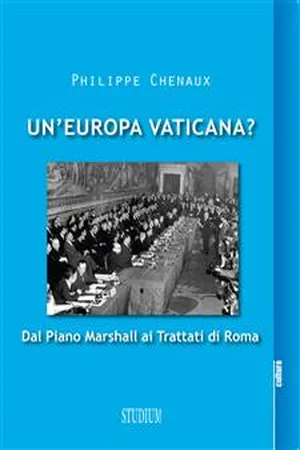
In un editoriale non firmato del 27 marzo 1957, «L'Osservatore Romano» parlava dell'«avvenimento politico più importante e più significativo della storia moderna della Città eterna». A sessant'anni di distanza dalla firma dei Trattati di Roma (25 marzo 1957), il presente volume indaga sul contributo della Santa Sede e degli ambienti cattolici (vescovi, preti, religiosi, movimenti e associazioni laicali, partiti di ispirazione democristiana) alla nascita delle prime istituzioni europee (Consiglio d'Europa, CECA, CED, CEE). L'Unione europea è stata vista per un lungo tempo come un "club cristiano", quando non come una "impresa del Vaticano". All'inizio degli anni Cinquanta il mito di un'"Europa vaticana" ha conosciuto una singolare fortuna. Nel suo Journal du septennat (1951), il presidente della Repubblica francese Vincent Auriol ricordava «la triplice alleanza, Adenauer, Schuman, De Gasperi, tre tonsure sotto lo stesso zucchetto». Se questo studio da un lato ridimensiona il ruolo svolto dai cattolici nella costruzione dell'Europa unita sul piano istituzionale tra il 1947 e il 1957, dall'altro tende a dimostrare l'apporto decisivo della Chiesa di Pio XII come forza transnazionale nella diffusione di un autentico "spirito europeo" dopo la seconda guerra mondiale. Di fronte al rischio di una frammentazione dell'Europa e del ritorno dei nazionalismi mortiferi della prima metà del secolo scorso, si fa sentire, viva ed urgente più che mai, la necessità di "reiventare l'Europa" ritornando al messaggio dei Padri Fondatori.
Frequently asked questions
- Essential is ideal for learners and professionals who enjoy exploring a wide range of subjects. Access the Essential Library with 800,000+ trusted titles and best-sellers across business, personal growth, and the humanities. Includes unlimited reading time and Standard Read Aloud voice.
- Complete: Perfect for advanced learners and researchers needing full, unrestricted access. Unlock 1.4M+ books across hundreds of subjects, including academic and specialized titles. The Complete Plan also includes advanced features like Premium Read Aloud and Research Assistant.
Please note we cannot support devices running on iOS 13 and Android 7 or earlier. Learn more about using the app.
Information
Table of contents
- Copertina
- Un'Europa Vaticana?
- Indice dei contenuti
- Prefazione all'edizione italiana
- Abbreviazioni e sigle
- Introduzione
- 1. L'Europa vista da Roma
- 2. Le basi di una nuova Europa
- 3. Dalla Germania all'Europa
- 4. I democratici cristiani, forza europea
- 5. Lo spettro di una Europa carolingia
- 6. L'Europa al di là dei blocchi
- 7. L'Europa senza sponde
- Conclusione
- Indice dei nomi