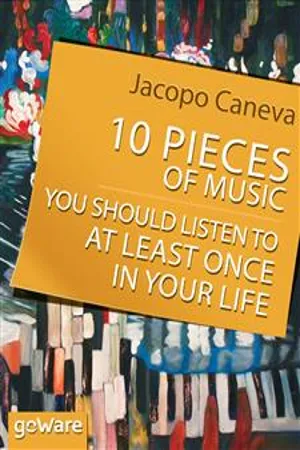
Welcome to this ramble through music: background notes unfold, little by little, amazingly and touchingly. Our guide is the young Jacopo Caneva, who puts forward a personal selection of musical extracts for a first listening experience, analysing them with the passion and competence of a teenager who loves and practises music. This is where authors meet, with different styles and historical backgrounds, sharing the will to be revolutionary and ahead of their time. A journey that winds from Mussorgsky to Berlioz, from Debussy to Handel, Danny Elfman and Joe Hisaishi, some of the most beloved composers of two great film directors of our time, Tim Burton and Hayao Miyazaki. 10 Pieces of Music You Should Listen to at Least Once in Your Life is a book you will take with you as an essay on music. Enjoy the read and the listen.
- English
- ePUB (mobile friendly)
- Available on iOS & Android
eBook - ePub
10 Pieces of Music You Should Listen to at Least Once in Your Life
About this book
Trusted by 375,005 students
Access to over 1.5 million titles for a fair monthly price.
Study more efficiently using our study tools.
Information
Subtopic
MusicEnd Titles
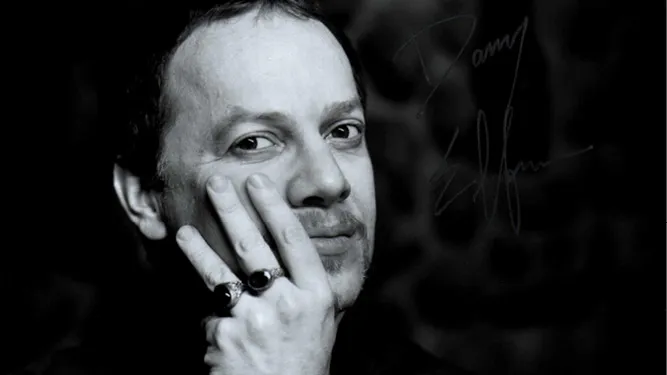
In the same way as Joe Hisaishi, who writes moving music with atypical means, the American composer Danny Elfman (1953) can boast the extremely rare ability of astonishing the listener in a non-conventional way. After developing a fruitful collaboration with Miyazaki, just like Hisaishi, he became the major adventure companion of the greatest film director of all times, the slightly younger Tim Burton. From Edward Scissorhands to Dark Shadows, Elfman has set to music all of Burton’s films except for two. I would like to suggest the piece accompanying the end titles of The Nightmare Before Christmas, one of Tim Burton’s more distinctive films (though its official direction is actually ascribed to someone else) and internationally recognized as the musician’s best soundtrack. The stop-motion film tells the story of the king of Halloween Town, Jack Skeleton, who suddenly “discovers” Christmas and sets out to giving a personal interpretation of it. A number of masterpieces follow each other from jazz to ballad and from chorus to lament. End Titles is basically a 5-minute mix of the best songs in the film, which are recalled in this order: Jack’s theme, Jack’s Lament, the well-known This Is Halloween, What’s This?, Oogie-Boogie’s Song, again Jack’s Lament, Sally’s Song and Making Christmas. I’m not going to sum up the musical features of the mix, as bars are carefully measured and refined, but I can try to communicate each song’s atmosphere, a major principle of the Burton-Elfman team: Jack’s theme sounds a bit disquieting, though never slipping towards anxiety or terror, and all the same sporadically quiet (Jack Skeleton is a hypersensitive character, always hanging between depression and enthusiasm); Jack’s Lament is deeply romantic or rather late-romantic, especially in the second part, with references to Mahler. The song insinuates a doubt in the listeners’ minds, pushing them to ask themselves the surprising question “what’s Christmas?”, to which the film does not know or does not want to answer. There is not much to say about This Is Halloween: the song is just awesome, with stupefying harmonies changing mysteriously at every bar, in the most classic style of Elfman.
▶ Play it online
Danny Elfman, End Titles, from Tim Burton’s The Nightmare Before Christmas OST (1993)
What’s This is the lighter and touching version of Jack’s Lament, at the time when the protagonist understands the origin of his obsession with novelty and change. In writing the amusing Oogie-Boogie’s Song Elfman seems to have been influenced by Cab Calloway’s jazz and by punk-rock, the music he played with the band he led, the Oingo-Boingo. Sally’s Song is the noblest ballad in the film, dangling between hope and melancholy, as all of Burton’s best works (though he usually leans towards the former option). Making Christmas is a hallucinated, though controlled test of the composer’s knowledge of orchestration and history of music (the theme comes directly from Dies Irae, which also fascinated Kubrick, who chose it for Shining).
All we can do now is exalting the creative, musical, lexical (lyrics are highly poetic, considering film music general standards) and cinematographic power of Danny Elfman, who never disappointed his world-spread fans, even when he took part in merely commercial productions.
End Titles is thus the composer’s most representative piece and is worth being considered as fundamental, thanks to Elfman’s superlative way of composing, which only equates his ability to amaze the listener, even with non-dissonant chords that turn dissonant if paired. In his 30-year career Elfman always wrote music with the basic aim of shocking and stupefying the listener, who is left just speechless. As a matter of fact, astonishment is the second main feature of the cinema of Burton and Elfman, after the melancholy-hope dichotomy. His music is always impressive to the listener, but never redundant or baroque, a style that is rarely successful in cinematographic efforts, and often touching post-modernism (as in Edward Scissorhands, Charlie and the Chocolate Factory and Batman Returns), without erring on the side of technology.
For all these reasons, Danny Elfman must and will be remembered in every anthology of 20th century music for being extraordinarily talented and for his deep knowledge of musical film writing, form ballad to jazz, from choral pieces to symphonic suites (the first of his officially classical compositions, Serenada Schizophrana, was launched in 2005 and met with great success), but also for being so flexible as to write any kind of music.
Glossary
Arpeggio
The term comes from the word “harp”, the instrument which most frequently uses this kind of grace-note, along with the piano (it can also be found in violin sheet music). Arpeggios indicate how to play chords in a non-simultaneous way. Different notes are not played at the same time, but follow each other in fast sequence.
Basso continuo
Basso continuo was used mostly in the Baroque period and indicates the sequence of notes the instrument or the orchestra play in the low register. Notes played in accordance with the rules of harmony act as a basis for all the chords in the piece. Back in the Baroque period musicians often “created” chords at sight on the basis of their continuous basses.
Cadence
This term has a double meaning. In harmony, the cadence is a series of not less than two chords that are frequently repeated in literature and put in the strategic points of a piece. The term also refers to the part of a piece, usually played by the orchestra, in which a particular instrument performs a virtuoso solo (the harp’s cadence in Waltz of the Flowers, from Tchaikovsky’s Nutcracker, is a well-known example).
Glissando
This grace-note is used by harp,...
Table of contents
- Cover
- Title page
- Copyright
- Introduction
- Author’s note
- Pictures at an Exhibition
- Symphonie Fantastique
- La Mer
- The Rite of Spring
- Water Music
- The Planets
- Prelude to the Afternoon of a Faun
- Romanian Folk Dances
- One Summer’s Day
- End Titles
- Playlist
Frequently asked questions
Yes, you can cancel anytime from the Subscription tab in your account settings on the Perlego website. Your subscription will stay active until the end of your current billing period. Learn how to cancel your subscription
No, books cannot be downloaded as external files, such as PDFs, for use outside of Perlego. However, you can download books within the Perlego app for offline reading on mobile or tablet. Learn how to download books offline
Perlego offers two plans: Essential and Complete
- Essential is ideal for learners and professionals who enjoy exploring a wide range of subjects. Access the Essential Library with 800,000+ trusted titles and best-sellers across business, personal growth, and the humanities. Includes unlimited reading time and Standard Read Aloud voice.
- Complete: Perfect for advanced learners and researchers needing full, unrestricted access. Unlock 1.5M+ books across hundreds of subjects, including academic and specialized titles. The Complete Plan also includes advanced features like Premium Read Aloud and Research Assistant.
We are an online textbook subscription service, where you can get access to an entire online library for less than the price of a single book per month. With over 1.5 million books across 990+ topics, we’ve got you covered! Learn about our mission
Look out for the read-aloud symbol on your next book to see if you can listen to it. The read-aloud tool reads text aloud for you, highlighting the text as it is being read. You can pause it, speed it up and slow it down. Learn more about Read Aloud
Yes! You can use the Perlego app on both iOS and Android devices to read anytime, anywhere — even offline. Perfect for commutes or when you’re on the go.
Please note we cannot support devices running on iOS 13 and Android 7 or earlier. Learn more about using the app
Please note we cannot support devices running on iOS 13 and Android 7 or earlier. Learn more about using the app
Yes, you can access 10 Pieces of Music You Should Listen to at Least Once in Your Life by Jacopo Caneva in PDF and/or ePUB format, as well as other popular books in Media & Performing Arts & Music. We have over 1.5 million books available in our catalogue for you to explore.