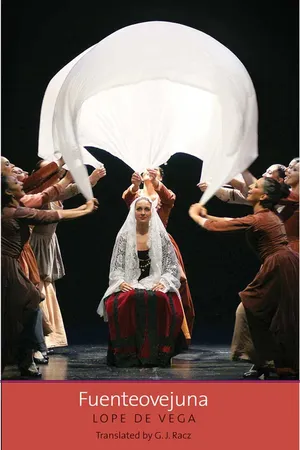
Lope de Vega’s masterpiece, a classic play of the Spanish Golden Age, in a vibrant new translation
Lope de Vega “single-handedly created the Spanish national theatre,” writes Roberto González Echevarría in the introduction to this new translation of Fuenteovejuna. Often compared to Shakespeare, Molière, and Racine, Lope is widely considered the greatest of all Spanish playwrights, and Fuenteovejuna (The Sheep Well) is among the most important Spanish Golden Age plays.
Written in 1614, Fuenteovejuna centers on the decision of an entire village to admit to the premeditated murder of a tyrannical ruler. Lope masterfully employs the tragicomic conventions of the Spanish comedia as he leavens the central dilemma of the peasant lovers, Laurencia and Frondoso, with the shenanigans of Mengo, the gracioso or clown. Based on an actual historical incident, Fuenteovejuna offers a paean to collective responsibility and affirmation of the timeless values of justice and kindness.
Translator G. J. Racz preserves the nuanced voice and structure of Lope de Vega’s text in this first English translation in analogical meter and rhyme. Roberto González Echevarría surveys the history of Fuenteovejuna, as well as Lope’s enormous literary output and indelible cultural imprint. Racz’s compelling translation and González Echevarría’s rich framework bring this timeless Golden Age drama alive for a new generation of readers and performers.