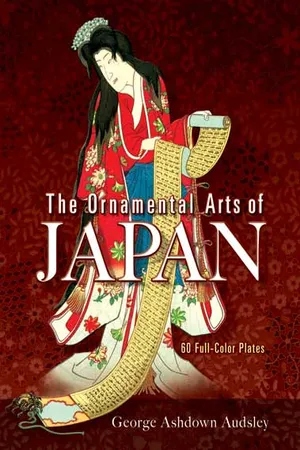
Japanese art was virtually unknown in the West until the middle of the nineteenth century, when the island nation emerged from 200 years of self-imposed isolation. A passion for Japanese culture swept Europe, and this landmark publication opened the eyes of the world to the grace and beauty of Japanese design. George Ashdown Audsley, a leader in the revival of English decorative design and one of the first Britons to specialize in Japanese art, assembled this outstanding collection. Featuring 60 full-color plates, it offers spectacular examples of Japanese painting, printing, embroidery, lacquer work, and cloisonné as well as masterpieces in ivory and porcelain. Informative captions accompany each illustration. Art lovers, rare book collectors, and enthusiasts of Japanese culture will treasure this magnificent selection of timeless art.
Frequently asked questions
Yes, you can cancel anytime from the Subscription tab in your account settings on the Perlego website. Your subscription will stay active until the end of your current billing period. Learn how to cancel your subscription.
No, books cannot be downloaded as external files, such as PDFs, for use outside of Perlego. However, you can download books within the Perlego app for offline reading on mobile or tablet. Learn more here.
Perlego offers two plans: Essential and Complete
Essential is ideal for learners and professionals who enjoy exploring a wide range of subjects. Access the Essential Library with 800,000+ trusted titles and best-sellers across business, personal growth, and the humanities. Includes unlimited reading time and Standard Read Aloud voice.
Complete: Perfect for advanced learners and researchers needing full, unrestricted access. Unlock 1.4M+ books across hundreds of subjects, including academic and specialized titles. The Complete Plan also includes advanced features like Premium Read Aloud and Research Assistant.
Both plans are available with monthly, semester, or annual billing cycles.
We are an online textbook subscription service, where you can get access to an entire online library for less than the price of a single book per month. With over 1 million books across 1000+ topics, we’ve got you covered! Learn more here.
Look out for the read-aloud symbol on your next book to see if you can listen to it. The read-aloud tool reads text aloud for you, highlighting the text as it is being read. You can pause it, speed it up and slow it down. Learn more here.
Yes! You can use the Perlego app on both iOS or Android devices to read anytime, anywhere — even offline. Perfect for commutes or when you’re on the go. Please note we cannot support devices running on iOS 13 and Android 7 or earlier. Learn more about using the app.
Yes, you can access The Ornamental Arts of Japan by George Ashdown Audsley in PDF and/or ePUB format, as well as other popular books in Art & Asian Art. We have over one million books available in our catalogue for you to explore.
George Ashdown Audsley (1838—1925) had a passion for the arts. He was an architect, curator, lecturer, and art collector. Thanks to other collectors from England, France, and America, Audsley was able to assemble an impressive publication on Japanese design, The Ornamental Arts of Japan, which introduced the world to Japanese art. For this edition, we have selected sixty chromolithographs from this rare, late-nineteenth-century, two-volume set. The images have been arranged into eight categories: painting, embroidery, textile fabrics, lacquer, incrusted work, metal work, cloisonné enamel, and carving.
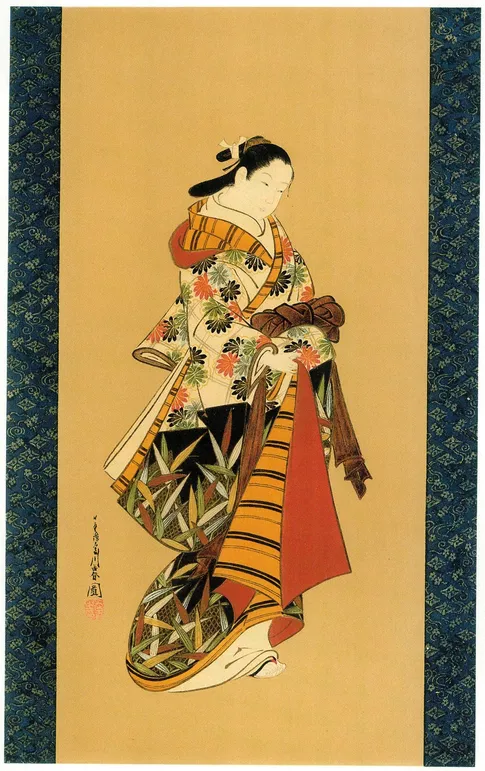
Takao, the courtesan of Yoshiwara; buff tinted paper with silk margins and rich colored paint; Miyagawa Chosun.
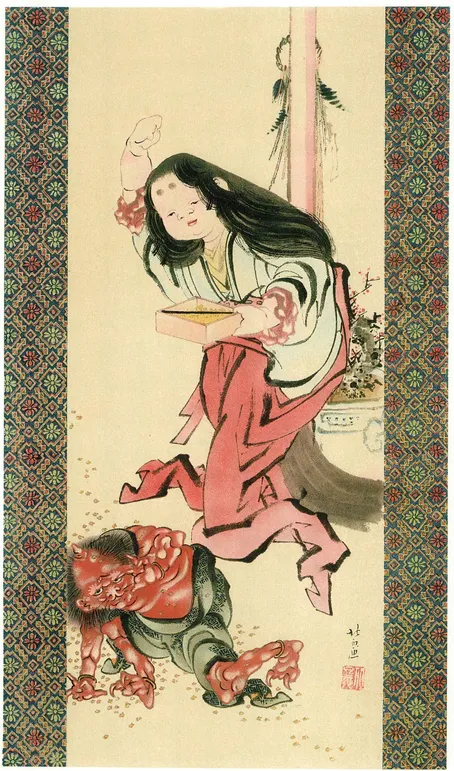
Ofuku throwing beans at a demon (represents good fortune); Knkemollo painting; silk-bordered paper and paint in transparent colors laid with large brushstrokes; Hokusai.
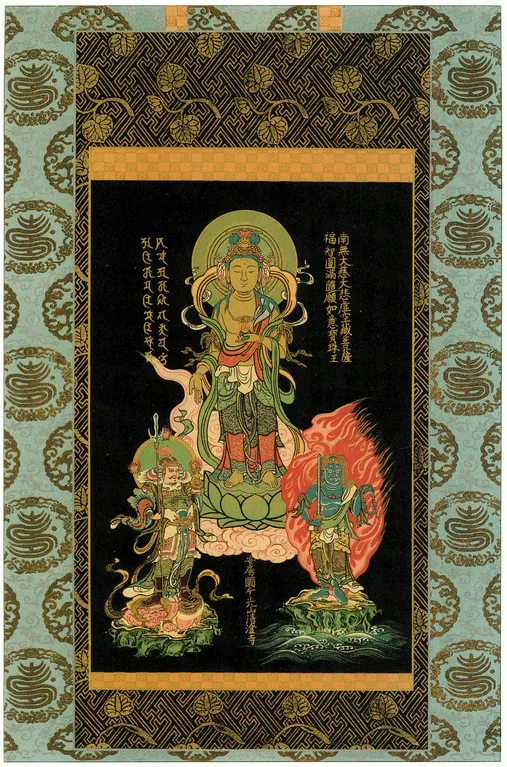
Kokuz
Bosatsu, the Bodhisavatta of Benevolence, Fud
, the Flame God, and Bishaman, one of the Deva Kings; Kakemono painting; silk-bordered paper, gold, and paint.
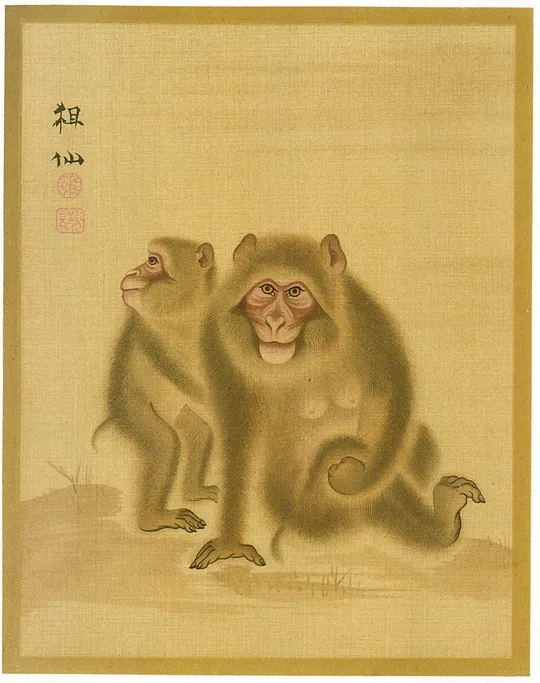
Ori-han painting of monkeys in broad washes and penciling on e-ginu (picture silk) prepared with d
-sa.
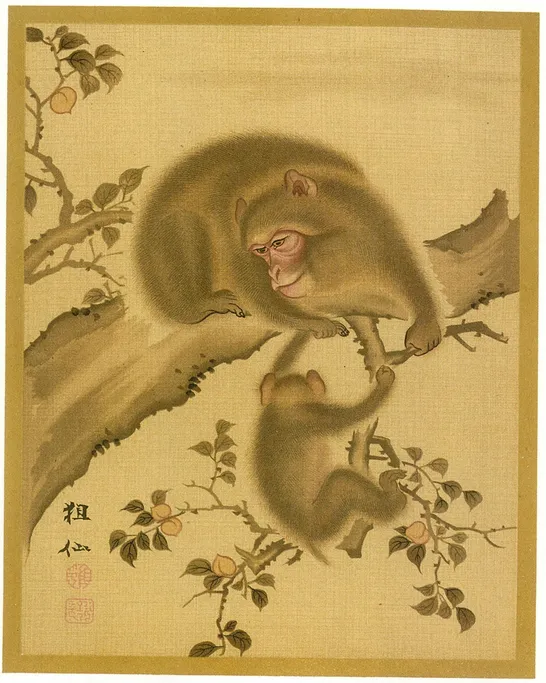
Ori-han painting of monkeys in broad washes and penciling on e-ginu (picture silk) prepared with d
-sa.
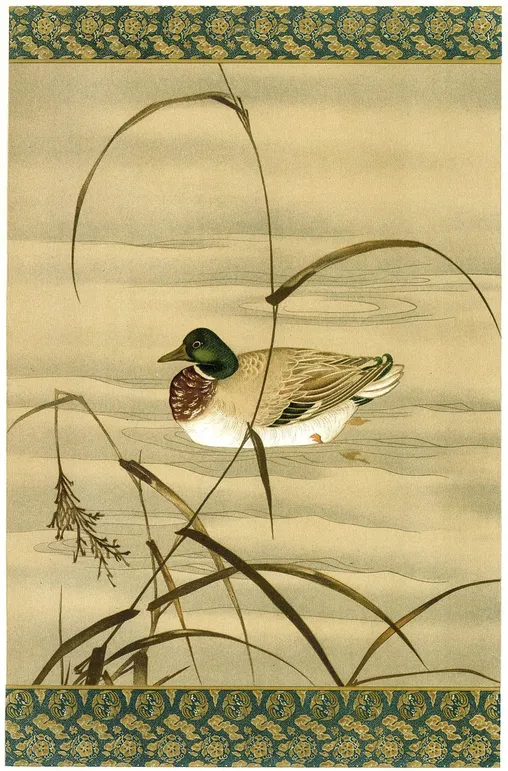
Chirimen (crape silk) stained with gray tints; waterlines, duck, and plants are dyes; head, neck, and tail feathers are stitched with green silk; embroidered feathers; Nishi Mura.