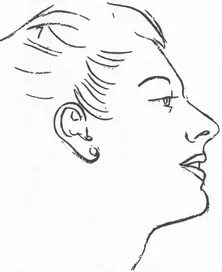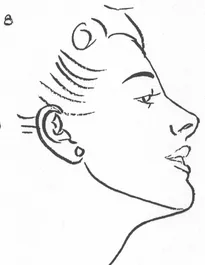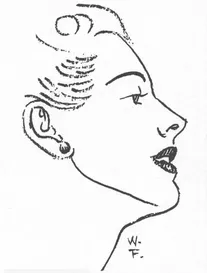
An accomplished artist and teacher, Walter T. Foster began producing his classic art instruction books in the 1920s. He wrote, illustrated, printed, bound, packaged, shipped, and distributed his books from his own home for decades, before moving the business to a commercial facility to accommodate his international trade. This comprehensive volume combines four of the artist's vintage instructional manuals to form an essential guide to illustrating the head and face. "Let your drawing be simple," Foster advises, and suggests that art students begin with the profile. Leave out unnecessary details until the basic shapes are in place. Then add the expressions that make the face the most interesting of all subjects. Instructions include step-by-step diagrams using charcoal, crayon, pencil, and brush to create finished portraits, plus tips on materials. With an array of subjects that include men, women, and children of various ages and ethnic types, this guide captures the mid-twentieth-century style of illustration to inspire today's artists.
Frequently asked questions
Yes, you can cancel anytime from the Subscription tab in your account settings on the Perlego website. Your subscription will stay active until the end of your current billing period. Learn how to cancel your subscription.
No, books cannot be downloaded as external files, such as PDFs, for use outside of Perlego. However, you can download books within the Perlego app for offline reading on mobile or tablet. Learn more here.
Perlego offers two plans: Essential and Complete
Essential is ideal for learners and professionals who enjoy exploring a wide range of subjects. Access the Essential Library with 800,000+ trusted titles and best-sellers across business, personal growth, and the humanities. Includes unlimited reading time and Standard Read Aloud voice.
Complete: Perfect for advanced learners and researchers needing full, unrestricted access. Unlock 1.4M+ books across hundreds of subjects, including academic and specialized titles. The Complete Plan also includes advanced features like Premium Read Aloud and Research Assistant.
Both plans are available with monthly, semester, or annual billing cycles.
We are an online textbook subscription service, where you can get access to an entire online library for less than the price of a single book per month. With over 1 million books across 1000+ topics, we’ve got you covered! Learn more here.
Look out for the read-aloud symbol on your next book to see if you can listen to it. The read-aloud tool reads text aloud for you, highlighting the text as it is being read. You can pause it, speed it up and slow it down. Learn more here.
Yes! You can use the Perlego app on both iOS or Android devices to read anytime, anywhere — even offline. Perfect for commutes or when you’re on the go. Please note we cannot support devices running on iOS 13 and Android 7 or earlier. Learn more about using the app.
Yes, you can access Drawing the Head by Walter T. Foster in PDF and/or ePUB format, as well as other popular books in Art & Art Techniques. We have over one million books available in our catalogue for you to explore.
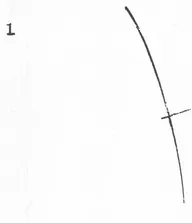
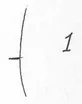
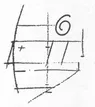
Draw a slightly curved line, placing line for nose half way. This is the best way to start.
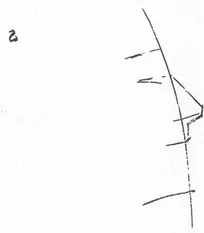
Now the eyebrow and the chin line. The mouth is one-third from nose to chin.
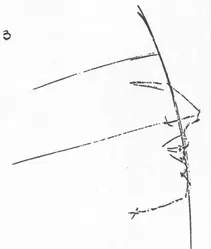
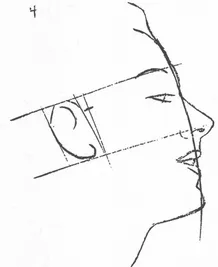
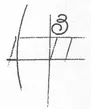
If head is tipped, start line from eyebrow and nose. This will give you the placement of ear.
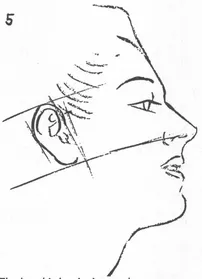
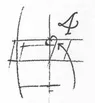
The distance from eyebrow to chin will give you back of ear, and it fits in an oblong box.
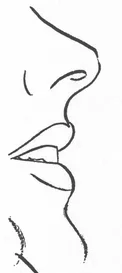
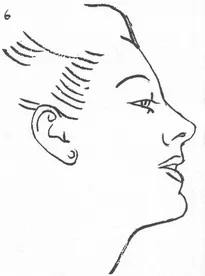
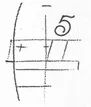
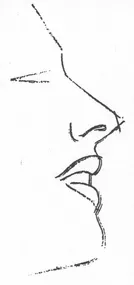
The head is beginning to shape up so now form up nose, mouth and chin, as well as ear.
Erase your guide lines and soften your outlines so it will be easy to draw over them.
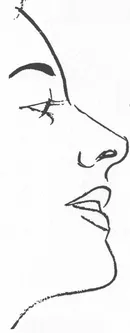
You will, and should, make many changes to get the right expression on face, shape of nose and mouth, etc.
It does not make any difference what the size of the head is, the method is the same. Try drawing all sizes.
Your outline is ready for color or shading. It is most important that this be right.
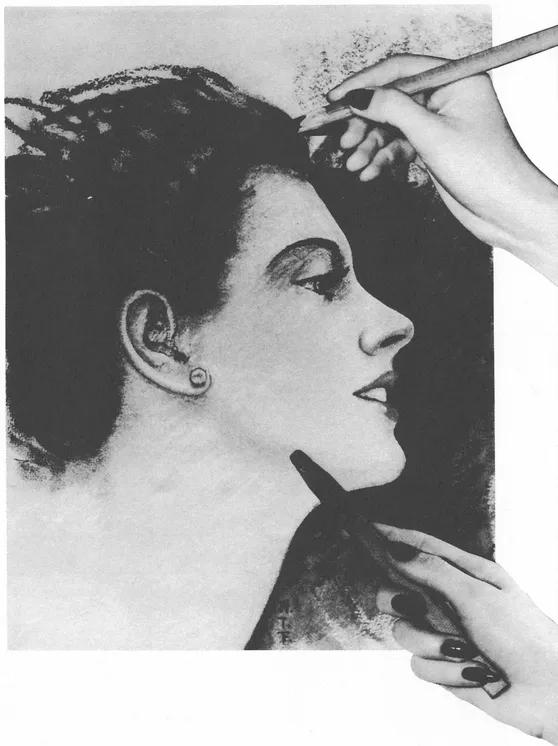
The PROFILE of head is the best way to start. If you are right-handed you will generally pick the left profile and if left-handed you will naturally choose the right profile. Why? That is a good question, but see that you do not do all rights or lefts but be able to do either equally well. The same with the front and three-quarter views of the head. Your life does not depend upon a masterpiece so just have fun and enjoy doing each pose.
Yours Sincerely,
First draw a curve line (, then decide on length of nose you want.
Extend lines back, measuring two nose-lengths from eyebrow, giving tip of ear—draw line parallel , to nose-line.
Draw vertical line touching ear-line, as shown above. This gives center of head.
Distance between vertical line and the ear-line will give you center of head and eye-line. The ear width is two-thirds its length.
Two nose lengths from center of head will give you chin and top of head. The head being four nose lengths high.
From nose-line to center of head will give you back of head. Back of collar is on a line with the mouth. The mouth is one-third the distance between nose and chin.
THE Head is the most interesting of all objects to draw. Your drawing can express joy, fear, hate, sadness and run the gamut of emotions. It is well to start with the profile, memorizing the proportions. This will not take long and you have it right here on the margin. (1, 2, 3, 4, 5, 6.) Do it now before you start...