This incisive text provides a basic undergraduate-level course in modern optics for students in physics, technology and engineering. The first half of the book deals with classical physical optics; the second principally with the quantum nature of light. Chapters 1 and 2 treat the propagation of light waves, including the concepts of phase and group velocities, and the vectorial nature of light. Chapter 3 applies the concepts of partial coherence and coherence length to the study of interference, and Chapter 4 takes up multiple-beam interference and includes Fabry-Perot interferometry and multilayer-film theory. Diffraction and holography are the subjects of Chapter 5, and the propagation of light in material media (including crystal and nonlinear optics) are central to Chapter 6. Chapters 7 and 8 introduce the quantum theory of light and elementary optical spectra, and Chapter 9 explores the theory of light amplification and lasers. Chapter 10 briefly outlines ray optics in order to introduce students to the matrix method for treating optical systems and to apply the ray matrix to the study of laser resonators.
Many applications of the laser to the study of optics are integrated throughout the text. The author assumes students have had an intermediate course in electricity and magnetism and some advanced mathematics beyond calculus. For classroom use, a list of problems is included at the end of each chapter, with selected answers at the end of the book.
- 352 pages
- English
- ePUB (mobile friendly)
- Available on iOS & Android
eBook - ePub
Introduction to Modern Optics
About this book
Information
CHAPTER 1
The Propagation of Light
1.1 Elementary Optical Phenomena and the Nature of Light
“Rays of light,” wrote Isaac Newton in his Treatise on Opticks, “are very small bodies emitted from shining substances.” Newton probably chose to regard light as corpuscular chiefly because of the fact that, in a given uniform medium, light appears to travel in straight-line paths. This is the so-called law of rectilinear propagation. The formation of shadows is a familiar example cited to illustrate it.
A contemporary of Newton’s, Christiaan Huygens (1629–1695), supported a different description, namely, that light is a “wave motion” spreading out from the source in all directions. The reader will recall the time-honored use of Huygens’ construction with primary waves and secondary wavelets to explain the elementary laws of reflection and refraction. Other optical facts that are well explained by the wave picture are interference phenomena such as the formation of bright and dark bands by reflection of light from thin films, and diffraction, or the spreading of light around obstacles.
Owing mainly to the genius of James Clerk Maxwell (1831–1879), we know today that visible light is merely one form of electromagnetic energy, usually described as electromagnetic waves, the complete spectrum of which includes radio waves, infrared radiation, the visible spectrum of colors red through violet, ultraviolet radiation, x-rays, and gamma radiation. Furthermore, from the quantum theory of light pioneered by Planck, Einstein, and Bohr during the first two decades of the twentieth century, we know that electromagnetic energy is quantized; that is, it can only be imparted to or taken from the electromagnetic field in discrete amounts called photons.
Thus the modern concept of light contains elements of both Newton’s and Huygens’ descriptions. Light is said to have a dual nature. Certain phenomena, such as interference, exhibit the wave character of light. Other phenomena, the photoelectric effect, for example, display the particle aspect of light.
If one were to ask the question “What is light, really?” there can be no simple answer. There is no familiar object or macroscopic model to employ as an analogy. But understanding need not be based on analogy. A consistent and unambiguous theoretical explanation of all optical phenomena is furnished jointly by Maxwell’s electromagnetic theory and the quantum theory. Maxwell’s theory treats the propagation of light, whereas the quantum theory describes the interaction of light and matter or the absorption and emission of light. The combined theory is known as quantum electrodynarnics. Since electromagnetic theory and quantum theory also explain many other physical phenomena in addition to those related to electromagnetic radiation, it can be fairly assumed that the nature of light is well understood, at least within the context of a mathematical framework that accurately accounts for present experimental observations. The question as to the “true” or “ultimate” nature of light, although as yet unanswered, is quite irrelevant to our study of optics.
1.2 Electrical Constants and the Speed of Light
At a point in empty space the electromagnetic state of the vacuum is said to be specified by two vectors, the electric field E and the magnetic field H. In the static case, that is, when the two fields do not change with time, E and H are independent of one another and are determined, respectively, by the distribution of charges and currents in all space. In the dynamic case, however, the fields are not independent. Their space and time derivatives are interrelated in a manner expressed by curl equations
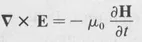
(1.1)
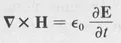
(1.2)
The divergence conditions

(1.3)

(1.4)
indicate the absence of any charge at the point in question. They are true in either the...
Table of contents
- Title Page
- Copyright Page
- Preface
- Table of Contents
- CHAPTER 1 - The Propagation of Light
- CHAPTER 2 - The Vectorial Nature of Light
- CHAPTER 3 - Coherence and Interference
- CHAPTER 4 - Multiple-Beam Interference
- CHAPTER 5 - Diffraction
- CHAPTER 6 - Optics of Solids
- CHAPTER 7 - Thermal Radiation and Light Quanta
- CHAPTER 8 - Optical Spectra
- CHAPTER 9 - Amplification of Light. Lasers
- CHAPTER 10 - Ray Optics
- APPENDIX I - Relativistic Optics
- REFERENCES
- ANSWERS TO SELECTED ODD-NUMBERED PROBLEMS
- Index
- A CATALOG OF SELECTED DOVER BOOKS IN SCIENCE AND MATHEMATICS
- DOVER BOOKS ON PHYSICS
Trusted by 375,005 students
Access to over 1.5 million titles for a fair monthly price.
Study more efficiently using our study tools.
Frequently asked questions
Yes, you can cancel anytime from the Subscription tab in your account settings on the Perlego website. Your subscription will stay active until the end of your current billing period. Learn how to cancel your subscription
No, books cannot be downloaded as external files, such as PDFs, for use outside of Perlego. However, you can download books within the Perlego app for offline reading on mobile or tablet. Learn how to download books offline
Perlego offers two plans: Essential and Complete
- Essential is ideal for learners and professionals who enjoy exploring a wide range of subjects. Access the Essential Library with 800,000+ trusted titles and best-sellers across business, personal growth, and the humanities. Includes unlimited reading time and Standard Read Aloud voice.
- Complete: Perfect for advanced learners and researchers needing full, unrestricted access. Unlock 1.5M+ books across hundreds of subjects, including academic and specialized titles. The Complete Plan also includes advanced features like Premium Read Aloud and Research Assistant.
We are an online textbook subscription service, where you can get access to an entire online library for less than the price of a single book per month. With over 1.5 million books across 990+ topics, we’ve got you covered! Learn about our mission
Look out for the read-aloud symbol on your next book to see if you can listen to it. The read-aloud tool reads text aloud for you, highlighting the text as it is being read. You can pause it, speed it up and slow it down. Learn more about Read Aloud
Yes! You can use the Perlego app on both iOS and Android devices to read anytime, anywhere — even offline. Perfect for commutes or when you’re on the go.
Please note we cannot support devices running on iOS 13 and Android 7 or earlier. Learn more about using the app
Please note we cannot support devices running on iOS 13 and Android 7 or earlier. Learn more about using the app
Yes, you can access Introduction to Modern Optics by Grant R. Fowles in PDF and/or ePUB format, as well as other popular books in Physical Sciences & Physics. We have over 1.5 million books available in our catalogue for you to explore.