This book explores the experience and value of dancing for people living with the neurodegenerative disorder Parkinson's disease. Linking aesthetic values to wellbeing, Sara Houston articulates the importance of the dancing experience for those with Parkinson's, and argues that the benefits of participatory dance are best understood through the experiences, lives, needs and challenges of people living with Parkinson's who have chosen to dance.
Presenting personal narratives from a study that investigates the experience of people with Parkinson's who dance, intertwined with the social and political contexts in which the dancers live, this volume examines the personal and systemic issues as well as the attitudes and identities that shape people's relationship to dance. Taking this new primary research as a starting point, Dancing with Parkinson's builds an argument for how dance becomes a way of helping people live well with Parkinson's.
Frequently asked questions
Yes, you can cancel anytime from the Subscription tab in your account settings on the Perlego website. Your subscription will stay active until the end of your current billing period. Learn how to cancel your subscription.
At the moment all of our mobile-responsive ePub books are available to download via the app. Most of our PDFs are also available to download and we're working on making the final remaining ones downloadable now. Learn more here.
Perlego offers two plans: Essential and Complete
Essential is ideal for learners and professionals who enjoy exploring a wide range of subjects. Access the Essential Library with 800,000+ trusted titles and best-sellers across business, personal growth, and the humanities. Includes unlimited reading time and Standard Read Aloud voice.
Complete: Perfect for advanced learners and researchers needing full, unrestricted access. Unlock 1.4M+ books across hundreds of subjects, including academic and specialized titles. The Complete Plan also includes advanced features like Premium Read Aloud and Research Assistant.
Both plans are available with monthly, semester, or annual billing cycles.
We are an online textbook subscription service, where you can get access to an entire online library for less than the price of a single book per month. With over 1 million books across 1000+ topics, we’ve got you covered! Learn more here.
Look out for the read-aloud symbol on your next book to see if you can listen to it. The read-aloud tool reads text aloud for you, highlighting the text as it is being read. You can pause it, speed it up and slow it down. Learn more here.
Yes! You can use the Perlego app on both iOS or Android devices to read anytime, anywhere — even offline. Perfect for commutes or when you’re on the go. Please note we cannot support devices running on iOS 13 and Android 7 or earlier. Learn more about using the app.
Yes, you can access Dancing with Parkinson's by Sara Houston in PDF and/or ePUB format, as well as other popular books in Media & Performing Arts & Diseases & Allergies. We have over one million books available in our catalogue for you to explore.
Although documents mentioning Parkinsonian behaviour date back to ancient Egypt (Palfreman 2015), James Parkinson, a doctor working in London in the early nineteenth century, is credited with the first detailed observations of the symptoms of the disease. He defined it as:
Shaking palsy. (paralysis agitans.)
Involuntary tremulous motion, with lessened muscular power, in parts not in action, even when supported; with a propensity to bend the trunk forward, and to pass from a walking to a running pace.
(Parkinson 1817: 1)
Parkinson wrote this description in 1817 after extensive observation of six people with ‘the shaking palsy’ in everyday settings. His acute analysis led to the disease being named after him.1 This chapter outlines some of the main symptoms of Parkinson’s, as well as highlighting issues of treatment and support. In keeping with the objective of the book to foreground the experiences of people with Parkinson’s through the voices of people living with the condition, it details the effects these symptoms have on individuals. In doing so, it expands descriptions of symptoms into what lived experiences of those symptoms are like for those with Parkinson’s. Most of the voices recorded in this chapter belong to the Parkinson’s dancers who participate in English National Ballet’s programme in London and Oxford.
Scientists are still studying the pathology that leads to Parkinson’s, a common chronic and degenerative condition. The causes of the disease are unknown. There are several theories as to the origin of Parkinson’s. Scientists have examined both potential genetic and environmental causes. Some of the ideas being investigated focus on bacteria in the gut and agricultural pesticides. Other studies concentrate on changes happening in the brain. One theory centres on the clumping of alpha-synuclein protein and a depletion of nerve cells in the substantia nigra, a part of the brain within the basal ganglia. As a result, the body gradually loses the chemical dopamine. Dopamine is a neurotransmitter that has several functions and what is clear so far is that post-mortem, brains of those who had Parkinson’s show depletion of dopamine. One of its functions is the control of voluntary movement. As dopamine lessens, movement slows down. It becomes difficult to initiate and, conversely, difficult to stop. It is no surprise that Parkinson’s is often termed a movement disorder. It is characterized by the cardinal (or primary) symptoms of a resting tremor, slowness of movement and rigidity of muscles. To be classified as having Parkinson’s a person must have at least two of these cardinal symptoms. They are likely to have several other non-motor symptoms too (those not associated with movement).
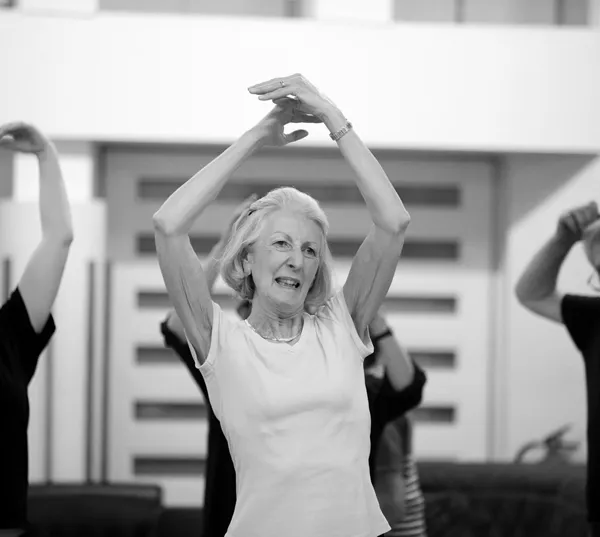
Figure 1: English National Ballet Dance for Parkinson’s London, photography by Rachel Cherry.
Tremor
The primary physical manifestation that people associate with the condition is tremor, although only 70 per cent of people with Parkinson’s develop one. As a visible symbol of a lack of control and that something is wrong with the body, tremor can become a source of anxiety. Commonly first found in a hand or foot, the Parkinsonian tremor manifests itself as a small, steady ‘pill-rolling’ action (Schapira 2008: 17). Characterized as a resting tremor, it is more noticeable when the hand or foot is at rest, than when carrying out an action. It may be more noticeable when the person is stressed or anxious. The tremor may progress to become more violent and intrusive, interfering in people’s ability to carry out fine motor tasks, such as fastening a button, writing or holding an object. Pat K (2010) noted that it interfered with her concentration. Roy K (2010) confessed to keeping his hand in his pocket so as to disguise the fact that he had a tremor. The worry about how children might perceive her tremor as frightening, and not knowing how to explain it to them, stopped Josephine DG (2013) helping children read at school. Josephine DG and Roy K’s behaviour is not unusual, particularly for people who are newly diagnosed. Anthropologist Samantha Solimeo (2009) notes that tremor often is seen as socially embarrassing by those who develop it, and many place a self-imposed curb on particular social practices. Solimeo describes that some people with Parkinson’s decide not to participate in social customs, such as shaking hands, in order to disguise tremor, but then risk being labelled as unfriendly. She highlights one woman who stopped paying for goods with small change as it was too embarrassing getting money out of her purse.
One consequence of dealing with shaking, with trying to concentrate to accomplish tasks or keep on balance, is that it is very tiring, particularly as some medication also encourages somnolence. Josephine DG (2013) wrote in her diary: ‘I have been trying to write this all week but half way through each day I flag, fatigued, it’s like living a half-life’. Many of Sue C’s diary entries begin like this one: ‘FATIGUE – dreadful dragging pain in my back, sagging deportment, and completely empty head’ (Sue C 2013). Fatigue affects many people with Parkinson’s, but it is under-acknowledged (Schulman et al. 2002; EPDA 2014). Palfreman (2015) notes that because of the traditional conception of Parkinson’s as a dopamine-deficient movement disorder, clinicians are not so conversant with the non-motor symptoms, particularly as some are challenges for older people in general. In Olsson, Stafström and Söderberg’s phenomenological study of fatigue in women with Parkinson’s (2013), 42 per cent characterize it as one of the worst symptoms they had developed. The women in this study came to see their body as an unpredictable burden and felt a sense of inertia, unable to function socially as well as before. As Parkinson’s fluctuates in intensity, fatigue does also, often appearing without warning.
Bradykinesia
Movement slowness is technically termed ‘bradykinesia’ and is another cardinal symptom. Bradykinesia looks like a hesitation within an action, not so much a pause as a lingering over one movement. It is a fragile hesitation, lacking in physical power, and the action may never reach its full conclusion. Josephine DG (2013) writes in her diary: ‘I’m slow at everything, bathing, dressing, cooking, thinking. Coffee is cold before I’ve finished a cup’. Specific manifestations of bradykinesia beyond general slowness are, for example, constipation and facial masking. Constipation is common as digestion slows down, but the urge to empty one’s bladder is often heightened. Facial muscles do not work as well, leading to a characteristic mask-like appearance, where expressions of emotions are not readily communicated. Gary, writing to the European Parkinson’s Disease Association (EPDA), explains that he does ‘not smile easily, my face is stiff and without expression. This can cause misunderstanding when my grandchildren show me their latest book or picture; they cannot see that I am smiling inside’ (cited in EPDA 2011: 9).
Muscular rigidity
Muscular rigidity is the third cardinal symptom. It may manifest itself in cramps and pain. Carroll F (2013) describes the cramps in her right arm and that she has difficulty opening bottles because of them: ‘I tried to open a bottle of bleach today and couldn’t. It’s so frustrating. Even if I want to do the housework I can’t’. An associated condition, dystonia, where muscles contract involuntarily, may also present in people with Parkinson’s. Jane D’A (2010) describes the feeling of dystonia as ‘stiff and starchy’. On another occasion she mentions that ‘I’m slow and stiff and my toes feel as if they’re curling underneath. I’m not feeling in control’ (Jane D’A 2011).
Often stiffness and slowness combine to frustrating ends. The combination of rigidity and bradykinesia leads to a smaller range of movement, which affects both whole body and functional movement. For example, a person with Parkinson’s may find it difficult to accomplish fine motor tasks. Paul Q (2012) confesses that his ‘hands are not as nimble. I have trouble doing up buttons. It’s frustrating. Shoe laces too’. Daily tasks and some physical tasks that were integral to working or pleasure are particularly affected. Some people mention difficulty in washing hair. John H (2012), who had been a successful graphic designer, cannot draw any more. Sue C (2013) explains she gave up playing the organ at her local church because she became ‘too disconnected (uncoordinated is the word I’m looking for) between my brain and fingers’. She articulates clearly that even though she knows what she wants to do, her body does not carry out her wishes. For others, muscles that influence swallowing with increased rigidity cause drooling and difficulty in eating, with the added danger of choking.
Instability
Stiffness and slowness combine to create situations where not only might a person be challenged in completing everyday tasks, but more dangerously where a person is at risk of losing balance. Falling over is a consequence of gait dysfunction and postural instability as Parkinson’s progresses. Often a leg will drag, steps become uneven, heels cease to dig into the floor and toes inadequately clear the floor, transforming the walk into a shuffle. Hips, knees and ankles may not bend and flex easily, and the pelvis ceases to be the main driver for leading the body forward. Instead, the chin may lead as the spine starts to curve either forwards or sideways, the chest sinking inward as the neck extends outward. The arms, so important in the rhythmic propulsion and stability of movement, cease to swing: first one, then both as time goes by. The arms are held close to the body, elbows half bent close to the waist as hands stick out forwards. The solidity of the arms is accompanied by stiffness in the torso. A typical walk involves not only the swing of the arms, but also the twisting of the trunk in the opposite direction to the rotation of the pelvis. As muscles become more rigid and arms stop swinging, so the torso stops twisting. Contralateral movement stops and fluid movement becomes harder to accomplish. The eyes often stare ahead, with the head fixed in one position as the person walks, not looking around to be aware of where he or she is going, or to contribute to the delicate art of keeping on balance whilst shifting the weight from one leg to the other. Sometimes festination will develop, as described by Parkinson: uneven steps become quicker, closer together, accelerating until the upper body propels itself forward away from the increasingly smaller yet quicker footsteps until the person is at risk of falling over.
Unexpectedly, their atypical walk does not seem to be so much of a focus when people talk about their symptoms. After all, as Margaret P (2013) commented, ‘this is natural to us to walk in this way’. More traumatic is the risk of falling over. Many people express how vulnerable they feel when they realize that their sense of balance has eroded. Charlotte J (2013) expressed it like this: ‘I miss balance. Without balance it is terrible, I live in constant fear of falling, I really do. I am terrified of falling. I have dreams about falling. I fall quite often’. Paul M describes a particular situation on the London Underground (known as ‘the tube’) where losing balance becomes more likely:
One of the things with Parkinson’s is I have become much more aware of gravity. Gravity is quite the enemy really […]. You’ve got to get yourself upright and not trip, because that seems to be one of the main things of people with Parkinson’s, falling over […]. Especially the tube, getting off the tube in crowds is quite complex. Once you start noticing people walking in a straight line that goes right through you, they’re not going to go around you, you have to slow down and start negotiating space. It can be very disorientating.
(Paul M 2013)
A person’s relationship to space changes with the onset of Parkinson’s and balance is affected by this. John H describes his specific problem:
If you’re doing something, you’ve got physical restrictions – buttons, cuffs etc. – it interrupts everything. You have to have focus and so you are oblivious to the things around you. If you focus too much you fall over. I’m a champion of falling over. I’ve dislocated three fingers. If there are so many surroundings it confuses you. I was staying with my mum in her flat. In the hall there are five doors. It confuses me. I’ve fallen over there although I didn’t tell. She’s 99 and she worries about me.
(John H 2012)
‘Illusions of scale’ and disorientation
The disorientation that Paul M feels negotiating crowded spaces and that John H feels when faced with a hallway with five doors manifests itself physically in loss of balance and often in an inability to move. The complex pathways that a typical person would invent to track space through a crowded room, or the quick decisions to dodge sideways, or the ability to take in multiple doorways all at once are not always available to a person with Parkinson’s. His or her ability to navigate the world of textures and fluctuating 3D negative and positive spaces can be partial, particularly if his or her eyesight also is deteriorating.
This embodied confusion runs parallel to the shrinking of a person’s personal space, or kinesphere. Arms may stick to a person’s side as posture droops, steps may become smaller, eye focus may narrow and limbs may fail to stretch out to their extremities. Voices may diminish in strength. Sacks describes this diminishing of space and disorientation, as seen in John H’s story, as a case of space-time judgements ‘being pushed out of shape’ (Sacks [1973] 1990: 344). From time to time perception of space contracts, warps and twists for someone with Parkinson’s, causing what Sacks calls ‘illusions of scale’ (Sacks [1973] 1990: 340) that result in disorientation, loss of balance and gait disturbances. Movement, the occupation of space through time, is distracted by a disjuncture between perception and actual physical motion, as well as the dual, but contradictory, problems of starting and stopping. The brain’s confusion translates directly into how people move.
Situations where improvisation is needed and quick thinking and action are necessary require much processing from the brain and a reliance on the body to move and adapt immediately. In these situations, automatic movement, which is achieved without conscious thought, is extremely useful. The basal ganglia, affected in Parkinson’s, are tasked with the role of creating automatic movement. These areas of the brain also allow multitasking to happen. Jon Palfreman, a science journalist and a person with Parkinson’s, explains the problem:
Having Parkinson’s feels a bit like going on vacation in another country and having to drive on the ‘wrong’ side of the road. Driving is one of those activities that we outsource, in large part, to the basal ganglia […]. To compensate, the American motorist [driving in Britain] must invoke the conscious, deliberate, mindful, and goal-directed part of his brain – the cortex – to override the basal ganglia. The driving will be difficult, partly because the conscious brain is now doing all the work, but mainly because it’s having to compensate for the basal ganglia’s signals that are inappropriate for the situation at hand.
(Palfreman 2015: 61)
If the signals are incomplete, misfiring and confused, the body will not respond quickly or effectively to a complicated, moving obstacle course, such as the London Underground at rush hour, or to choosing one of five similar looking doors in a hallway.
One of the most dramatic symptoms allied to festination, disorientation and attempts to multitask is called ‘freezing’. A person suddenly feels they cannot move even if they want to. Sacks’ patient, Frances D, explained: ‘I don’t just come to a halt. I am still going, but I have run out of space to move in’ (cited in Sacks [1973] 1990: 339, original emphasis). Jane D’A (2010) finds it happening to her when going through doorways, from one surface to another: ‘All of a sudden you stop and cannot under any circumstances move. It’s like a tonne weight on your foot. I’m stuck’. While Frances D links freezing to space contracting, Jane D’A notes the somatic response and the way that texture – moving from one surface to another – may trigger a misjudgement of space. For Pat C, her tendency to freeze has social implications. It is embarrassing: ‘If I’m frozen I can’t get going and I feel mortified’ (Pat C 2012). Charlotte J explains:
My walking isn’t good. I have a very traditional Parkinson’s problem, which is walking a few steps and then freezing. I’ve frozen in the middle of the road. I was crossing in the middle of the road, and the lorry came along and did that to me [makes a gesture to move along], then he flashed his lights at me, then he did this again [does gesture again], then he started swearing at me, then another car came from the other direction, and starting saying this [makes the waving gesture again]. And I was just frozen, I couldn’t do anything. It was terrible.
(Charlotte J 2013)
Other people living with Parkinson’s echo the embarrassment felt by many of those who freeze. The general public often do not understand particular behaviour symptomatic of Parkinson’s and misinterpretation can cause discomfort or humiliation. Renée A has Parkinson’s and writes poetry when she cannot sleep at night. She told me about one poem ‘Besoffen?’ (‘Drunk?’) which describes an incident she experienced that is typical of many people with Parkinson’s, who experience gait dysfunction:
I called this one ‘Drunk’ because of people thinking often that I am drunk! That’s because of the way I walk in my bad moments as someone with Parkinson’s. They may think whatever they want, but I was shocked when people I don’t know and who don’t know me asked me on the street why I am drinking so much. The fact is that I was never drunk in my whole life! That’s unbelievable! Must I explain the way I am walking? A few weeks ago a man of my age, I was shopping […] and he past me and looked at me from top to toe, you know what I mean, and then he observ...