![]()
CHAPTER I.
ANCESTRY—BIRTH—BOYHOOD.
MY family is American, and has been for generations, in all its branches, direct and collateral.
Mathew Grant, the founder of the branch in America, of which I am a descendant, reached Dorchester, Massachusetts, in May, 1630. In 1635 he moved to what is now Windsor, Connecticut, and was the surveyor for that colony for more than forty years. He was also, for many years of the time, town clerk. He was a married man when he arrived at Dorchester, but his children were all born in this country. His eldest son, Samuel, took lands on the east side of the Connecticut River, opposite Windsor, which have been held and occupied by descendants of his to this day.
I am of the eighth generation from Mathew Grant, and seventh from Samuel. Mathew Grant’s first wife died a few years after their settlement in Windsor, and he soon after married the widow Rockwell, who, with her first husband, had been fellow-passengers with him and his first wife, on the ship Mary and John, from Dorchester, England, in 1630. Mrs. Rockwell had several children by her first marriage, and others by her second. By intermarriage, two or three generations later, I am descended from both the wives of Mathew Grant.
In the fifth descending generation my great grandfather, Noah Grant, and his younger brother, Solomon, held commissions in the English army, in 1756, in the war against the French and Indians. Both were killed that year.
My grandfather, also named Noah, was then but nine years old. At the breaking out of the war of the Revolution, after the battles of Concord and Lexington, he went with a Connecticut company to join the Continental army, and was present at the battle of Bunker Hill. He served until the fall of Yorktown, or through the entire Revolutionary war. He must, however, have been on furlough part of the time—as I believe most of the soldiers of that period were—for he married in Connecticut during the war, had two children, and was a widower at the close. Soon after this he emigrated to Westmoreland County, Pennsylvania, and settled near the town of Greensburg in that county. He took with him the younger of his two children, Peter Grant. The elder, Solomon, remained with his relatives in Connecticut until old enough to do for himself, when he emigrated to the British West Indies.
Not long after his settlement in Pennsylvania, my grandfather, Captain Noah Grant, married a Miss Kelly, and in 1799 he emigrated again, this time to Ohio, and settled where the town of Deerfield now stands. He had now five children, including Peter, a son by his first marriage. My father, Jesse R. Grant, was the second child—oldest son, by the second marriage.
Peter Grant went early to Maysville, Kentucky, where he was very prosperous, married, had a family of nine children, and was drowned at the mouth of the Kanawha River, Virginia, in 1825, being at the time one of the wealthy men of the West.
My grandmother Grant died in 1805, leaving seven children. This broke up the family. Captain Noah Grant was not thrifty in the way of “laying up stores on earth,” and, after the death of his second wife, he went, with the two youngest children, to live with his son Peter, in Maysville. The rest of the family found homes in the neighborhood of Deerfield, my father in the family of Judge Tod, the father of the late Governor Tod, of Ohio. His industry and independence of character were such, that I imagine his labor compensated fully for the expense of his maintenance.
There must have been a cordiality in his welcome into the Tod family, for to the day of his death he looked upon Judge Tod and his wife, with all the reverence he could have felt if they had been parents instead of benefactors. I have often heard him speak of Mrs. Tod as the most admirable woman he had ever known. He remained with the Tod family only a few years, until old enough to learn a trade. He went first, I believe, with his half-brother, Peter Grant, who, though not a tanner himself, owned a tannery in Maysville, Kentucky. Here he learned his trade, and in a few years returned to Deerfield and worked for, and lived in the family of a Mr. Brown, the father of John Brown—“whose body lies mouldering in the grave, while his soul goes marching on.” I have often heard my father speak of John Brown, particularly since the events at Harper’s Ferry. Brown was a boy when they lived in the same house, but he knew him afterwards, and regarded him as a man of great purity of character, of high moral and physical courage, but a fanatic and extremist in whatever he advocated. It was certainly the act of an insane man to attempt the invasion of the South, and the overthrow of slavery, with less than twenty men.
My father set up for himself in business, establishing a tannery at Ravenna, the county seat of Portage County. In a few years he removed from Ravenna, and set up the same business at Point Pleasant, Clermont County, Ohio.
During the minority of my father, the West afforded but poor facilities for the most opulent of the youth to acquire an education, and the majority were dependent, almost exclusively, upon their own exertions for whatever learning they obtained. I have often heard him say that his time at school was limited to six months, when he was very young, too young, indeed, to learn much, or to appreciate the advantages of an education, and to a “quarter’s schooling” afterwards, probably while living with Judge Tod. But his thirst for education was intense. He learned rapidly, and was a constant reader up to the day of his death—in his eightieth year. Books were scarce in the Western Reserve during his youth, but he read every book he could borrow in the neighborhood where he lived. This scarcity gave him the early habit of studying everything he read, so that when he got through with a book, he knew everything in it. The habit continued through life. Even after reading the daily papers—which he never neglected—he could give all the important information they contained. He made himself an excellent English scholar, and before he was twenty years of age was a constant contributor to Western newspapers, and was also, from that time until he was fifty years old, an able debater in the societies for this purpose, which were common in the West at that time. He always took an active part in politics, but was never a candidate for office, except, I believe, that he was the first Mayor of Georgetown. He supported Jackson for the Presidency; but he was a Whig, a great admirer of Henry Clay, and never voted for any other democrat for high office after Jackson.
My mother’s family lived in Montgomery County, Pennsylvania, for several generations. I have little information about her ancestors. Her family took no interest in genealogy, so that my grandfather, who died when I was sixteen years old, knew only back to his grandfather. On the other side, my father took a great interest in the subject, and in his researches, he found that there was an entailed estate in Windsor, Connecticut, belonging to the family, to which his nephew, Lawson Grant—still living—was the heir. He was so much interested in the subject that he got his nephew to empower him to act in the matter, and in 1832 or 1833, when I was a boy ten or eleven years old, he went to Windsor, proved the title beyond dispute, and perfected the claim of the owners for a consideration—three thousand dollars, I think. I remember the circumstance well, and remember, too, hearing him say on his return that he found some widows living on the property, who had little or nothing beyond their homes. From these he refused to receive any recompense.
My mother’s father, John Simpson, moved from Montgomery County, Pennsylvania, to Clermont County, Ohio, about the year 1819, taking with him his four children, three daughters and one son. My mother, Hannah Simpson, was the third of these children, and was then over twenty years of age. Her oldest sister was at that time married, and had several children. She still lives in Clermont County at this writing, October 5th, 1884, and is over ninety years of age. Until her memory failed her, a few years ago, she thought the country ruined beyond recovery when the Democratic party lost control in 1860. Her family, which was large, inherited her views, with the exception of one son who settled in Kentucky before the war. He was the only one of the children who entered the volunteer service to suppress the rebellion.
Her brother, next of age and now past eighty-eight, is also still living in Clermont County, within a few miles of the old homestead, and is as active in mind as ever. He was a supporter of the Government during the war, and remains a firm believer, that national success by the Democratic party means irretrievable ruin.
In June, 1821, my father, Jesse R. Grant, married Hannah Simpson. I was born on the 27th of April, 1822, at Point Pleasant, Clermont County, Ohio. In the fall of 1823 we moved to Georgetown, the county seat of Brown, the adjoining county east. This place remained my home, until at the age of seventeen, in 1839, I went to West Point.
The schools, at the time of which I write, were very indifferent. There were no free schools, and none in which the scholars were classified. They were all supported by subscription, and a single teacher—who was often a man or a woman incapable of teaching much, even if they imparted all they knew—would have thirty or forty scholars, male and female, from the infant learning the A B C’s up to the young lady of eighteen and the boy of twenty, studying the highest branches taught—the three R’s, “Reading, ‘Riting, ’Rithmetic.” I never saw an algebra, or other mathematical work higher than the arithmetic, in Georgetown, until after I was appointed to West Point. I then bought a work on algebra in Cincinnati; but having no teacher it was Greek to me.
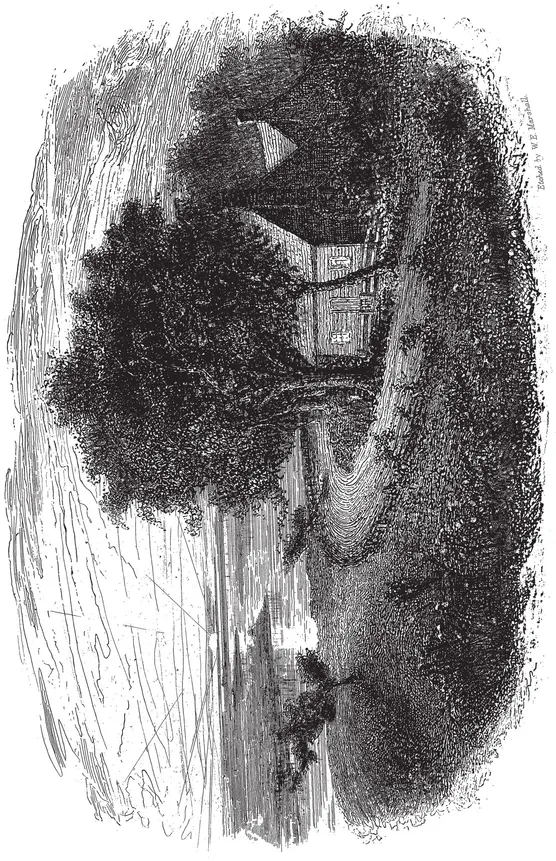
BIRTH-PLACE OF GENERAL U.S. GRANT
POINT PLEASANT, OHIO.
My life in Georgetown was uneventful. From the age of five or six until seventeen, I attended the subscription schools of the village, except during the winters of 1836-7 and 1838-9. The former period was spent in Maysville, Kentucky, attending the school of Richardson and Rand; the latter in Ripley, Ohio, at a private school. I was not studious in habit, and probably did not make progress enough to compensate for the outlay for board and tuition. At all events both winters were spent in going over the same old arithmetic which I knew every word of before, and repeating: “A noun is the name of a thing,” which I had also heard my Georgetown teachers repeat, until I had come to believe it—but I cast no reflections upon my old teacher, Richardson. He turned out bright scholars from his school, many of whom have filled conspicuous places in the service of their States. Two of my cotemporaries there—who, I believe, never attended any other institution of learning—have held seats in Congress, and one, if not both, other high offices; these are Wadsworth and Brewster.
My father was, from my earliest recollection, in comfortable circumstances, considering the times, his place of residence, and the community in which he lived. Mindful of his own lack of facilities for acquiring an education, his greatest desire in maturer years was for the education of his children. Consequently, as stated before, I never missed a quarter from school from the time I was old enough to attend till the time of leaving home. This did not exempt me from labor. In my early days, every one labored more or less, in the region where my youth was spent, and more in proportion to their private means. It was only the very poor who were exempt. While my father carried on the manufacture of leather and worked at the trade himself, he owned and tilled considerable land. I detested the trade, preferring almost any other labor; but I was fond of agriculture, and of all employment in which horses were used. We had, among other lands, fifty acres of forest within a mile of the village. In the fall of the year choppers were employed to cut enough wood to last a twelvemonth. When I was seven or eight years of age, I began hauling all the wood used in the house and shops. I could not load it on the wagons, of course, at that time, but I could drive, and the choppers would load, and some one at the house unload. When about eleven years old, I was strong enough to hold a plough. From that age until seventeen I did all the work done with horses, such as breaking up the land, furrowing, ploughing corn and potatoes, bringing in the crops when harvested, hauling all the wood, besides tending two or three horses, a cow or two, and sawing wood for stoves, etc., while still attending school. For this I was compensated by the fact that there was never any scolding or punishing by my parents; no objection to rational enjoyments, such as fishing, going to the creek a mile away to swim in summer, taking a horse and visiting my grandparents in the adjoining county, fifteen miles off, skating on the ice in winter, or taking a horse and sleigh when there was snow on the ground.
While still quite young I had visited Cincinnati, forty-five miles away, several times, alone; also Maysville, Kentucky, often, and once Louisville. The journey to Louisville was a big one for a boy of that day. I had also gone once with a two-horse carriage to Chilicothe, about seventy miles, with a neighbor’s family, who were removing to Toledo, Ohio, and returned alone; and had gone once, in like manner, to Flat Rock, Kentucky, about seventy miles away. On this latter occasion I was fifteen years of age. While at Flat Rock, at the house of a Mr. Payne, whom I was visiting with his brother, a neighbor of ours in Georgetown, I saw a very fine saddle horse, which I rather coveted, and proposed to Mr. Payne, the owner, to trade him for one of the two I was driving. Payne hesitated to trade with a boy, but asking his brother about it, the latter told him that it would be all right, that I was allowed to do as I pleased with the horses. I was seventy miles from home, with a carriage to take back, and Mr. Payne said he did not know that his horse had ever had a collar on. I asked to have him hitched to a farm wagon and we would soon see whether he would work. It was soon evident that the horse had never worn harness before; but he showed no viciousness, and I expressed a confidence that I could manage him. A trade was at once struck, I receiving ten dollars difference.
The next day Mr. Payne, of Georgetown, and I started on our return. We got along very well for a few miles, when we encountered a ferocious dog that frightened the horses and made them run. The new animal kicked at every jump he made. I got the horses stopped, however, before any damage was done, and without running into anything. After giving them a little rest, to quiet their fears, we started again. That instant the new horse kicked, and started to run once more. The road we were on, struck the turnpike within half a mile of the point where the second runaway commenced, and there there was an embankment twenty or more feet deep on the opposite side of the pike. I got the horses stopped on the very brink of the precipice. My new horse was terribly frightened and trembled like an aspen; but he was not half so badly frightened as my companion, Mr. Payne, who deserted me after this last experience, and took passage on a freight wagon for Maysville. Every time I attempted to start, my new horse would commence to kick. I was in quite a dilemma for a time. Once in Maysville I could borrow a horse from an uncle who lived there; but I was more than a day’s travel from that point. Finally I took out my bandanna—the style of handkerchief in universal use then—and with this blindfolded my horse. In this way I reached Maysville safely the next day, no doubt much to the surprise of my friend. Here I borrowed a horse from my uncle, and the following day we proceeded on our journey.
About half my school-days in Georgetown were spent at the school of John D. White, a North Carolinian, and the father of Chilton White who represented the district in Congress for one term during the rebellion. Mr. White was always a Democrat in politics, and Chilton followed his father. He had two older brothers—all three being school-mates of mine at their father’s school—who did not go the same way. The second brother died before the rebellion began; he was a Whig, and afterwards a Republican. His oldest brother was a Republican and brave soldier during the rebellion. Chilton is reported as having told of an earlier horse-trade of mine. As he told the story, there was a Mr. Ralston living within a few miles of the village, who owned a colt which I very much wanted. My father had offered twenty dollars for it, but Ralston wanted twenty-five. I was so anxious to have the colt, that after the owner left, I begged to be allowed to take him at the price demanded. My father yielded, but said twenty dollars was all the horse was worth, and told me to offer that price; if it was not accepted I was to offer twenty-two and a half, and if that would not get him, to give the twenty-five. I at once mounted a horse and went for the colt. When I got to Mr. Ralston’s house, I said to him: “Papa says I may offer you twenty dollars for the colt, but if you won’t take that, I am to offer twenty-two and a half, and if you won’t take that, to give you twenty-five.” It would not require a Connecticut man to guess the price finally agreed upon. This story is nearly true. I certainly showed very plainly that I had come for the colt and meant to have him. I could not have been over eight years old at the time. This transaction caused me great heart-burning. The story got out among the boys of the village, and it was a long time before I heard the last of it. Boys enjoy the misery of their companions, at least village boys in that day did, and in later life I have found that all adults are not free from the peculiarity. I kept the horse until he was four years old, when he went blind, and I sold him for twenty dollars. When I went to Maysville to school, in 1836, at the age of fourteen, I recognized my colt as one of the blind horses working on the tread-wheel of the ferry-boat.
I have described enough of my early life to give an impression of the whole. I did not like to work; but I did as much of it, while young, as grown men can be hired to do in these days, and attended school at the same time. I had as many privileges as any boy in the village, and probably more than most of them. I have no recollection of ever having been punished at home, either by scolding or by the rod. But at school the case was different. The rod was freely used there, and I was not exempt from its influence. I can see John D. White—the school teacher—now, with his long beech switch always in his hand. It was not always the same one, either. Switches were brought in bundles, from a beech wood near the school house, by the boys for whose benefit they were intended. Often a whole bundle would be used up in a single day. I never had any hard feelings against my teacher, either while attending the school, or in later years when reflecting upon my experience. Mr. White was a kind-hearted man, and was much respected by the community in which he lived. He only followed the universal custom of the period, and that under which he had received his own education.
![]()
CHAPTER II.
WEST POINT—GRADUATION.
IN the winter of 1838-9 I was attending school at Ripley, only ten miles distant from Georgetown, but spent the Christmas holidays at home. During this vacation my father received a letter from the Honorable Thomas Morris, then United States Senator from Ohio. When he read it he said to me, “Ulysses, I believe you are going to receive the appointment.” “What appointment?” I inquired. “To West Point; I have applied for it.” “But I won’t go,” I said. He said he thought I would, and I thought so too, if he did. I really had no objection to going to West Point, except that I had a very exalted idea of the acquirements necessary to get through. I did not believe I possessed them, and could not bear the idea of failing. There had been four boys from our village, or its immediate neighborhood, who had been graduated from West Point, and never a failure of any one appointed from Georgetown, except in the case of the one whose place I was to take. He was the son of Dr. Bailey, our nearest and most intimate neighbor. Young Bailey had been appointed in 1837. Finding before the January examination following, that he could not pass, he resigned and went to a private school, and remained there until the following year, when he was reappointed. Before the next examination he was dismissed. Dr. Bailey was a proud and sensitive man, and felt the failure of his son so keenly that he forbade his return home. There were no telegraphs in those days to disseminate news rapidly, no railroads west of the Alleghanies, and but few east; and above all, there were no reporters prying into other people’s private affairs. Consequently it did not become generally known that there was a vacancy at West Point from our district until I was appointed. I presume Mrs. Bailey confided to my mother the fact that Bartlett had been dismissed, and that the doctor had forbidden his son’s return home.
The Honorable Thomas L. Hamer, one of the ablest men Ohio ever produced, was our member of Congress at the time, and had the right of nomination. He and my father had been members of the same debating society (where they were generally pitted on opposite sides), and intimate personal friends from their early manhood up to a few years before. In politics they differed. Hamer was a life-long Democrat, while my father was a Whig. They had a warm discussion, which finally became ...