Arthur Mayger Hind (1880–1957) was a leading historian of engraving, one of the most highly respected art historians of modern times. Keeper of Prints and Drawings at the British Museum and Professor of Fine Art at Oxford, he was the author of the most complete history of etching and engraving that has yet been written. This book, formerly out of print for many years, contains references to every etcher or engraver worthy of mention from the early fifteenth century to 1914, and it gives a fair account of influences, artistic repercussions, and accomplishments of each individual.
Beginning with a chapter on processes and methods of the twin arts, in which he covers line-engraving, etching, biting and stopping-out, tone processes, the tools used in the various methods, and so on, the author proceeds with a text that is fabled among artists, art historians, teachers, and students for its richness of detail and the brilliance of its author’s obvious genius for research and criticism. He begins with the anonymous engravers of the fifteenth century, moves through Holland, Italy, and Germany to the great masters of engraving and the beginnings of etching in the sixteenth century, through the portrait engravers, master etchers, the practitioners of mezzotint, aquatint, crayon manner and stipple, and color print makers, to modern etching in the period prior to World War I. All along the way there are illustrations: over 100 magnificent works by Dürer, Finiguerra, Cranach, Lucas Van Leyden, Parmigiano, Van Dyck, Rembrandt, van Ruysdael, Blake, Tiepolo, Piranesi, Turner, Boucher, Goya, Millet, Whistler, and scores of others. All but seven of these plates have been reproduced from new photographs and are even sharper and clearer than those in the original editions of Hind's great text.
As an aid to students of art history, there is a massive Index of more than 2,500 artists mentioned in the text, with their dates and brief individual biographical data. Furthermore, there is a classified chronological list, arranged by country, of important artists, movements, and styles, and the engravers and etchers who were influenced by them. Finally, there is a bibliography that is valuable for further reference work.
- 512 pages
- English
- ePUB (mobile friendly)
- Available on iOS & Android
eBook - ePub
A History of Engraving and Etching
About this book
Information
Topic
ArteSubtopic
Técnicas artísticasCHAPTER I
THE EARLIEST ENGRAVERS
(THE FIFTEENTH CENTURY)
ENGRAVING, in its broadest signification, is no discovery of the modern world.[Origin and antiquity of engraving.] Goldsmith and metal-chaser have flourished amongst almost every cultured people of antiquity of whom we have any knowledge, and the engraved line is one of the simplest and most universal modes of ornamentation in their craft. But there is no evidence that the art was used as a basis for taking impressions on paper before the fifteenth century of the present era, and our study has little to do with engraving apart from its application to this end.
Printing from relief-blocks had already been practised for several centuries for impressing patterns on textiles,1 but no paper impressions of wood-cuts are preserved which can be dated before the latter part of the fourteenth century. In fact paper itself can hardly have been procurable in sufficient quantity much before about 1400. It is by no means astonishing that the idea of printing from a plate engraved in intaglio should have been devised later than the sister process, where the transference of the ink from the surface of the block would entail comparatively little pressure.
The two processes of printing are so entirely different that one can hardly say that the line engraver owed more to the wood-cutter than the mere suggestion of the possibility of duplicating his designs through the medium of the press.[The comparative position of wood-cut and intaglio engraving.] The popularity of religious cuts and pictures of saints, produced in the convents, and sold at the various shrines to the pilgrims in which the age abounded, must have opened the eyes of the goldsmith to the chance of profit, which hitherto had been largely in the hands of the monks and scribes turned wood-cutters. Another incentive to the reproductive arts, of which the wood-cutter must have early taken advantage,2 was the introduction of playing cards in Europe.
From their very beginnings the two arts were widely separated, that of line engraving having all the advantage in respect of artistic entourage. The cutter of pattern-blocks (Formenschneider) would be ranked in a class with the wood-carvers and joiners; the monk, duplicating his missionary pamphlets in the most popular form, might have been a brilliant scribe, but not often beyond a mere amateur in art; and, finally, the professional cutter, who was called into being by the increased demand towards the second half of the fifteenth century, was seldom more than a designer’s shadow or a publisher’s drudge. The goldsmith, on the other hand, generally started with a more thorough artistic training, and from the very nature of his material was more able than the cutter to preserve his independence in face of the publishers, who could not so easily apply his work to book illustration in conjunction with type.3 Moreover, the individual value of the process would appeal to the painter and to the more cultured exponent of art more directly than the other medium, which often does no more than merely duplicate the quality of the original design. [The original engraver (peintre-graveur) as opposed to the reproductive engraver.]So quite early in the history of our art we meet the painter-engraver, i.e., as Bartsch understood the title of his monumental work, the painter who himself engraves his original designs, in contradistinction to the reproductive engraver who merely translates the designs of others. “Artist-engraver” has been recently suggested as an English rendering of peintre-graveur, but the term is hardly more happy than painter-engraver, for what reproductive engraver will not also claim to come beneath its cloak? As a term at once most comprehensive and exclusive, we would prefer to use original engraver (or etcher), for we have to deal with an artist like Meryon, who from natural deficiency (colour blindness) could not be a painter at all.
The earliest date known on any intaglio engraving is 1446, and occurs on the Flagellation of a Passion series in the Berlin Print Room (for another of the series see Fig. 2).[GERMANY earliest group. The Master of the Year 1446.] There is direct evidence that others preceded this at least by a few years, and the priority of one master may reasonably be extended to a decade, or even more. Copies in illuminated manuscripts point to the existence of prints by the engraver, called from his most extensive work the MASTER OF THE PLAYING CARDS, as early as 1446.4 [The Master of the Playing Cards.]This engraver forms the chief centre of influence on the technical character of the first decade of engraving in the North. From stylistic connexion with Stephan Lochner, he has been generally localised near Cologne, but recent recognition of Hans Multscher and Conrad Witz inclines Lehrs to place him in the neighbourhood of Basle, citing the South German origin of Lochner as an apology for the older position. His manner of shading, which suggests the painter rather than the goldsmith, is of a simple order, consisting of parallel lines laid generally in a vertical direction, and seldom elaborated with cross-hatching. His playing cards (most of which are in Paris or Dresden) present an example of the branch of activity which, alongside with the making of small devotional prints, formed one of the chief uses to which early wood-cutting and engraving were applied (see Fig. 3). As a draughtsman he possesses an incisive and individual manner, and, in his representations of animals, he is no unworthy contemporary of Pisanello. The flat and decorative convention of his drawing of bird and beast shows a certain kinship with the genius of Japanese art.
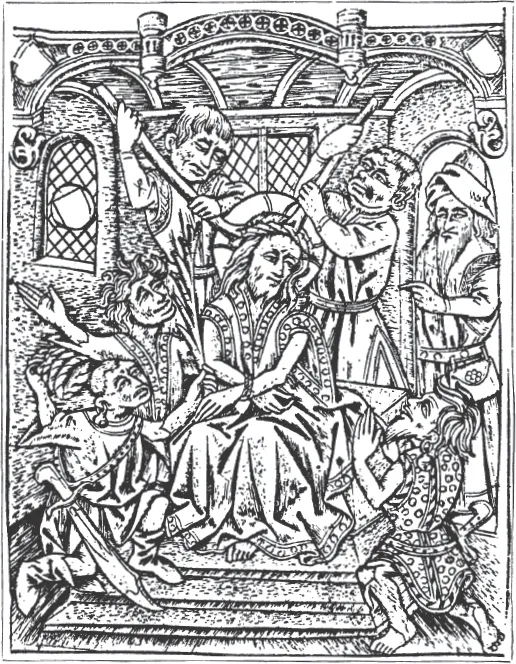
FIG. 2.—The Master of the Year 1446. Christ crowned with Thorns.
Among the craftsmen who show the clearest evidence of his influence is the MASTER OF THE YEAR 1446, which gives considerable weight to the assumption that the Master of the Playing Cards was working some years before this date. With less artistic power and a more timid execution, the same scheme of parallel shading is followed, though varied with a more liberal admixture of short strokes and flicks.
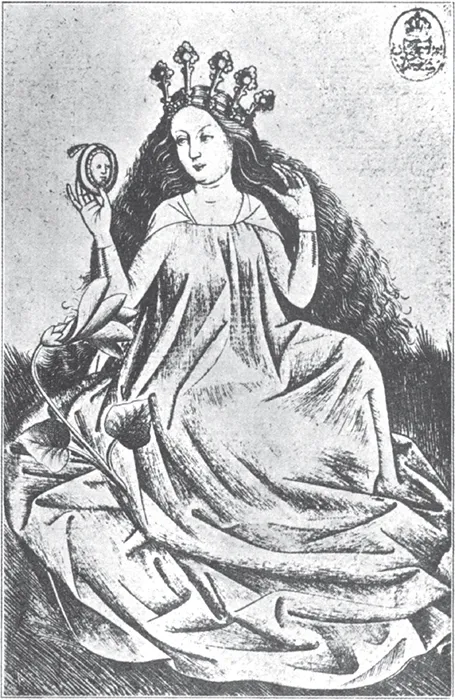
FIG. 3. —The Master of the Playing Cards. Cyclamen Queen.
Another engraver, who emanates from the same school—of small originall power, but of some interest as a copyist on account of compositions preserved us by his plagiarisms—is the MASTER OF THE BANDEROLES, so called from the recurrence of ribbon scrolls with inscriptions on his prints.[The Master of the Banderoles.] He has also been called the Master of the Year 1464, but as he merely repeated the date from a wood-cut series which he copied (a grotesque alphabet now in Basle), the title is hardly apt. In certain instances, e.g. the Alphabet, and a Fight for the Hose (Munich), the latter from a print of the Finiguerra School (Berlin),5 the sources of his plagiarisms have been identified. Others, like the Judgment of Paris (Munich), possess greater value as probable copies from lost Italian originals. As an artist he is of little account. Clumsy draughtsmanship is combined with slender powers of modelling, often still further enfeebled by the weak printing commoner in Italian than in German work of this period. It is not unlikely that he may have worked at some period of his life in Italy itself.
The Master of 1462 is another of the fictitious personalities whose name should be ruled out.[The Master of the Weibemacht.] The most recent criticism attributes the Holy Trinity at Munich (with the MS. date of 1462 on which the original name was based) to the Master of the Banderoles, and other prints formerly assigned to him are now attributed to the Master of the Playing Cards (e.g. St. Bernardino, Lehrs, i. 239, 11), or ranged under a newly christened MASTER OF THE WEIBEMACHT, so called from a print in Munich representing a Woman on an ass leading four monkeys in her train (Lehrs, i., Tafel, xi. No. 30).
Most of the earliest German engravers are now thought to belong to the Upper Rhine.[THE NETHERLANDS AND BURGUNDY: earliest group. The Master of the Death of Mary.] Quite contemporary with these is another group which bears undoubted signs of Flemish or Burgundian origin.
The MASTER OF THE DEATH OF MARY (so named from P. II. 227, 117, and of great interest for a large Battle piece) is perhaps only one among other slightly older contemporaries of the engraver called from his most important plates the MASTER OF THE GARDENS OF LOVE.
In this engraver, some of whose prints must have been in existence in 1448, by reason of copies in a manuscript of that year, the Netherlands exhibit an earlier development of a certain grade of technical excellence than Germany, a fact which poss...
Table of contents
- Cover
- Title Page
- Copyright Page
- Dedication
- Preface
- Contents
- Illustrations
- Introduction. Processes and Materials
- Chapter I: The Earliest Engravers. (The Fifteenth Century)
- Chapter II: The Great Masters of Engraving: their Contemporaries and immediate Followers. (About 1495-1550)
- Chapter III: The Beginnings of Etching and its Progress during the Sixteenth Century
- Chapter IV: The Decline of Original Engraving. The Print-sellers—the great reproductive Engravers of the School of Rubens—the first Century of Engraving in England. (About 1540-1650)
- Chapter V: The Great Portrait Engravers (about 1600-1750), with some Account of the Place of Portrait in the whole History of Engraving and Etching
- Chapter VI: The Masters of Etching. Van Dyck and Rembrandt—their immediate Predecessors, and their Following in the Seventeenth Century. (About 1590-1700)
- Chapter VII: The Later Development and Decay of Line-Engraving. (From about 1650)
- Chapter VIII: Etching in the Eighteenth and Early Nineteenth Centuries. The great Italian Etchers — the Archaisers and Amateurs — the Satirists—Goya
- Chapter IX: The Tone Processes
- Chapter X: Modern Etching
- Appendix I: Classified List of Engravers
- Appendix II: General Bibliography
- Appendix III: Index of Engravers and Individual Bibliography
Trusted by 375,005 students
Access to over 1.5 million titles for a fair monthly price.
Study more efficiently using our study tools.
Frequently asked questions
Yes, you can cancel anytime from the Subscription tab in your account settings on the Perlego website. Your subscription will stay active until the end of your current billing period. Learn how to cancel your subscription
No, books cannot be downloaded as external files, such as PDFs, for use outside of Perlego. However, you can download books within the Perlego app for offline reading on mobile or tablet. Learn how to download books offline
Perlego offers two plans: Essential and Complete
- Essential is ideal for learners and professionals who enjoy exploring a wide range of subjects. Access the Essential Library with 800,000+ trusted titles and best-sellers across business, personal growth, and the humanities. Includes unlimited reading time and Standard Read Aloud voice.
- Complete: Perfect for advanced learners and researchers needing full, unrestricted access. Unlock 1.5M+ books across hundreds of subjects, including academic and specialized titles. The Complete Plan also includes advanced features like Premium Read Aloud and Research Assistant.
We are an online textbook subscription service, where you can get access to an entire online library for less than the price of a single book per month. With over 1.5 million books across 990+ topics, we’ve got you covered! Learn about our mission
Look out for the read-aloud symbol on your next book to see if you can listen to it. The read-aloud tool reads text aloud for you, highlighting the text as it is being read. You can pause it, speed it up and slow it down. Learn more about Read Aloud
Yes! You can use the Perlego app on both iOS and Android devices to read anytime, anywhere — even offline. Perfect for commutes or when you’re on the go.
Please note we cannot support devices running on iOS 13 and Android 7 or earlier. Learn more about using the app
Please note we cannot support devices running on iOS 13 and Android 7 or earlier. Learn more about using the app
Yes, you can access A History of Engraving and Etching by Arthur M. Hind in PDF and/or ePUB format, as well as other popular books in Arte & Técnicas artísticas. We have over 1.5 million books available in our catalogue for you to explore.